Understanding moon phases Normal Space Worksheets for Ages 3-9
3 filtered results
-
From - To
Explore the wonders of the moon through our "Understanding Moon Phases" worksheets, designed specifically for children aged 3-9. These engaging and interactive resources will help young learners grasp the different phases of the moon, enhancing their scientific knowledge and observational skills. Each worksheet is filled with colorful illustrations and fun activities that make learning about the night sky enjoyable and accessible. From tracing moon shapes to creative drawing prompts, these worksheets encourage exploration and curiosity about the cosmos. Perfect for homeschoolers, classroom use, or solo learning, our moon phases worksheets are a delightful way to ignite a passion for science in young minds.
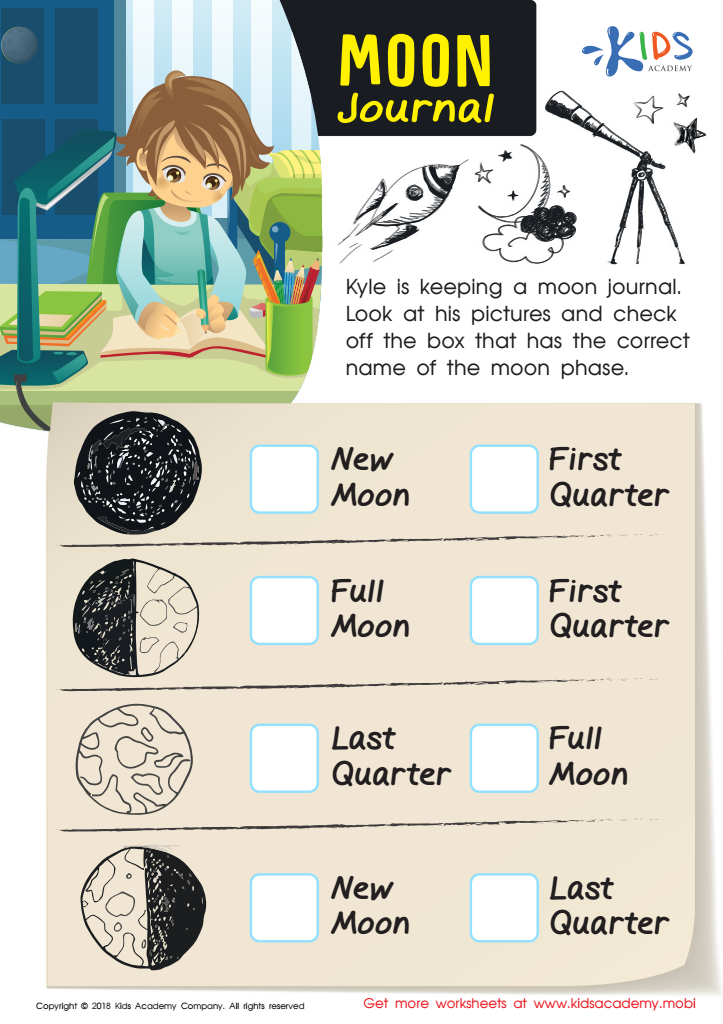
Moon Journal Worksheet
 Assign to My Students
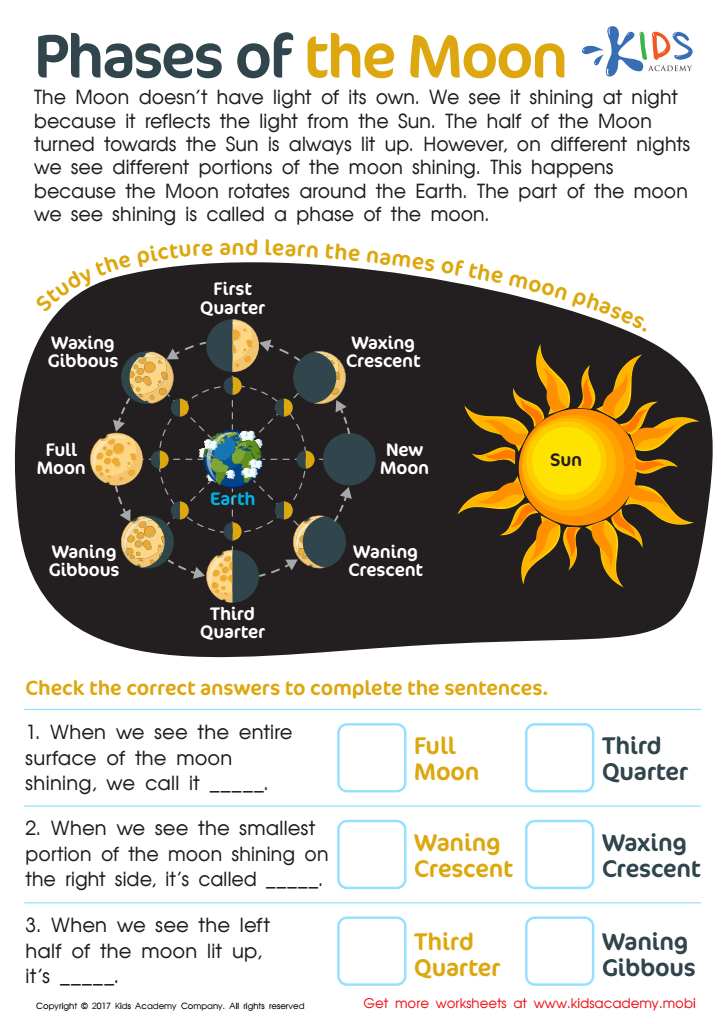
Phases of The Moon Worksheet
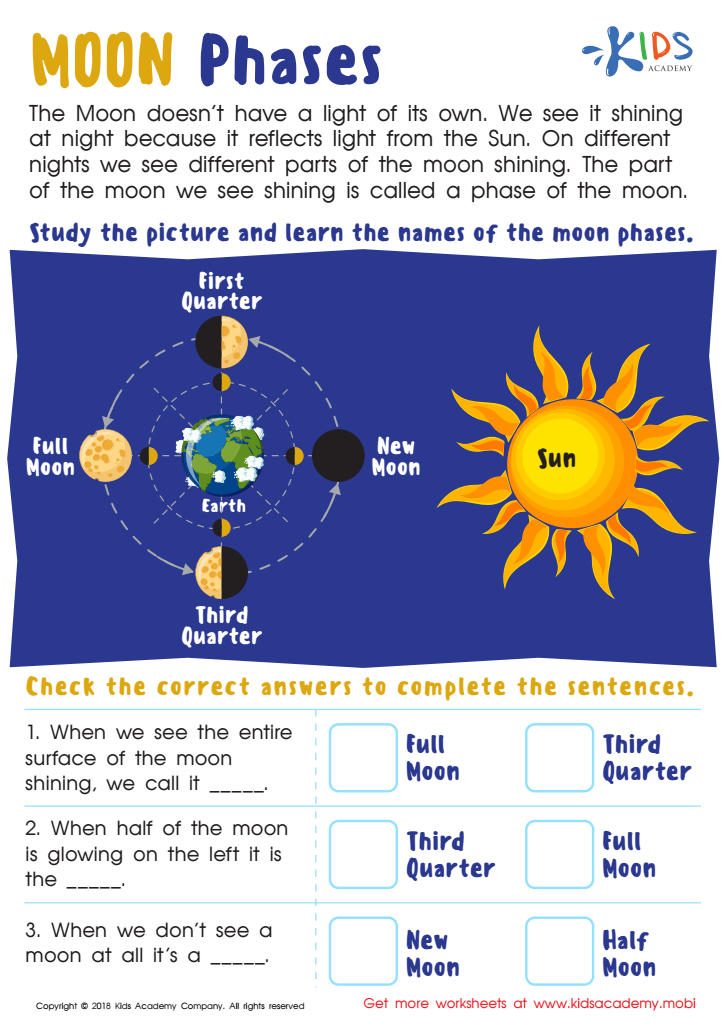
Moon Phases Worksheet





Understanding moon phases is a vital aspect of early education, especially for children aged 3-9. At this age, children are naturally curious about the world around them, and introducing them to concepts like moon phases sparks their interest in astronomy and science. Parents and teachers should care about this subject as it not only expands children’s knowledge but also encourages observational thinking and scientific inquiry.
Learning about the moon's phases offers a hands-on approach to learning, blending art, nature, and science. By observing the moon's changes, children develop critical thinking skills and a sense of wonder about the universe. Moreover, understanding these natural phenomena can help children make connections with other subjects, such as geometry (shapes of the moon), time (lunar cycles), and the importance of the moon in our environment (tides, night sky).
Furthermore, discussing moon phases can foster family bonding. Parents can engage in activities like moon-watching or creating moon phase crafts, enriching their child's educational experience. Overall, instilling knowledge about moon phases in early childhood deepens appreciation for science and promotes lifelong learning.







