Developing analytical skills Normal Community Worksheets for Ages 3-9
3 filtered results
-
From - To
Discover the power of analytical skills development with our "Normal Community Worksheets" tailored for ages 3-9! Designed to engage young minds, these worksheets provide stimulating activities that encourage critical thinking, problem-solving, and effective reasoning. From exploring community roles to understanding relationships within their environment, children will enhance their analytical skills through fun, interactive exercises. Each worksheet fosters creativity while aligning with early education standards. Perfect for parents and teachers, these resources help children connect with their community and understand their role within it. Unlock your child’s potential and make learning enjoyable today with these carefully crafted worksheets!
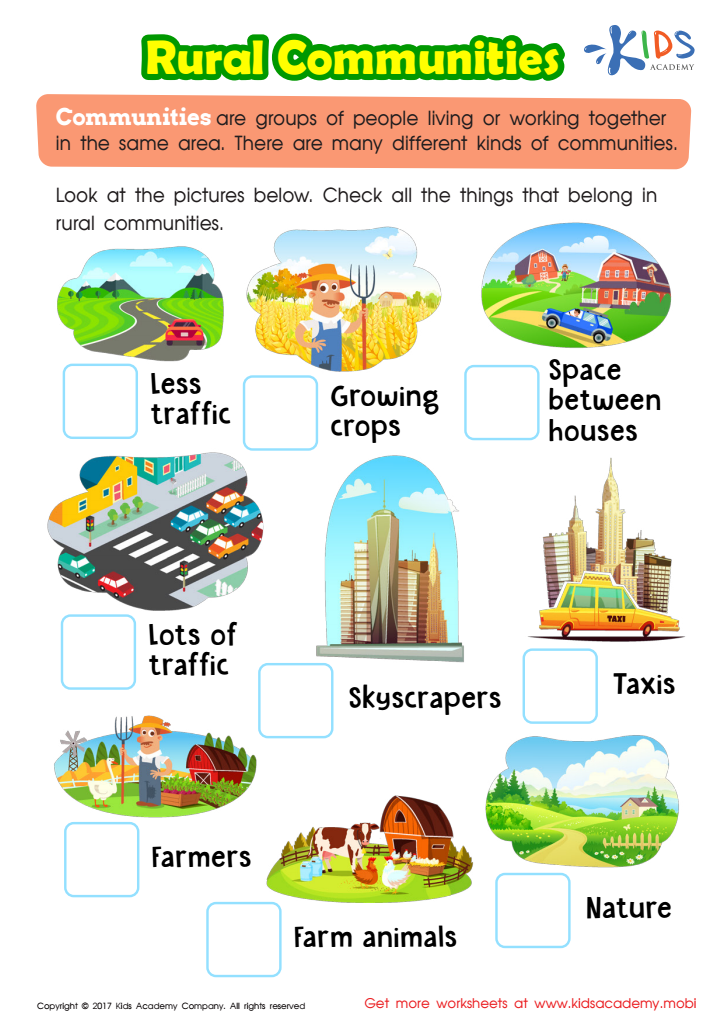
Rural Communities Printable
 Assign to My Students

What Needs Electricity Printable
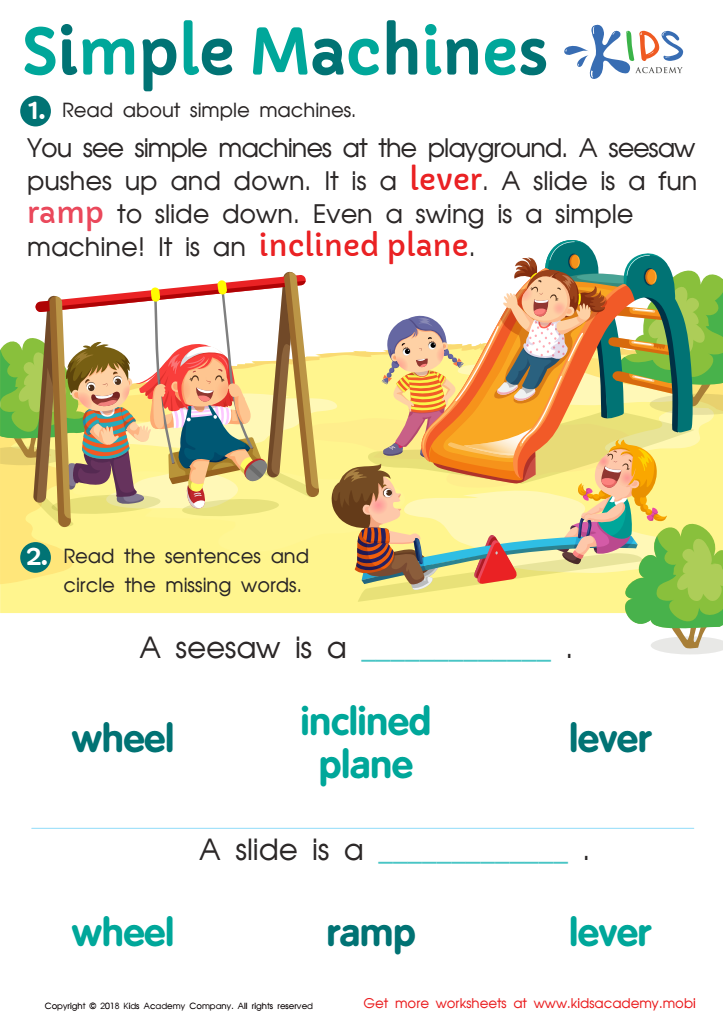
Simple Machines Worksheet








Developing analytical skills in young children, particularly those aged 3-9, is crucial for their overall cognitive growth and future success. At this tender age, children are already absorbing vast amounts of information and learning how to interpret the world around them. Analytical skills enable them to think critically, solve problems, and make informed decisions as they engage with their environment.
Parents and teachers play a vital role in fostering these skills. By introducing activities that encourage exploration, such as puzzles, games, and group projects, adults can nurture a child’s natural curiosity. Engaging children in discussions that promote reasoning and questioning helps them articulate their thoughts and understand different perspectives.
Furthermore, analytical skills set the foundation for academic success. As children progress in their education, these skills become essential for subjects like mathematics and science, where logical thinking is paramount. Moreover, strong analytical abilities contribute to emotional intelligence, helping children navigate social interactions and build resilience.
In nurturing analytical skills, parents and teachers not only equip children with the tools necessary for learning but also prepare them for real-life challenges, fostering independent thinkers who will thrive in an increasingly complex world. Thus, investing in these skills is an investment in a child’s future.