Understanding timelines Normal History Worksheets for Ages 3-9
3 filtered results
-
From - To
Welcome to our “Understanding Timelines” History Worksheets page, designed specifically for children ages 3-9! Our engaging resources help young learners grasp the concept of time and sequence through fun activities. These worksheets offer a colorful and interactive way to explore historical events, helping kids to visualize timelines and understand the story of our past. Suitable for classroom use or home learning, our worksheets foster curiosity, critical thinking, and foundational knowledge of history. Encourage your child's learning journey with these age-appropriate materials that make history exciting and accessible! Start creating meaningful connections with the past today!
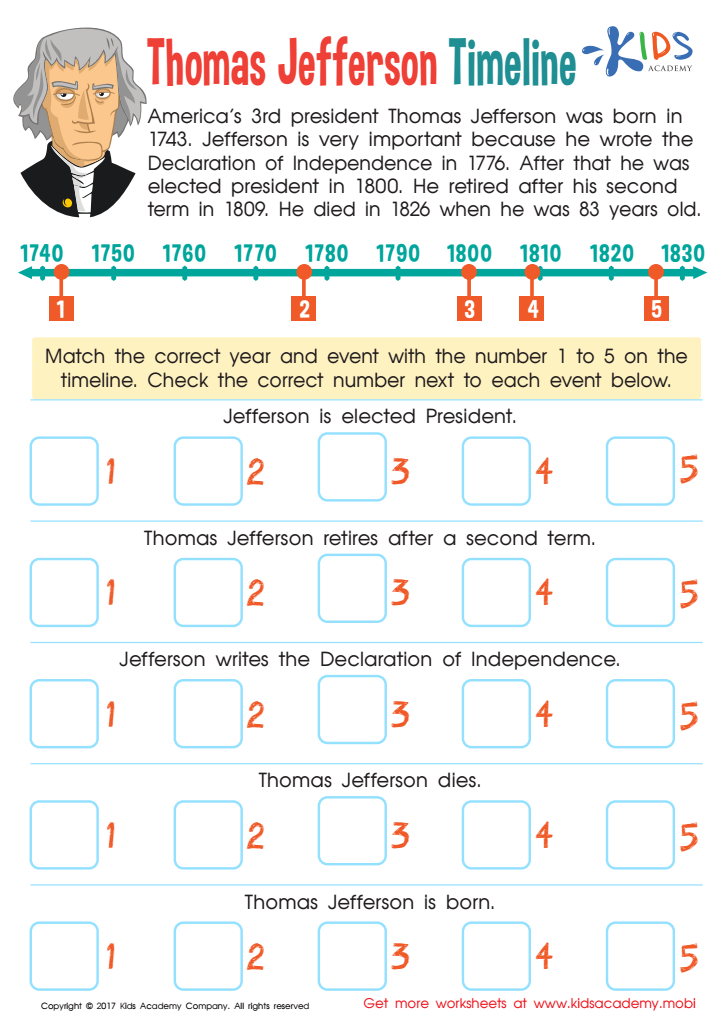
Thomas Jefferson Timeline Worksheet
 Assign to My Students
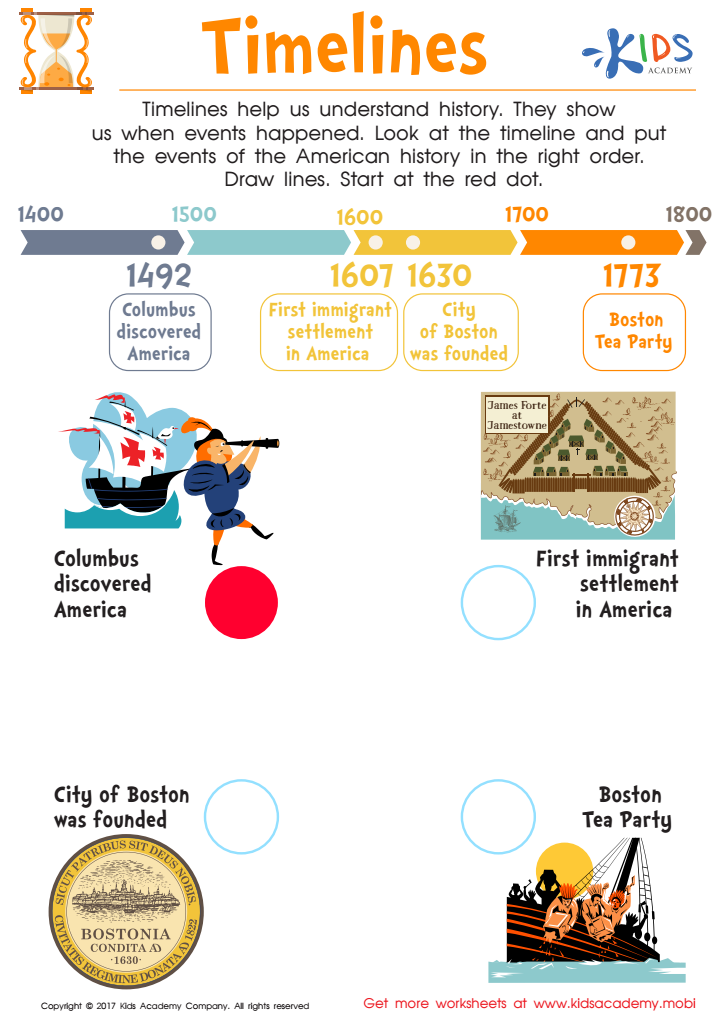
American History Timeline Worksheet
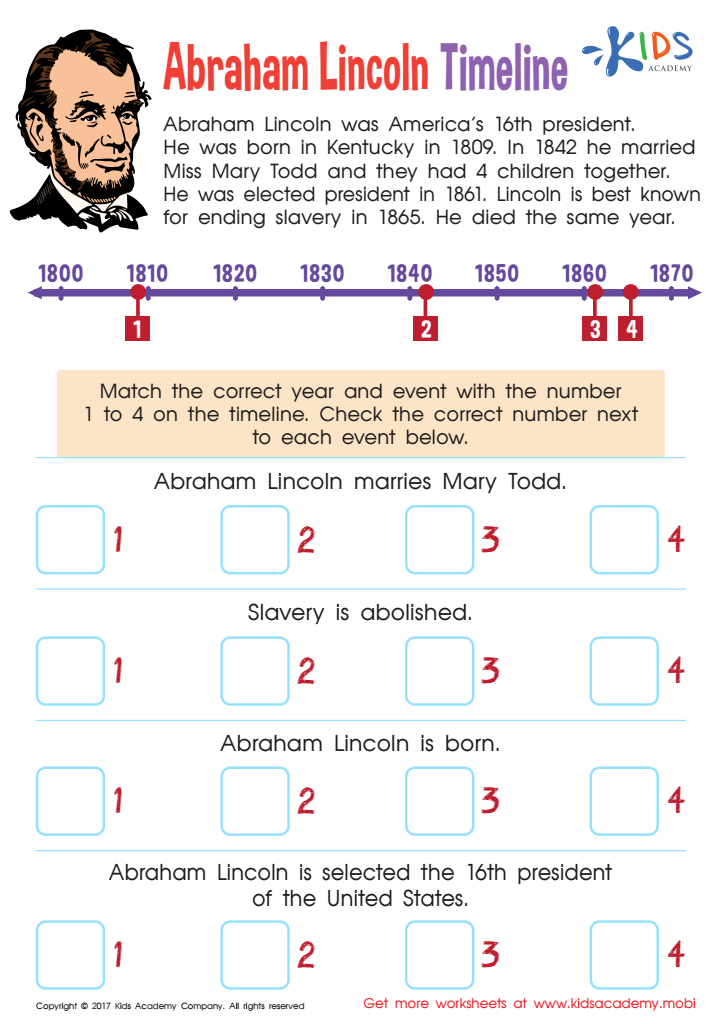
Abraham Lincoln Timeline Worksheet



.jpg)



Understanding timelines is crucial for young children aged 3-9 as it lays a foundational framework for their comprehension of history and the sequence of events in their own lives. For parents and teachers, fostering an appreciation for timelines helps children make connections between past, present, and future, encouraging critical thinking skills.
Children in this age group are naturally curious about stories and events, and introducing timelines allows them to visualize these experiences in a structured manner. By understanding the order of events, children can grasp concepts like cause and effect, enhancing their cognitive development. Visual aids like pictures or simple graphics can make timelines engaging and accessible for young learners.
Furthermore, timelines can serve as a tool for teaching important values and cultural backgrounds, ensuring children recognize the relevance of history in shaping their identities. As they learn about influential events or figures appropriate for their age, it helps cultivate empathy and a sense of belonging.
Ultimately, teaching timelines empowers children with a framework for understanding the world around them, fostering their curiosity and encouraging educational exploration. Parents and educators who prioritize this skill contribute significantly to a child's holistic development, preparing them for future academic success.