Matching skills Normal Social Studies Worksheets for Ages 3-9
3 filtered results
-
From - To
Discover the perfect tool to boost your child's cognitive development and social understanding with our "Matching Skills Normal Social Studies Worksheets for Ages 3-9.” Designed for young learners, these engaging worksheets help kids ages 3-9 develop critical thinking and problem-solving skills through fun matching activities. Each worksheet is crafted to enhance visual discrimination, fine motor skills, and early learning concepts in history, geography, and cultures. Whether at home or in the classroom, our printable resources are an ideal way to support your child's learning journey in an enjoyable and effective manner. Build a strong foundation with Kids Academy today!
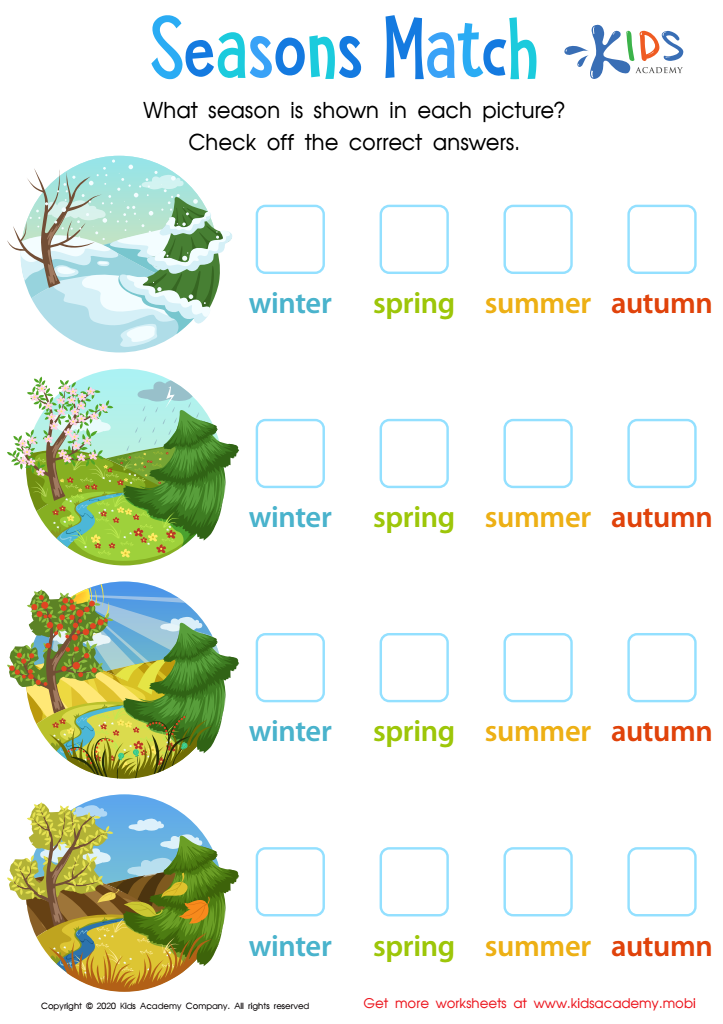
Seasons Match Worksheet
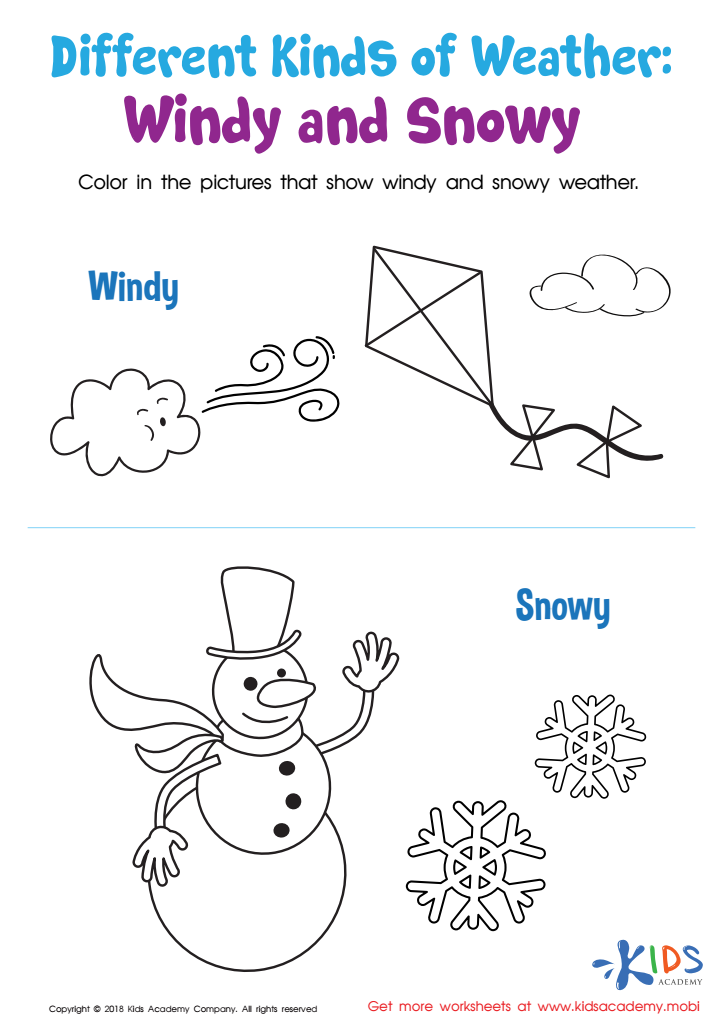
Different Kinds of Weather: Windy and Snowy Worksheet
 Assign to My Students
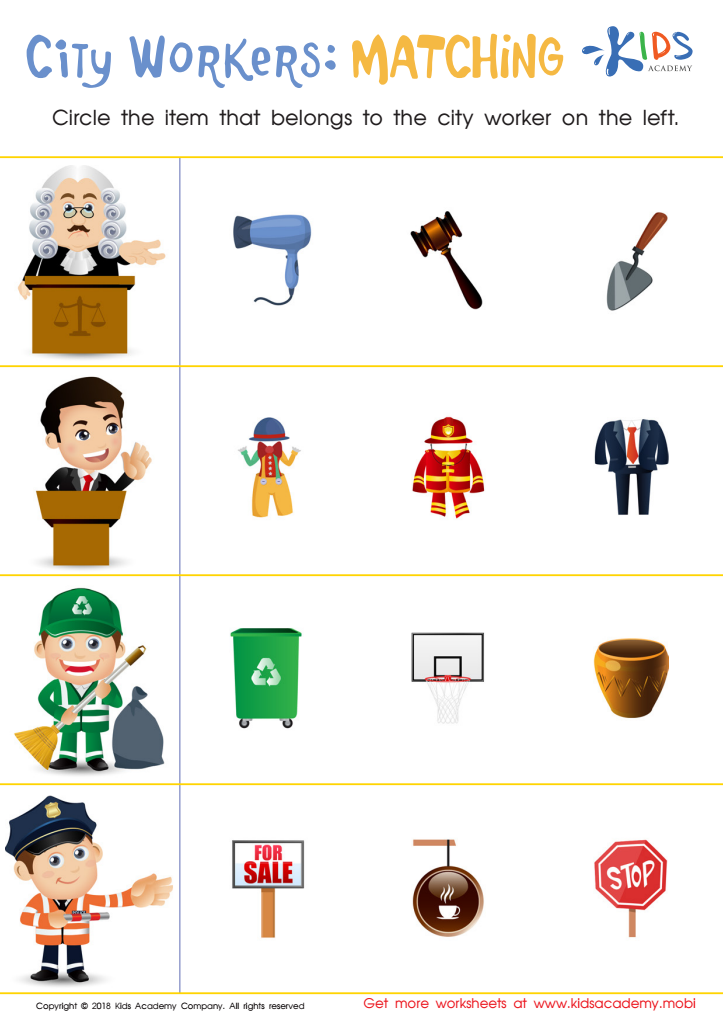
City Workers: Matching Worksheet







Matching skills are foundational in early childhood development and should be considered an essential part of Normal Social Studies education for children aged 3-9 for several reasons. First, these skills help children make connections between existing knowledge and new information, which supports cognitive development. During the ages of 3-9, kids are navigating both familiar and novel social environments where connecting ideas, people, and places enhances their understanding of the world around them.
Social Studies, which encompasses history, geography, and civics, relies significantly on the ability to recognize patterns and make associations. For instance, when children learn about different communities, matching and sorting activities can help them differentiate and group information about places, cultural practices, and historical timelines, leading to a deeper and more comprehensive grasp of the material.
Furthermore, matching skills foster critical thinking and problem-solving abilities. By recognizing similarities and differences, children improve their ability to categorize data, enhancing their organizational skills. An early foundation in these skills prepares children for more advanced studies and complex reasoning required in later grades.
Additionally, the interactive and engaging nature of matching activities supports cooperative learning and social interaction among peers. Such dynamics not only build social-emotional skills but also instill a love for learning that is essential for lifelong educational enthusiasm. Therefore, cultivating matching skills within the Social Studies curriculum for young children significantly contributes to their overall intellectual and social growth.