Understanding adjectives Normal Grammar Worksheets for Ages 3-9
3 filtered results
-
From - To
Unlock the power of words with our "Understanding Adjectives" Normal Grammar Worksheets, tailored for ages 3-9! These engaging and educational worksheets are designed to help young learners grasp the concept of adjectives, enhancing their vocabulary and writing skills. Featuring fun activities and colorful illustrations, our worksheets make grammar enjoyable and understandable. Perfect for both classroom and at-home learning, these materials foster a strong foundation in language arts. Boost your child’s descriptive abilities and watch their sentences come alive with rich detail—download our adjectives worksheets today and inspire a love for learning!
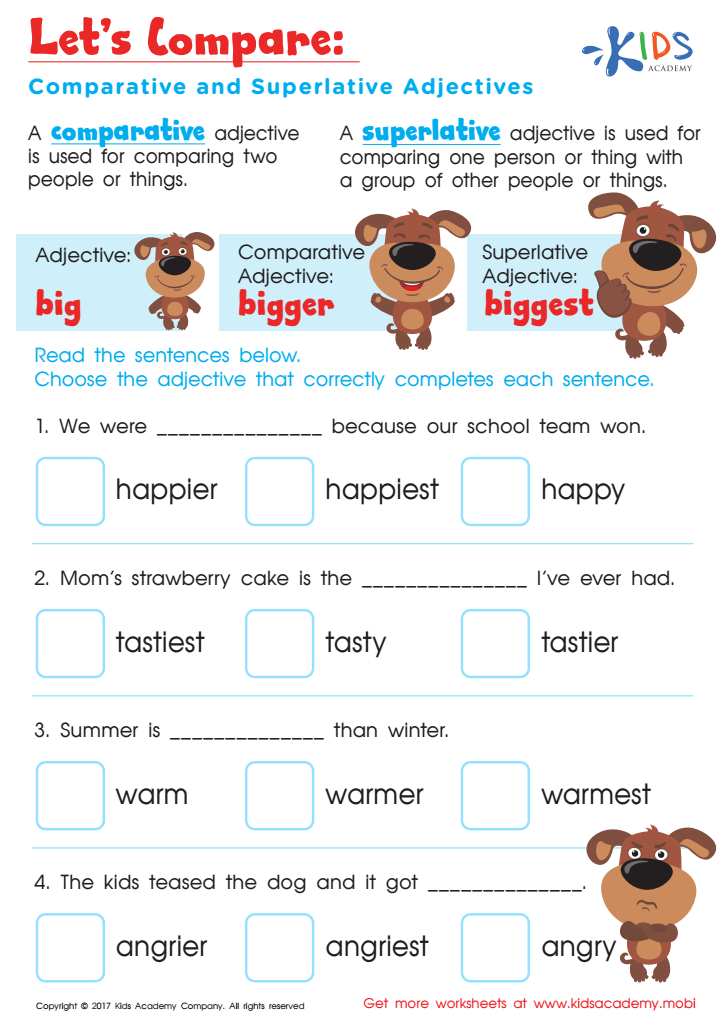
Comparative and Superlative Worksheet
 Assign to My Students
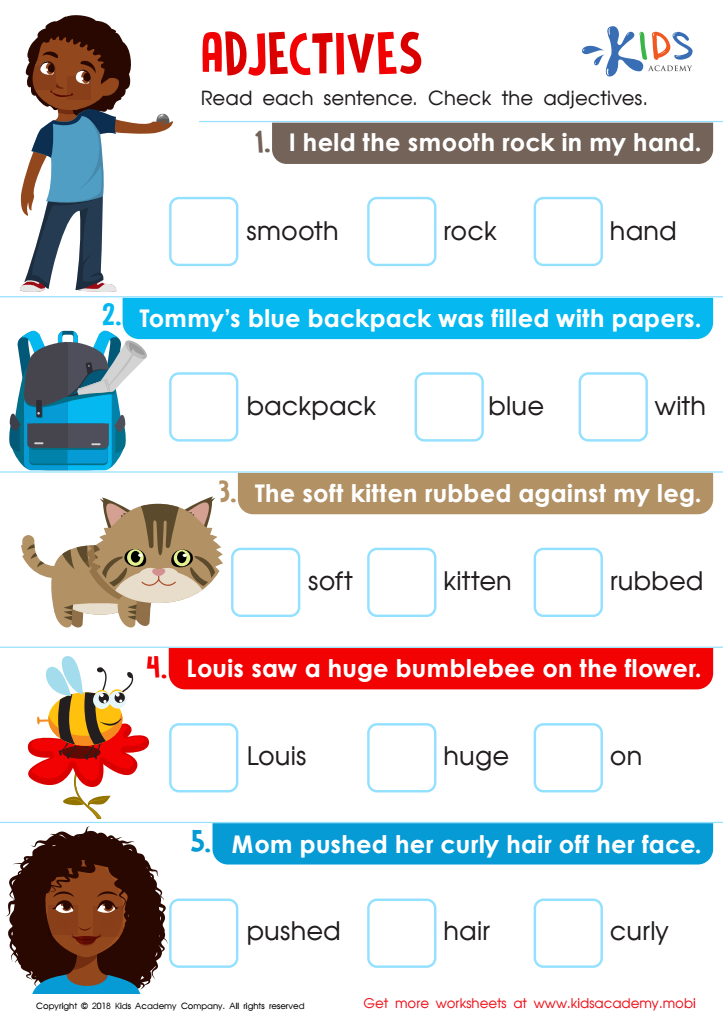
Adjectives Worksheet
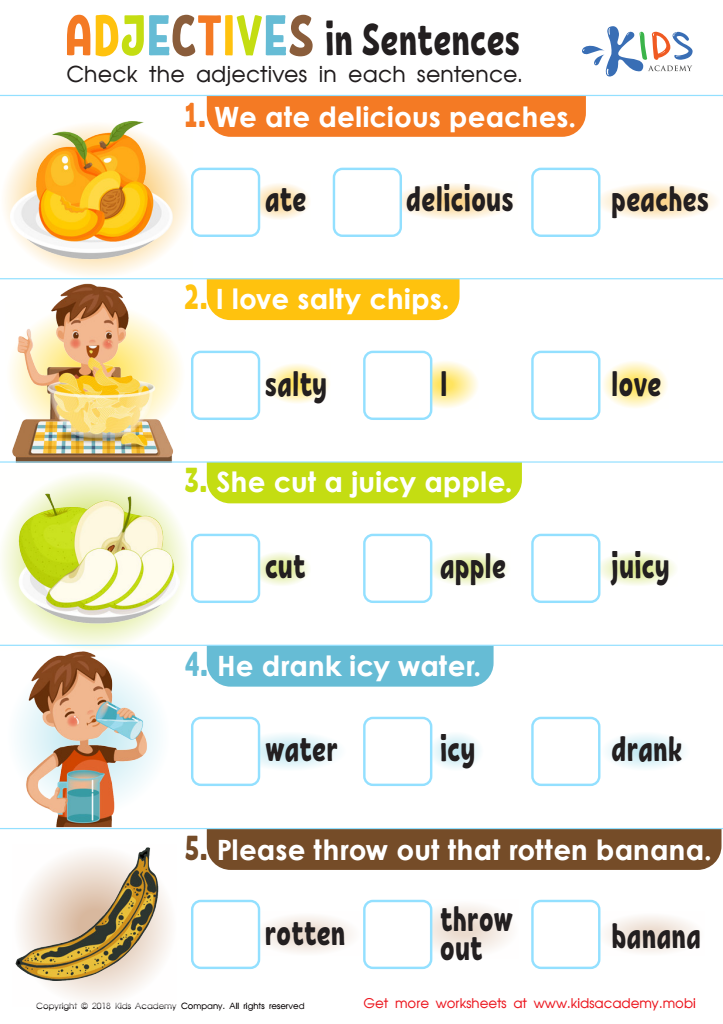
Adjectives in Sentences Worksheet






Understanding adjectives plays a crucial role in a child’s language development, which has far-reaching implications for their overall learning and communication skills. By ages 3-9, children are expanding their vocabularies rapidly, and adjectives help them express more nuanced thoughts and descriptions. For example, instead of saying "ball," they can say "big red ball," which provides a clearer picture and enhances their storytelling abilities.
Parents and teachers have a vital role in facilitating this growth. A strong grasp of adjectives helps children improve their reading comprehension and writing skills. Texts are often rich with descriptive language, and being able to understand these descriptions makes stories more engaging and easier to visualize. In writing, children can create more dynamic and vivid poems, stories, and reports.
Furthermore, social interactions are enriched when children can accurately describe their emotions, experiences, and environments. This descriptive ability fosters better peer communication and reduces misunderstandings. For teachers, incorporating adjectives into lessons can make learning more interactive and engaging, facilitating concepts in subjects like science and social studies, where descriptive accuracy can be vital.
Incorporating activities that highlight adjectives helps in laying a strong linguistic foundation, shaping articulate, expressive, and confident communicators. This foundational skill has lifelong benefits, aiding in academic success and personal growth.