Verb identification Normal Grammar Worksheets for Ages 3-9
6 filtered results
-
From - To
Explore our engaging Verb Identification Normal Grammar Worksheets, designed for children ages 3 to 9! These interactive worksheets enhance early language skills through fun and age-appropriate activities. Kids will learn to recognize and classify verbs within sentences, fostering a solid grammatical foundation. Each worksheet provides a vibrant and playful approach to learning, making it perfect for classrooms or at-home practice. With clear instructions and varied exercises, children will gain confidence in their writing and communication abilities. Perfect for educators and parents alike, our verb identification worksheets are an essential tool for promoting literacy in young learners! Start your child’s learning adventure today!
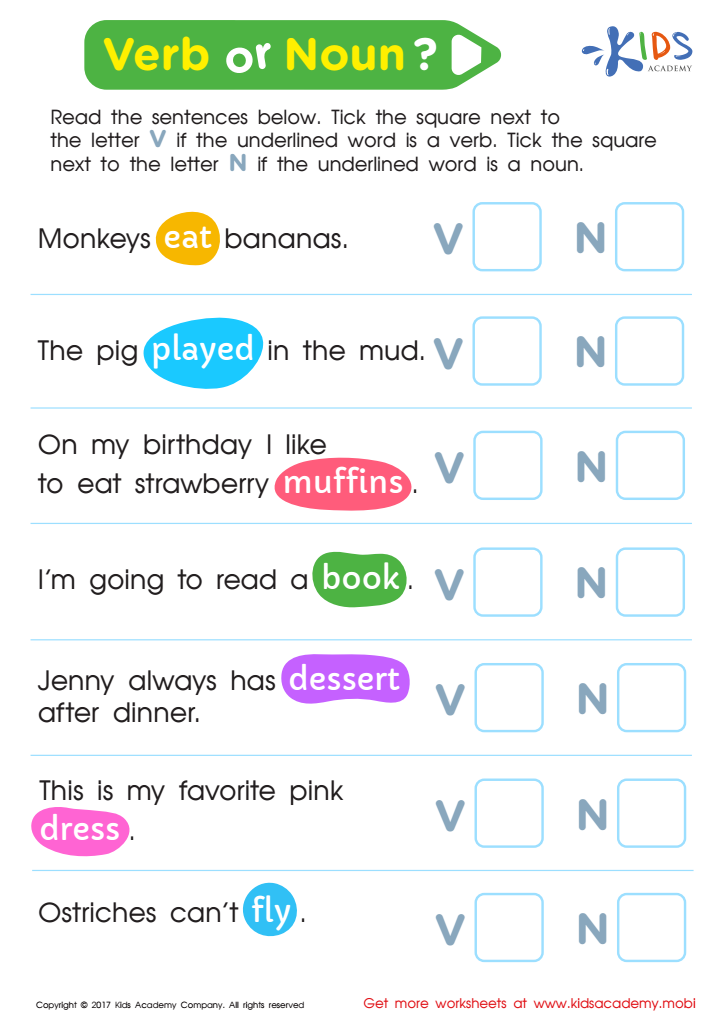
Verb or Noun Worksheet
 Assign to My Students
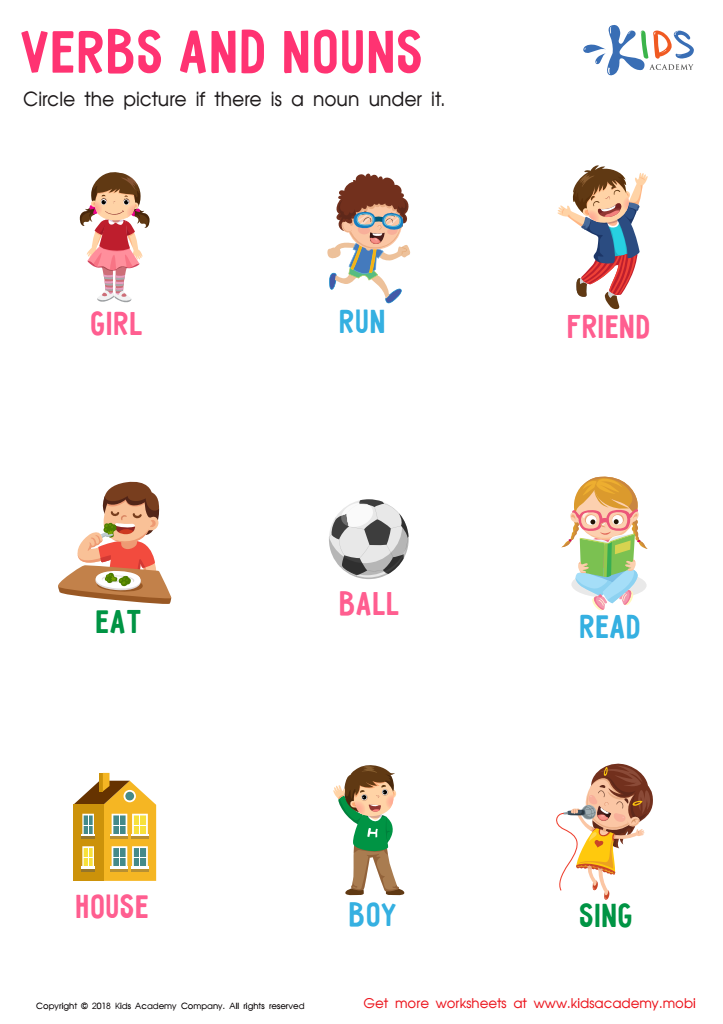
Verbs and Nouns Worksheet
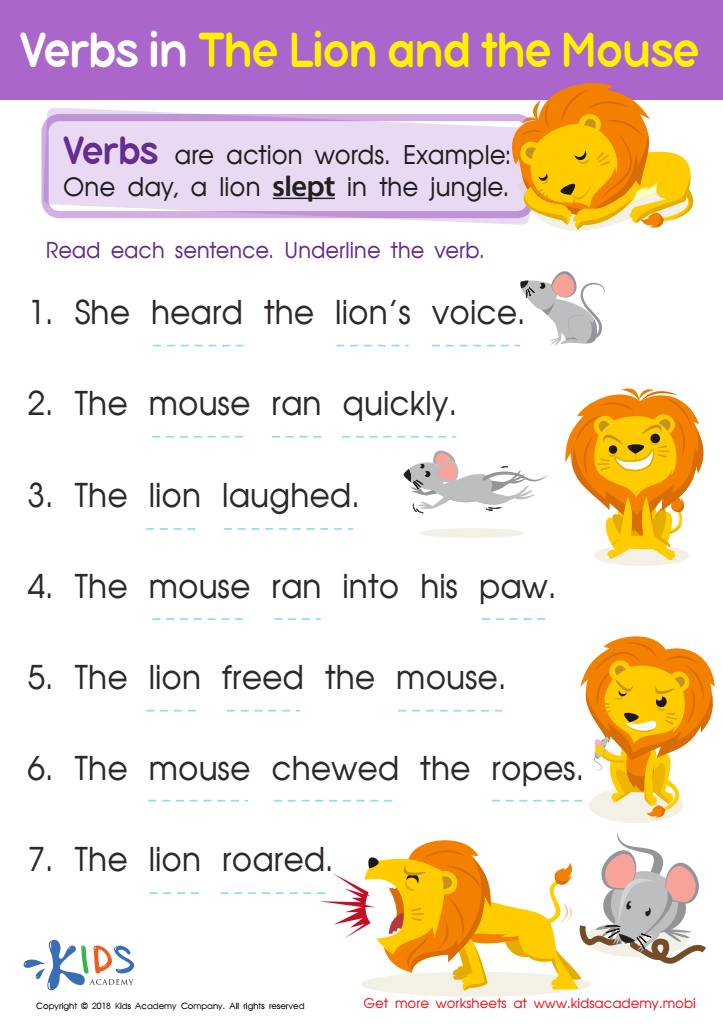
Verbs in The Lion and the Mouse Worksheet
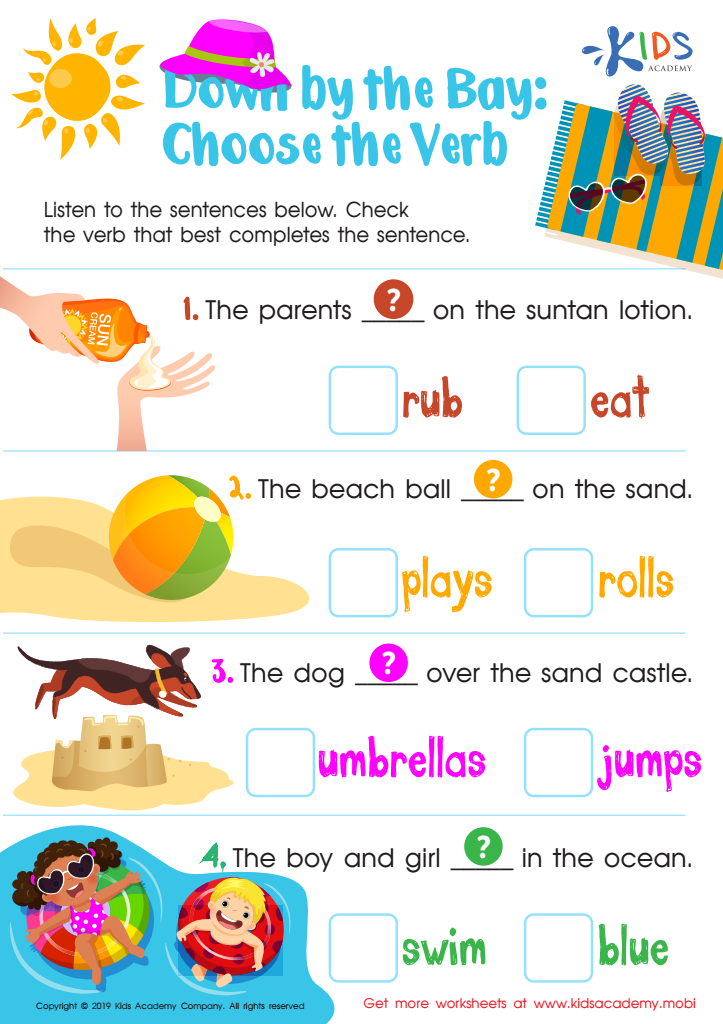
Down by the Bay: Choose the Verb Worksheet
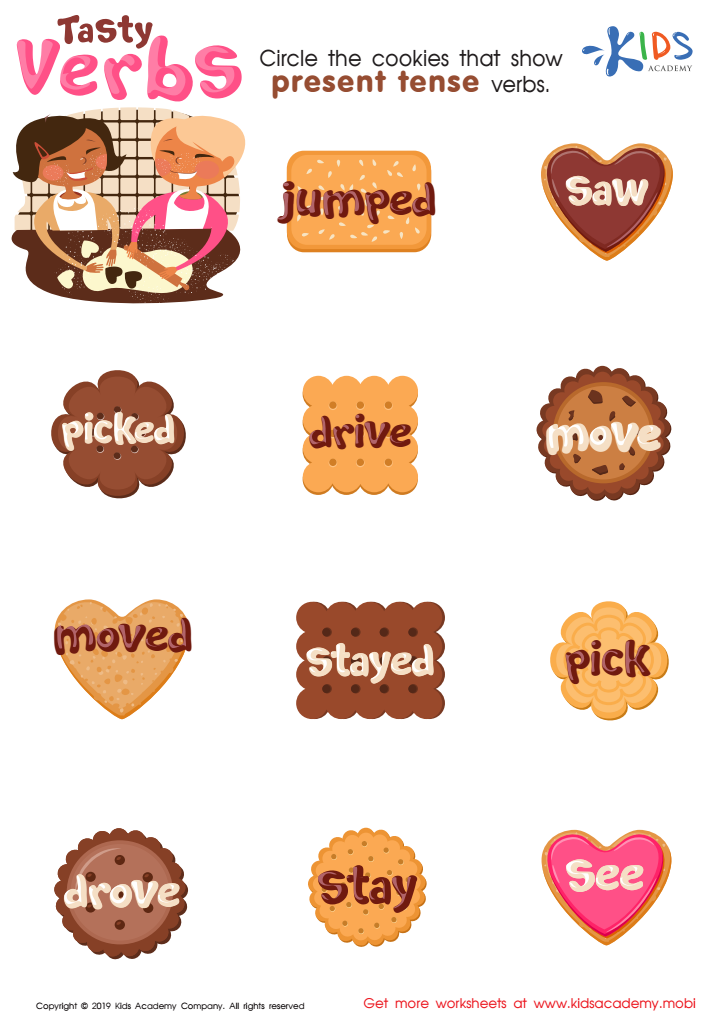
Tasty Verbs Worksheet
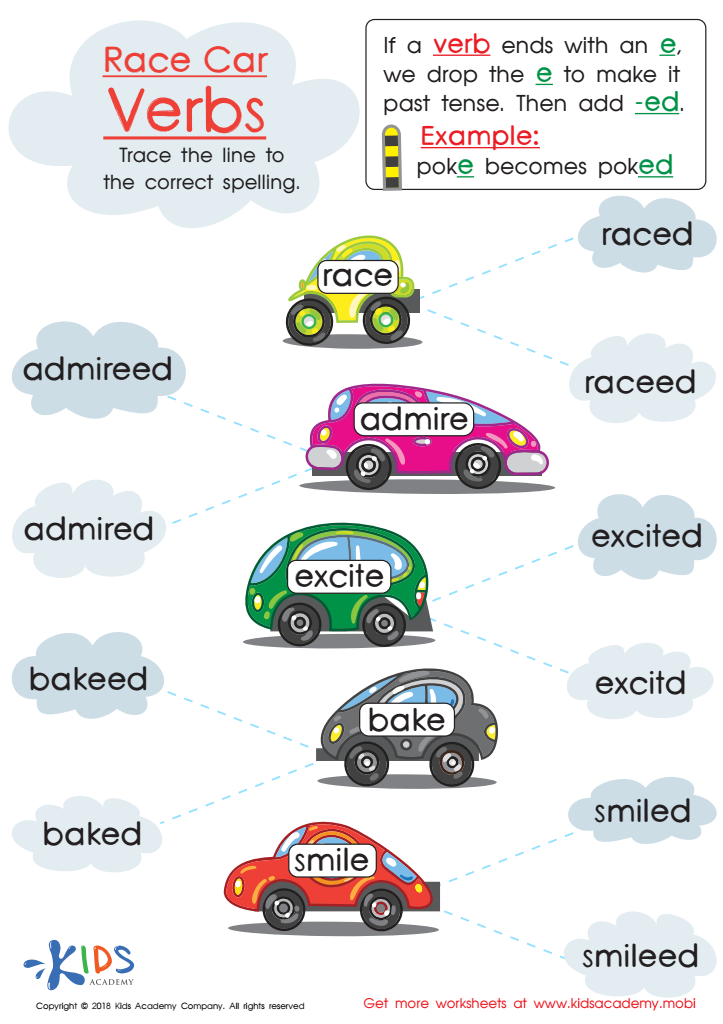
Race Car Verbs Worksheet







Understanding verb identification and normal grammar is crucial for children aged 3-9, as it forms the foundation of their language development and literacy skills. At this age, children are rapidly acquiring language and begin to express themselves through spoken and written words. Identifying verbs—the action words in sentences—helps children comprehend sentence structure and enhances their ability to form complete thoughts.
When parents and teachers focus on verb identification, they facilitate better communication skills. Recognizing verbs allows young learners to engage in more complex conversations and narratives, promoting critical thinking and creativity. Furthermore, grasping proper grammar equips children with the tools they need to read and understand written texts, significantly contributing to their overall academic success.
Additionally, developing an early understanding of verbs encourages language exploration, vocabulary expansion, and improves writing skills. Playful activities such as games, songs, and storytelling can make verb identification fun and enjoyable, fostering a love for language learning. Ultimately, by emphasizing verb recognition and grammar, parents and teachers can support children's developmental milestones, setting a strong foundation for their future educational journey. This not only impacts academic achievement but also boosts self-confidence and communication skills, crucial in today’s world.