Vocabulary development Normal Grammar Worksheets for Ages 3-9
5 filtered results
-
From - To
Enhance your child’s language skills with our Vocabulary Development Normal Grammar Worksheets designed for ages 3-9. These engaging, age-appropriate worksheets focus on building essential vocabulary and grammar foundations, fostering a love for language learning. Through a variety of fun activities, children will explore word meanings, expand their vocabulary, and practice sentence structure. Our worksheets encourage creativity and critical thinking, ensuring a comprehensive learning experience. Perfect for classroom or at-home instruction, these resources cater to diverse learning styles. Help your child become a confident communicator with our expertly crafted vocabulary development worksheets today! Explore, learn, and thrive in their language journey.
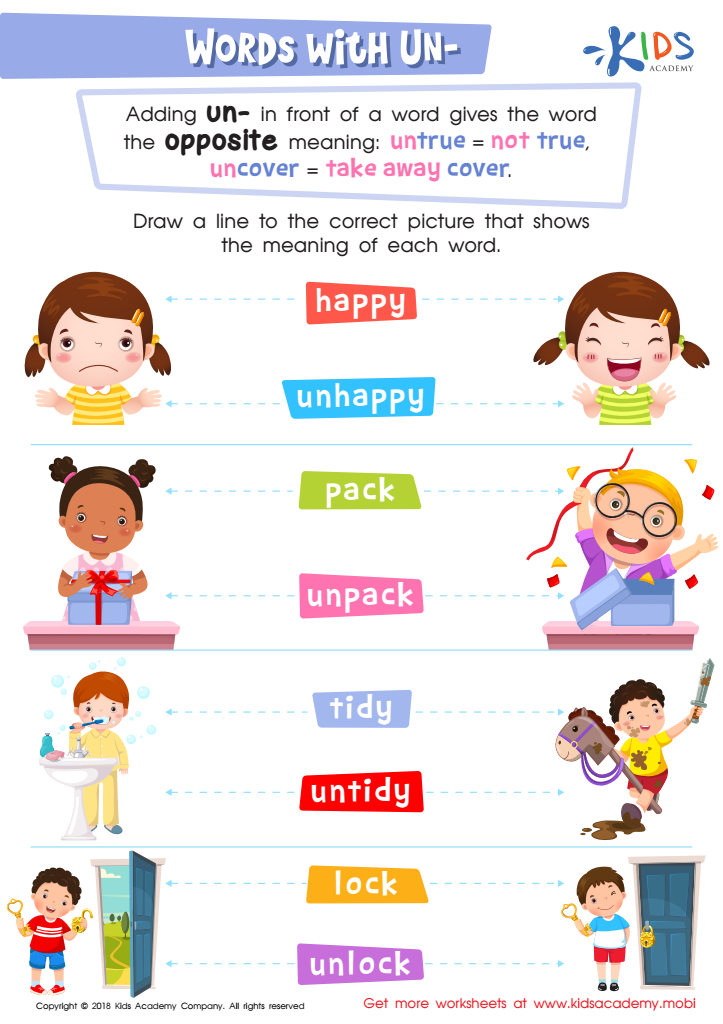
Words with Un– Worksheet
 Assign to My Students
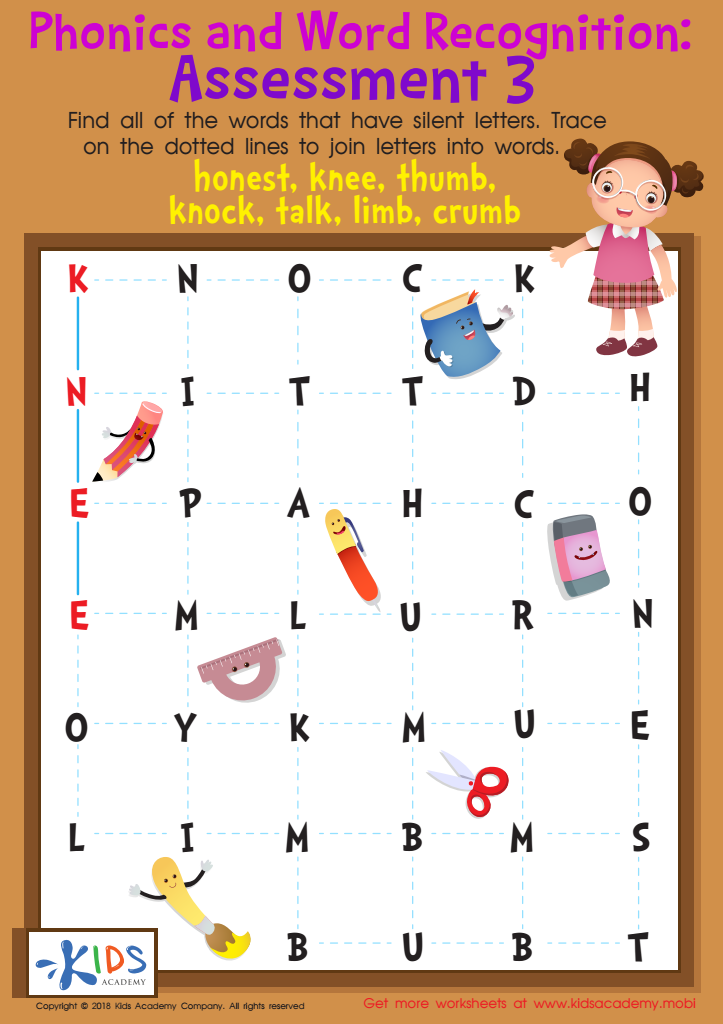
Phonics and Word Recognition: Assessment 3 Worksheet
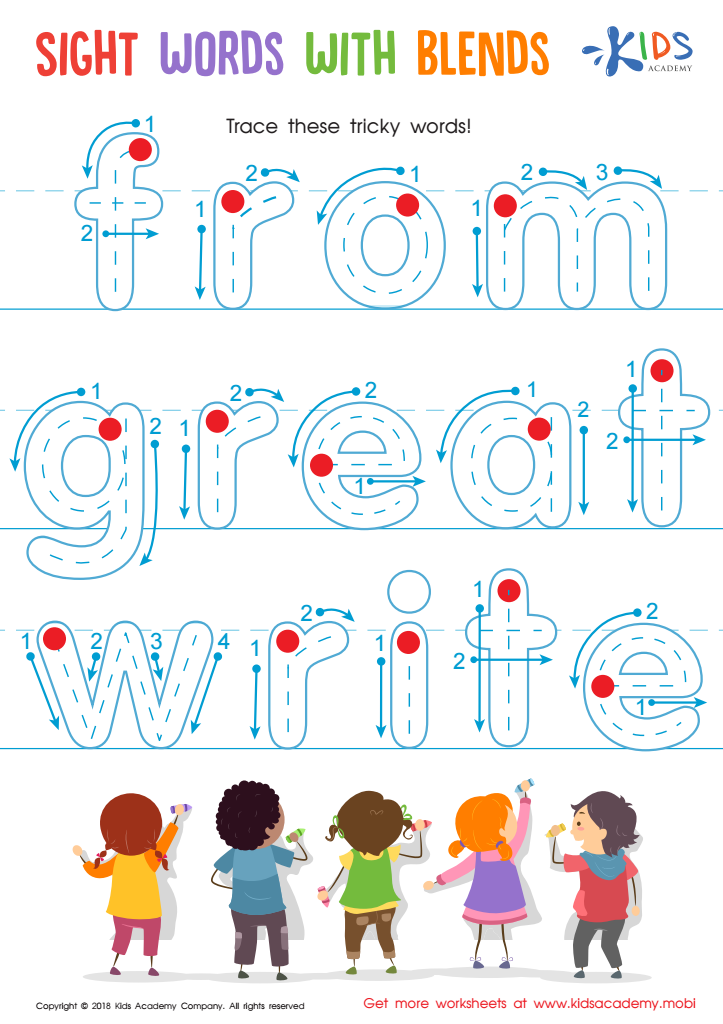
Sight Words with Blends Worksheet
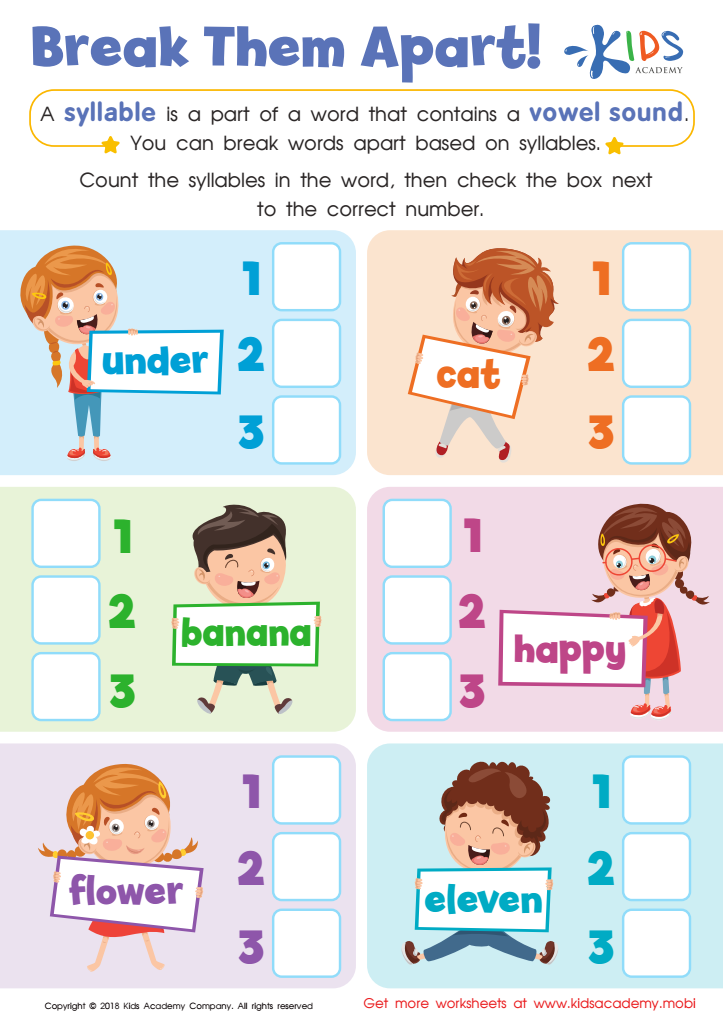
Reading: Break Them Apart Worksheet
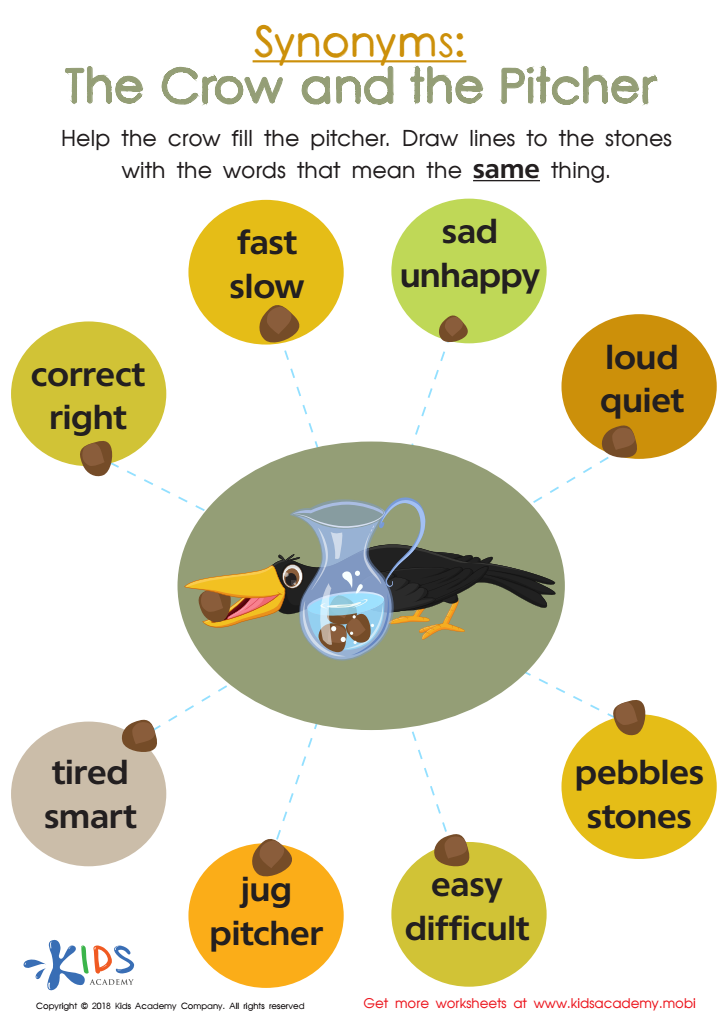
The Crow and the Pitcher Synonyms Worksheet







Vocabulary development is crucial for children aged 3-9 as it lays the foundation for their communication skills and overall literacy. During these formative years, children absorb language rapidly, and a rich vocabulary enables them to express their thoughts, feelings, and needs effectively. When parents and teachers prioritize vocabulary growth, they contribute to better academic performance since a strong vocabulary is linked to reading comprehension and writing skills.
Moreover, a well-developed vocabulary fosters cognitive development, encouraging critical thinking and problem-solving abilities. Children who understand and use a diverse range of words are more capable of articulating their ideas and interacting confidently with peers and adults.
Additionally, vocabulary development nurtures social-emotional growth. Children who can communicate effectively are better equipped to build relationships, resolve conflicts, and articulate their emotions, leading to improved social skills.
Finally, inclusive practices in vocabulary teaching support all learners, particularly those with language delays or those learning a second language. By engaging families in vocabulary-building activities—like reading together or word games—teachers and parents ensure children have the tools they need for lifelong success. Prioritizing vocabulary development during these crucial years has lasting benefits that extend far beyond the classroom.