Word identification Normal Grammar Worksheets for Ages 3-9
5 filtered results
-
From - To
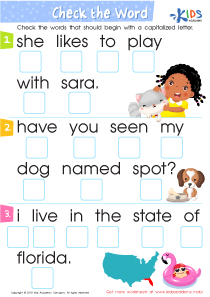
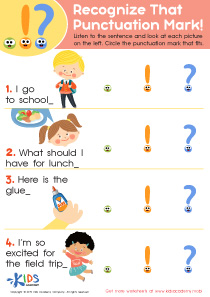
Discover our engaging "Word Identification Normal Grammar Worksheets" designed for children aged 3 to 9! These worksheets help young learners develop essential reading and writing skills through fun and interactive exercises. Each worksheet focuses on word recognition, phonics, and sentence formation, ensuring a comprehensive understanding of grammar fundamentals. With colorful illustrations and age-appropriate activities, children will stay motivated and excited while mastering vocabulary and spelling. Ideal for classroom use or at-home practice, these printable resources enhance learning in a playful way. Equip your child with the foundational skills they need to become confident readers and writers! Explore our collection today!
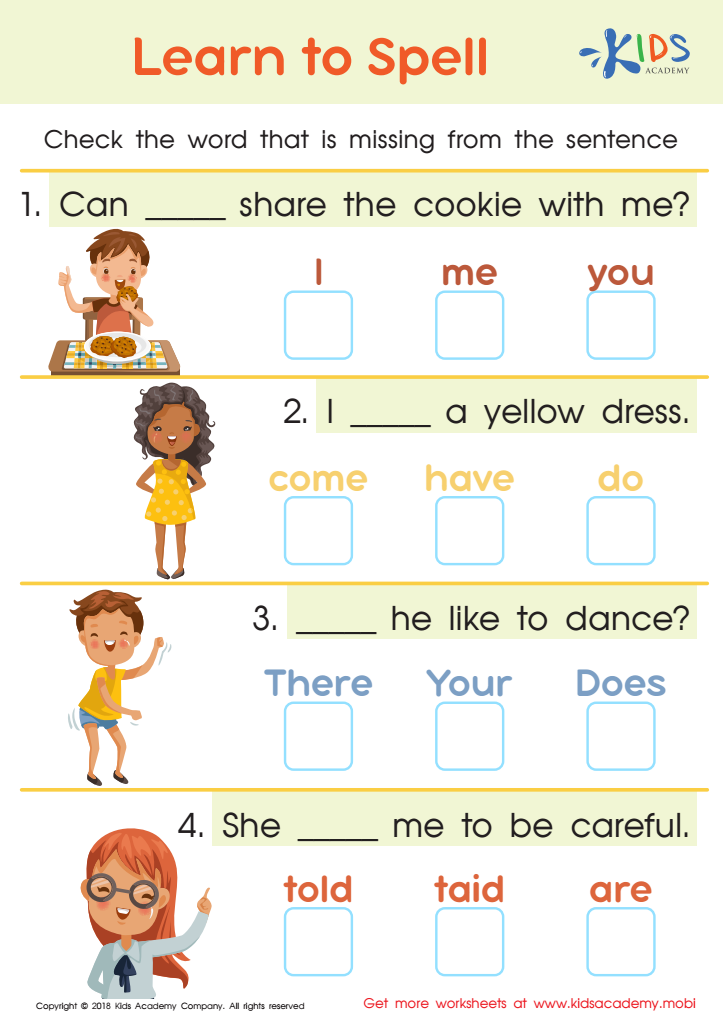
Learn to Spell Worksheet
 Assign to My Students
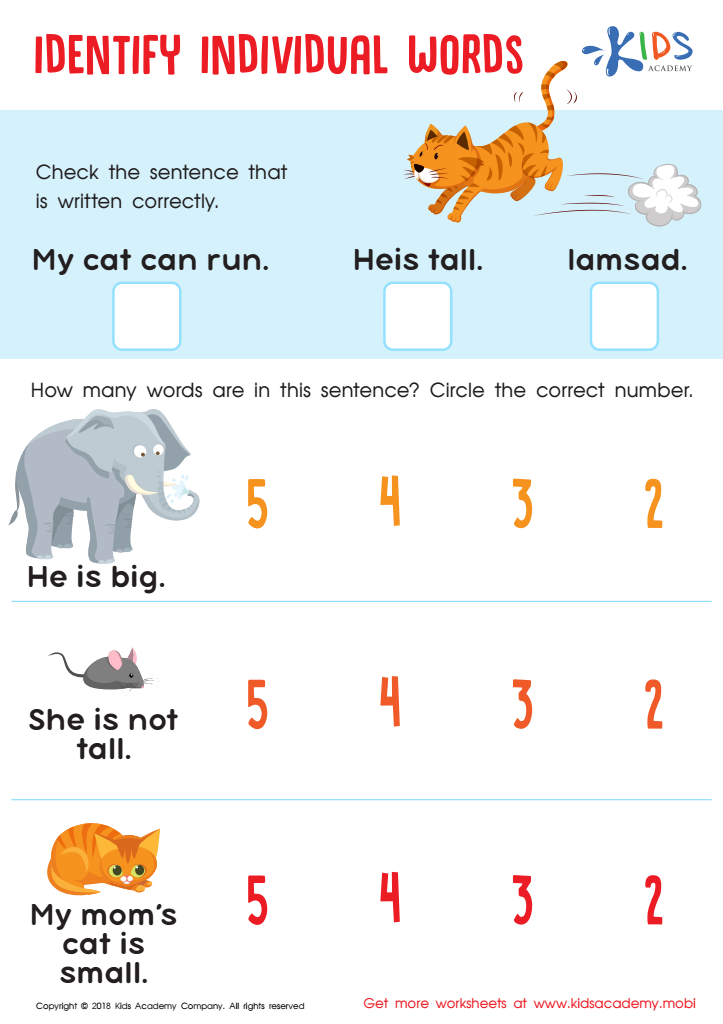
Identify Individual Words Worksheet
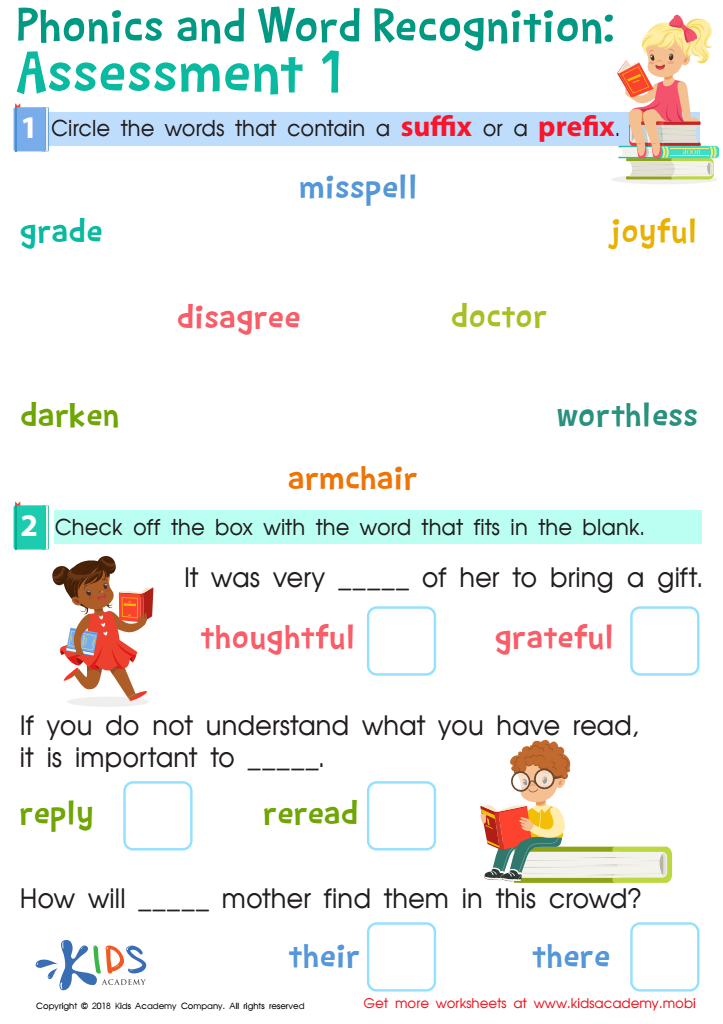
Phonics and Word Recognition: Assessment 1 Worksheet
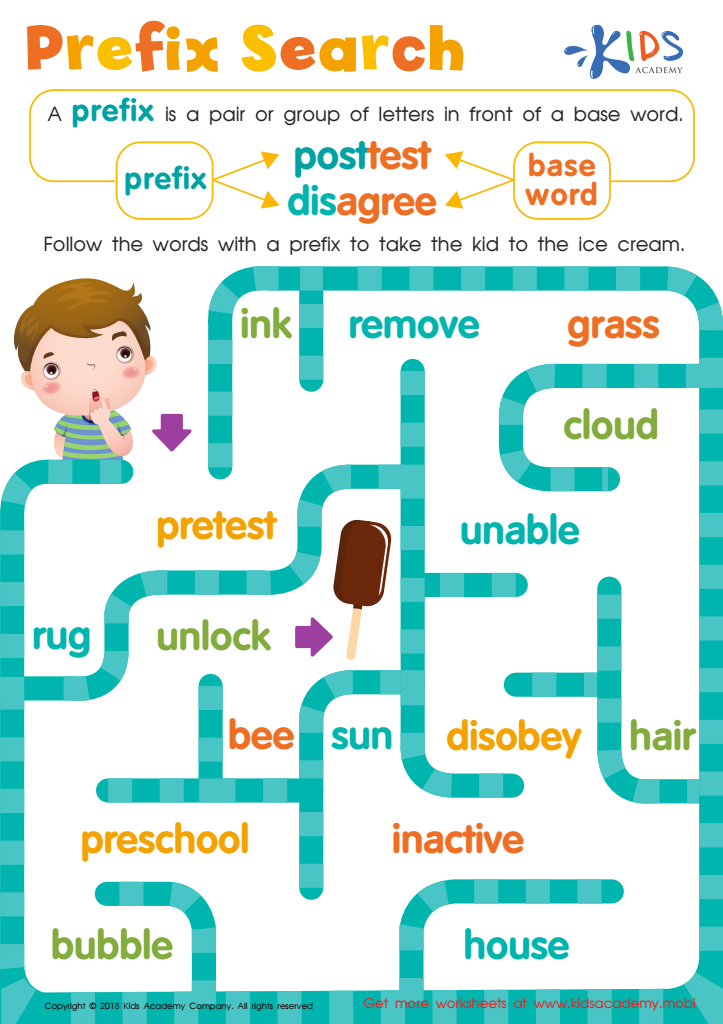
Reading: Prefix Search Worksheet
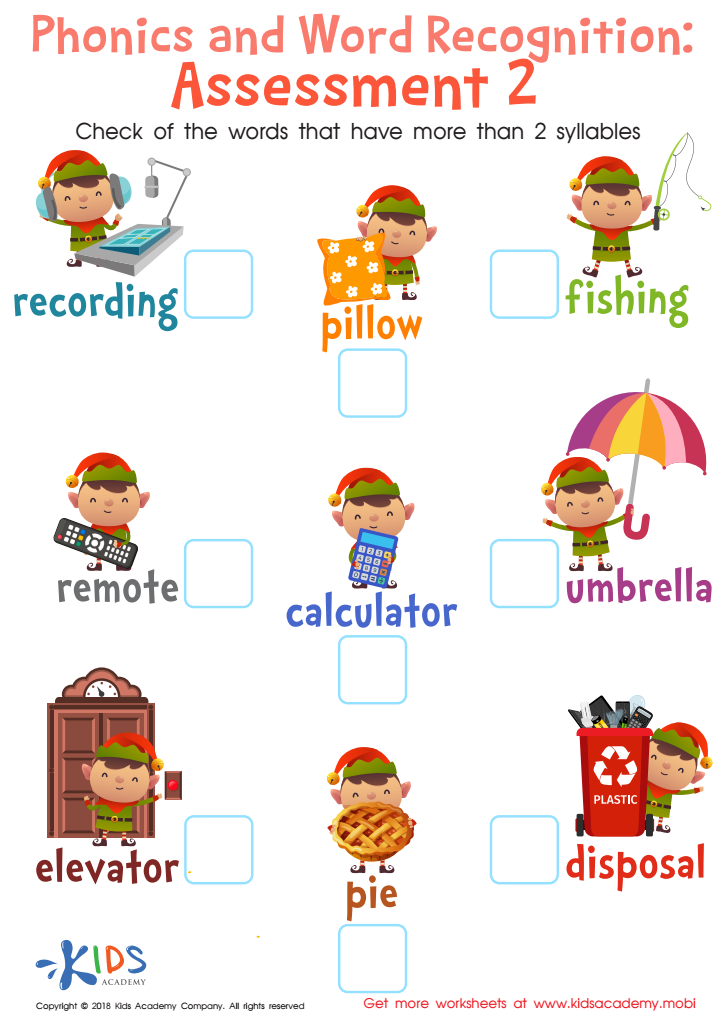
Phonics and Word Recognition: Assessment 2 Worksheet




.jpg)
Word identification and normal grammar are essential components of early literacy for children aged 3-9. At this stage, children not only acquire fundamental reading and writing skills but also develop their understanding of language structures. Parents and teachers should care about this development because it lays the foundation for effective communication and academic success.
When children are proficient in word identification, they can quickly recognize and decode words, which enhances their reading fluency and comprehension. This ability fosters a love for reading and builds confidence, encouraging them to explore more advanced texts. Furthermore, a solid grasp of normal grammar allows children to express their thoughts clearly, ensuring that their communication is both coherent and effective.
Additionally, when educators and parents focus on these skills, they help nurture children's cognitive development and critical thinking. It promotes a rich vocabulary, crucial for written expression and participation in discussions. Supporting language development through engaging activities and age-appropriate resources not only enhances literacy but also promotes social skills and emotional intelligence. In summary, investing time and resources into word identification and normal grammar is vital for equipping children with the necessary tools for lifelong learning and effective communication.