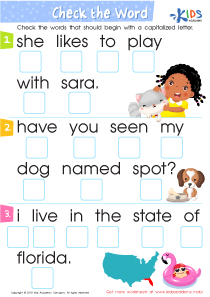
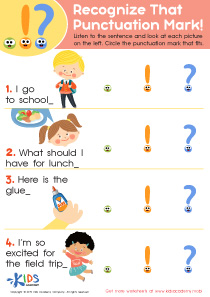
Understanding adjectives Normal Writing Worksheets for Ages 3-9
3 filtered results
-
From - To
Unlock the power of descriptive language with our "Understanding Adjectives Normal Writing Worksheets," specifically designed for children ages 3-9. These engaging worksheets help young learners identify and use adjectives to enhance their writing skills. Through fun activities, kids will discover how adjectives add color and detail to their sentences, making their writing more vivid and interesting. Each worksheet offers a variety of exercises, including word matching, fill-in-the-blank, and creative writing prompts. Perfect for classroom use or at-home practice, these playful resources encourage a love for language and strengthen foundational writing abilities. Start sparking your child’s creativity today!
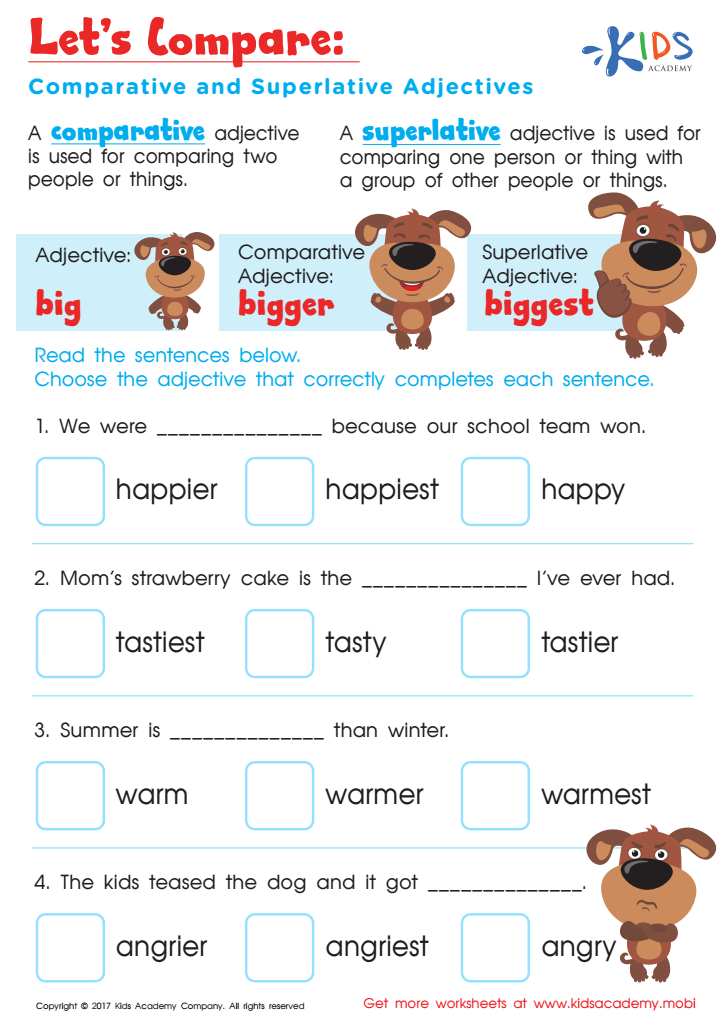
Comparative and Superlative Worksheet
 Assign to My Students
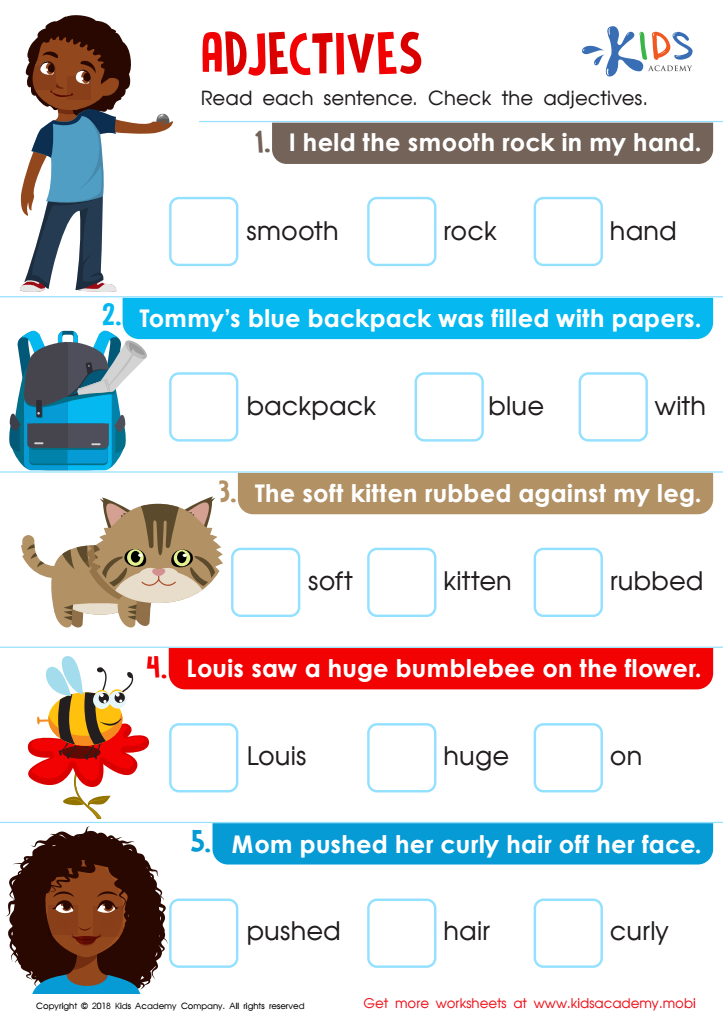
Adjectives Worksheet
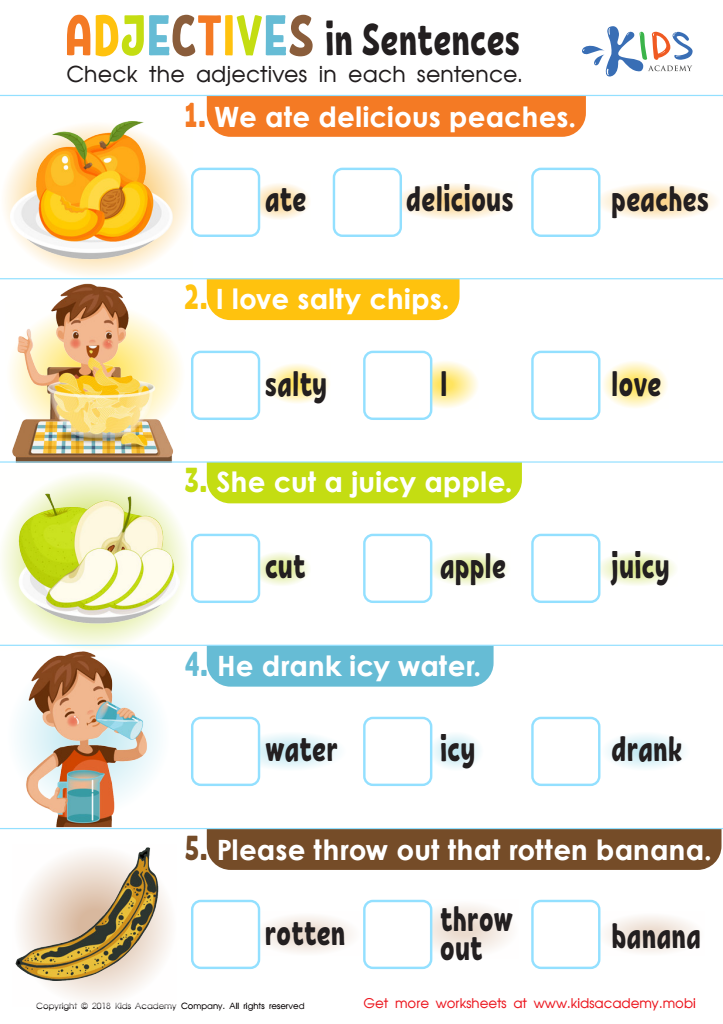
Adjectives in Sentences Worksheet






Understanding adjectives is crucial for children ages 3-9 because these descriptive words enrich language development and communication skills. For parents and teachers, fostering this understanding lays a strong foundation for literacy and creative expression. Adjectives help children describe their world, enhancing both their vocabulary and their ability to convey feelings, ideas, and experiences.
When children learn to use adjectives, they engage more vividly in storytelling and conversation, making their communication more engaging and clear. This not only improves their writing skills but also fosters critical thinking, as they learn to observe and categorize their surroundings—increasing their awareness of nuances in meaning.
Additionally, early exposure to adjectives can nurture a love for reading. As children encounter descriptive language in books, they develop a deeper appreciation for literature, which ultimately motivates them to become avid readers.
By prioritizing the understanding of adjectives, parents and teachers help cultivate confident communicators who can express themselves with clarity and creativity. Ultimately, this early linguistic skill supports emotional intelligence and interpersonal relationships, both of which are essential for success in school and beyond. Investing time in teaching adjectives pays long-term dividends in a child's educational journey and social interactions.