Phonics Skills Normal Tracing Words Worksheets for Ages 3-9
3 filtered results
-
From - To
Enhance your child's reading and writing capabilities with our Phonics Skills Normal Tracing Words Worksheets designed for ages 3-9. These expert-crafted worksheets focus on phonics skills, helping young learners recognize, trace, and write words effectively. Specially tailored for preschool to early elementary students, each resource strengthens letter-sound correspondence, boosts confidence in word formation, and supports early literacy development. Engaging activities make learning fun and effective, ensuring your child builds a strong foundation for future academic success. Foster phonemic awareness and mastery with our expertly curated worksheets—an essential tool for young, budding readers and writers.
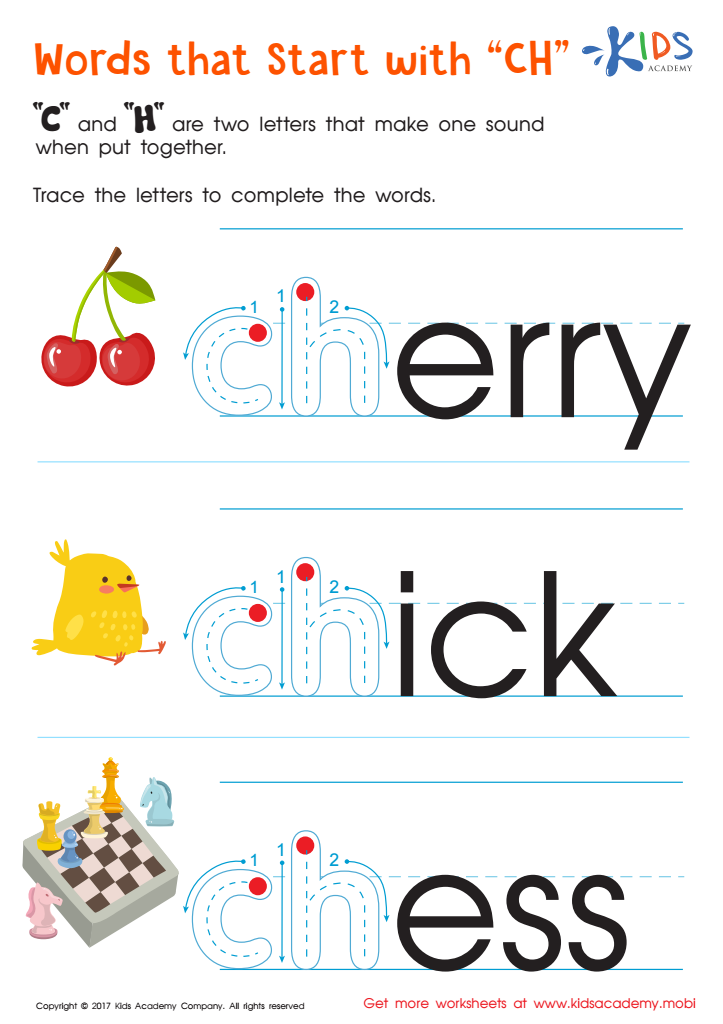
Words That Start with "ch" Spelling Worksheet
 Assign to My Students
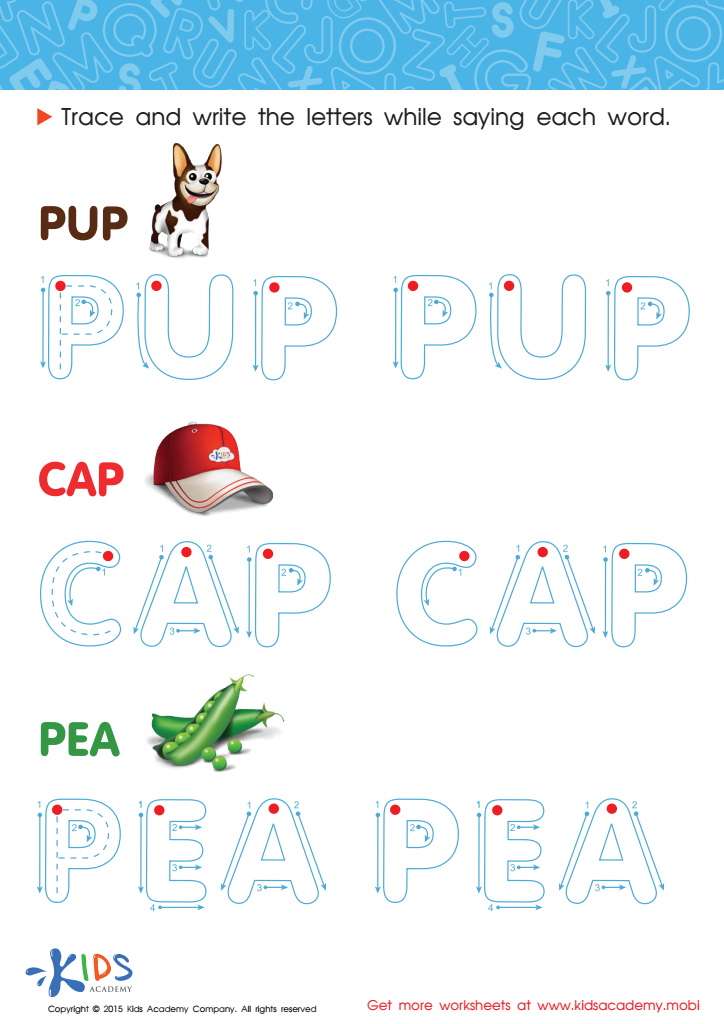
A Pup, a Cap and a Pea Spelling Worksheet
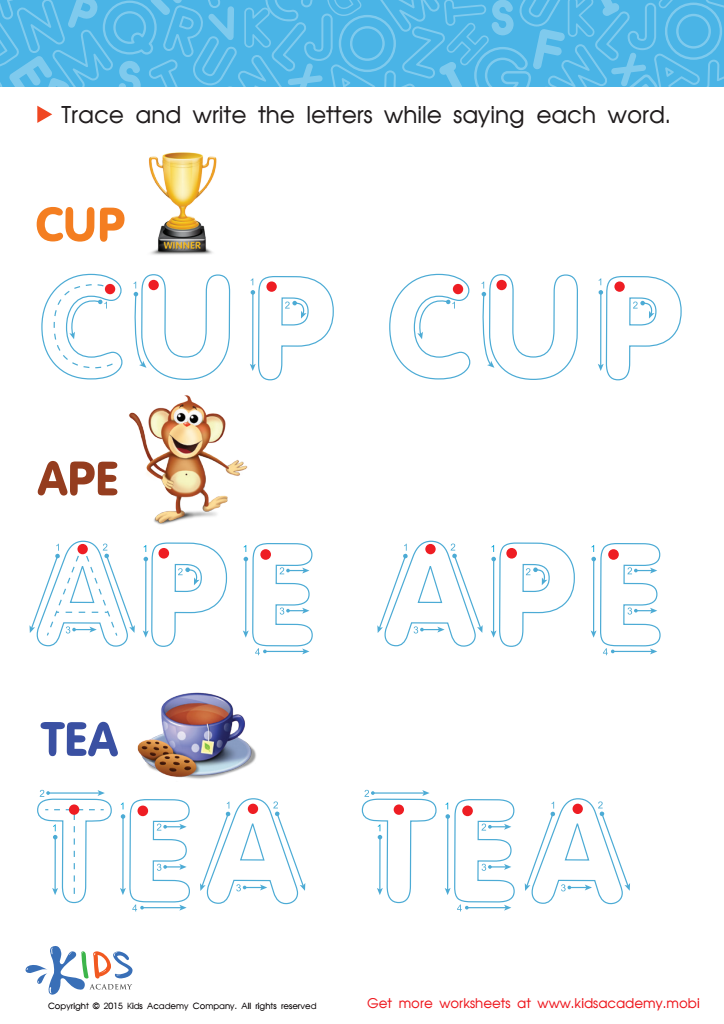
A Cup, an Ape and Tea Spelling Worksheet








Phonics skills are crucial in the early stages of a child's literacy development, typically between ages 3-9. These skills involve connecting sounds to letters, forming the foundation for decoding words, which is essential for reading proficiency. Early phonics instruction ensures that children understand how words are phonetically constructed, which significantly impacts their ability to read and comprehend text.
Why does this matter? Well, the ability to read fluently and comprehend material influences every other educational subject. Mastery in phonics allows children to move beyond simple word recognition to fluent reading, which lays the groundwork for academic success. Research consistently shows that children with strong phonics skills are not only better readers but are also more proficient in spelling and writing.
Phonics tracing exercises further solidify these skills by engaging multiple senses. Tracing letters helps children physically learn the shape and direction of each letter, reinforcing memory through tactile feedback. This multisensory approach can make learning more engaging and effective, catering to different learning styles.
Given these points, parents and teachers should be keenly interested in phonics skills and normal tracing words within this age range. Active participation in phonics education ensures that children build a strong literacy foundation, setting the stage for lifelong learning and academic achievement.