Letter recognition Normal Elementary Phonics Worksheets for 3-Year-Olds
3 filtered results
Difficulty Level
Grade
Age
-
From - To
Subject
Activity
Standards
Discover our engaging Letter Recognition Normal Elementary Phonics Worksheets, specially designed for 3-year-olds! These worksheets provide a playful and interactive way to introduce young learners to the alphabet. With vibrant illustrations and fun exercises, children will enhance their letter recognition skills through activities like tracing, matching, and identifying letters. Each worksheet encourages early literacy development while promoting fine motor skills. Perfect for home or classroom use, our printable resources make learning letters enjoyable and effective. Get ready to spark a love for reading in your little ones with our comprehensive range of phonics worksheets that support their essential learning milestones!
Favorites
With answer key
Interactive
Long and Short U Worksheet
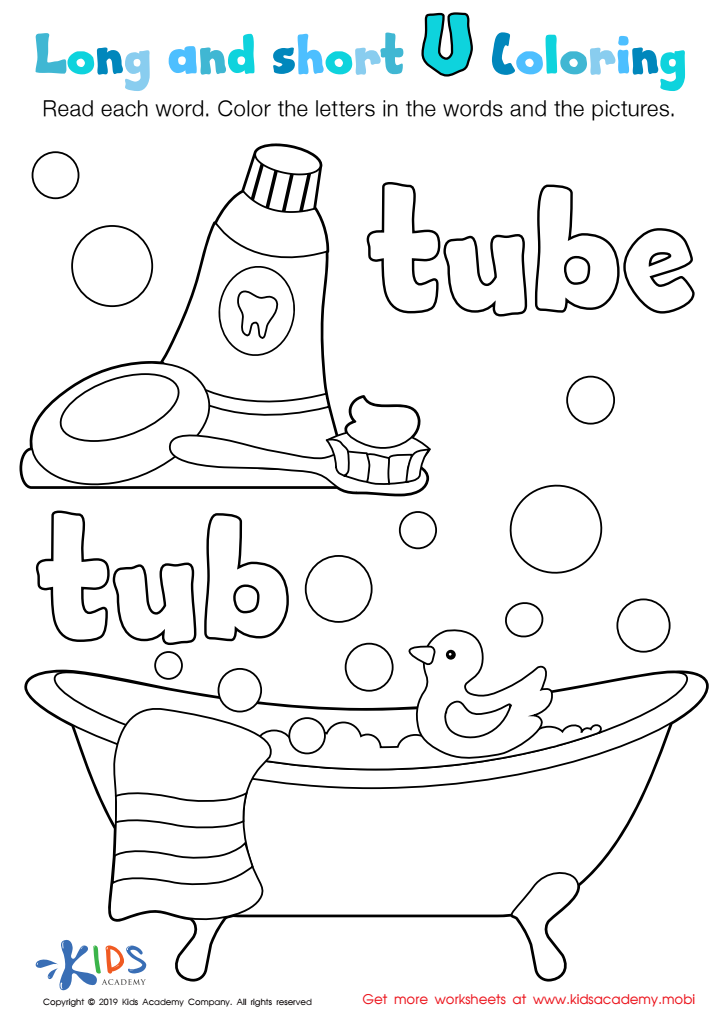
Revised: Spice up your lesson on long and short vowels with this fun printout! Kids read the words "tube" and "tub," then reinforce the sound by coloring in the words and pictures. It's a great way to make phonics class enjoyable!
Download (PDF)
 Assign to My Students
Assign to My Students
Long and Short U Worksheet
Worksheet
Long and Short E Worksheet
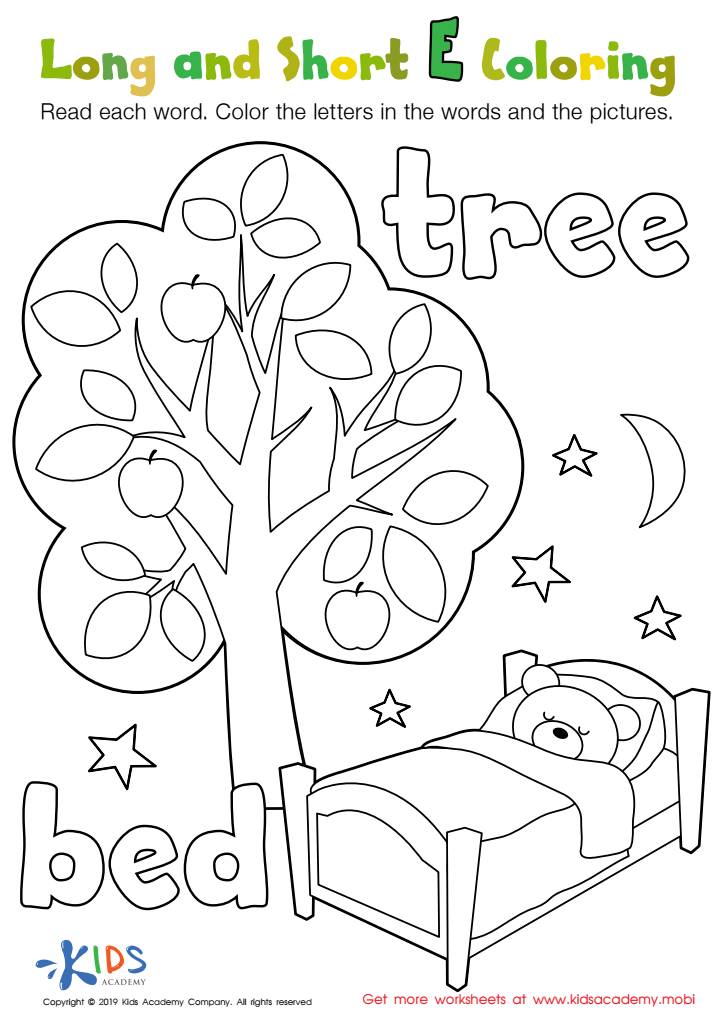
This fun printout makes learning phonics enjoyable for Grade 3 students. Get them to read the words “tree” and “bed” to recognize the different sounds of the letter “E”. After hearing the words they can color the words and the pictures to understand differences between long and short vowels.
Download (PDF)
Assign to My Students
Assign to My Students
Long and Short E Worksheet
Worksheet
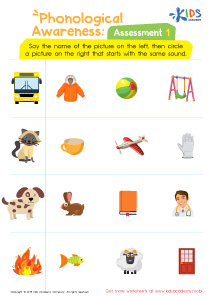
Phonological Awareness: Assessment 1 Worksheet
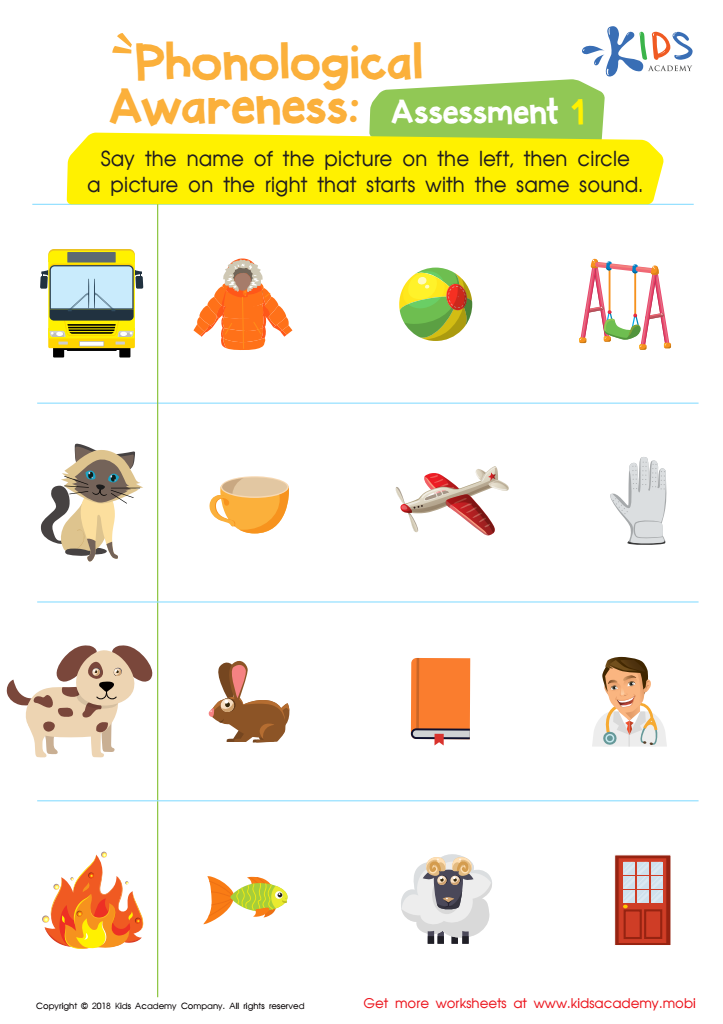
This worksheet helps kids build key phonics skills for pre-reading. They say each picture name aloud, focusing on the starting sound. Then, they match the sound with an image in the same row. Use as a checkpoint for kindergarten or grade 1 phonics readiness.
Phonological Awareness: Assessment 1 Worksheet
Worksheet
Join Kids Academy for Free
Who is primarily going to use this learning content?




Letter recognition is a foundational skill in early childhood education, particularly in phonics instruction for 3-year-olds. This developmental milestone is crucial for several reasons. First, it lays the groundwork for literacy, enabling children to decode written language and understand that letters represent sounds. This understanding is essential for reading and writing in later years.
Parents and teachers should care about this because early exposure to letter recognition fosters confidence and a love for reading. Children who can identify letters are more likely to engage with books, leading to improved vocabulary and comprehension skills. Additionally, when letter recognition is integrated into fun, interactive activities—such as games, songs, and storytelling—they develop a positive attitude toward learning.
Moreover, recognizing letters enhances fine motor skills when children practice writing and manipulating alphabet blocks or cards. This multifaceted approach promotes cognitive development and critical thinking.
Inclusion of letter recognition in the curriculum promotes equity, as low-income children often miss out on early literacy experiences. By prioritizing letter recognition, parents and teachers can cultivate a strong educational foundation that prepares 3-year-olds for future academic success and lifelong learning.