
Vocabulary Building Normal Alphabet Worksheets for 3-Year-Olds
3 filtered results
Difficulty Level
Grade
Age
-
From - To
Subject
Activity
Standards
Discover our engaging Vocabulary Building Normal Alphabet Worksheets designed specifically for 3-year-olds! These worksheets create an interactive learning environment that nurtures early literacy skills while making learning fun. Tailored for young learners, each worksheet encourages children to explore words and enhance their vocabulary through captivating illustrations and activities. As they match words with pictures and trace letters, kids will develop essential language skills, strengthen their understanding of the alphabet, and improve their reading readiness. Perfect for parents and teachers alike, our worksheets support early childhood education and lay the foundation for a lifelong love of learning. Begin the journey today!
Favorites
With answer key
Interactive
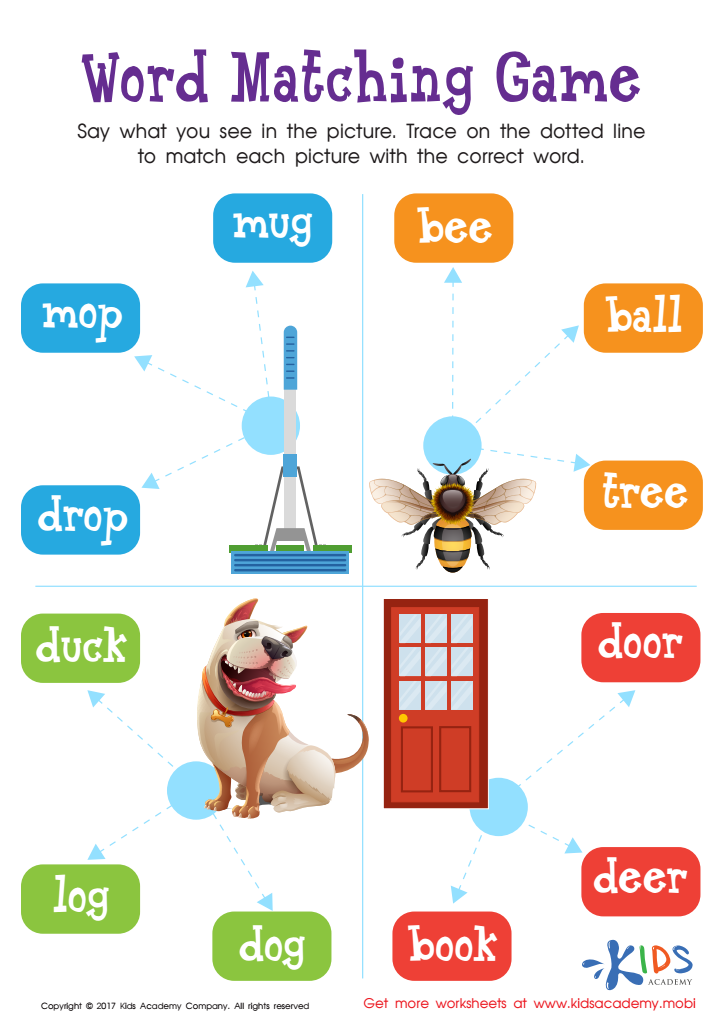
Word Matching Game Worksheet
Help your early reader develop prereading skills with this fun matching worksheet! Visual cues help them learn sight words, decode words in word families, and identify phonetic patterns. They'll practice discerning sounds past initial consonants while saying the name of the picture and finding the matching word - and reading at the same time!
Word Matching Game Worksheet
Worksheet
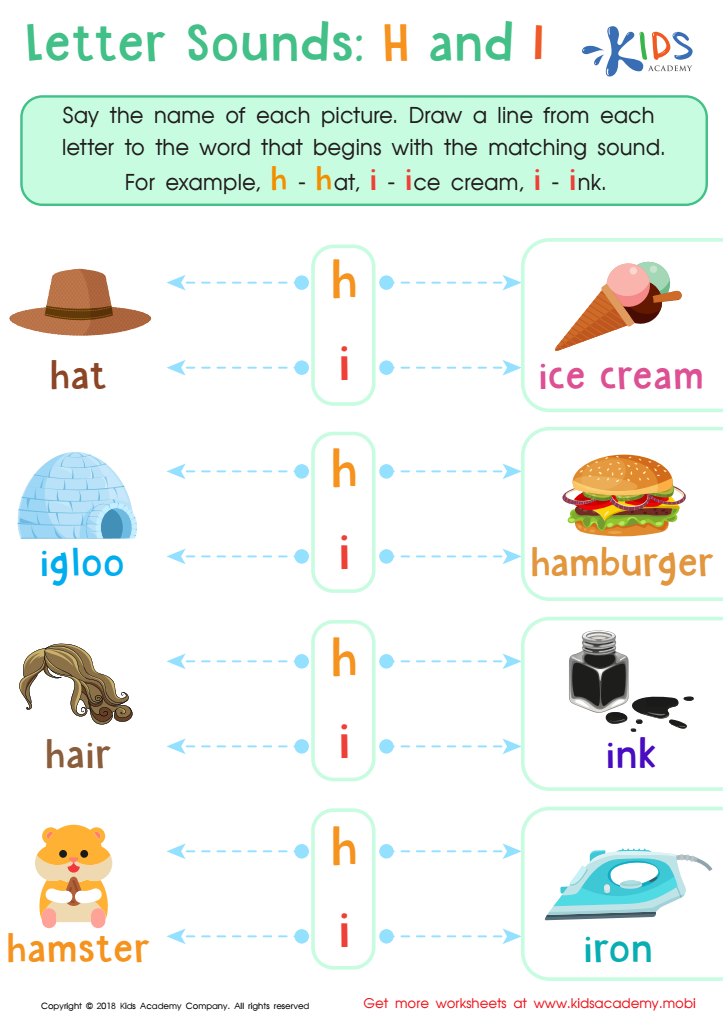
Letter H and I Sounds Worksheet
Preschoolers will have fun and develop reading and writing skills at the same time! They'll use pictures to recognize familiar words and differentiate between 'H' and 'I' sounds. Then they'll trace lines to connect each sound to the picture, improving their fine-motor skills. Bright and cheerful visuals make learning a breeze!
Letter H and I Sounds Worksheet
Worksheet
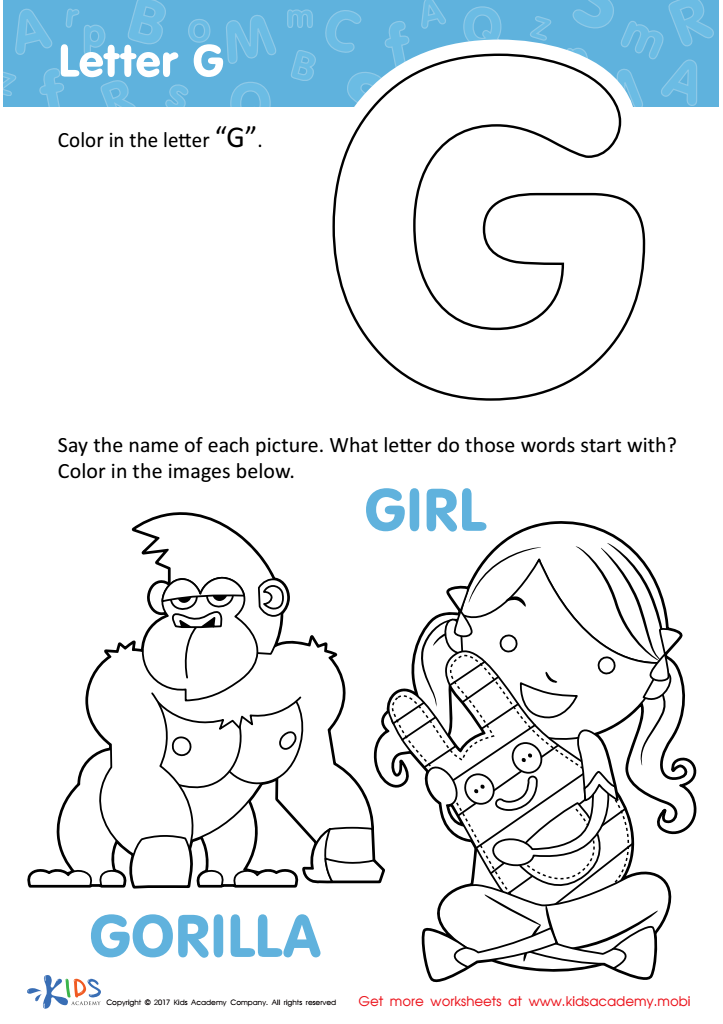
Letter G Coloring Sheet
This "G" coloring page encourages creativity and teaches kids the letter "G" sound. With its fun visuals and familiar words, it's sure to excite your child. Plus, you can talk about the letter’s sound with the pictures given.
Download (PDF)
 Assign to My Students
Assign to My Students
Letter G Coloring Sheet
Worksheet
Join Kids Academy for Free
Who is primarily going to use this learning content?








Vocabulary building in 3-year-olds is crucial for their overall development, impacting both language skills and cognitive growth. During this formative age, children are naturally curious and eager to learn, making it the perfect time to introduce a rich vocabulary. By focusing on vocabulary development using the normal alphabet, parents and teachers can enhance language acquisition in a playful and engaging manner.
A strong vocabulary lays the foundation for effective communication, comprehension, and social interactions. When children learn new words, they can better express their thoughts and emotions, leading to increased confidence in their speaking abilities. Moreover, a broad vocabulary enhances their understanding of stories, instructions, and everyday conversations, furthering their cognitive skills.
Additionally, vocabulary skills are closely linked to future academic success. Early literacy development can pave the way for better reading and writing abilities in the later years. Engaging activities such as storytelling, singing, and interactive games can make the learning process enjoyable and memorable.
In summary, investing time in building vocabulary for 3-year-olds is essential for their linguistic and cognitive growth, fostering communication skills that will benefit them throughout their lives. Parents and teachers play a vital role in nurturing this critical aspect of development.







