Rhyming skills development Normal Phonics Worksheets for 3-Year-Olds
3 filtered results
-
From - To
Enhance your 3-year-old's phonics journey with our engaging Rhyming Skills Development worksheets! Designed to cultivate early literacy, these worksheets introduce the rhythm and sound patterns essential for building strong reading foundations. Young learners will enjoy fun activities that promote rhyming recognition through colorful illustrations and simple words. Our resources encourage repetition and reinforce language skills, making learning enjoyable and interactive. Perfect for preschool educators and parents looking to support vocabulary expansion and phonemic awareness. Empower your child to explore the magical world of rhymes while developing essential skills for their future reading success. Start their phonics adventure today!
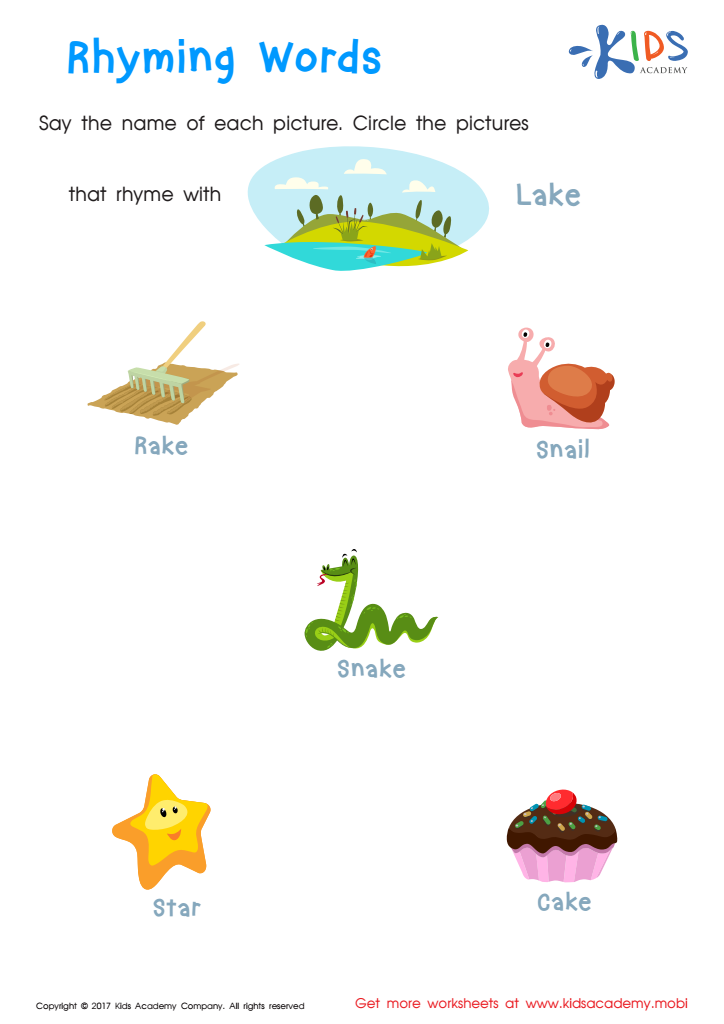
Rhyming Words Rhyming Worksheet
 Assign to My Students
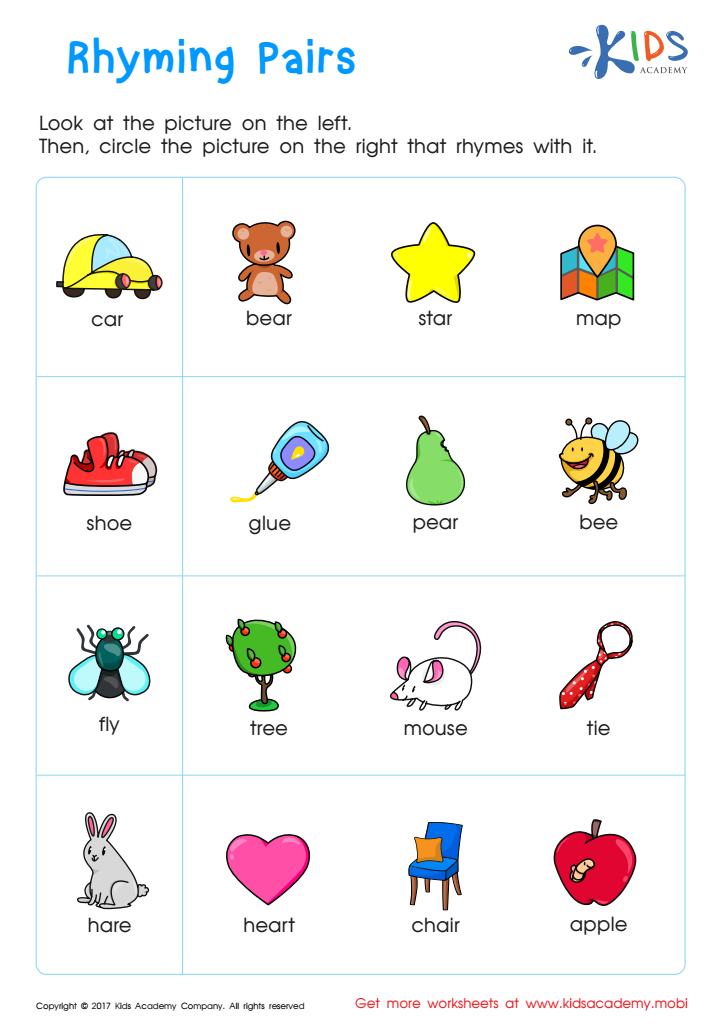
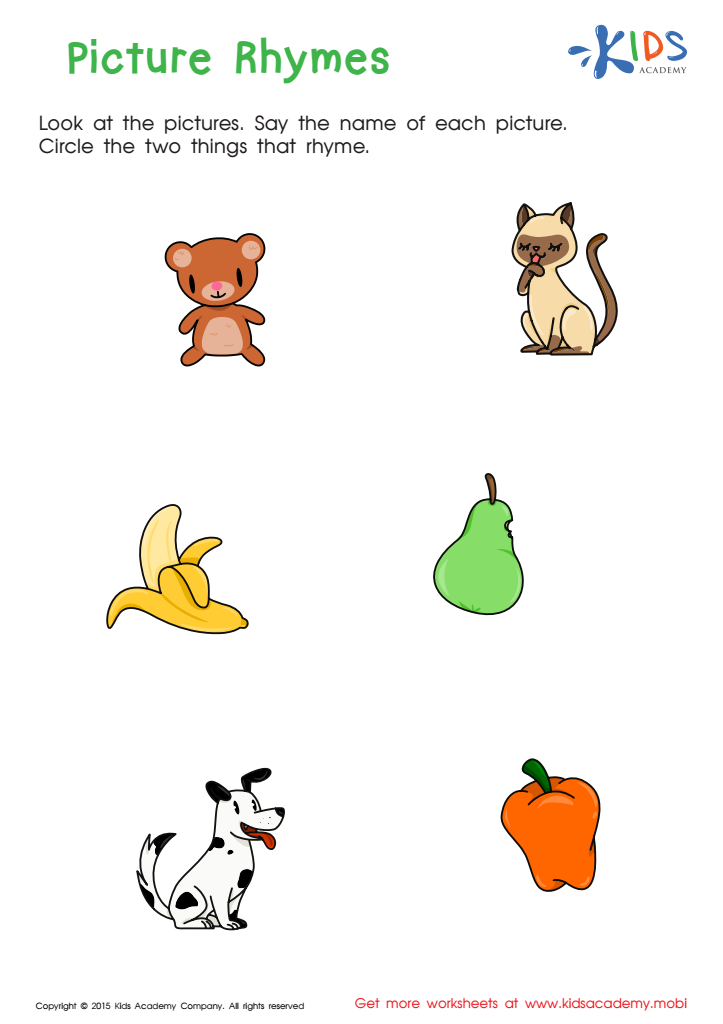
First Words: Picture Rhymes Worksheet








Rhyming skills and phonics development are fundamental components of early literacy that significantly impact a child's reading and language abilities. For three-year-olds, engaging in rhyming activities helps to strengthen their phonemic awareness, the ability to recognize and manipulate sounds in spoken language. By playing with words that sound alike, children learn to distinguish different phonemes, laying a solid foundation for decoding words as they begin to read.
Moreover, rhyming encourages vocabulary expansion and enhances listening skills, which are crucial for effective communication. Children who can recognize and produce rhymes often enjoy a variety of linguistic experiences, boosting their confidence in using language creatively.
For teachers and parents, fostering these skills provides an enjoyable pathway to literacy. Rhyming games, songs, and stories make learning fun and interactive, promoting a love for reading from an early age. As young children engage with phonics through rhyming, they also develop critical thinking skills, as they explore patterns and relationships in language.
Ultimately, prioritizing rhyming skills and phonics at this age creates a vital stepping stone toward future academic success, enabling children to become proficient readers and confident communicators.







