
Vocabulary development Normal Phonics Worksheets for 3-Year-Olds
5 filtered results
Difficulty Level
Grade
Age
-
From - To
Subject
Activity
Standards
Boost your 3-year-old's language skills with our Vocabulary Development Normal Phonics Worksheets! Specially designed for toddlers, these engaging and educational worksheets are perfect for building a strong foundation in phonics. Each worksheet focuses on helping young learners recognize and pronounce basic sounds, enhancing their vocabulary through fun and interactive activities. Our expertly crafted materials are tailored to capture the curiosity of little ones, ensuring an enjoyable learning experience. Prepare your child for academic success while sparking their love for reading with these essential phonics resources. Explore our collection today and watch your preschooler's vocabulary blossom!
Favorites
With answer key
Interactive
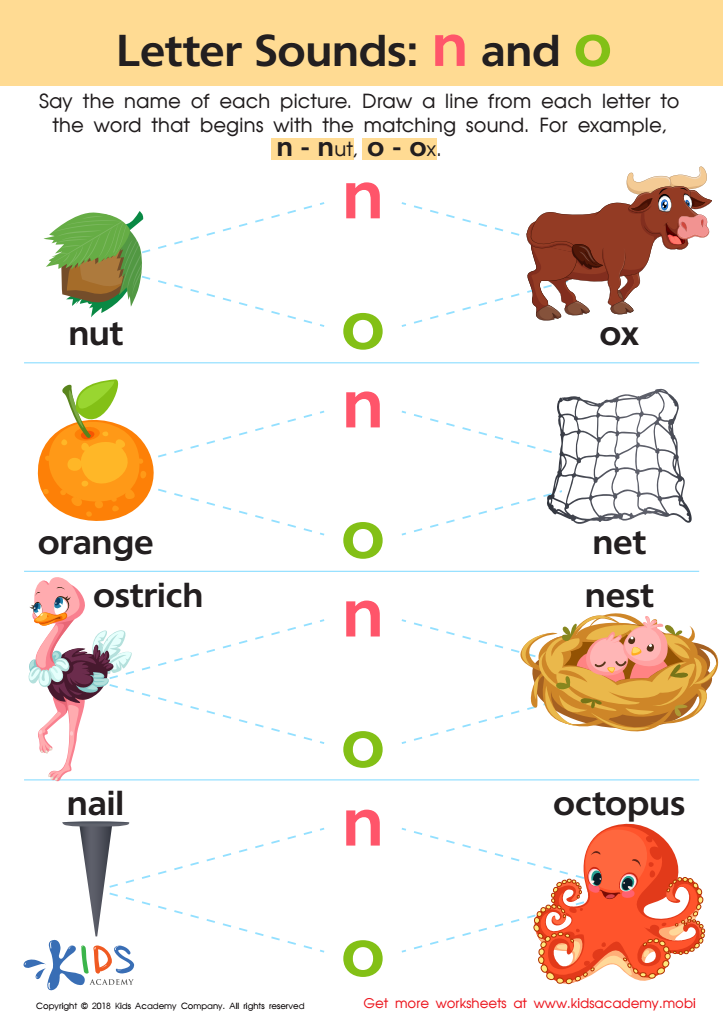
Letter N and O Sounds Worksheet
Help your preschooler learn to recognize the N and O letter sounds with this vibrant worksheet from Kids Academy! Have them say the name of each picture and listen for N or O. Trace the dotted line from letter to its match to complete the phonics review. It's a fun way to help them master the difference between the two sounds!
 Assign to My Students
Letter N and O Sounds Worksheet
Worksheet
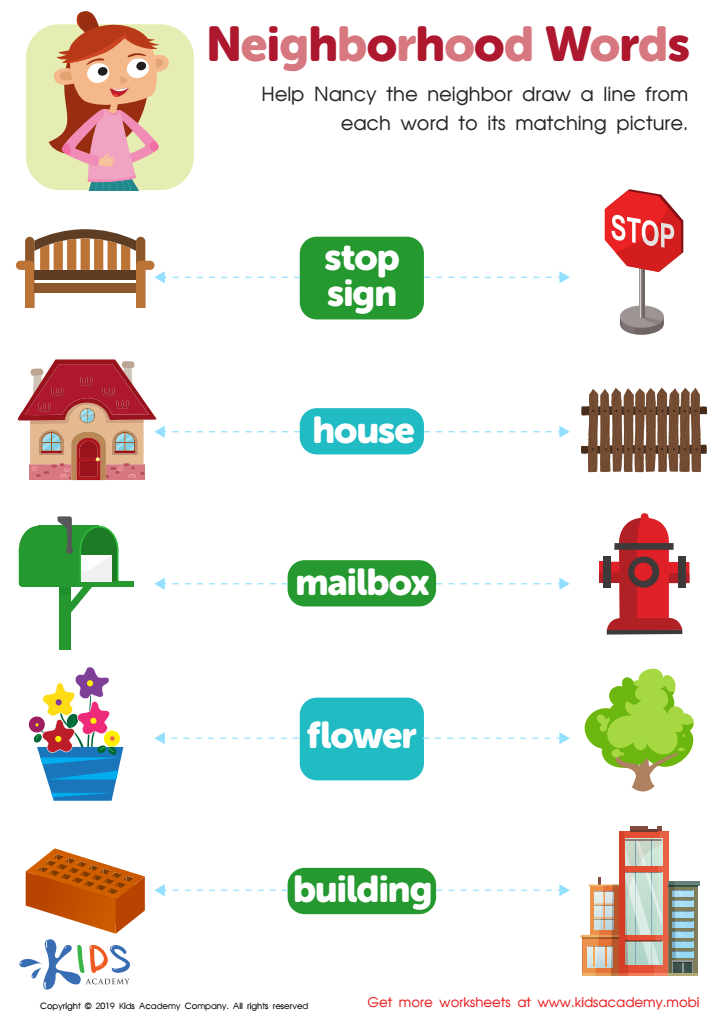
Neighborhood Words Worksheet
Help preschoolers develop life skills and familiarize them with words and concepts with this worksheet! It'll also boost their fine motor skills as they trace lines to match pictures with the words. They'll learn new words and feel more confident in their reading.
Neighborhood Words Worksheet
Worksheet
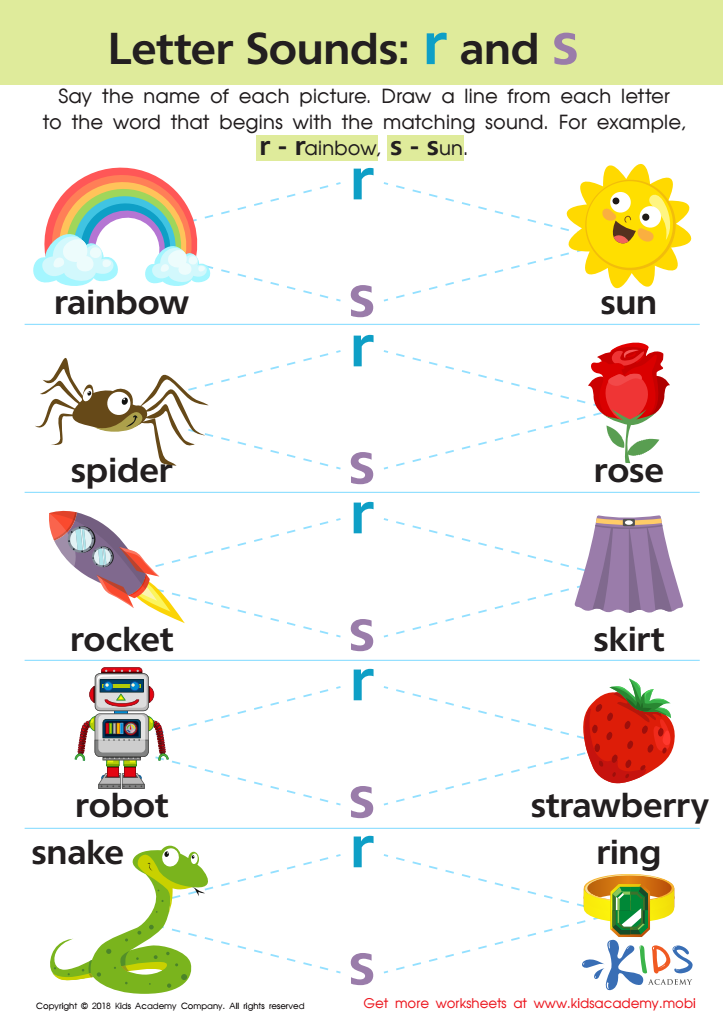
Letter R and S Sounds Worksheet
Kids Academy's phonics worksheet is full of fun and color! Help your child name the pictures and read the words under each one. Does it begin with an R or S? Then, use a pencil to trace the dotted line from the letter to its image. It's a great way to practice phonics skills!
Letter R and S Sounds Worksheet
Worksheet
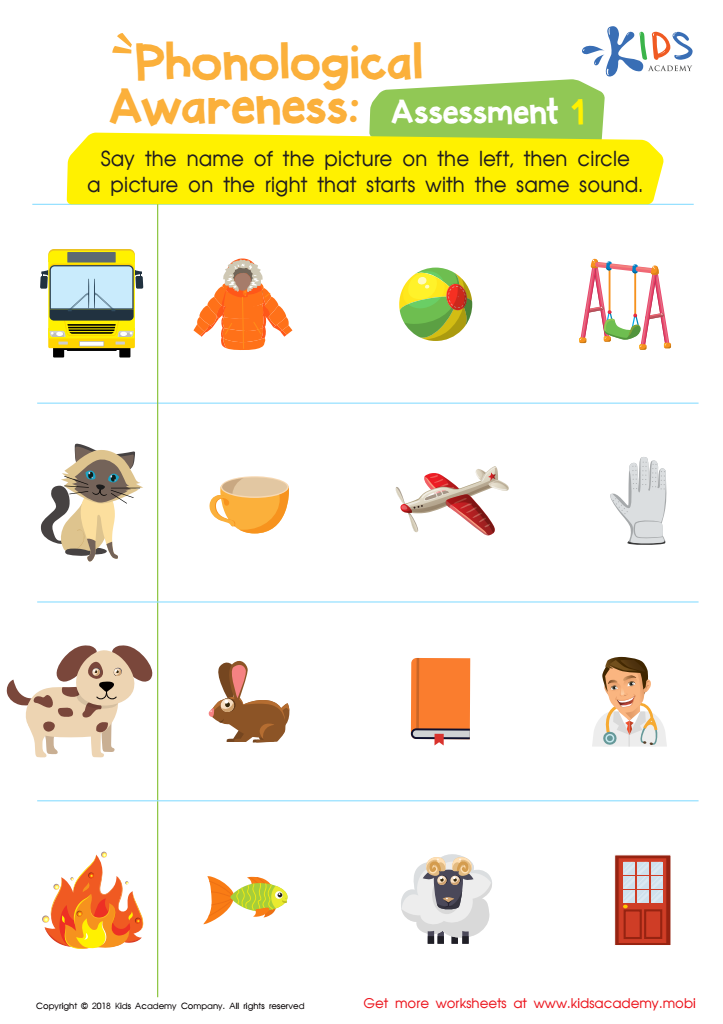
Phonological Awareness: Assessment 1 Worksheet
This worksheet helps kids build key phonics skills for pre-reading. They say each picture name aloud, focusing on the starting sound. Then, they match the sound with an image in the same row. Use as a checkpoint for kindergarten or grade 1 phonics readiness.
Phonological Awareness: Assessment 1 Worksheet
Worksheet
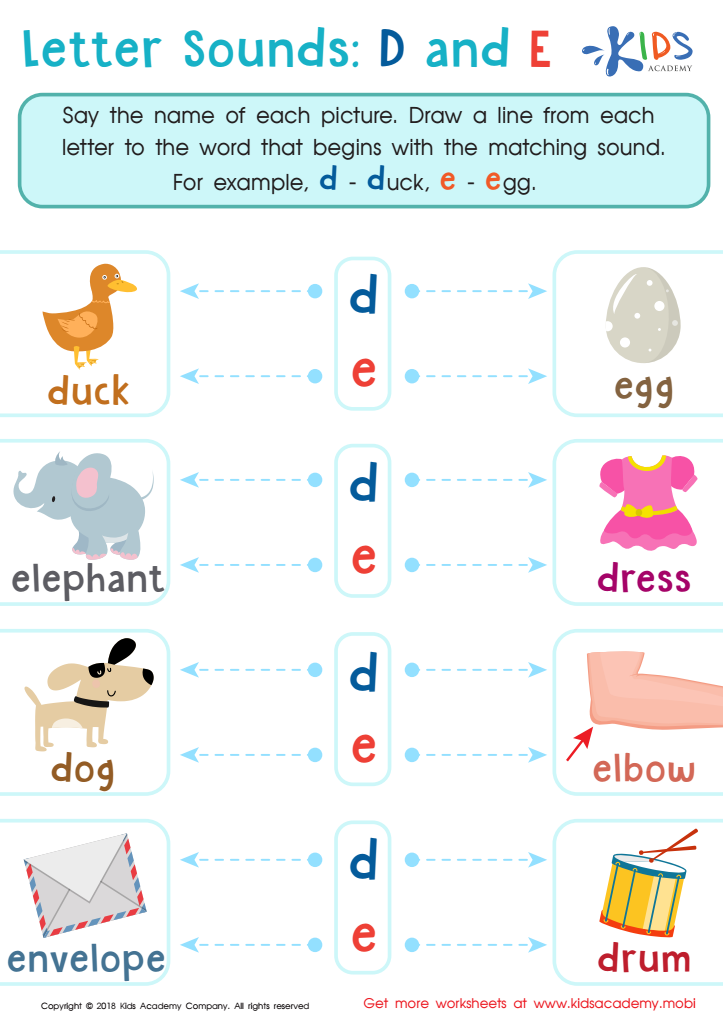
Letter D and E Sounds Worksheet
Kids can use picture clues and visual discrimination to name cheerful pics and isolate the beginning sound. This free PDF worksheet will help them develop phonological awareness, differentiate between "D" and "E", and hone fine-motor skills. It'll also boost their confidence as they become readers.
Letter D and E Sounds Worksheet
Worksheet
Join Kids Academy for Free
Who is primarily going to use this learning content?








Vocabulary development and normal phonics acuity are essential components of a child's early literacy—and parents and teachers should give these areas focused attention, especially with 3-year-olds. At this age, children's brains are rapidly developing, making it an optimal time for language acquisition. Expanding vocabulary prepares them for more complex language skills, such as reading and writing, critical for academic success.
A strong vocabulary enables children to express their thoughts, emotions, and needs more effectively. This enhanced communication reduces frustration and fosters better relationships with peers and adults. Phonics, on the other hand, forms the foundation for decoding and reading words. Familiarity with phonics helps children understand how letters form specific sounds and words, equipping them with the skills needed for reading fluency and comprehension later on.
Setting aside time for vocabulary enrichment and phonics activities aids cognitive development by improving memory, critical thinking, and problem-solving abilities. Literature also reveals that early exposure to rich vocabulary environments enhances a child's curiosity and love for reading, promoting lifelong learning habits. Parents and teachers working together to prioritize these areas provide a balanced and robust early education experience that anchors overall academic success and personal growth.







