Counting skills Normal Addition & Subtraction Worksheets for 3-Year-Olds
5 filtered results
-
From - To
Develop essential math skills with our carefully designed Counting Skills Normal Addition & Subtraction Worksheets for 3-Year-Olds. These printable worksheets from Kids Academy introduce young learners to the basics of counting, addition, and subtraction through engaging, age-appropriate activities. Each sheet provides fun exercises tailored to stimulate curiosity, build confidence, and foster a love for numbers. Perfect for home or preschool environments, these worksheets enhance cognitive development and pave the way for future math success. Encourage your child's mathematical journey today with our thoughtfully crafted resources available for easy download and print.
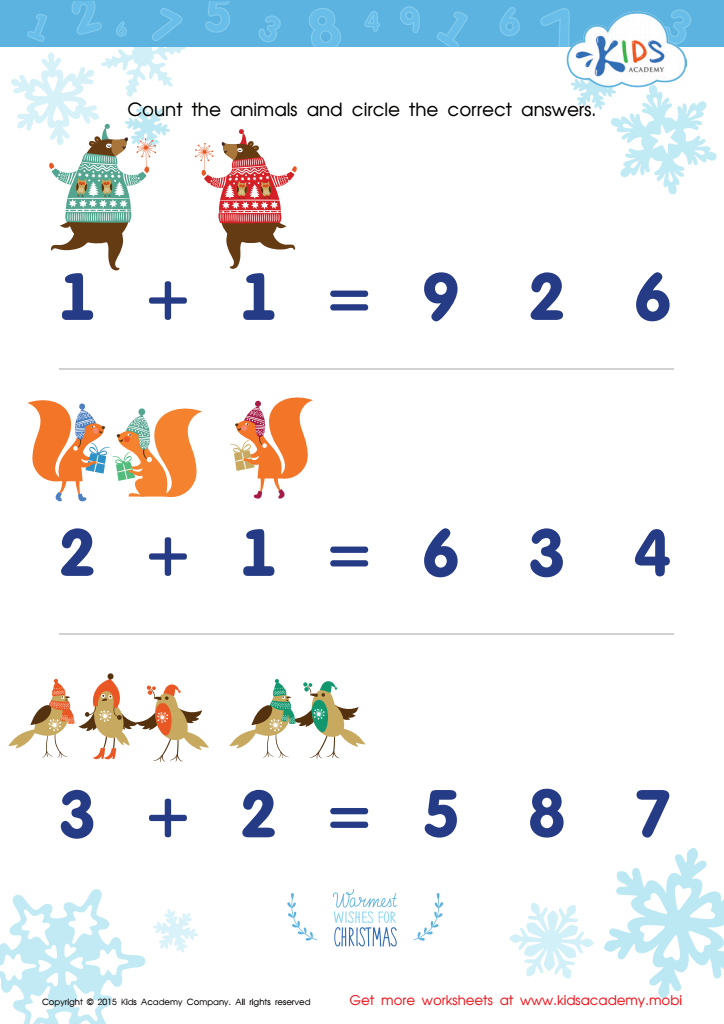
Count Funny Animals Worksheet
 Assign to My Students
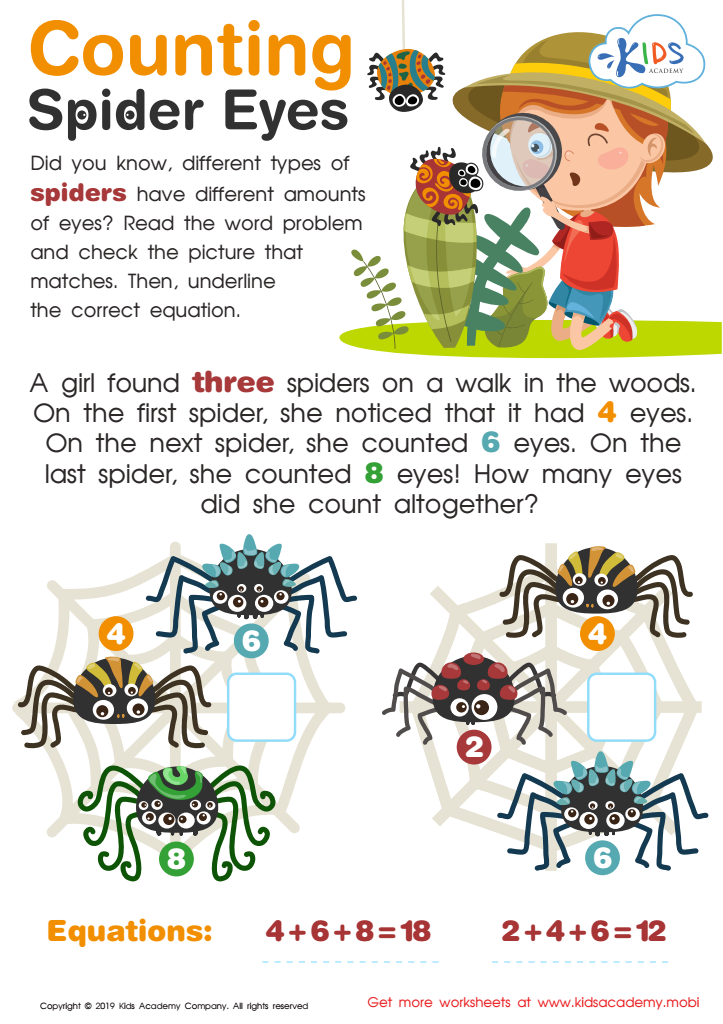
Counting Spider Eyes Worksheet
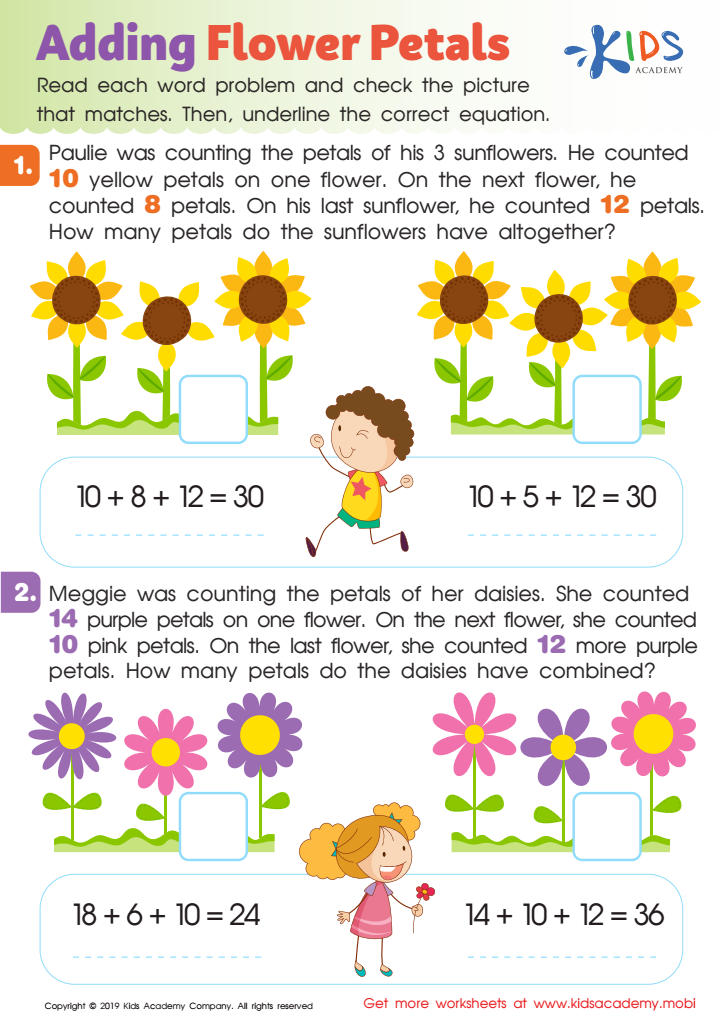
Adding Flower Petals Worksheet
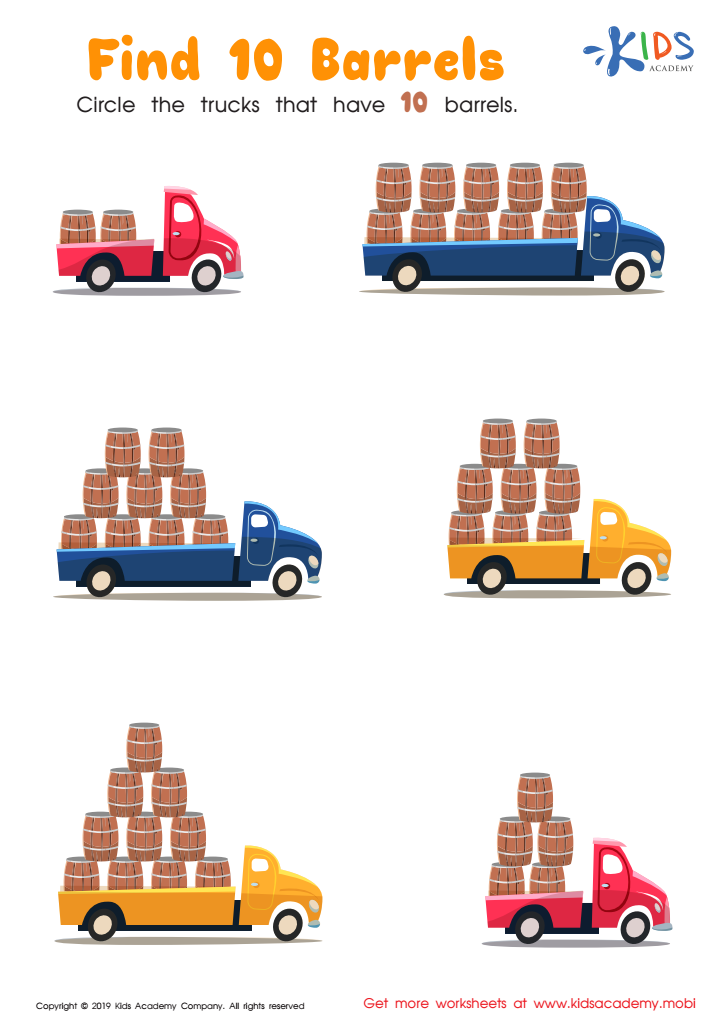
Find 10 Barrels Worksheet
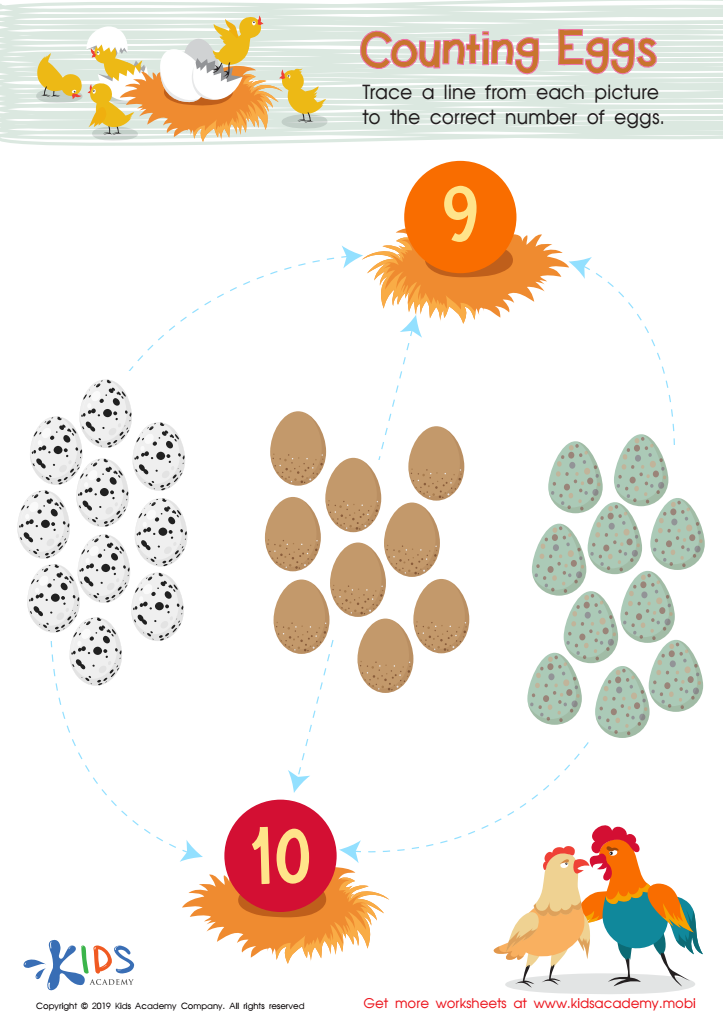
Counting Eggs Worksheet








Counting skills and basic addition and subtraction serve as foundational building blocks of mathematical understanding for young children. For 3-year-olds, engaging in these early math activities fosters cognitive development and sharpens their problem-solving abilities. At this age, children's brains are developing rapidly, and exposing them to counting, addition, and subtraction helps create neural pathways that make more complex mathematical concepts easier to grasp later on.
Parents and teachers play a crucial role in this early stage of learning. By nurturing counting skills, they help children understand the concept of numbers and their sequences, which are essential for recognizing patterns and relationships, critical components in all areas of math. Developing the ability to count objects, comprehend quantities, and perform simple operations like adding and subtracting equips children with the tools for understanding higher-order math in school.
Beyond academics, these skills are also vital for everyday tasks such as sharing toys, following game rules, or setting a table, fostering independence and social interaction. Furthermore, early success in math can boost a child's confidence and inquisitiveness, laying a foundation for a positive attitude toward learning. In summary, instilling counting and basic arithmetic skills in 3-year-olds offers invaluable benefits that extend well beyond the classroom and academia.








