
Analytical skills Normal Reading Worksheets for 3-Year-Olds
4 filtered results
Difficulty Level
Grade
Age
-
From - To
Subject
Activity
Standards
Boost your child's analytical skills with our engaging Normal Reading Worksheets designed specifically for 3-year-olds. These worksheets encourage critical thinking and problem-solving through fun activities that stimulate curiosity and imagination. Young learners will explore patterns, make predictions, and identify sequences, all while enjoying age-appropriate reading exercises. Each worksheet is crafted to promote cognitive development, making learning both effective and enjoyable. Perfect for homeschooling or supplementary learning, these resources lay a strong foundation for future literacy and analytical abilities. Download now to inspire your little one’s love for learning and set them on the path toward academic success!
Favorites
With answer key
Interactive
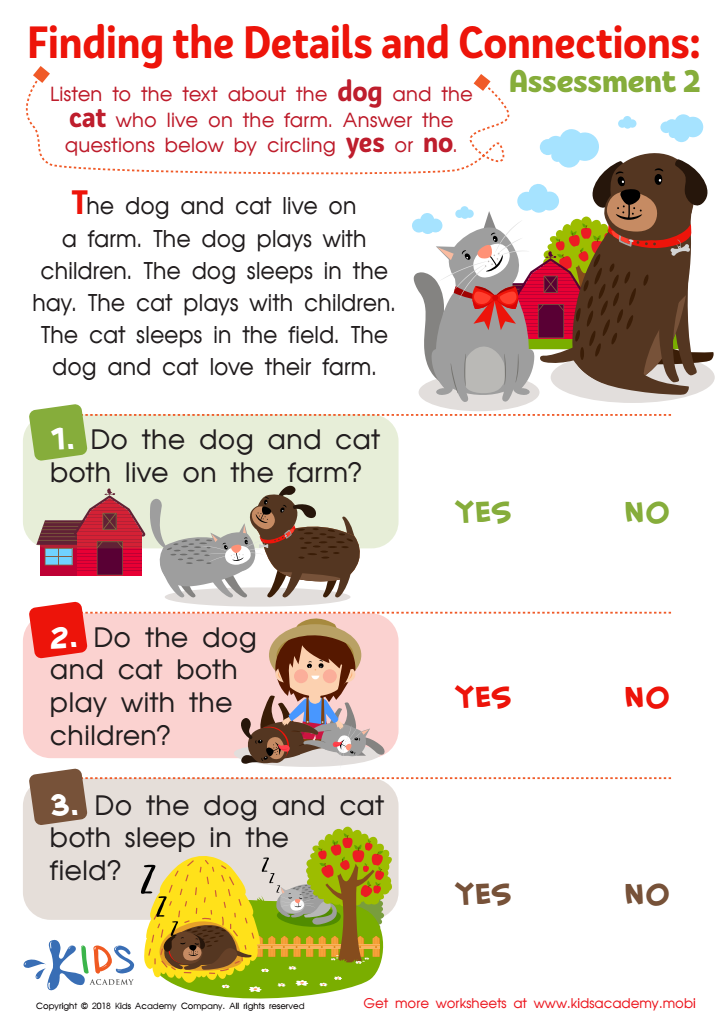
Finding the Details and Connections: Assessment 2 Worksheet
Does your child love animals? If you have pets, they'll relate to the text in this worksheet. Read it aloud to them and help them answer the simple questions by circling yes or no. The story is about a dog and cat living on a farm. Let your child read it aloud to you if they can.
 Assign to My Students
Finding the Details and Connections: Assessment 2 Worksheet
Worksheet
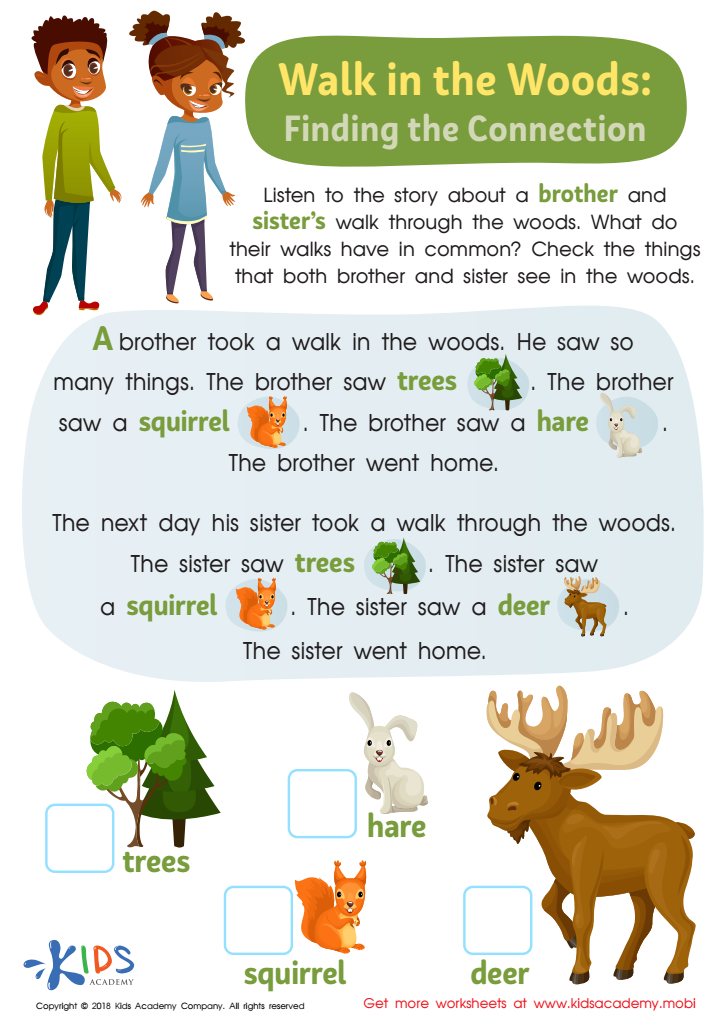
Walk In the Woods: Finding Connections Worksheet
Brother and sister took a walk in the woods to connect with nature and get some exercise. As they went, they noted different things like birds and plants, which they share in this story. Read it to your little ones, and help them check off the items the two saw. It's a great way to learn about nature and enjoy the outdoors.
Walk In the Woods: Finding Connections Worksheet
Worksheet
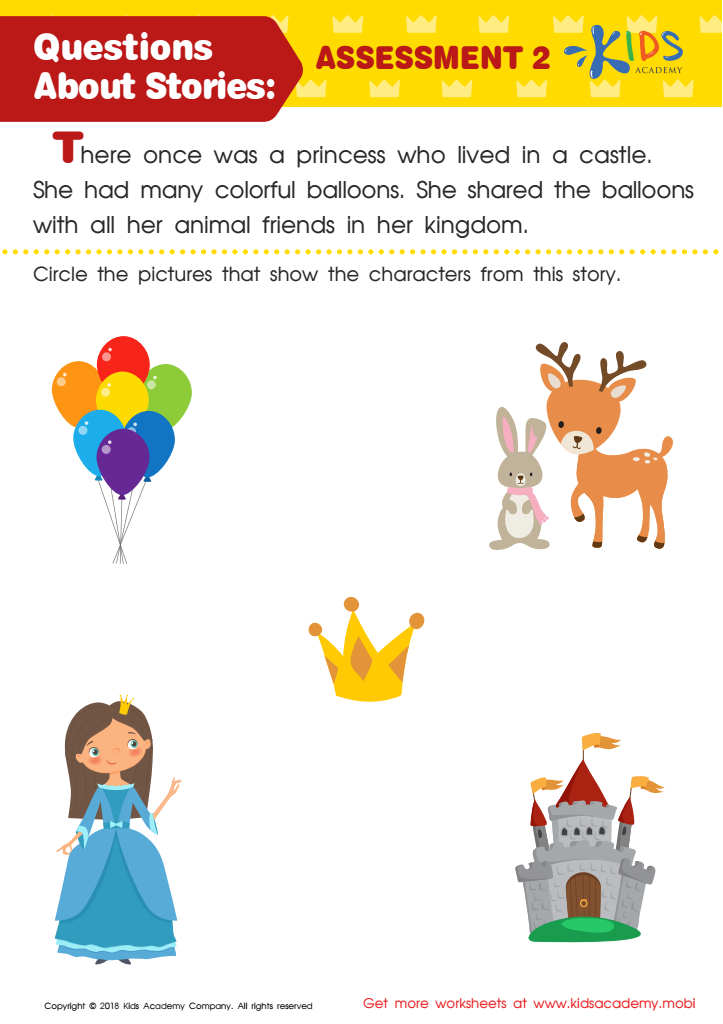
Questions About Stories: Assessment 2 Worksheet
Talk to your child about what a princess is and what activities they associate with that word. Then, read the story to them and help them identify characters in the pictures. Look out for details and ask them questions to ensure they understand.
Questions About Stories: Assessment 2 Worksheet
Worksheet
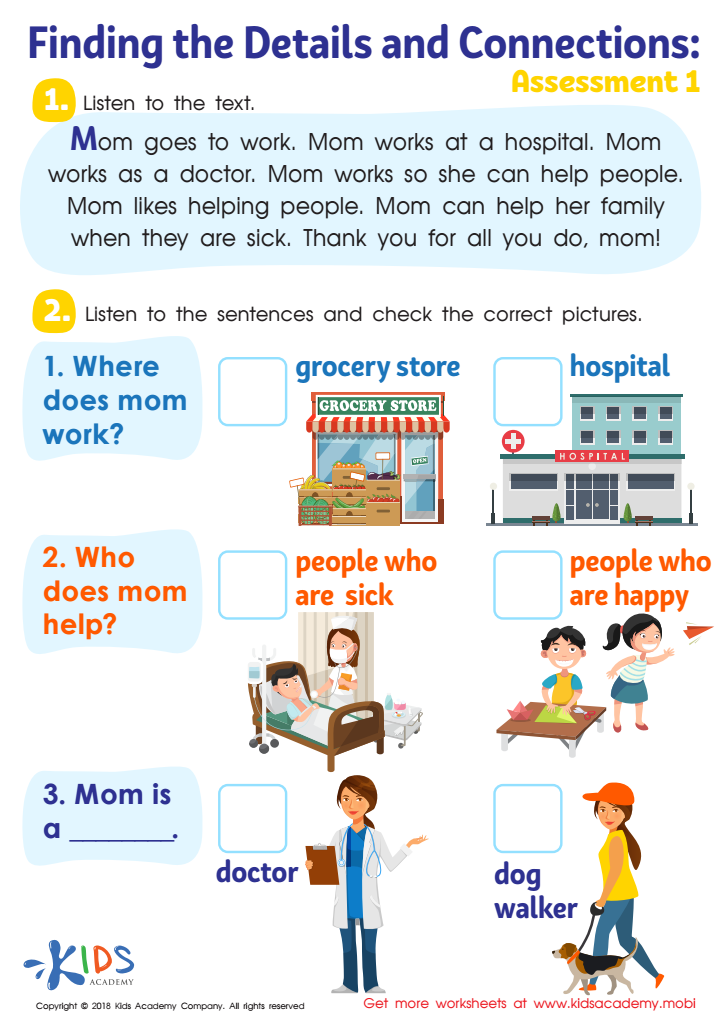
Finding the Details and Connections: Assessment 1 Worksheet
Ask your students what their parents do for a job. Do they know what profession their mom is in and where she works? Professionals have places they go to do their job. In this task, Mom goes to a hospital and is a doctor. Read the text and help them check the right pictures.
Finding the Details and Connections: Assessment 1 Worksheet
Worksheet
Join Kids Academy for Free
Who is primarily going to use this learning content?







Analytical skills are crucial for a child's cognitive development and future academic success, making it important for parents and teachers to pay attention to these abilities in 3-year-olds. At this age, children's brains are rapidly developing, and engaging them in activities that foster analytical skills helps enhance problem-solving, critical thinking, and decision-making.
Normal reading practices can introduce young learners to new vocabulary and concepts, supporting their ability to analyze and make connections. For example, discussing the story and predicting outcomes encourages children to think critically about what they read. This not only improves comprehension but also fosters creativity and imagination.
Additionally, strong analytical skills are a gateway to effective communication and social interaction. When children learn to articulate their thoughts and opinions early on, they build confidence in expressing themselves.
By nurturing analytical skills through reading and related activities, adults help children develop a strong foundation for future learning. These skills are not just essential for academic pursuits; they are vital for lifelong learning and adaptability in an ever-changing world. Therefore, fostering analytical skills in young children should be a priority for both parents and teachers.








