Enhance your 3-year-old's critical thinking skills with our engaging Normal Reading Worksheets! Designed for young learners, these printable worksheets promote cognitive development through fun activities that encourage exploration and problem-solving. Each activity fosters early literacy, helping children decipher images, comprehend simple texts, and make connections between concepts. Our worksheets are colorful and interactive, making learning enjoyable and age-appropriate. Perfect for homeschool settings or classroom use, these resources support your child’s growth in communication and analytical skills while cultivating a love for reading. Dive into a world of learning and watch your little one's critical thinking abilities flourish!

Check out this FREE Trial Lesson on Reading for age 3!

Retell Familiar Stories

Favorites
With answer key
Interactive
  • 3
  • Critical Thinking
  • Reading
  • Normal
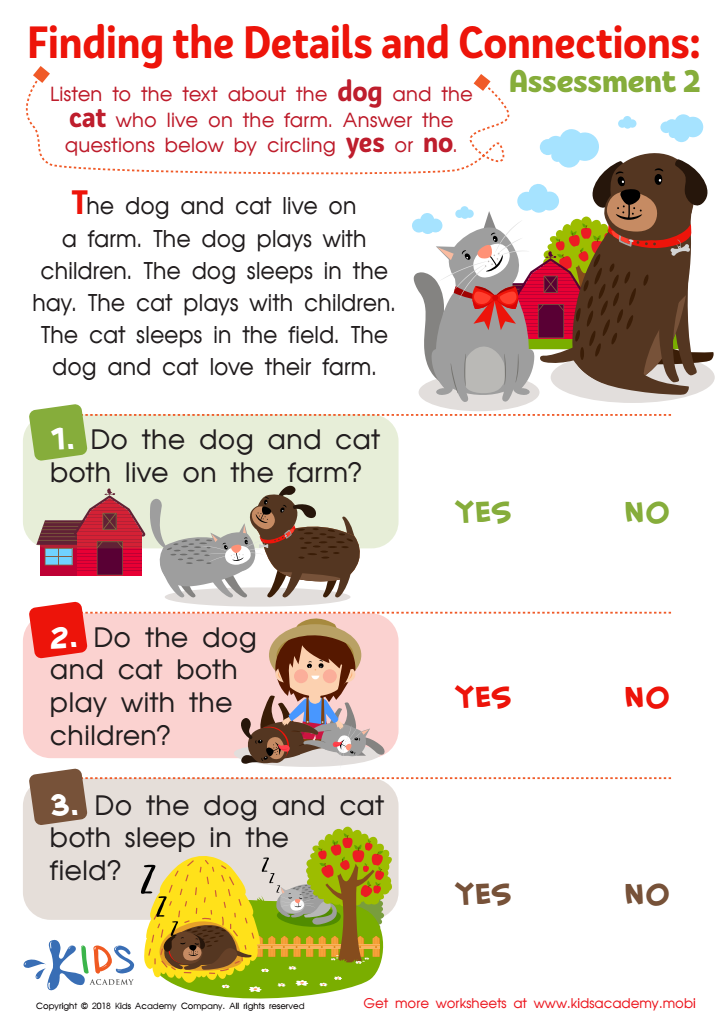
Finding the Details and Connections: Assessment 2 Worksheet

Finding the Details and Connections: Assessment 2 Worksheet

Does your child love animals? If you have pets, they'll relate to the text in this worksheet. Read it aloud to them and help them answer the simple questions by circling yes or no. The story is about a dog and cat living on a farm. Let your child read it aloud to you if they can.
Finding the Details and Connections: Assessment 2 Worksheet
Worksheet
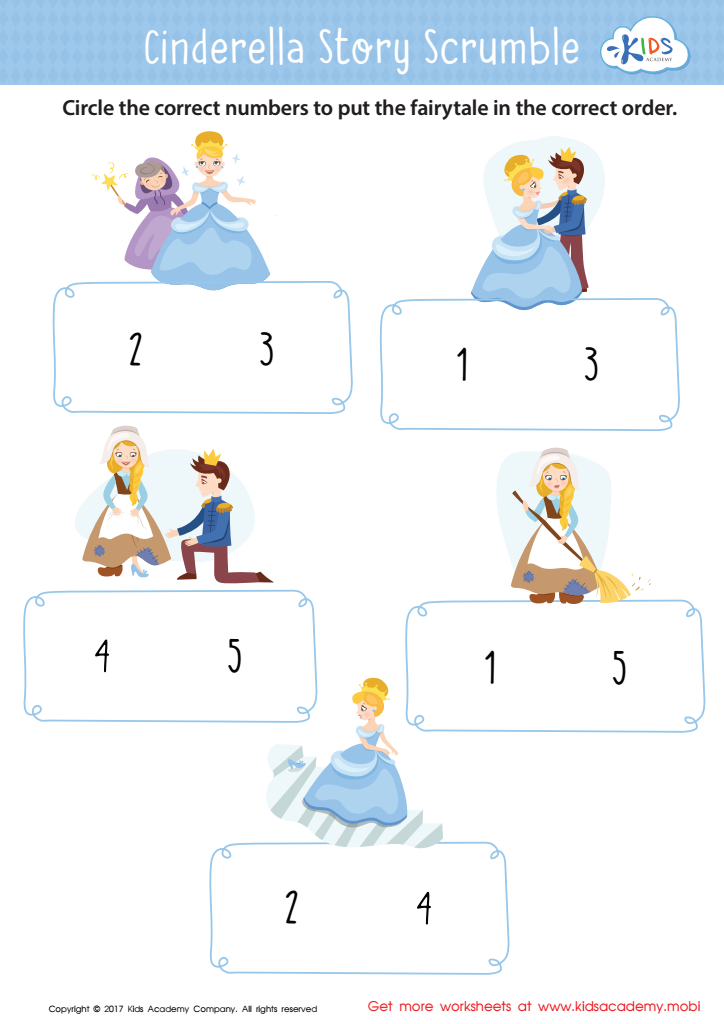
Cinderella story sequencing worksheet

Cinderella Story Sequencing Worksheet
This worksheet helps strengthen reading comprehension skills by getting your child to remember key moments from the Cinderella story. They'll be asked to place pictures in the right order to tell the story.
Cinderella Story Sequencing Worksheet
Worksheet
Picture in Books Worksheet

Picture in Books Worksheet

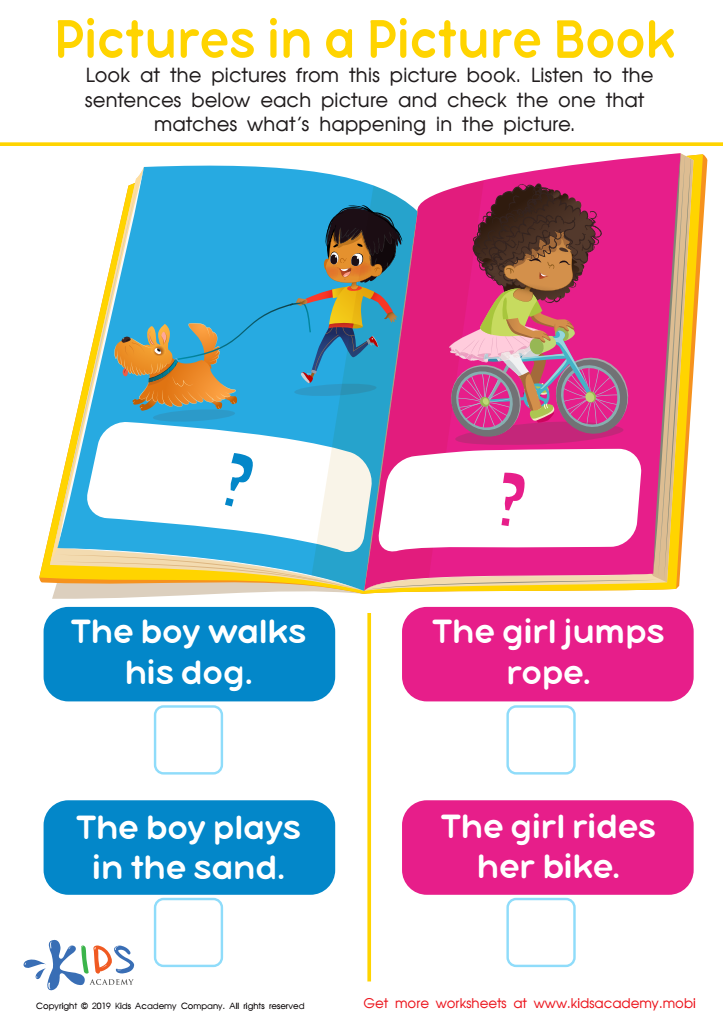
Picture books are popular with students - they're easier to read and understand because of the captions and illustrations. With preschoolers, look at the pictures in the book and read the sentences in the worksheet. Help them choose the one that matches the scene.
Picture in Books Worksheet
Worksheet
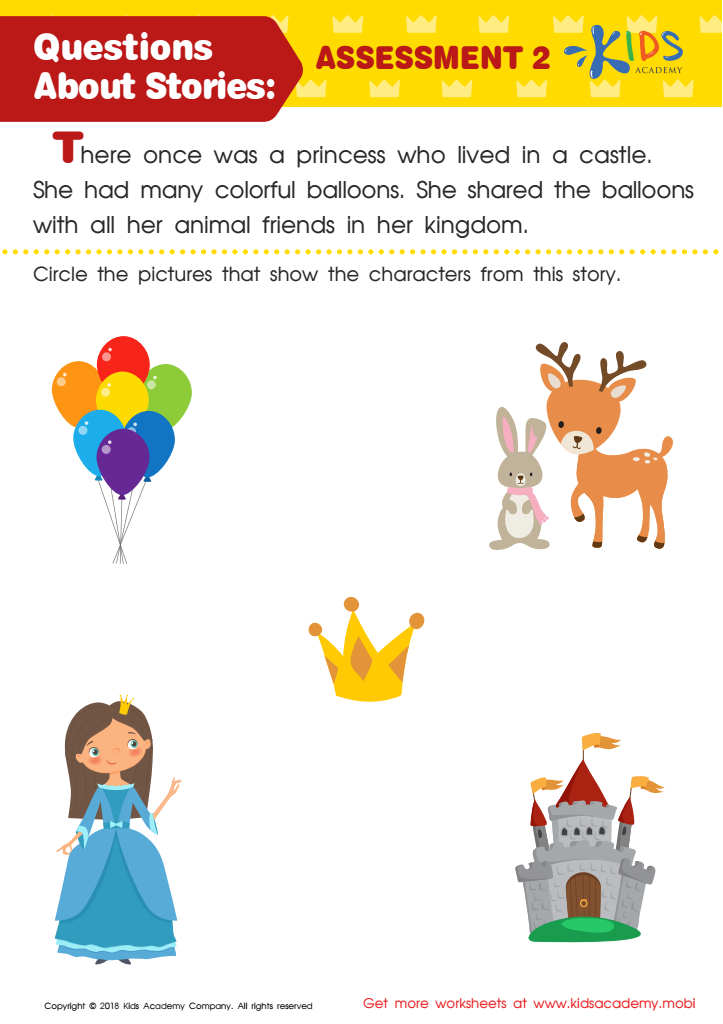
Questions About Stories: Assessment 2 Worksheet

Questions About Stories: Assessment 2 Worksheet

Talk to your child about what a princess is and what activities they associate with that word. Then, read the story to them and help them identify characters in the pictures. Look out for details and ask them questions to ensure they understand.
Questions About Stories: Assessment 2 Worksheet
Worksheet
Craft and Structure of Stories: Assessment 2 Worksheet

Craft and Structure of Stories: Assessment 2 Worksheet

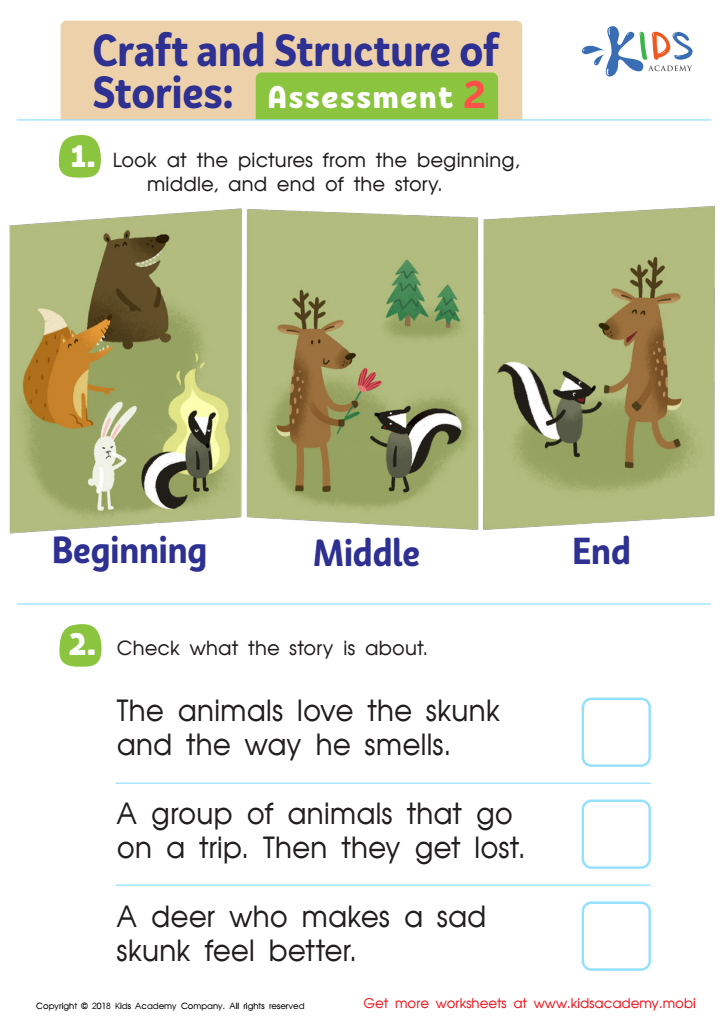
Help your child assess their story sequencing and reading comprehension skills using this cute worksheet! It encourages them to look at the three pictures on the page, each representing a scene from the beginning, middle and end. Ask them what the story is about, then let them check the box next to the correct answer. This is a great way to ensure they understand the main events of a story.
Craft and Structure of Stories: Assessment 2 Worksheet
Worksheet
Picture Books Worksheet

Picture Books Worksheet

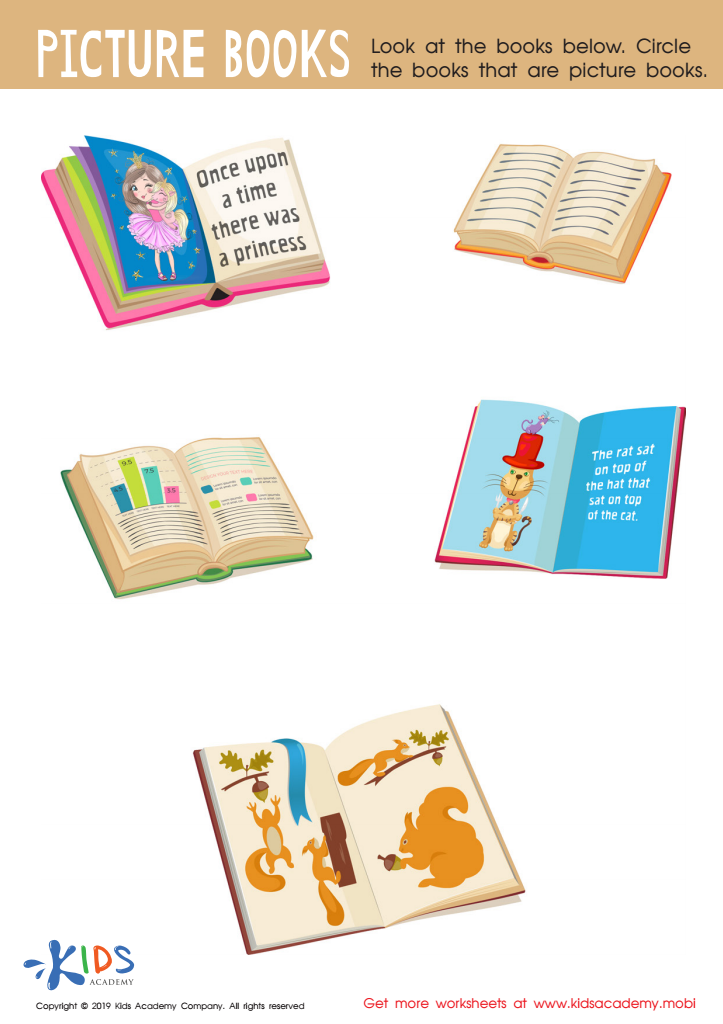
Kids will love this exercise! Get their imaginations going with five colorful picture books. Ask them to circle the books that are picture books and have them enjoy the exciting stories, along with the colorful images. Reading can become that much more enjoyable!
Picture Books Worksheet
Worksheet
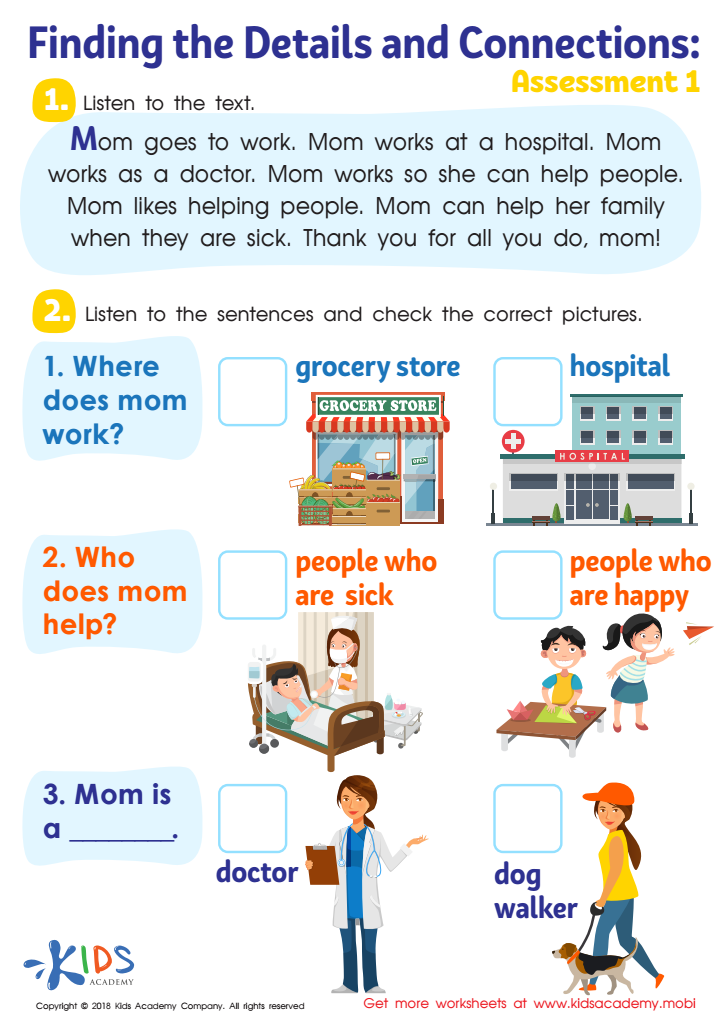
Finding the Details and Connections: Assessment 1 Worksheet

Finding the Details and Connections: Assessment 1 Worksheet

Ask your students what their parents do for a job. Do they know what profession their mom is in and where she works? Professionals have places they go to do their job. In this task, Mom goes to a hospital and is a doctor. Read the text and help them check the right pictures.
Finding the Details and Connections: Assessment 1 Worksheet
Worksheet
Craft and Structure of Informational Texts: Assessment 1 Worksheet


Craft and Structure of Informational Texts: Assessment 1 Worksheet

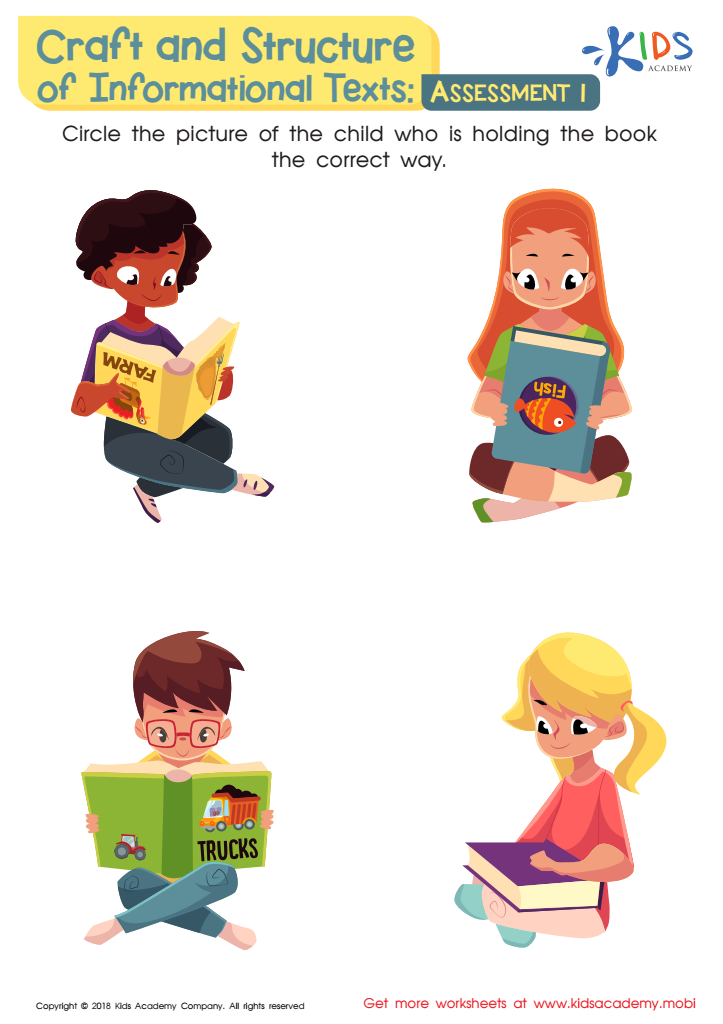
Young children need to know how to hold books correctly when they start reading. This assessment worksheet helps them show they know what to do. They'll look at the pictures and circle the child who is holding the book correctly. It's a great way to tell they are well on their way to becoming lifetime readers!
Craft and Structure of Informational Texts: Assessment 1 Worksheet

Worksheet


Critical Thinking Normal Reading for 3-year-olds is essential for fostering early cognitive development and literacy skills. At this stage, children are naturally curious and eager to explore the world around them. Parents and teachers play a crucial role in nurturing this curiosity through engaging reading practices. Introducing age-appropriate books stimulates critical thinking by encouraging young children to ask questions, make predictions, and relate stories to their own experiences. This form of interactive reading enhances comprehension and fosters an early love for literature.

Moreover, developing critical thinking skills at a young age lays the foundation for problem-solving abilities in later years. Engaged discussions around stories enhance vocabulary and encourage children to articulate their thoughts and feelings—skills vital for effective communication.

Additionally, Critical Thinking Normal Reading empowers children to differentiate between facts and fiction, aiding their understanding of the world and promoting emotional intelligence. It cultivates the ability to analyze situations, consider different perspectives, and make informed decisions from a young age. Involving parents and educators in this process creates a rich, supportive environment where children feel confident to express themselves and develop a lifelong love for learning. Ultimately, investing in critical thinking through reading is an invaluable step toward holistic child development.