Perfect for preschool learners aged 4-5, our "Sound Association: Normal Letter Sounds Worksheets" make phonics fun! These engaging worksheets help children recognize and associate standard letter sounds with everyday objects, animals, and activities. Each carefully designed activity strengthens listening skills and enhances early reading abilities, making it easier for little ones to identify and pronounce letters correctly. The colorful images and interactive exercises keep young minds captivated while providing a foundational understanding of phonemic awareness and sound-letter relationships. Equip your child for literary success with Kids Academy’s expert-approved resources today!

Check out this FREE Trial Lesson on Letter Sounds for age 4-5!

Letter Sound Relationship J-K

Favorites
With answer key
Interactive
  • 4-5
  • Sound Association
  • Letter Sounds
  • Normal
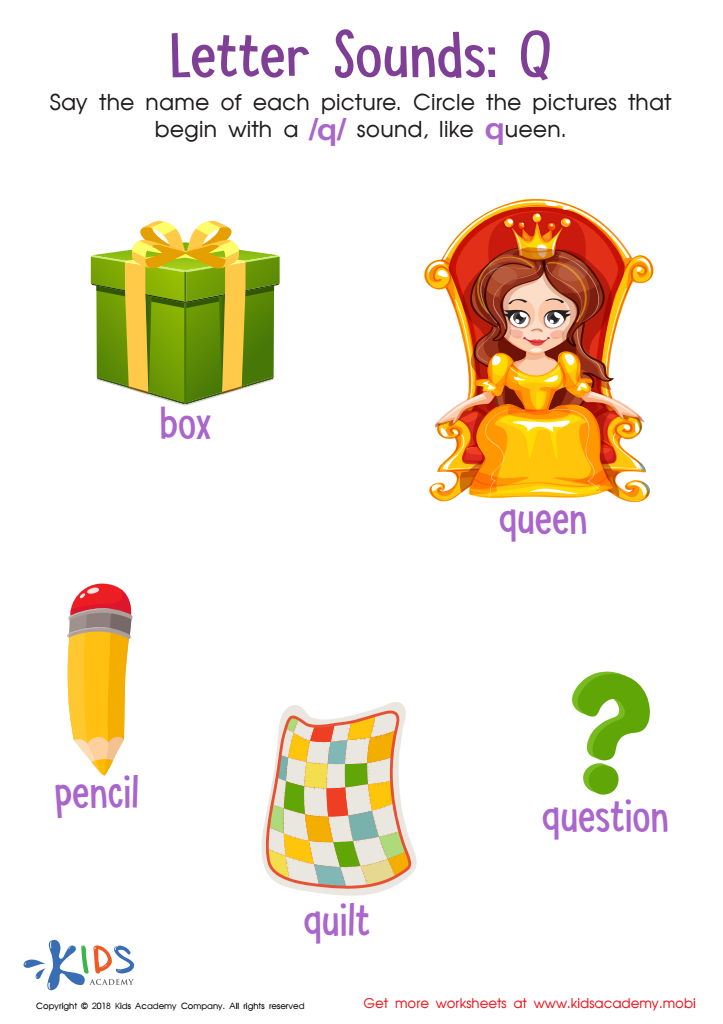
Letter Q Sounds Worksheet

Letter Q Sounds Worksheet

Kids can get confused between "K" and "Q" sounds. Help them learn with this phonics worksheet. They'll name each image and read the word underneath. Point out that words with "Q" also have a "U" which affects how it sounds. Have them circle the matching pictures and watch as they learn this unique letter sound.
Letter Q Sounds Worksheet
Worksheet
Letter K Sounds Worksheet

Letter K Sounds Worksheet

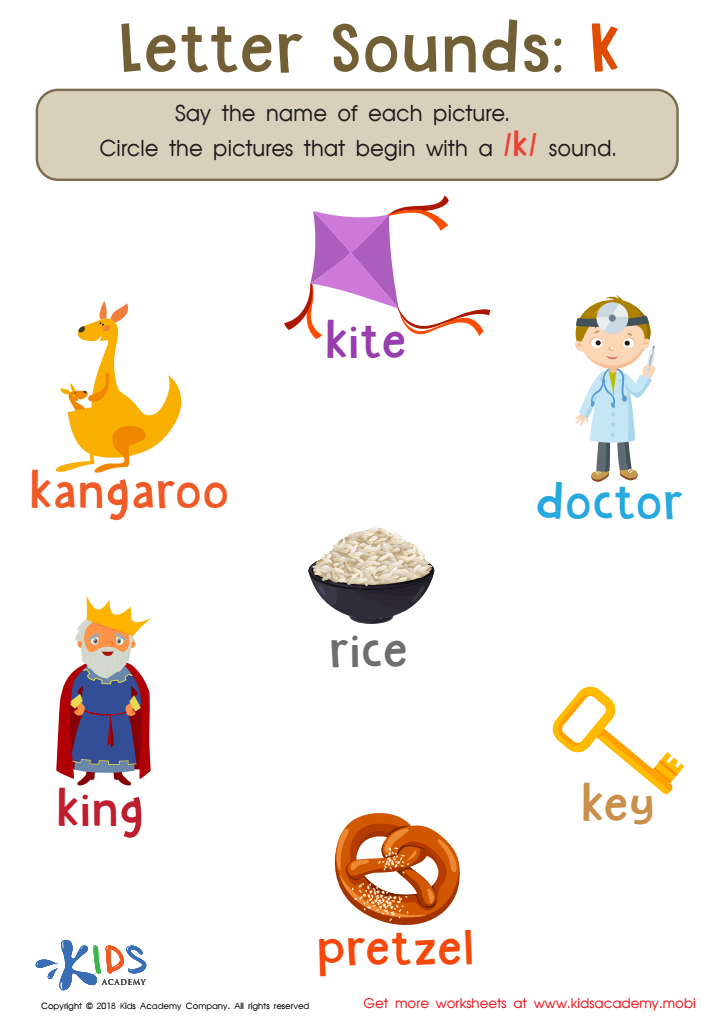
Help your child practice phonics with Kids Academy's illustrated worksheet! Have them look at the pictures, read the words and say them aloud. Only circle those that start with a hard 'K' sound. Perfect for preschoolers and kindergarteners! Plus, they'll learn the silent K used in a few words.
Letter K Sounds Worksheet
Worksheet
Letter p sound worksheet

Letter P Sound Worksheet

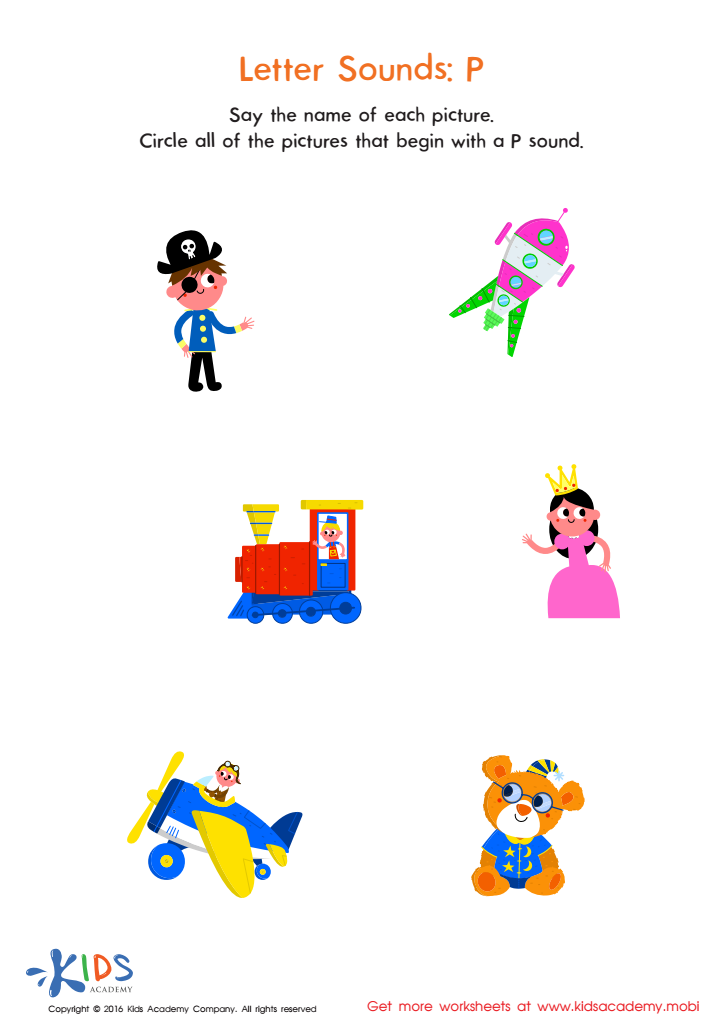
Think P! Kids practice phonics with this fun letter P worksheet. With delightful illustrations, they'll sound out simple words and get closer to reading.
Letter P Sound Worksheet
Worksheet
Letter B and C Sounds Worksheet

Letter B and C Sounds Worksheet

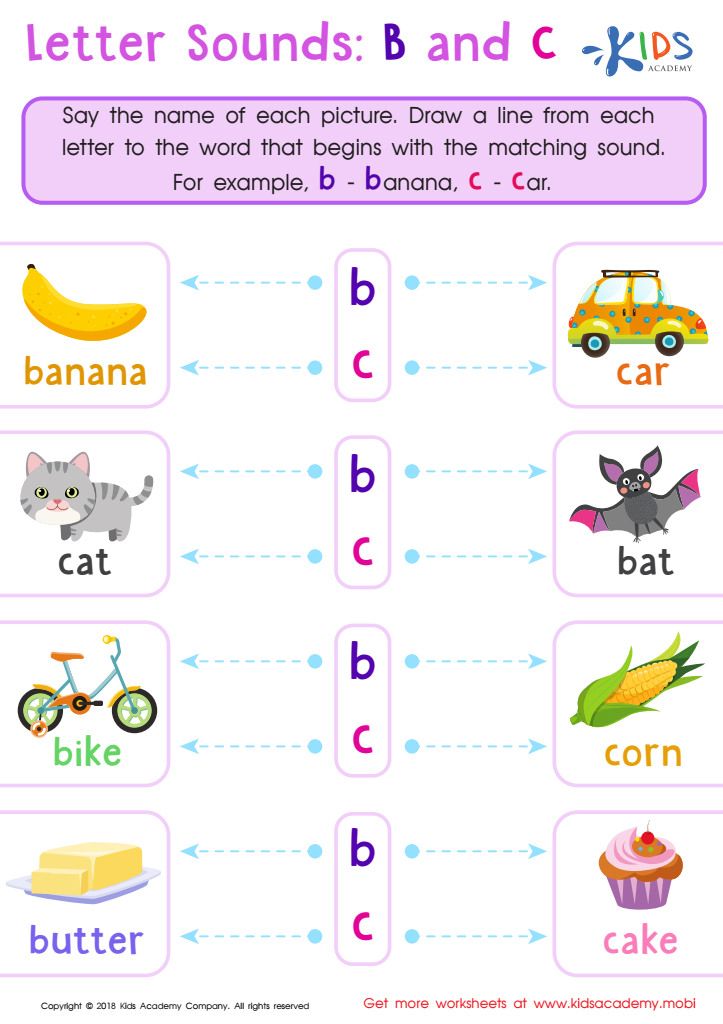
This fun worksheet offers bright, engaging pictures and helps kids learn to distinguish between the sounds of "B" and "C". With the use of pictures and familiar items, kids will trace lines to the correct initial consonant sound, while also developing fine-motor skills. It's a great way to build decoding ability!
Letter B and C Sounds Worksheet
Worksheet
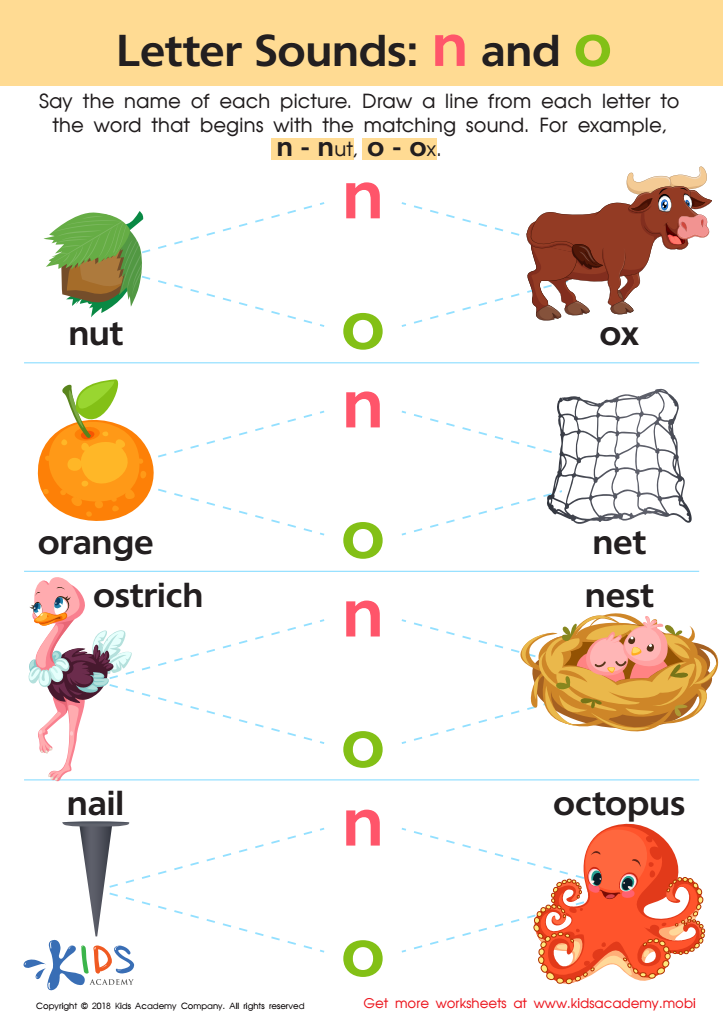
Letter N and O Sounds Worksheet

Letter N and O Sounds Worksheet

Help your preschooler learn to recognize the N and O letter sounds with this vibrant worksheet from Kids Academy! Have them say the name of each picture and listen for N or O. Trace the dotted line from letter to its match to complete the phonics review. It's a fun way to help them master the difference between the two sounds!
Letter N and O Sounds Worksheet
Worksheet
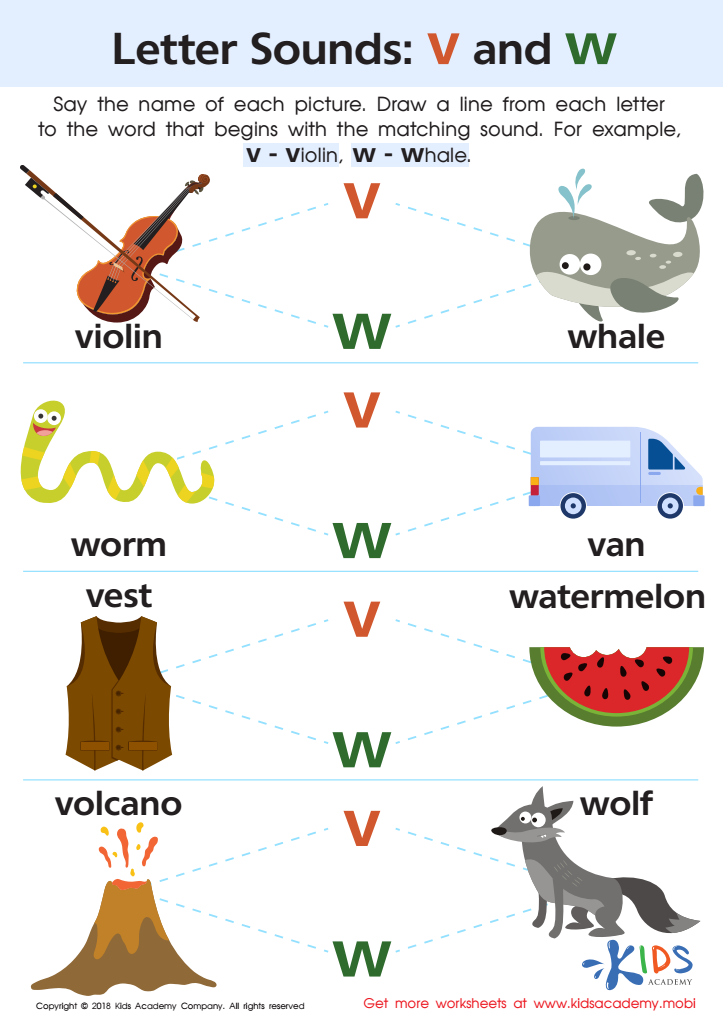
Letter V and W Sounds Worksheet

Letter V and W Sounds Worksheet

Help your child master the sounds of W & V while completing this fun phonics worksheet. Have them trace the dotted line from letter to picture while saying words like "worm", "violin" and "van" aloud to notice how each word begins with either W or V. Listen and pay attention to the pronunciation to complete the practice.
Letter V and W Sounds Worksheet
Worksheet
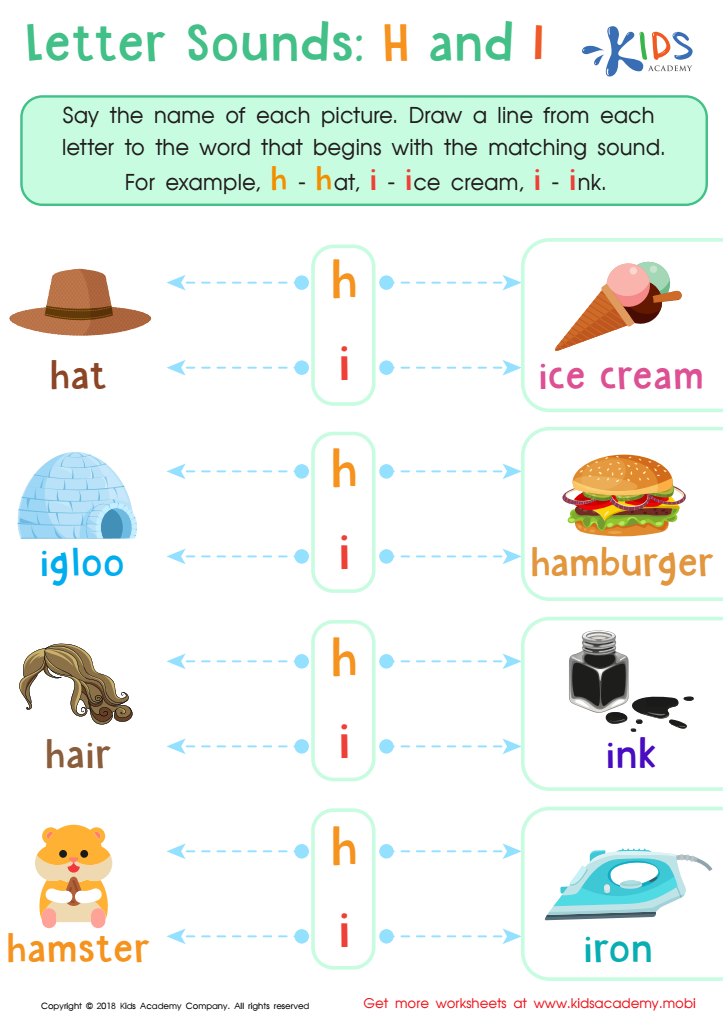
Letter H and I Sounds Worksheet

Letter H and I Sounds Worksheet

Preschoolers will have fun and develop reading and writing skills at the same time! They'll use pictures to recognize familiar words and differentiate between 'H' and 'I' sounds. Then they'll trace lines to connect each sound to the picture, improving their fine-motor skills. Bright and cheerful visuals make learning a breeze!
Letter H and I Sounds Worksheet
Worksheet
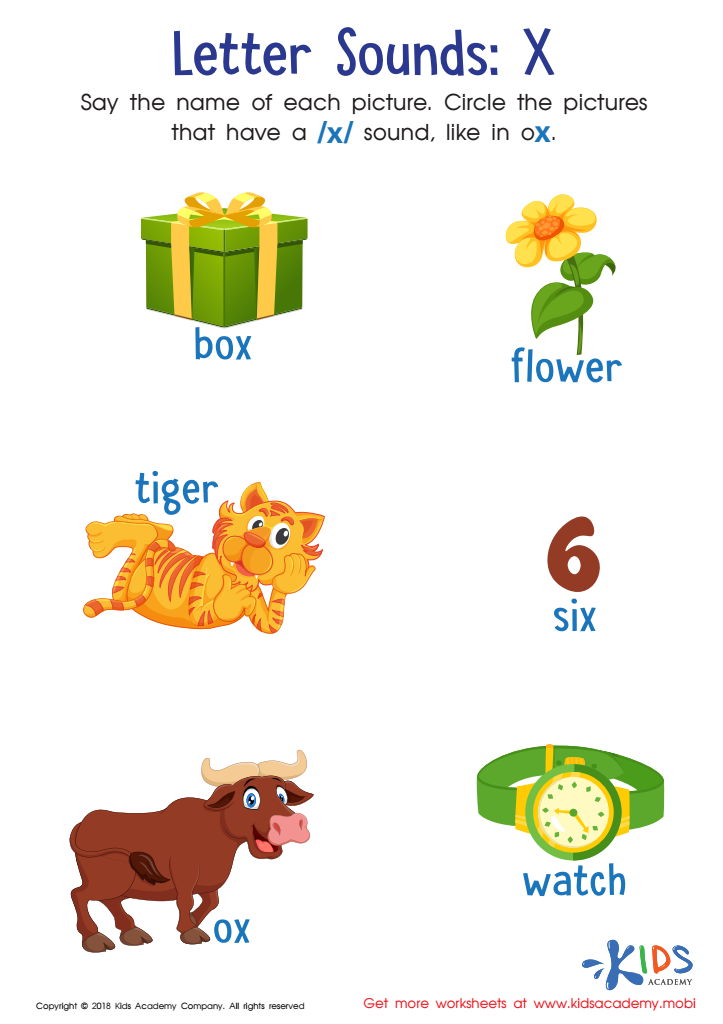
Letter X Sounds Worksheet
Letter X Sounds Worksheet

Help your early learner master the letter X sound with this fun, illustrated phonics worksheet. Have kids name the pictures, listening for the pronunciation of each. Have them circle only the pictures with the X sound, then double check by looking for the letter in the word below.
Letter X Sounds Worksheet
Worksheet
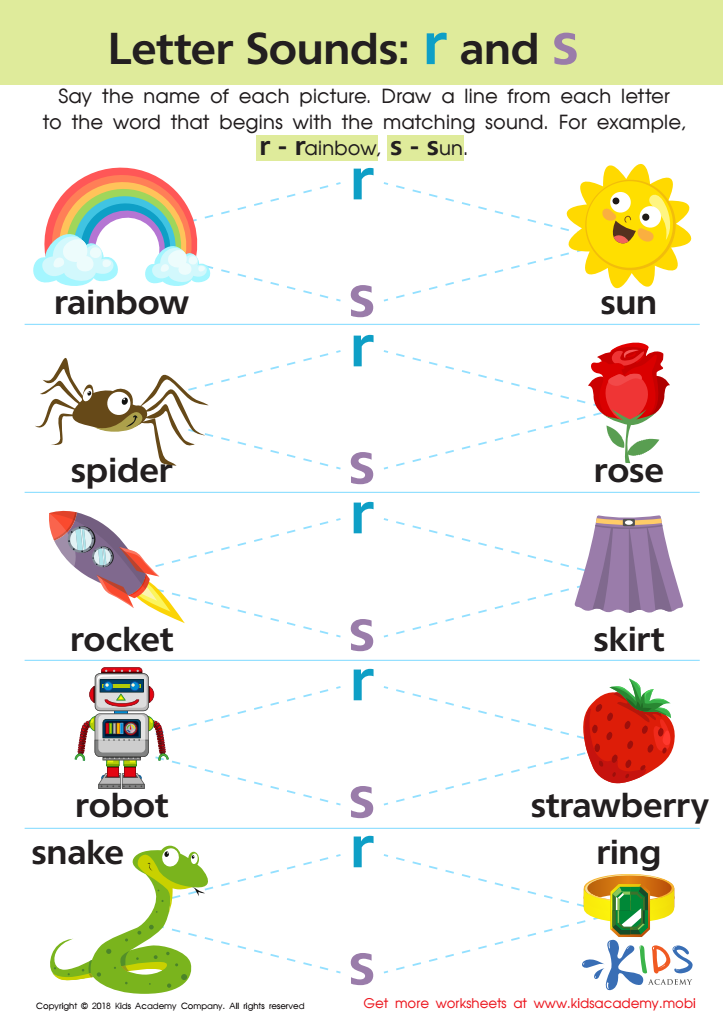
Letter R and S Sounds Worksheet

Letter R and S Sounds Worksheet

Kids Academy's phonics worksheet is full of fun and color! Help your child name the pictures and read the words under each one. Does it begin with an R or S? Then, use a pencil to trace the dotted line from the letter to its image. It's a great way to practice phonics skills!
Letter R and S Sounds Worksheet
Worksheet
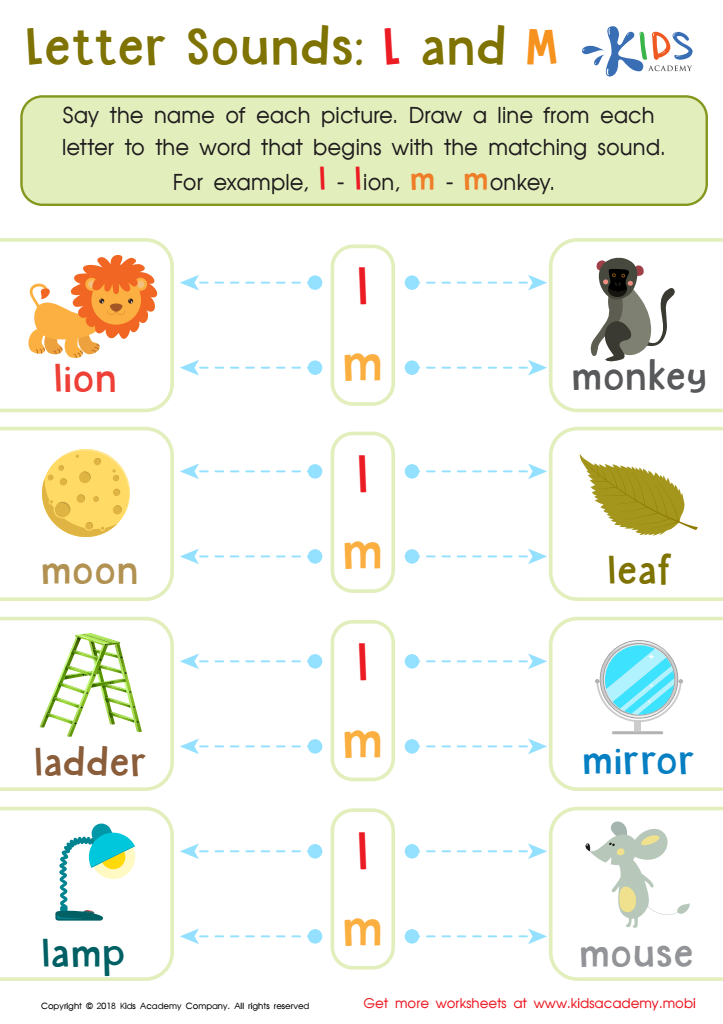
Letter l and M Sounds Worksheet

Letter l and M Sounds Worksheet

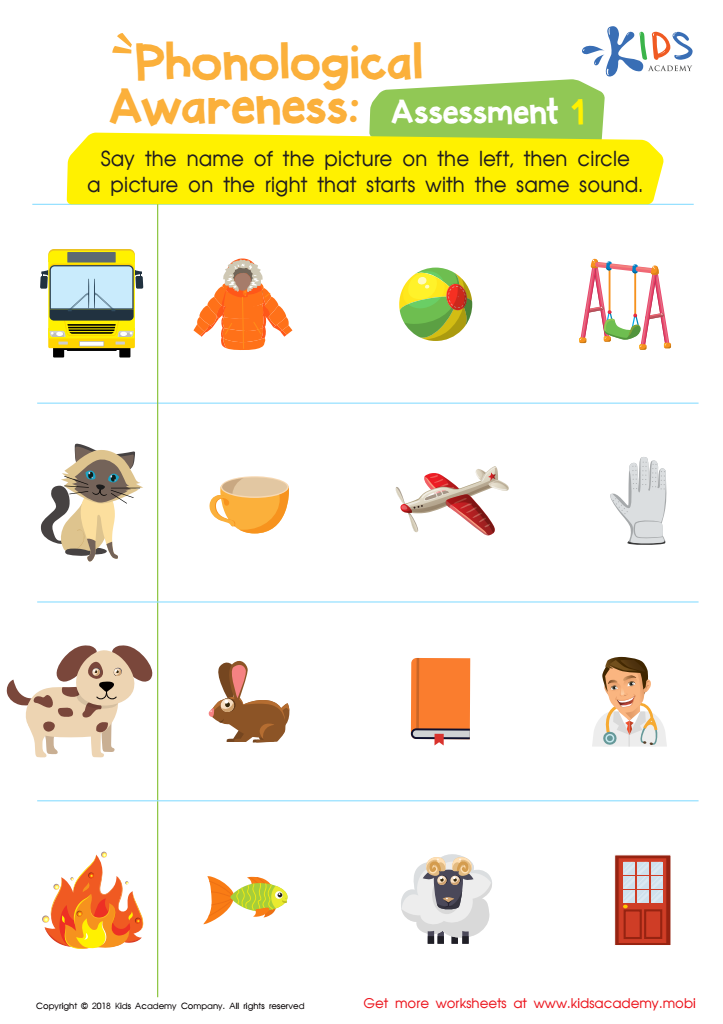
Our Kids Academy phonics practice pages give clear instructions and captivating pictures to pique children's interest. This fun worksheet helps kids identify a picture, then match its beginning sound. Listen and say each word - does it start with "L" or "M"? Trace the dotted line from the letter to the correct match and listen closely to the sound it makes.
Letter l and M Sounds Worksheet
Worksheet
Letter G Sounds Worksheet

Letter G Sounds Worksheet

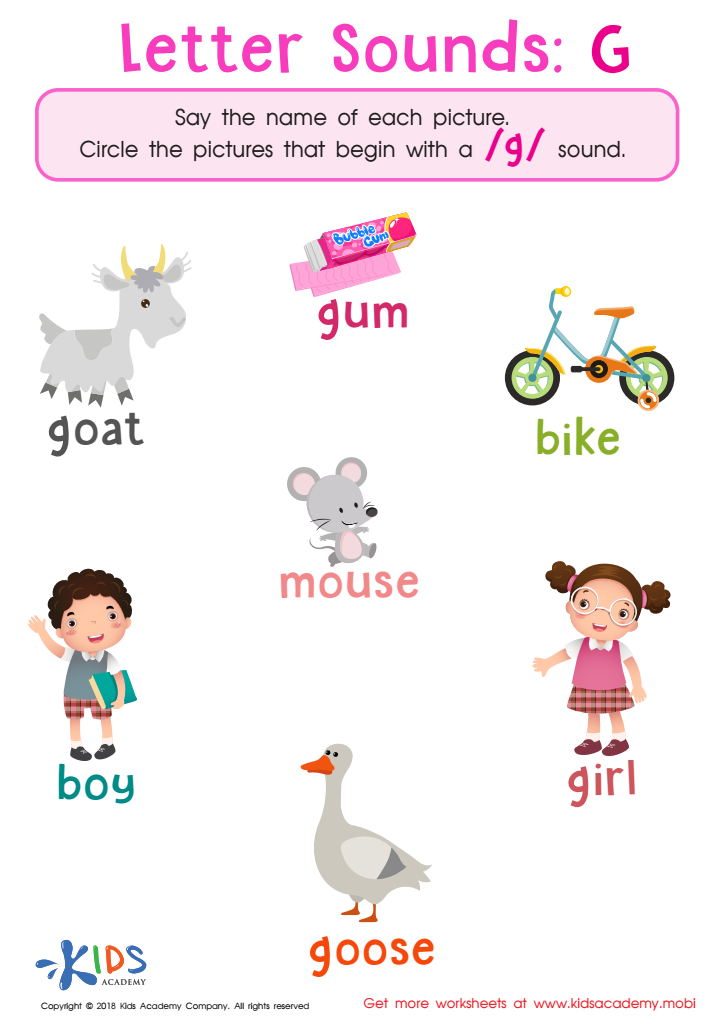
Help emerging readers build confidence by giving them practice identifying hard "G" with this free PDF worksheet. They'll use picture clues to name the words, and practice fine-motor skills tracing circles around the corresponding pics. It's a great way to introduce or reinforce hard "G" words.
Letter G Sounds Worksheet
Worksheet
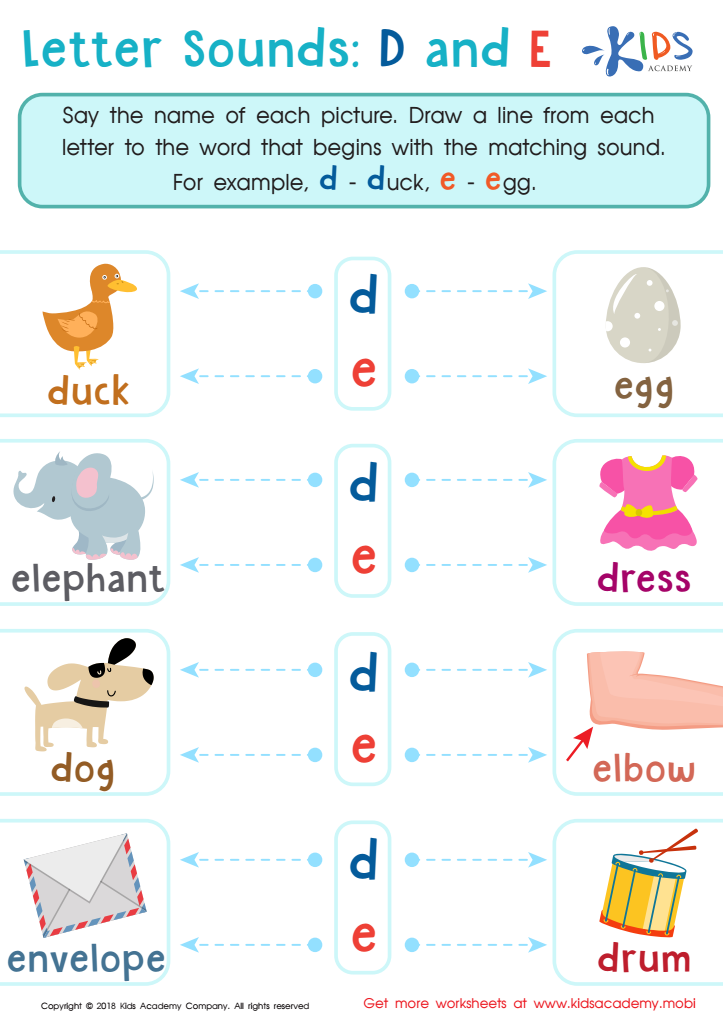
Letter D and E Sounds Worksheet


Letter D and E Sounds Worksheet

Kids can use picture clues and visual discrimination to name cheerful pics and isolate the beginning sound. This free PDF worksheet will help them develop phonological awareness, differentiate between "D" and "E", and hone fine-motor skills. It'll also boost their confidence as they become readers.
Letter D and E Sounds Worksheet

Worksheet


Parents and teachers should care deeply about sound association and normal letter sounds for children aged 4-5 because these skills form the bedrock of early literacy. During these formative years, children are highly receptive to learning language and understanding the relationship between letters and sounds. This period is critical for developing phonemic awareness, the ability to hear and manipulate individual sounds in words, which is essential for reading and writing.

Phonemic awareness aids in recognizing patterns in language, which in turn helps children to decode new words when they start reading independently. Consistent exposure to letter sounds and sound associations helps children better grasp phonics, improving their reading fluency and accuracy. Furthermore, children who are proficient in these skills are generally more confident and motivated learners.

Early proficiency in sound association also supports broader language skills, such as vocabulary development and listening comprehension. Children who can connect sounds to letters are better equipped to understand spoken language and use it effectively in communication.

Ultimately, fostering these foundational skills prepares children for academic success and cultivates a love for reading that can last a lifetime. By prioritizing sound association and letter-sound knowledge, parents and teachers can give children a crucial advantage in their educational journey.