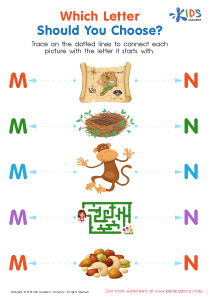
Lowercase identification Normal Lowercase/Small Letters Worksheets for Ages 4-5
4 filtered results
-
From - To
Introduce your 4-5-year-olds to the fundamentals of reading and writing with our engaging Lowercase Identification Normal Lowercase/Small Letters Worksheets. These carefully crafted resources from Kids Academy focus on helping young learners recognize and identify lowercase letters through fun and interactive activities. Perfect for both home and classroom settings, our worksheets enhance letter matching, fine motor skills, and visual discrimination. Boost your child's confidence and early literacy skills with these essential educational tools specially designed to make learning enjoyable and effective. Download today to give your child a head start in their literacy journey.
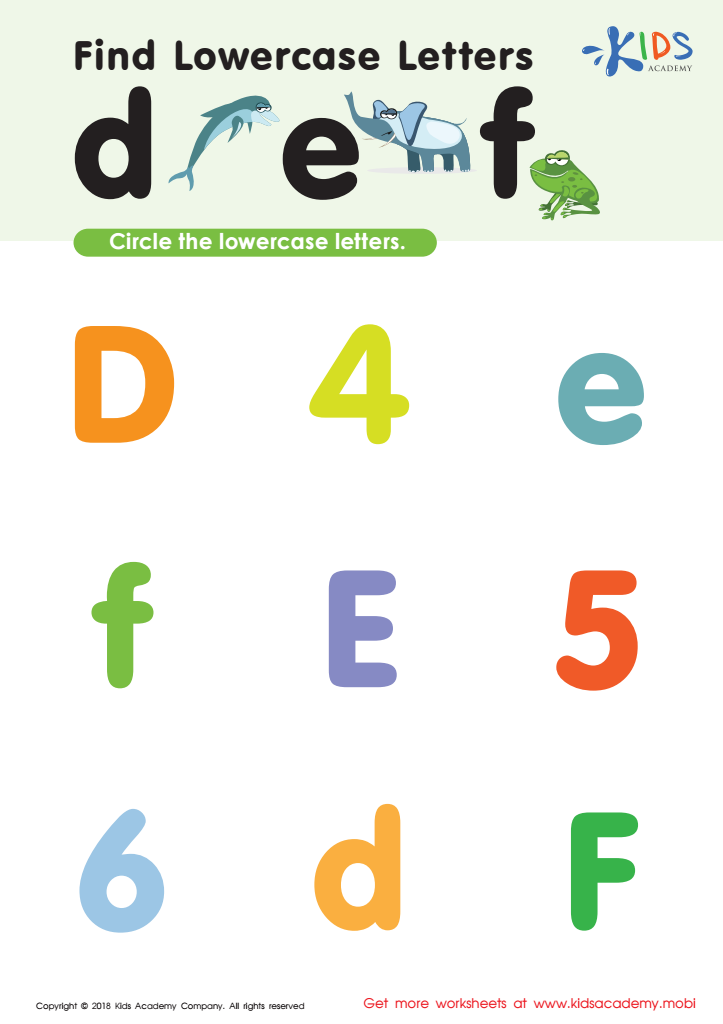
Find Lowercase Letters d e f Worksheet
 Assign to My Students
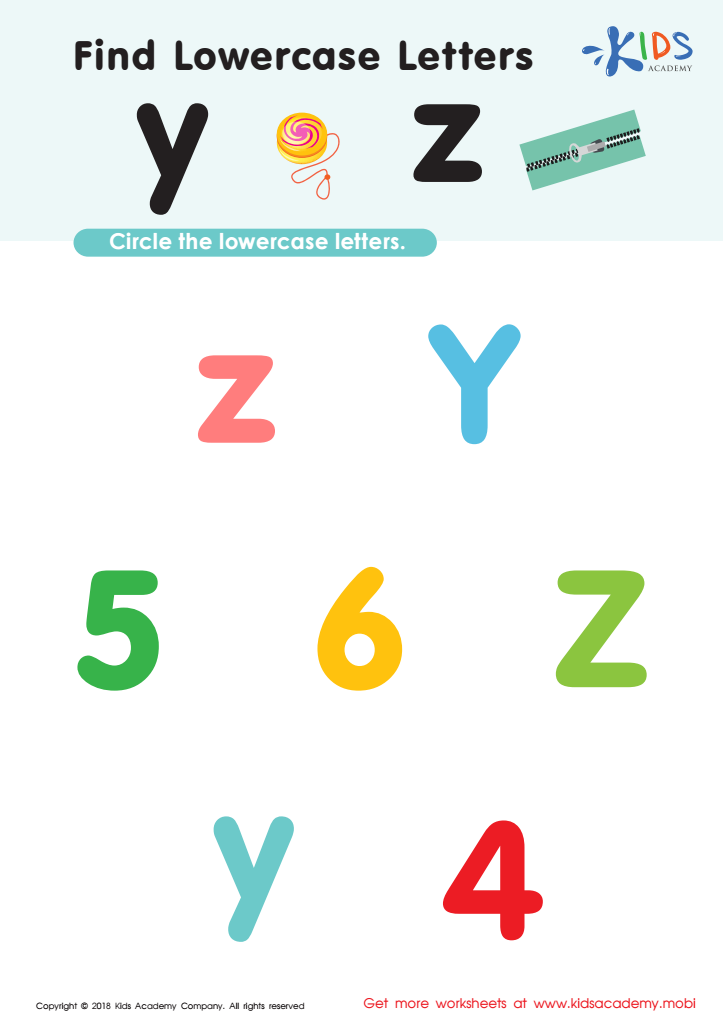
Find Lowercase Letters y z Worksheet
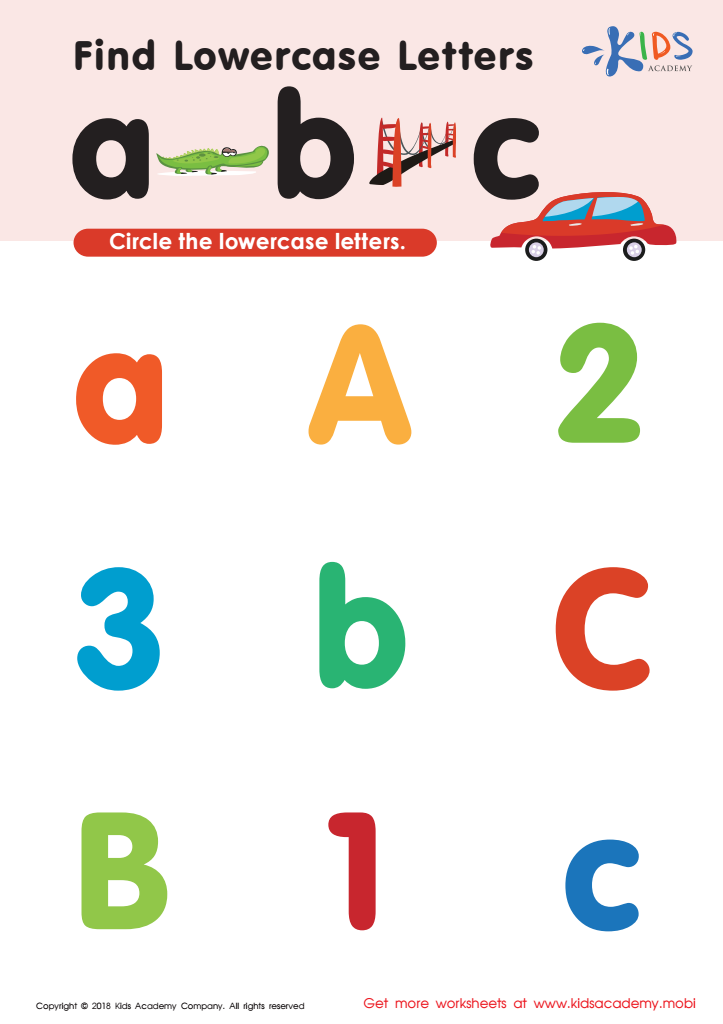
Find lowercase letters a b c Worksheet
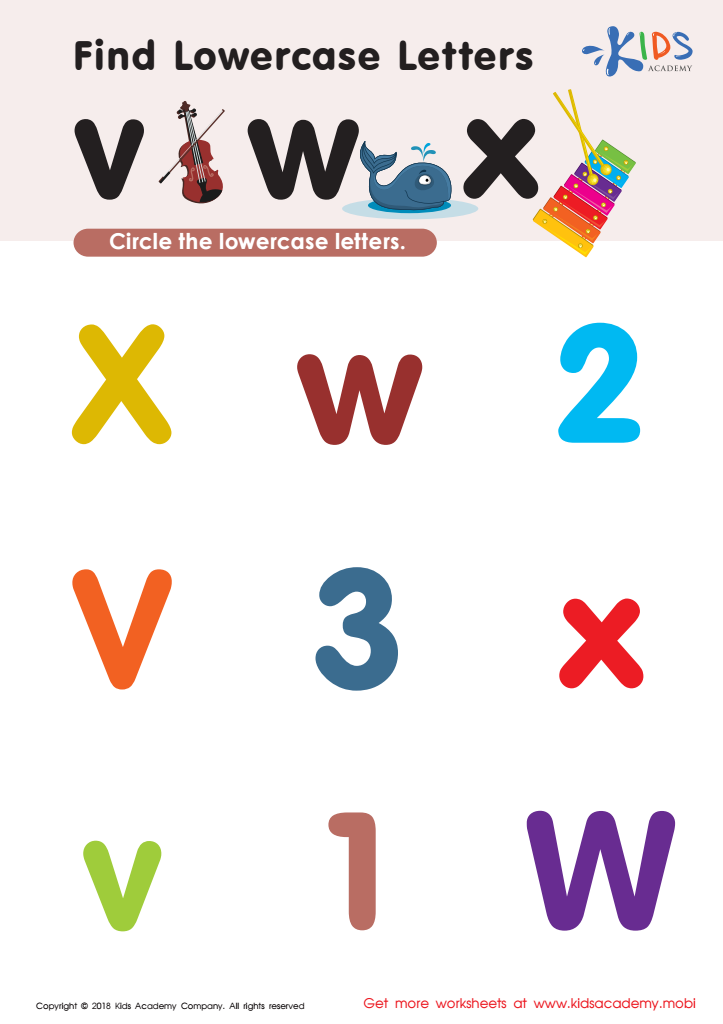
Find Lowercase Letters v w x Worksheet


Parents and teachers should prioritize lowercase identification for children aged 4-5 because it forms a crucial foundation for literacy development. At this age, children's brains are exceptionally receptive to learning and building the skills they'll need for reading and writing. Lowercase letters frequently appear in text, much more than their uppercase counterparts, making it essential for children to recognize and understand them to access most written materials effectively.
Developing familiarity with lowercase letters can significantly enhance a child's ability to decode words, a key step in early reading. Being proficient in both letter forms expands their ability to connect spoken sounds with written symbols, a vital component of phonemic awareness. Furthermore, early mastery of lowercase letters supports better handwriting as cursive and regular writing conventions favor lowercase usage.
Fostering lowercase letter recognition also encourages children’s confidence in reading and storytelling, promoting a lifelong interest in books and learning. By getting an early start, delightful and engaging learning experiences, parents and teachers can make a profound, lasting impact on a child's educational journey. Investing time in this area enriches children's vocabulary, comprehension, and overall academic performance, setting the stage for continuous success throughout their schooling years and beyond.