Basic geometry understanding Normal Worksheets for Ages 4-5
3 filtered results
-
From - To
Our "Basic Geometry Understanding Normal Worksheets for Ages 4-5" offer perfect resources to introduce your child to the fascinating world of shapes and spatial awareness. Specifically designed for preschoolers, these engaging activities will help young learners recognize and name basic shapes like circles, squares, triangles, and rectangles. Each worksheet features colorful illustrations and fun exercises tailored to the developmental stages of children aged 4-5. By completing these interactive tasks, kids will enhance their fine motor skills, memory, and cognitive abilities, all while building a strong foundation in basic geometry. Give your child the head start they need with our thoughtfully crafted worksheets!
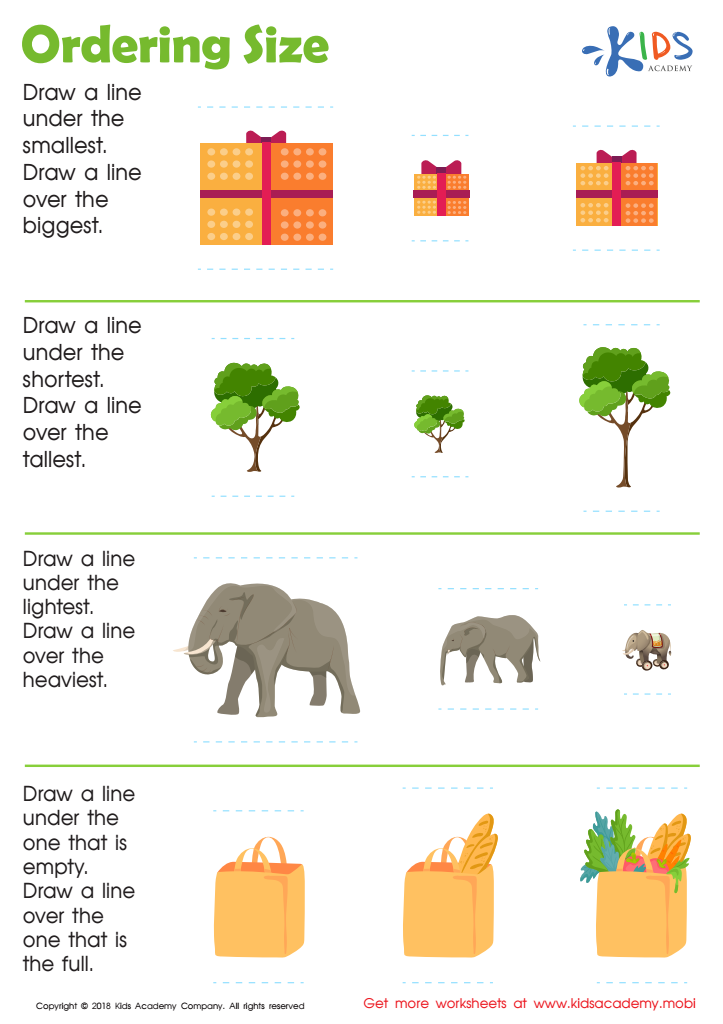
Ordering Size Worksheet
 Assign to My Students
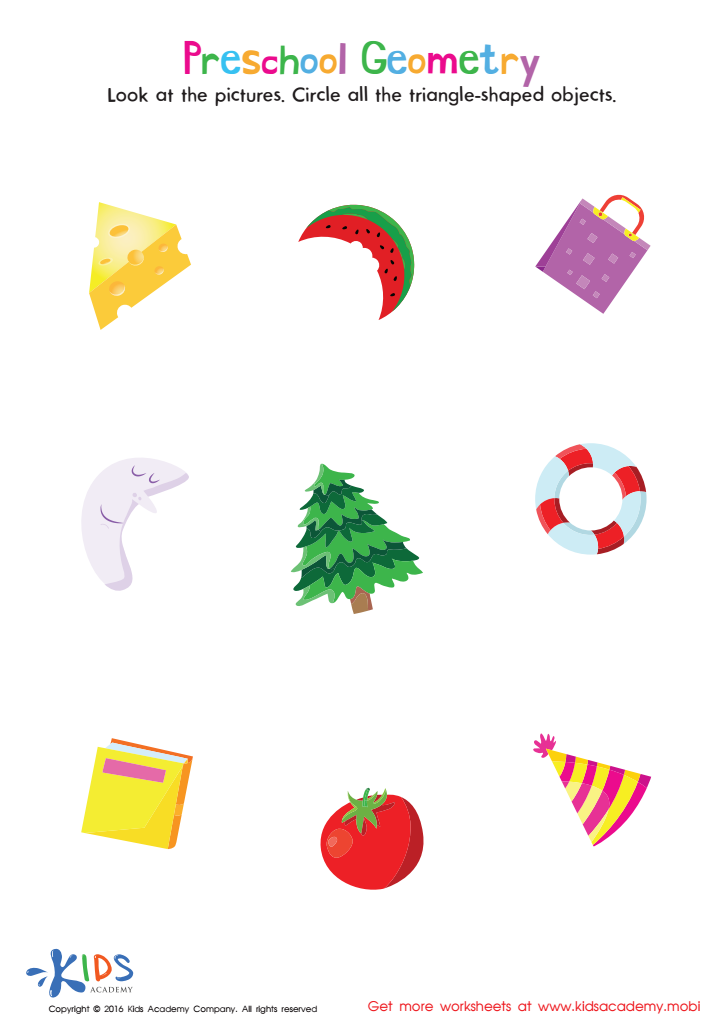
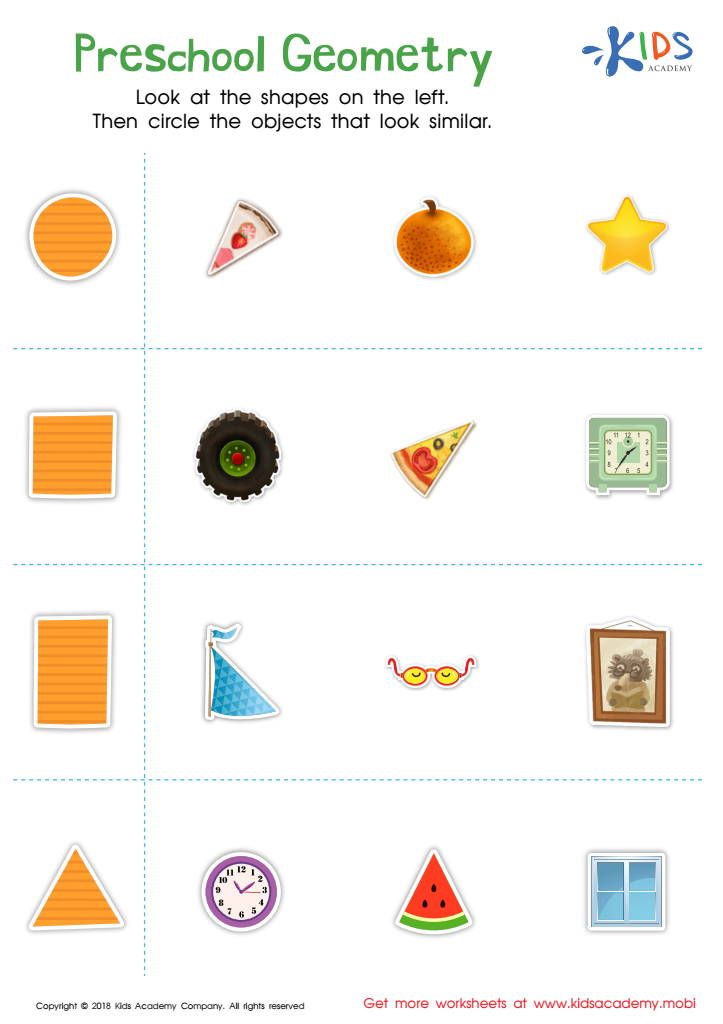
Preschool Geometry Worksheet






.jpg)

Basic geometry understanding for children aged 4-5 is crucial for several reasons. First, it lays the foundation for future math learning. Recognizing shapes and spatial relationships at an early age helps children comprehend more complex mathematical concepts later, such as measurement, symmetry, and geometry in higher grades.
Second, basic geometry promotes critical thinking and problem-solving skills. Identifying shapes, sizes, and patterns encourages children to analyze and categorize information logically. These experiences enhance their ability to think critically and tackle problems systematically.
Third, early exposure to geometry supports language development. When children learn the names and properties of shapes, they expand their vocabulary and improve their ability to describe the world around them. This descriptive language is essential for effective communication and writing skills.
Additionally, geometry is integral to interpreting and navigating the physical world. Understanding spatial relationships helps children with everyday tasks, such as fitting objects into spaces and recognizing patterns, which can enhance their fine motor skills.
Finally, engaging with basic geometry through play—such as building blocks and puzzles—enriches children's creativity and imagination. Through these activities, they learn to visualize and manipulate objects, fostering a strong cognitive foundation.
In summary, early geometry understanding is fundamental for cognitive, linguistic, and motor development, providing essential skills that support overall academic and personal growth.








