Check out this FREE "Counting skills" Trial Lesson for age 4-5!

Classifying Objects and Count the Number of Objects in Each Category CCSS.Math.Content

Favorites
With answer key
Interactive
  • 4-5
  • Counting skills
  • Normal
Kindergarten Counting by Tens

Learn Dozens: Counting by Tens Printable

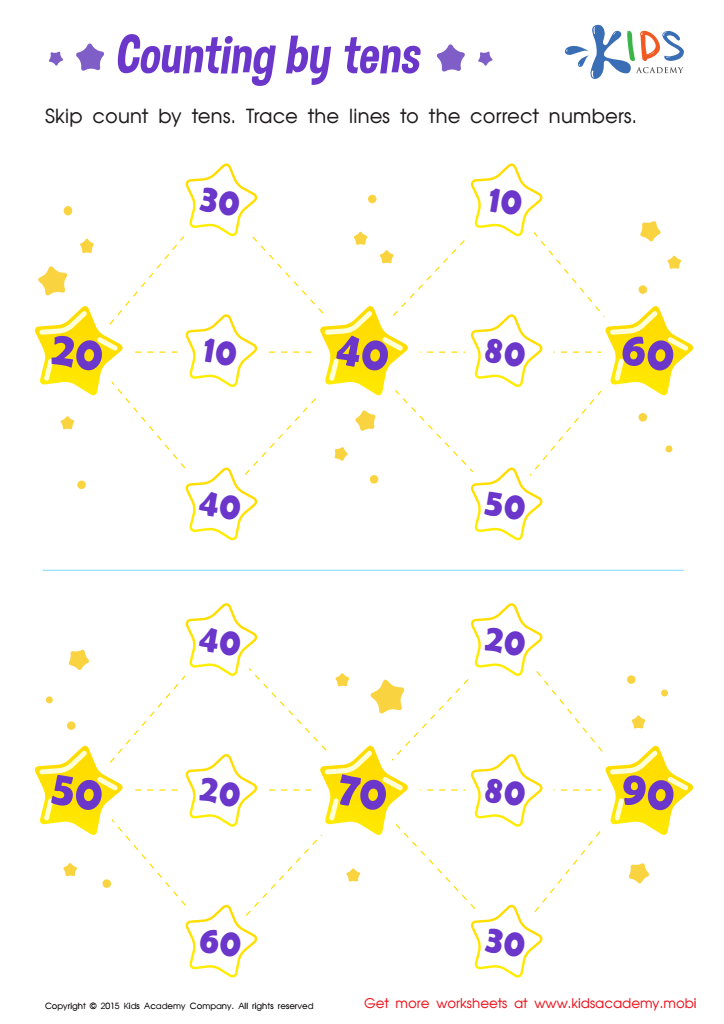
Kindergartners need to learn skip counting - counting in number groups - to increase number sense and be ready for more advanced math. Our kindergarten worksheet featuring a starry trip to outer space will help your child practice this valuable skill. Your child will choose correct answers to trace the lines to the stars, building fluency in skip counting. They'll also strengthen problem solving and see the pattern it creates. Get your little learner to the next level with this skip counting worksheet!
Learn Dozens: Counting by Tens Printable
Worksheet
Growing with 15 Worksheet

Growing with 15 Worksheet

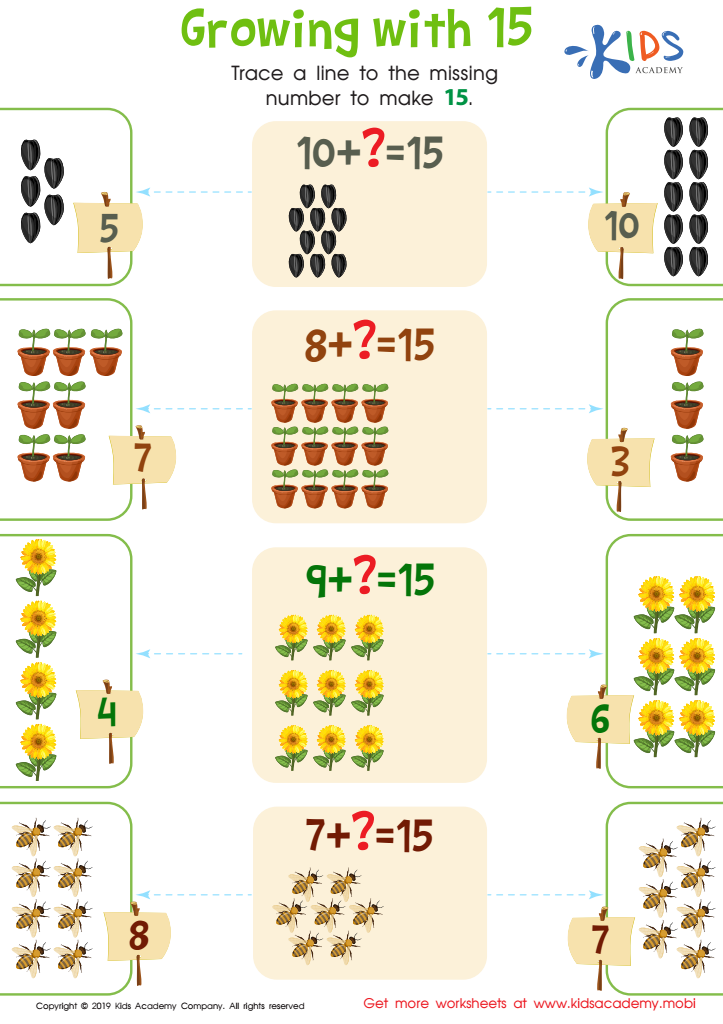
Remind your kids that adding different sets of numbers can give the same total (e.g. 2+3=5, 4+1=5). Test their understanding by asking them for more examples. Move onto the worksheet: count objects, then trace the line to the number making a total of 15.
Growing with 15 Worksheet
Worksheet
Sort and Count Candy Worksheet

Sort and Count Candy Worksheet

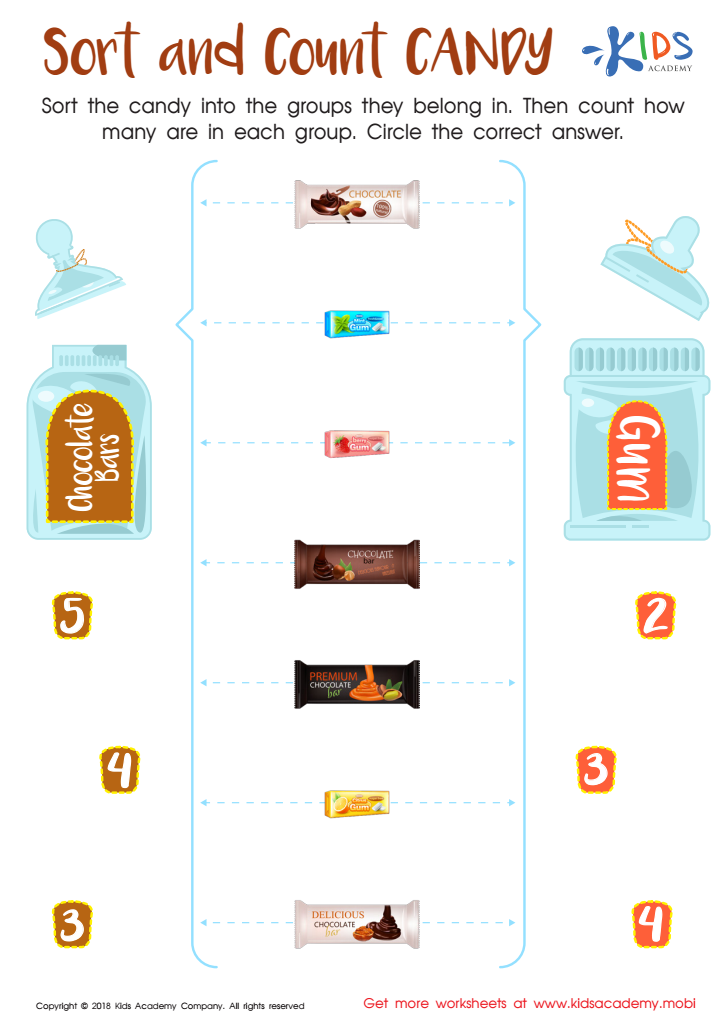
Sort chocolate and candy with your kids! Help them use recognizable items and pictures to sort, practice counting with one-to-one representation, and develop their fine motor skills with the traceable lines. Download this free worksheet to get started. Yum!
Sort and Count Candy Worksheet
Worksheet
Count and Write 6 Worksheet

Count and Write 6 Worksheet

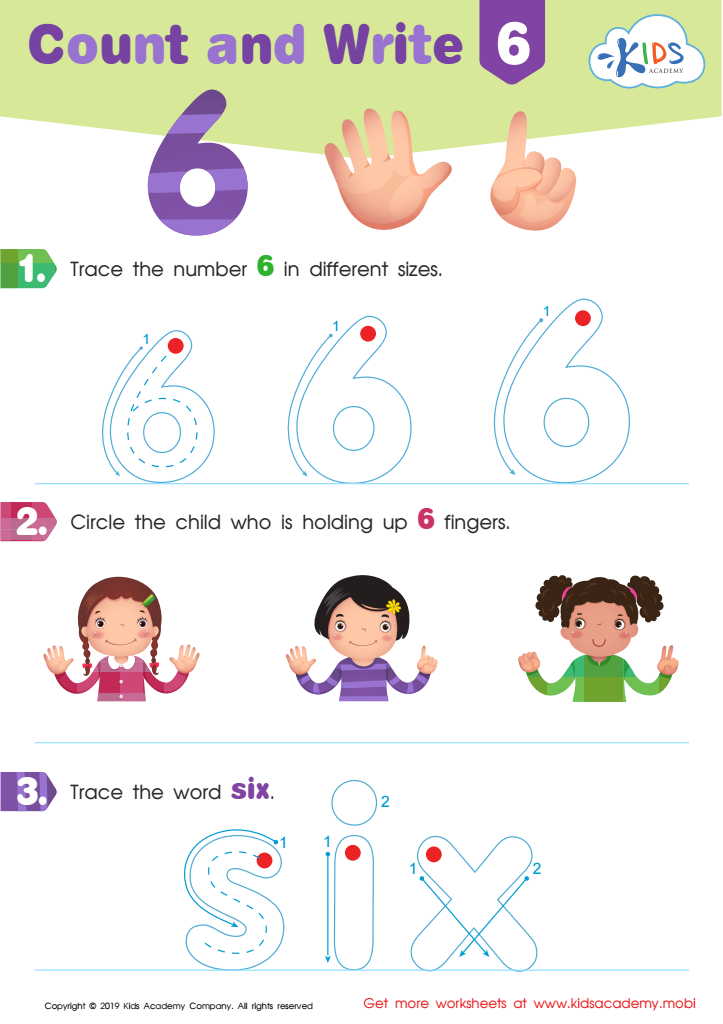
Kids begin math by mastering recognition skills. This worksheet helps with that by giving them practice writing "six" and the numeral 6, with guide dots and traceable lines. Giving kids multiple ways to learn the basics helps them build a strong math foundation.
Count and Write 6 Worksheet
Worksheet
Count and Write 10 Worksheet

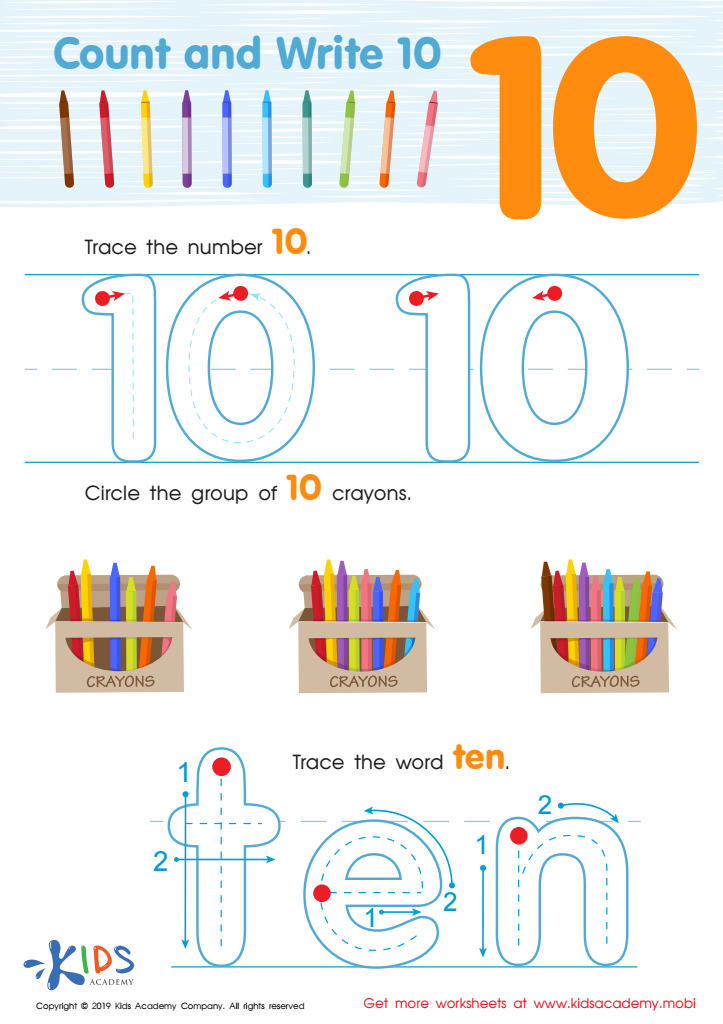
Count and Write 10 Worksheet

Help your child succeed by teaching them numbers! They should already know their 1,2,3s before their first day of school. This worksheet will give them the practice they need to write and count to 10. Get them to count and circle the 10 crayons, then trace the number 10. It's a great way to help them understand numbers and get a head start.
Count and Write 10 Worksheet
Worksheet
Matching Numbers to Amounts Worksheet

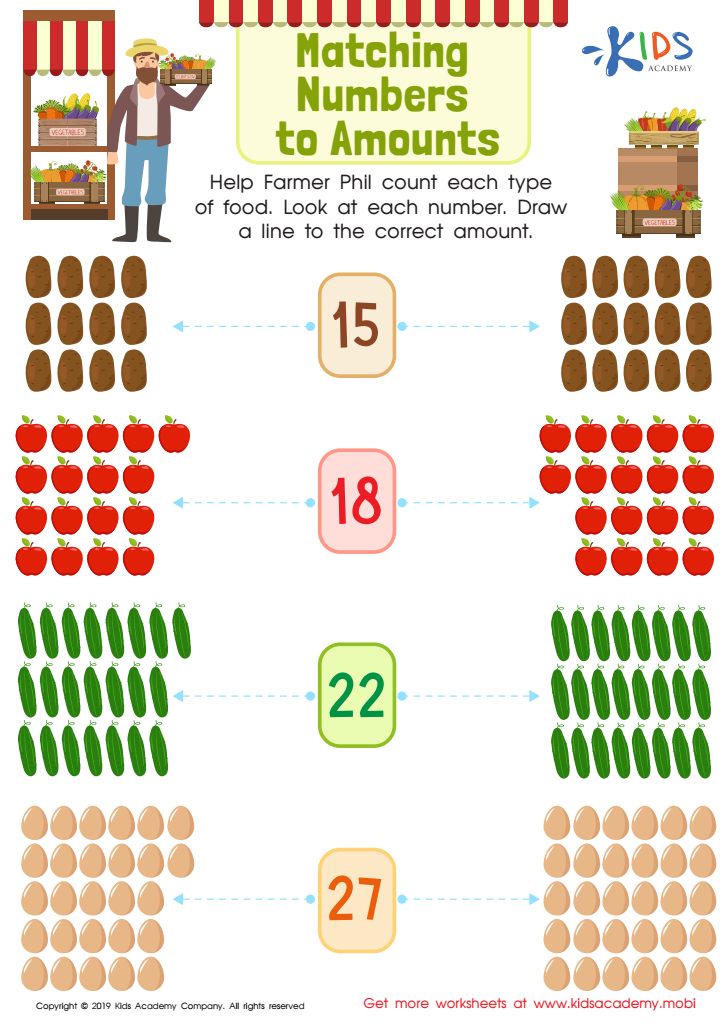
Matching Numbers to Amounts Worksheet

Farmer Phil needs your kid's help! Ensure they know the basics of math such as counting, adding and subtracting. Before beginning, help your child identify and count the different foods in the picture. Then, draw a line to the correct amount.
Matching Numbers to Amounts Worksheet
Worksheet
Kindergarten number tracing worksheet pdf

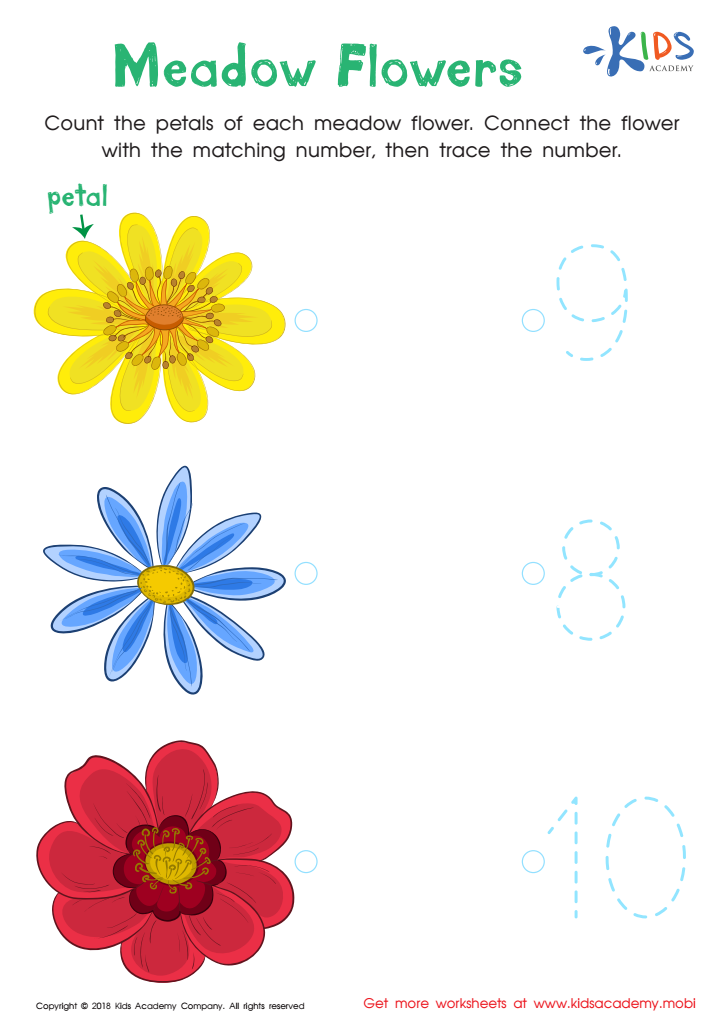
Kindergarten Number Tracing: Medow Flowers Worksheet

Take your child to the garden to count flower petals and trace numbers with this fun kindergarten PDF worksheet. They'll learn to count and write, all while enjoying the sweet scent of the flowers.
Kindergarten Number Tracing: Medow Flowers Worksheet

Worksheet


... 3 4

Counting skills in children aged 4-5 are essential for building a strong foundation in mathematics and overall cognitive development. At this crucial developmental stage, kids are learning to understand and relate to numbers in a way that will set the stage for all future mathematical learning. When parents and teachers prioritize counting skills, they help children develop number sense, which is the ability to recognize numbers, understand their value, and use them in a variety of contexts. This early number familiarity facilitates smoother transitions into more complex arithmetic concepts such as addition, subtraction, and problem-solving.

Moreover, counting skills enhance children's ability to sequence, an important cognitive skill that translates into understanding order and patterns, crucial not just in math, but also in reading and daily routines. When children count accurately aloud or physically with objects, they practice key skills like one-to-one correspondence, the principle that each number corresponds to one object. This reinforces the meaning behind counting and number relationships. Encouraging these skills at an early age can enhance attention spans and improve fine motor skills as children learn to manipulate objects.

In summary, mastering counting skills between ages 4-5 equips children with critical cognitive tools for academic success and contributes significantly to their overall intellectual growth.