Differentiating shapes Normal Worksheets for Ages 4-5
3 filtered results
-
From - To
Discover our engaging "Differentiating Shapes Normal Worksheets" designed specifically for children aged 4-5. These worksheets help young learners identify and differentiate between various shapes through fun and interactive activities. With bright illustrations and simple instructions, children will enjoy exploring the world of shapes while developing essential cognitive and motor skills. Ideal for preschool or kindergarten settings, these resources support early math learning and promote critical thinking. Whether at home or in the classroom, our worksheets provide a valuable tool for nurturing creativity and confidence in young learners. Start your child’s journey in shape recognition with these exciting, foundational worksheets today!
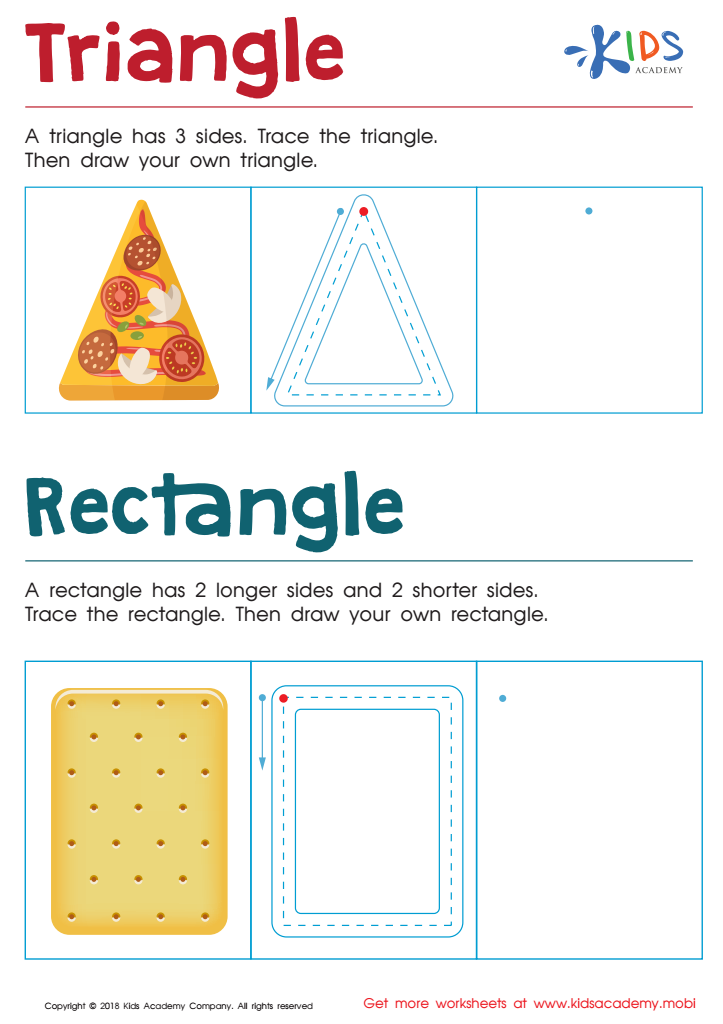
Triangle Rectangle Worksheet
 Assign to My Students
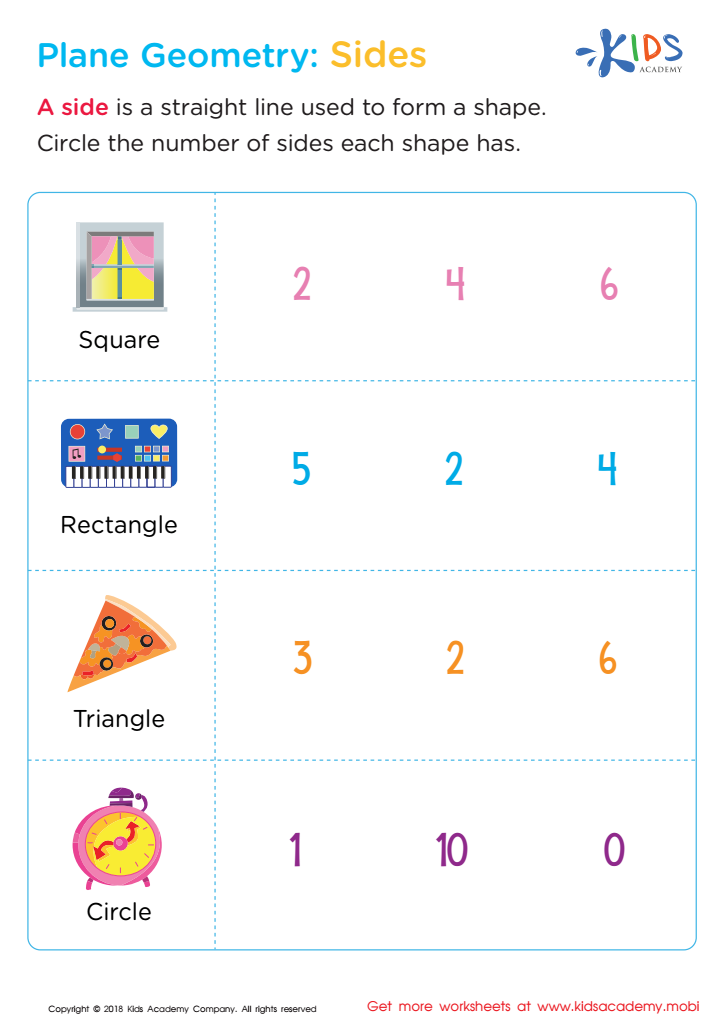
Plane Geometry: Sides Worksheet
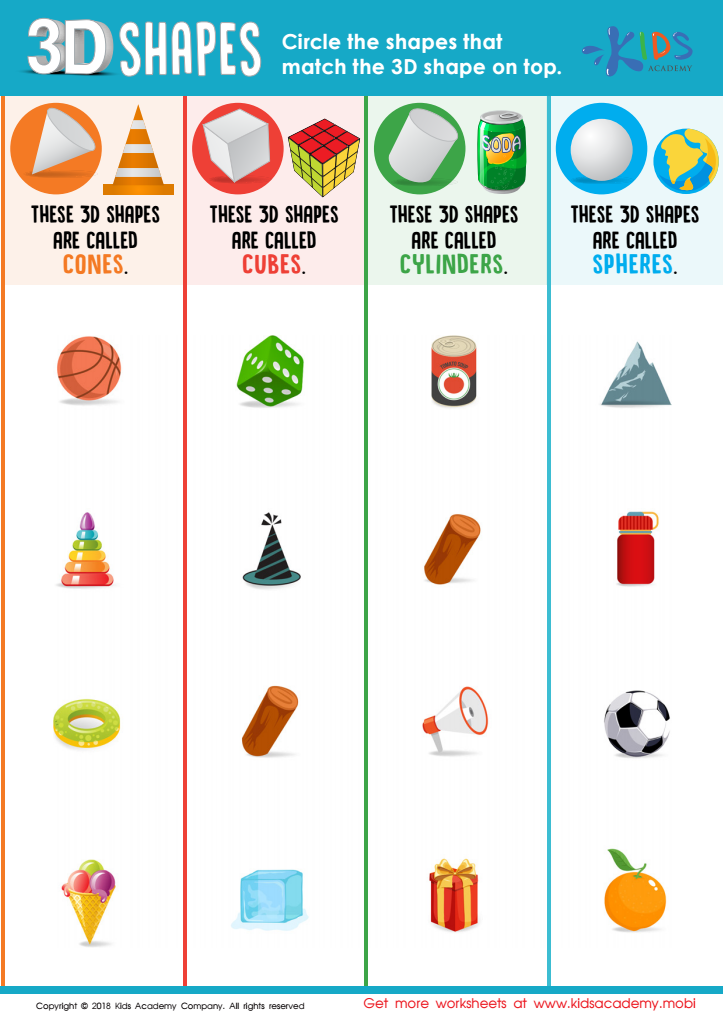
3D Shapes Worksheet






Differentiating shapes is crucial for children ages 4-5 as it lays the foundation for essential cognitive skills and early mathematics understanding. At this age, children are naturally curious and eager to explore their environment. Teaching them about different shapes not only helps them recognize and define the world around them, but it also enhances their observational skills and critical thinking.
When parents or teachers introduce a variety of shapes—such as circles, squares, triangles, and rectangles—through engaging activities like drawing, building, or sorting, they promote hands-on learning. This approach caters to various learning styles, ensuring that each child can grasp concepts at their own pace.
Moreover, differentiating shapes supports early literacy and language development. As children describe and discuss shapes, they expand their vocabulary and improve communication skills. Early shape recognition also serves as a precursor to more complex math concepts, such as geometry and spatial reasoning, as children learn to identify relationships and patterns.
Ultimately, fostering an understanding of shapes at this age helps prepare children for future academic success, builds their confidence, and nurtures interdisciplinary skills, setting a strong foundation for their lifelong learning journey.








