Mental math practice Normal Worksheets for Ages 4-5
3 filtered results
-
From - To
Welcome to our Mental Math Practice Worksheets for Ages 4-5! Designed to enhance your child's early mathematical skills, these engaging worksheets provide fun and interactive activities that foster mental arithmetic. Suitable for preschoolers, our resources encourage problem-solving, number recognition, and basic addition and subtraction in a playful manner. Each worksheet progressively challenges young minds, promoting confidence and a love for learning. Perfect for teachers and parents, these printable materials seamlessly integrate into daily lessons or home activities. Watch your child thrive as they develop essential math skills through enjoyable practice. Start their mathematical journey today with our thoughtfully crafted worksheets!
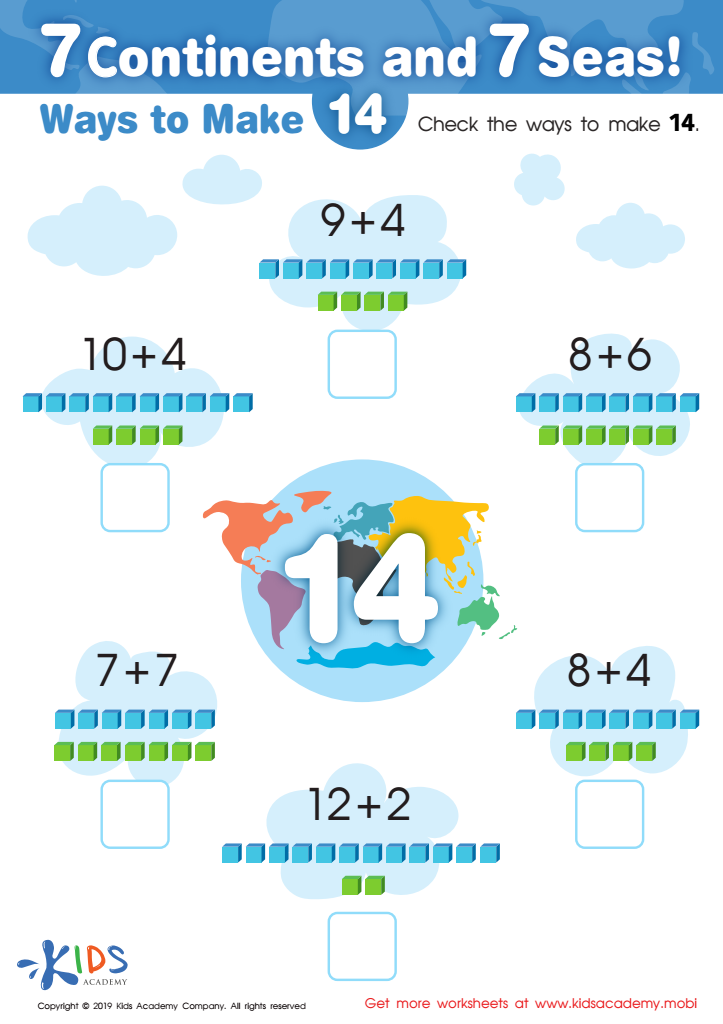
7 Continents and 7 Seas Worksheet
 Assign to My Students

Adding at the Hospital Worksheet
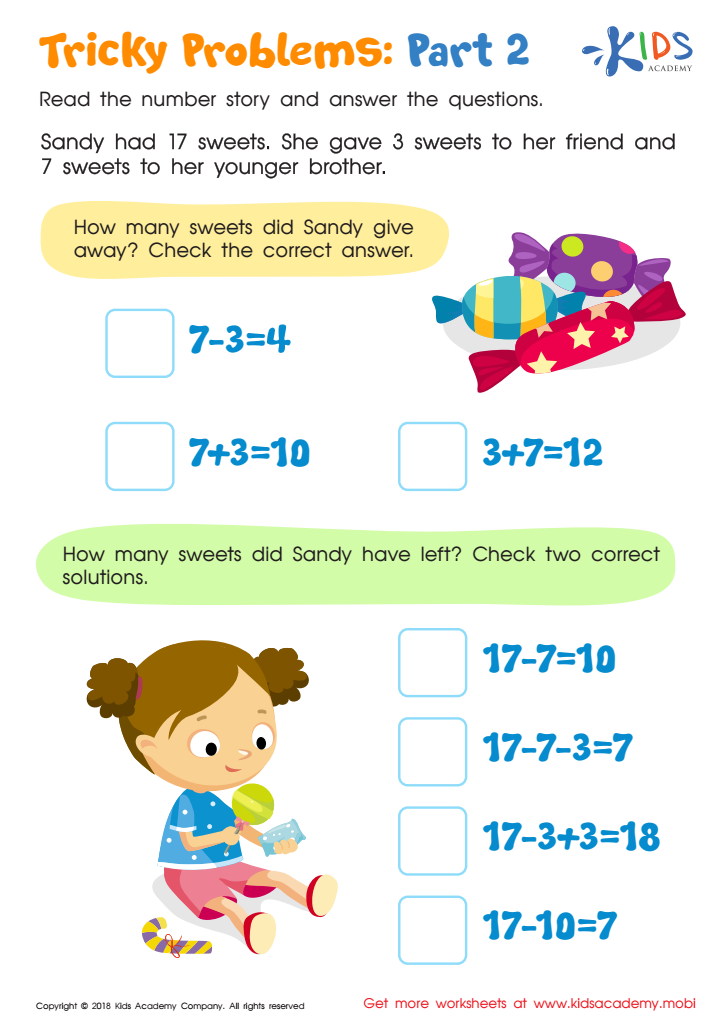
Tricky Problems Worksheet: Part 2







Mental math practice for ages 4-5 is essential for developing early mathematical skills and cognitive abilities. At this stage, children are naturally curious and learn best through play and active engagement. Practicing mental math helps them build a strong foundational understanding of numbers, essential for future learning.
First, mental math fosters critical thinking. Children learn to solve problems more quickly and effectively, which boosts their confidence in mathematical abilities. Engaging in simple mental math activities, such as counting games or basic addition and subtraction, enhances their ability to manipulate numbers and encourages flexibility in thinking.
Moreover, mental math aids in developing memory and concentration. Young children are at a prime age for refining these skills, which are crucial not only in math but in all areas of learning. It also encourages communication skills when they explain their reasoning to peers or adults.
Lastly, regular mental math practice prepares children for more complex mathematical concepts in later grades. Establishing a positive attitude toward math early on can foster a lifelong appreciation for the subject. Parents and teachers play a vital role in this early developmental stage, and by incorporating mental math into play and learning routines, they contribute significantly to children’s overall intellectual growth.








