Mental math skills Normal Worksheets for Ages 4-5
4 filtered results
-
From - To
Enhance your child's numerical fluency with our expertly designed Mental Math Skills Normal Worksheets for Ages 4-5. These engaging worksheets offer fun and interactive ways for young learners to develop essential mental math abilities. Each activity focuses on building a strong foundation in counting, addition, and subtraction through vivid illustrations and age-appropriate challenges. Perfect for early learners, these worksheets are an excellent tool to boost your child's confidence in math, ensuring they grasp fundamental concepts while having fun. Foster a love for numbers with our comprehensive set of worksheets tailored to stimulate young minds.
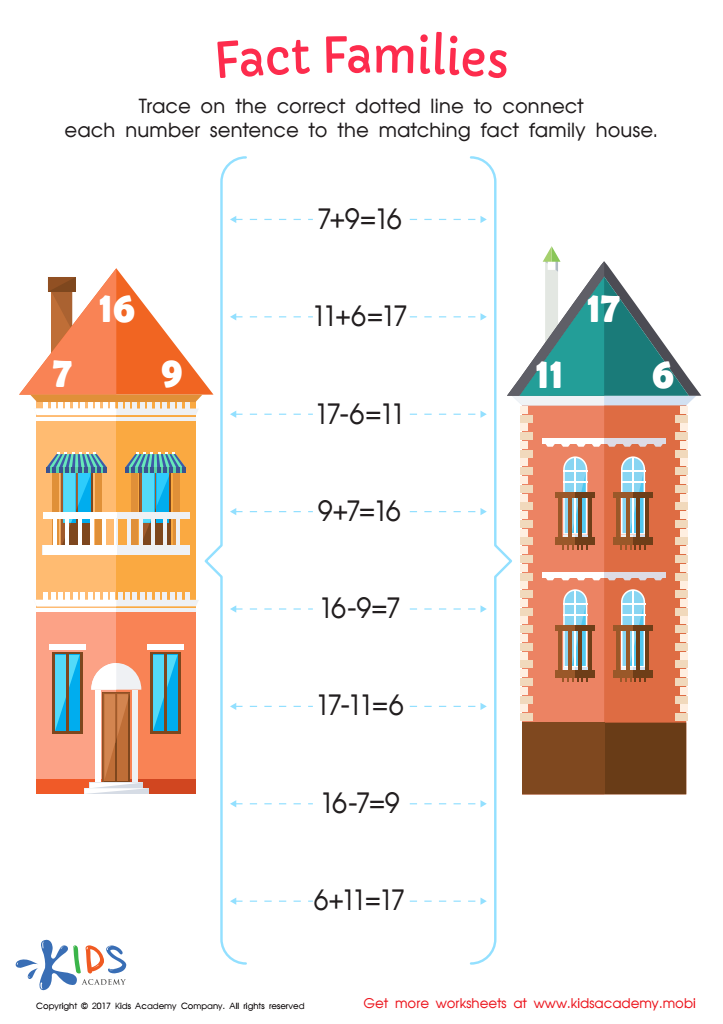
Fact Families — Add and Subtract Worksheet
 Assign to My Students
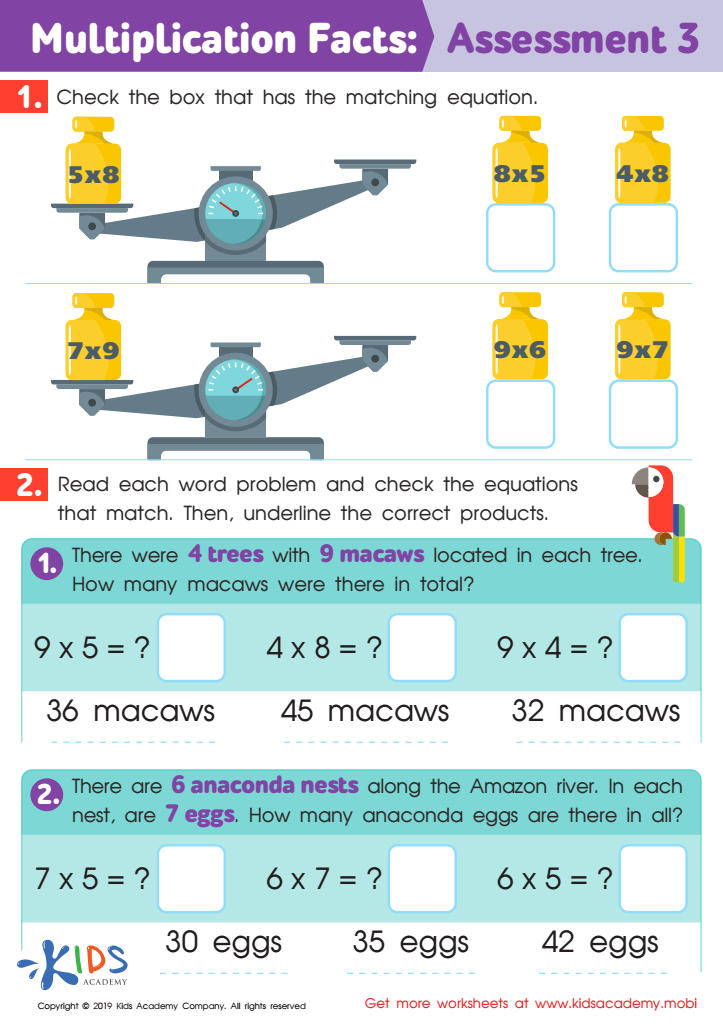
Multiplication Facts: Assessment 3 Worksheet
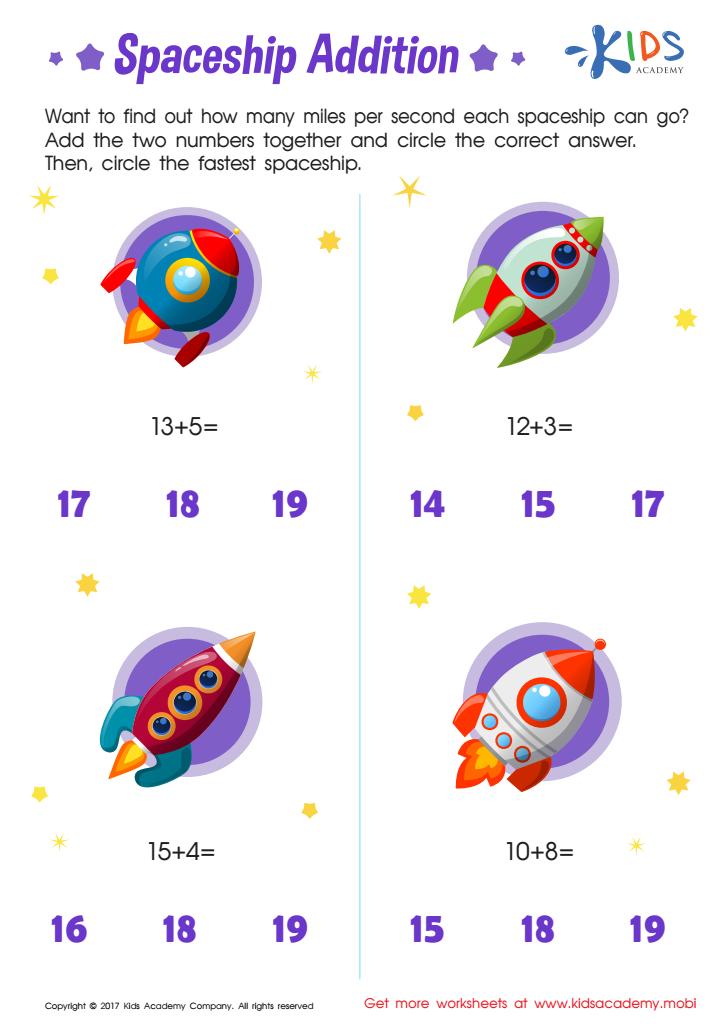
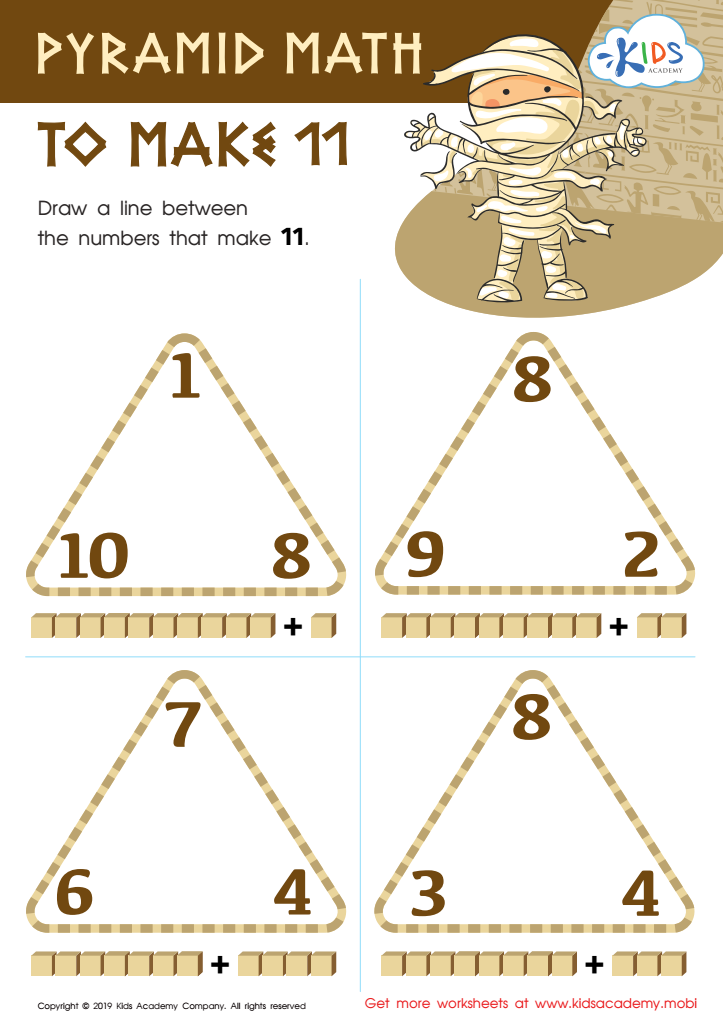
Pyramid Math to Make 11 Worksheet




.jpg)



Developing mental math skills at ages 4-5 is essential for children, as it lays the foundation for future academic success and critical thinking. Early mental math exercises sharpen a child's number sense, enabling them to understand basic concepts such as addition, subtraction, counting, and comparisons more intuitively. These fundamental skills boost confidence and reduce math anxiety, a common hurdle in later years.
Parents and teachers should recognize that children at this age are highly receptive to new information and can easily absorb new concepts through playful and engaging activities. Simple games, interactive toys, and daily-life scenarios can seamlessly integrate mental math practice without overwhelming the child. For example, asking a child to count apples in a grocery store or sort blocks by color or shape can turn everyday activities into learning opportunities.
Strong mental math skills also contribute to better problem-solving abilities. As kids grow, they'll encounter more complex issues requiring quick thinking and logical reasoning. Early exposure to mental math enhances cognitive flexibility and working memory, allowing children to handle academic and real-life problems more effectively.
In short, fostering mental math skills in young children equips them with a strong mathematical foundation, promoting lifelong learning, curiosity, and scholastic achievement. Engaging children with math early on supports a positive and lasting relationship with the subject.








