Phonological awareness Normal Worksheets for Ages 4-5
3 filtered results
-
From - To
Discover our engaging phonological awareness worksheets designed specifically for children ages 4-5. These printable activities help young learners develop essential skills in recognizing and manipulating sounds, which are crucial for reading success. With a variety of fun exercises, including rhyming, syllable counting, and sound discrimination, kids will enhance their auditory processing and language development in an interactive way. Our worksheets are user-friendly and perfect for parents and teachers seeking to enrich early literacy skills. Encourage your child's love for learning and set a strong foundation for their reading journey with our phonological awareness worksheets today!
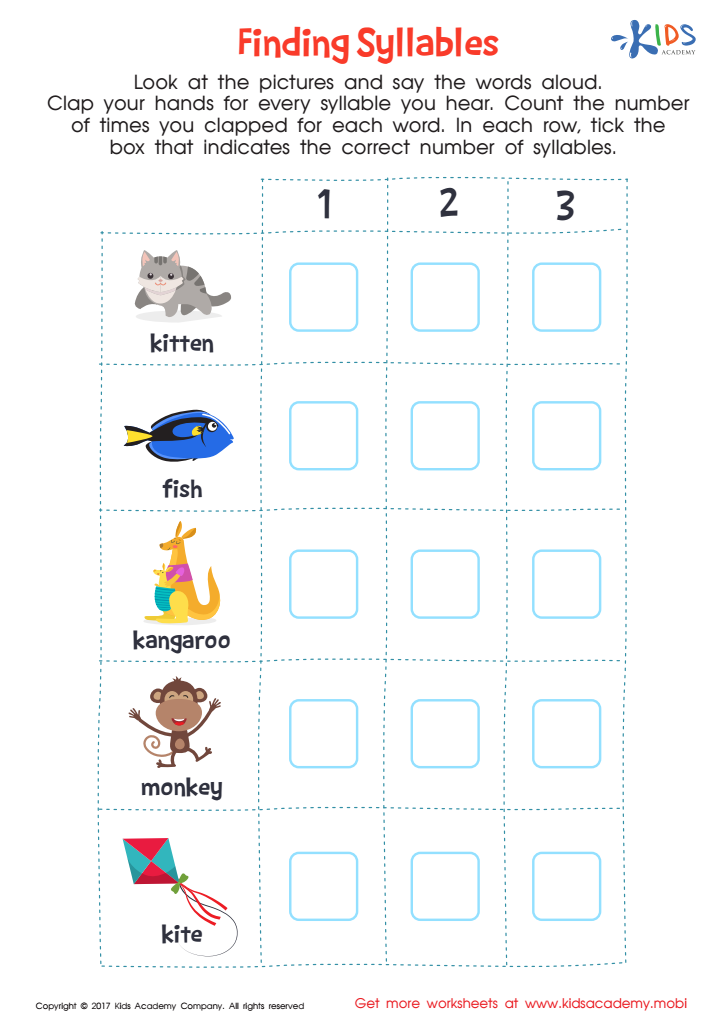
Finding Syllables Word Structure Worksheet
 Assign to My Students
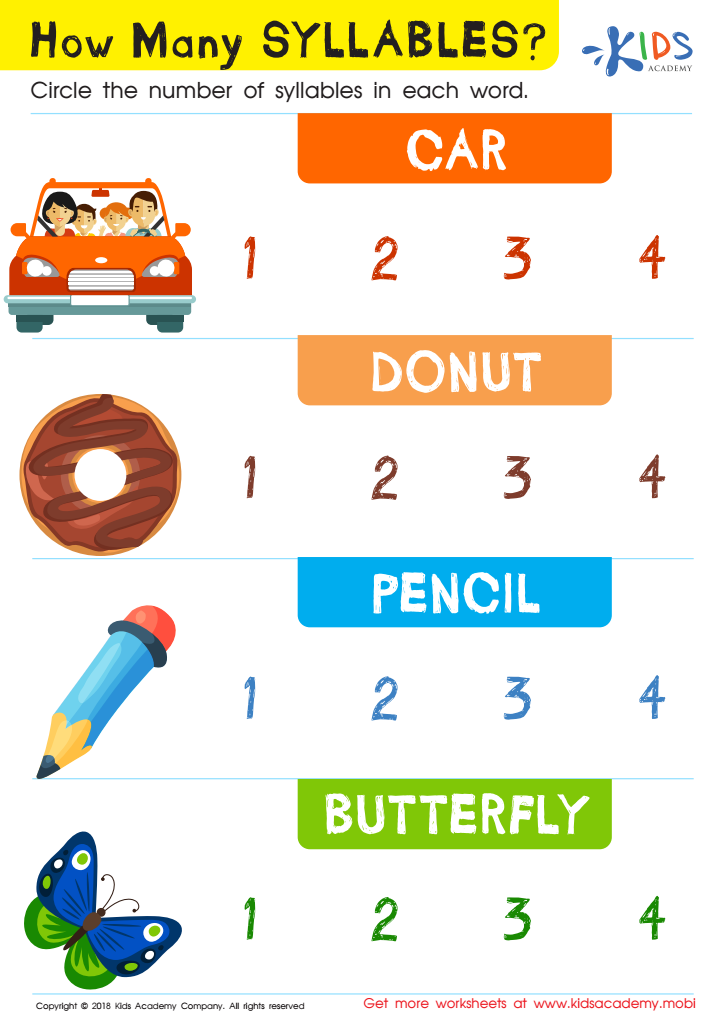
How Many Syllables? Worksheet
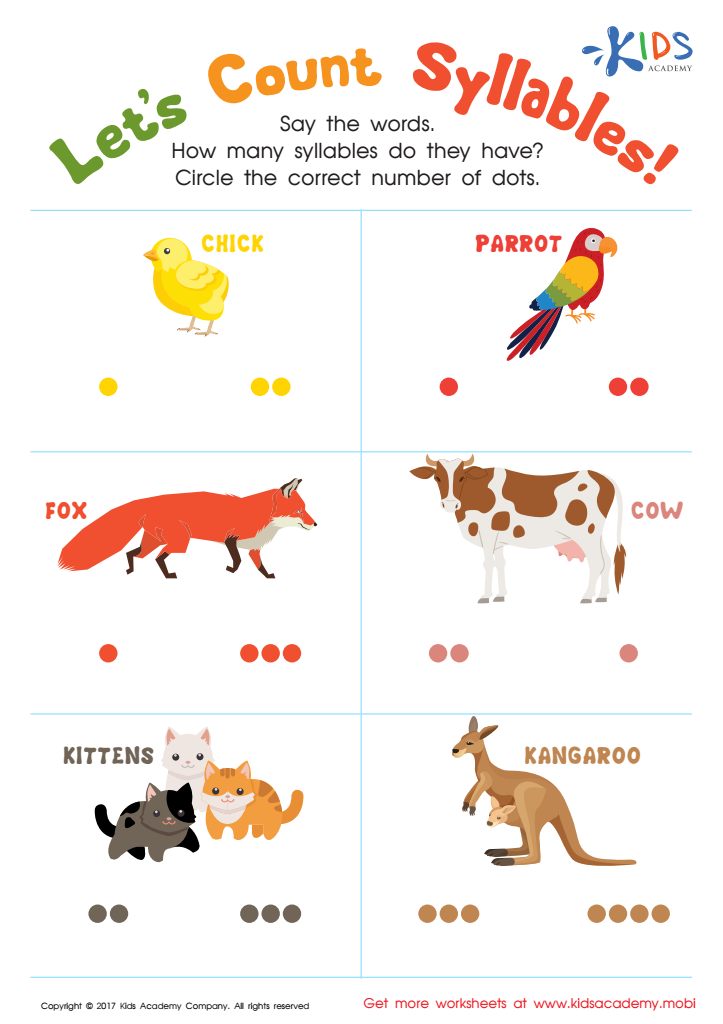
Lets Count Syllables Worksheet







.jpg)
Phonological awareness is a critical skill that serves as a foundation for reading and literacy development, making it crucial for parents and teachers to prioritize it for children aged 4-5. At this age, children are developing the ability to recognize and manipulate sounds within words, which is the first step towards successful reading. Clear phonological awareness helps them understand that words are made up of sounds and that these sounds can be segmented, blended, and changed.
When children develop phonological awareness, they gain the skills needed to decode unfamiliar words, improving their reading abilities as they progress in school. Early exposure to phonological activities, such as rhyming games and syllable clapping, also fosters a love for language, enhances vocabulary, and aids in comprehension skills.
Moreover, children who lack phonological awareness are at risk of reading difficulties, which can impact their academic performance and self-esteem. By recognizing the importance of phonological awareness, parents and teachers can implement fun and engaging activities that stimulate this skill. Encouraging children to play with sounds fuels not only literacy but also cognitive development, ultimately leading to greater success in their educational journey and instilling a sense of confidence and joy in learning.








