Sequencing Skills Normal Worksheets for Ages 4-5
3 filtered results
-
From - To
Boost your child's cognitive development with our Sequencing Skills Normal Worksheets for ages 4-5. Specially designed for preschool and kindergarten students, these printables guide little learners through understanding sequences and order. Each worksheet encourages critical thinking and enhances a child's ability to predict logical steps in a series. Fun and engaging activities help improve memory, logical reasoning, and problem-solving skills. Perfect for classroom use or at-home learning, ensure your young ones grasp the essential concept of sequencing with our expertly crafted resources. Visit Kids Academy to start nurturing foundational skills for lifelong learning success!
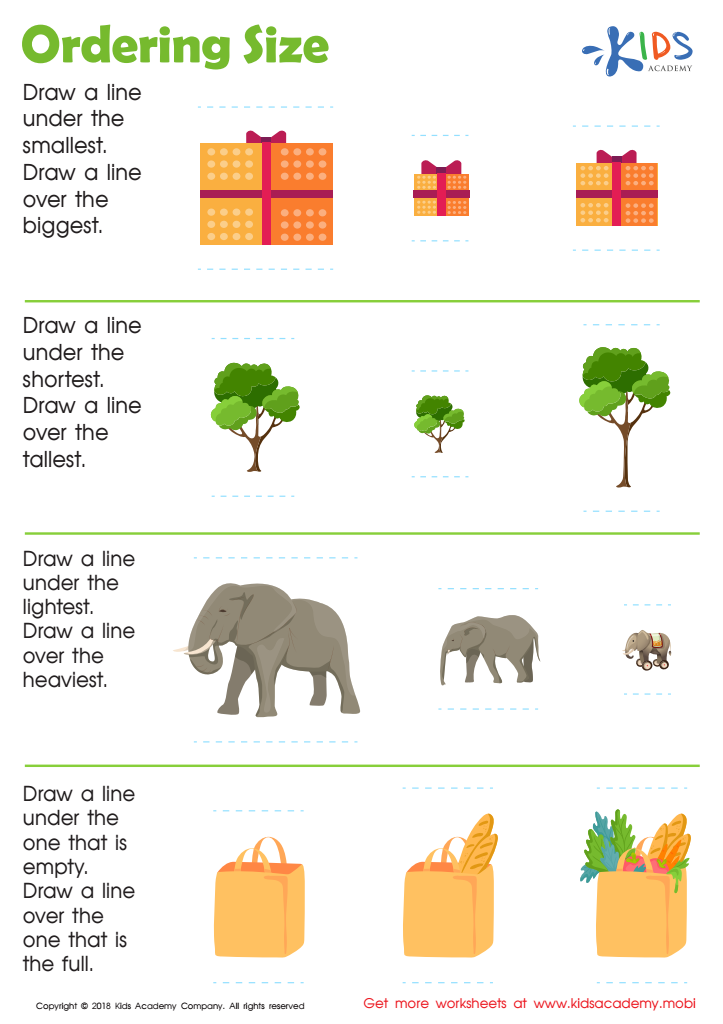
Ordering Size Worksheet
 Assign to My Students

Wash Your Hands Worksheet
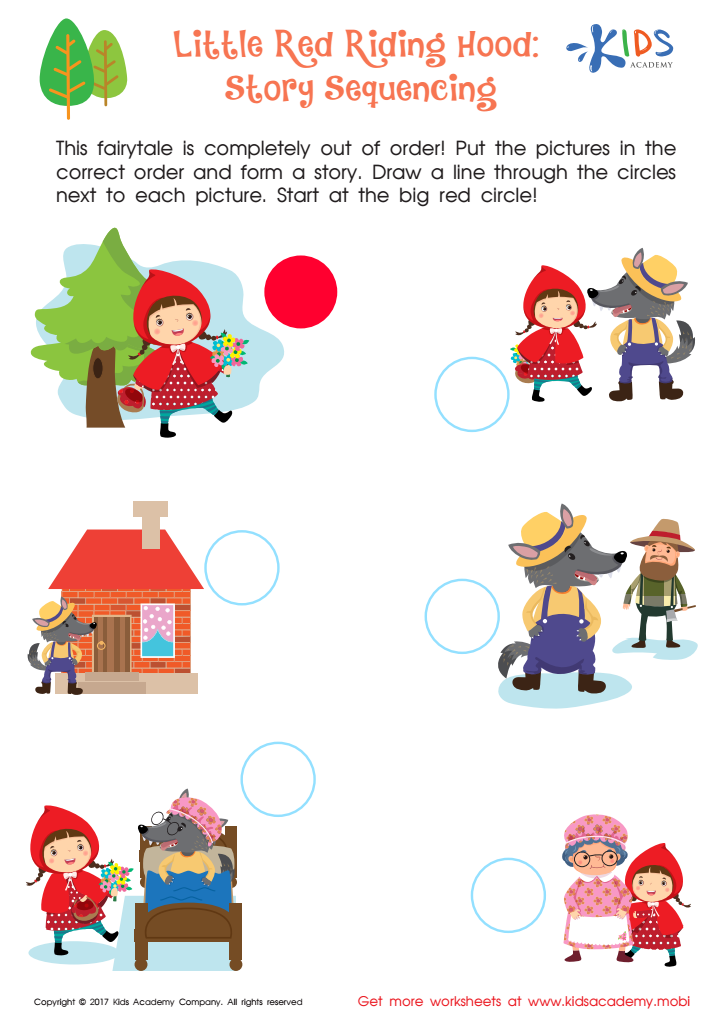
Story Sequencing Printable







Sequencing skills are crucial for children aged 4-5 because they lay the foundation for essential cognitive and academic abilities. Sequencing refers to the ability to understand and organize events or information in a logical order. At this age, children are rapidly developing critical thinking and problem-solving skills, where sequencing plays a central role.
First, mastering sequencing aids in language development. Children learn to recount stories coherently, understand cause-and-effect relationships, and follow instructions. This ability enhances their communication skills and prepares them for reading by fostering an understanding of narrative structure.
Second, sequencing is vital for mathematical reasoning. It helps children grasp patterns, understand number order, and develop early concepts of time and routines, which are foundational for higher-level math skills.
Third, sequencing supports everyday functioning and social development. Being able to follow steps in daily tasks, like getting dressed or preparing a snack, promotes independence. In social interactions, it allows children to understand and predict others' actions, improving their ability to navigate teamwork and play.
Thus, by focusing on developing sequencing skills in young children, parents and teachers set the stage for future educational success and daily life competencies. This solid foundation mitigates potential learning difficulties and supports overall cognitive development.








