Spelling practice Normal Worksheets for Ages 4-5 - Page 2
25 filtered results
-
From - To
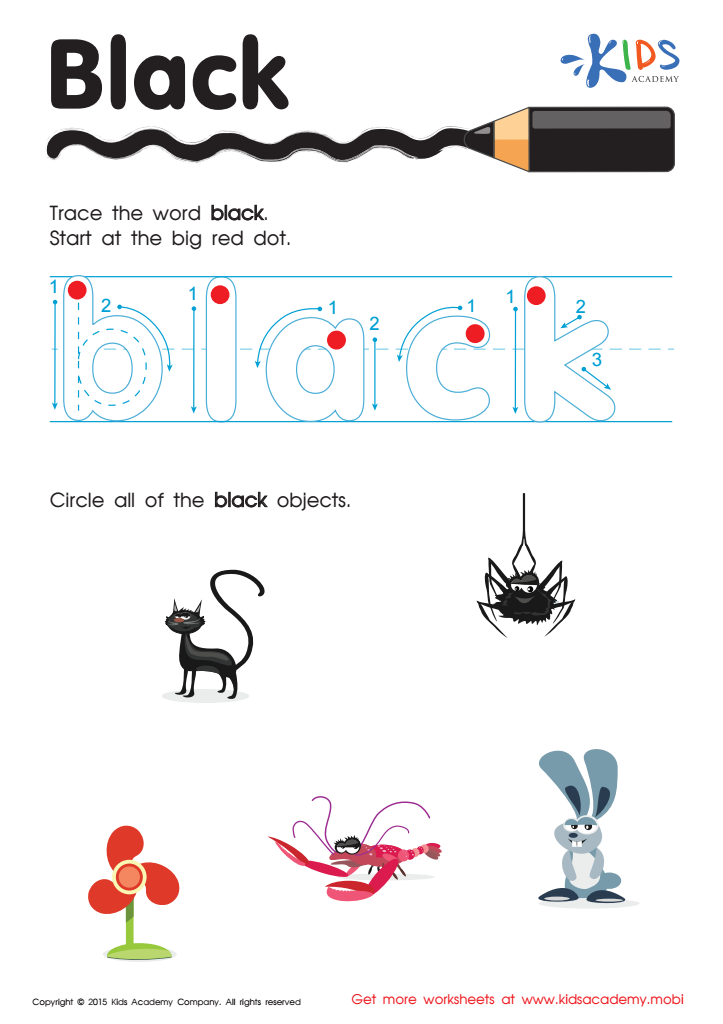
Black Tracing Color Words Printable
 Assign to My Students








Spelling practice for children aged 4-5 is crucial for several reasons. At this stage, young learners are developing foundational literacy skills that set the groundwork for their future education. Engaging in consistent spelling practice helps enhance phonemic awareness, the ability to hear and manipulate sounds in words, which is essential for reading and writing.
Additionally, this practice promotes vocabulary growth. As children learn to spell words, they naturally expand their understanding of language, enriching their communication skills. It also fosters confidence; successfully spelling words boosts self-esteem and encourages them to engage further in learning activities.
Moreover, spelling practice can improve cognitive abilities by enhancing memory and problem-solving skills. As children decode and construct words, they engage in critical thinking, which is beneficial across subject areas.
For parents and teachers, facilitating spelling practice provides an opportunity for bonding and individualized instruction. Encouraging spelling through fun activities—like games, songs, or drawing—makes learning enjoyable. Thus, prioritizing spelling practice in early education is essential for nurturing a child's love of language and laying the groundwork for academic success.








