Story comprehension Normal Worksheets for Ages 4-5
4 filtered results
-
From - To
Introducing our Story Comprehension Normal Worksheets for Ages 4-5, designed to enhance young learners' understanding of tales. These engaging worksheets provide captivating stories alongside interactive questions that promote critical thinking and attention to detail. Each activity aims to boost reading comprehension, vocabulary development, and narrative recall skills in early learners. Guided by colorful illustrations and simplified text, children can enjoy and grasp essential story elements, setting a solid foundation for future reading success. Ideal for parents and educators, our worksheets ensure a joyful and educational reading experience tailored specifically for young readers. Explore now to enrich your child's reading journey!
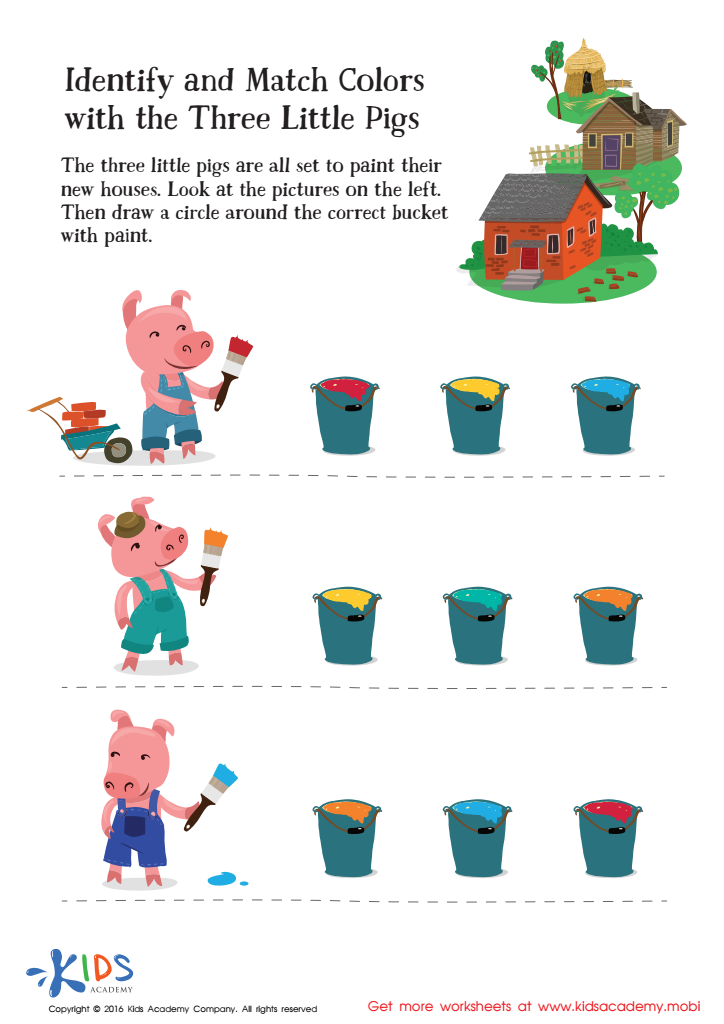
Fairy Tale Worksheet: Identify and Match Colors with Three Little Pigs
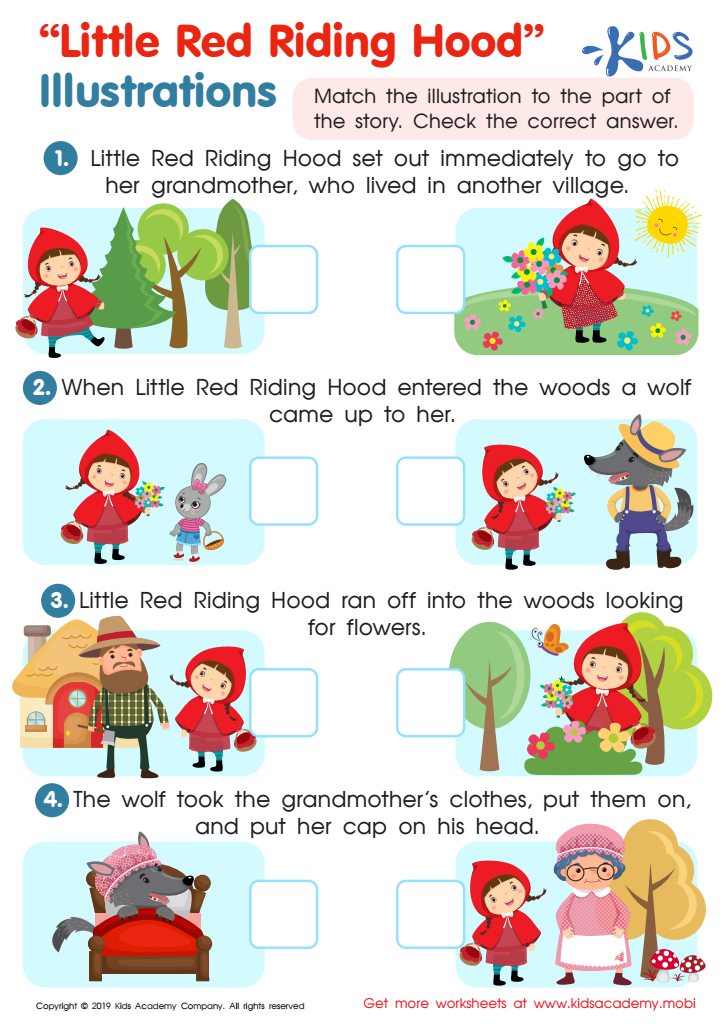
Little Red Riding Hood: Illustrations Worksheet
Red Riding Hood Coloring Page
 Assign to My Students
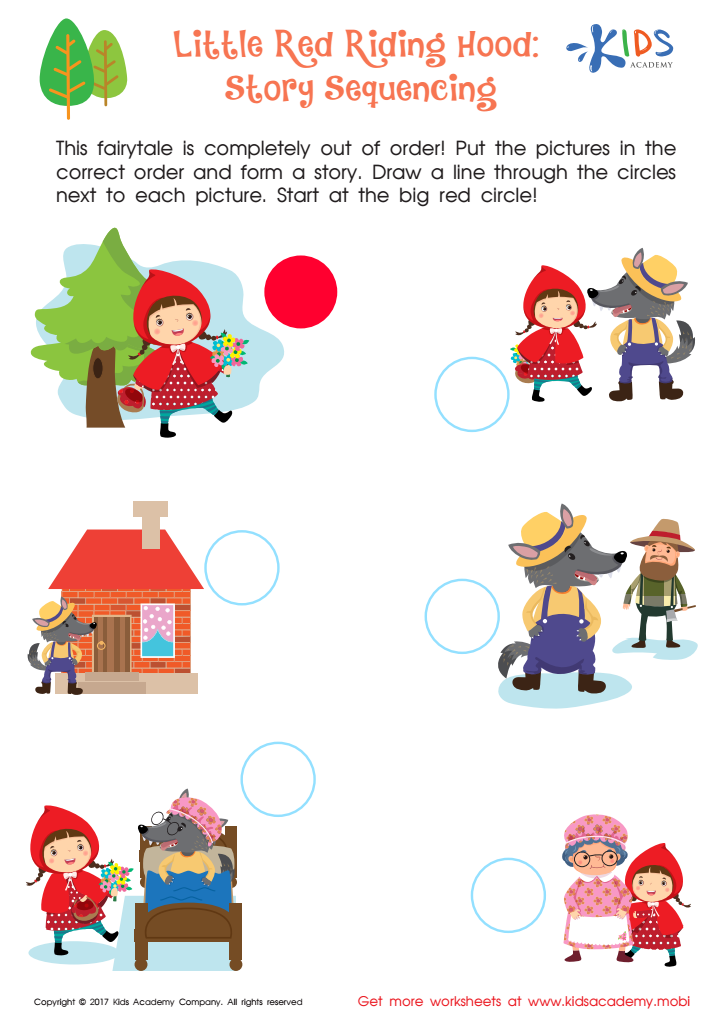
Story Sequencing Printable







Story comprehension is a critical skill for children aged 4-5 and merits significant attention from parents and teachers. At this developmental stage, children are rapidly expanding their language, cognitive, and social-emotional capabilities. Understanding stories enhances vocabulary, introduces new concepts, and nurtures imaginative thinking.
When young children engage with stories, they learn to follow a sequence of events, understand cause and effect, and grasp moral lessons or themes. These skills are essential for logical thinking and problem-solving. Moreover, well-developed story comprehension lays a foundation for future reading and academic success. Research shows that early literacy skills are strong predictors of later academic achievement.
Additionally, stories teach empathy by allowing children to experience different perspectives and emotions. Through characters and plotlines, children learn to navigate social situations, recognize others’ feelings, and develop interpersonal skills.
For parents and teachers, fostering a love for stories creates a warm, nurturing environment conducive to learning. Storytime becomes a shared bonding activity that supports emotional security and trust. Parents and teachers can use questioning techniques during or after a story to encourage children to think critically and articulate their thoughts.
Thus, prioritizing story comprehension for children aged 4-5 not only supports their immediate development but also builds the groundwork for lifelong learning and emotional intelligence.








