Syllable identification Normal Worksheets for Ages 4-5
3 filtered results
-
From - To
Introduce your young learners to the joy of reading with our Syllable Identification Normal Worksheets for ages 4-5. These thoughtfully crafted worksheets help preschoolers and kindergarteners develop crucial phonemic awareness by teaching them to recognize and count syllables in words. Featuring engaging illustrations and kid-friendly design, these exercises make learning fun and interactive. By mastering syllable identification, children build a strong foundation for reading fluency and language skills that will support their academic success. Perfect for classroom or home use, these printable worksheets are an excellent resource for early childhood educators and parents committed to nurturing literacy from the start.
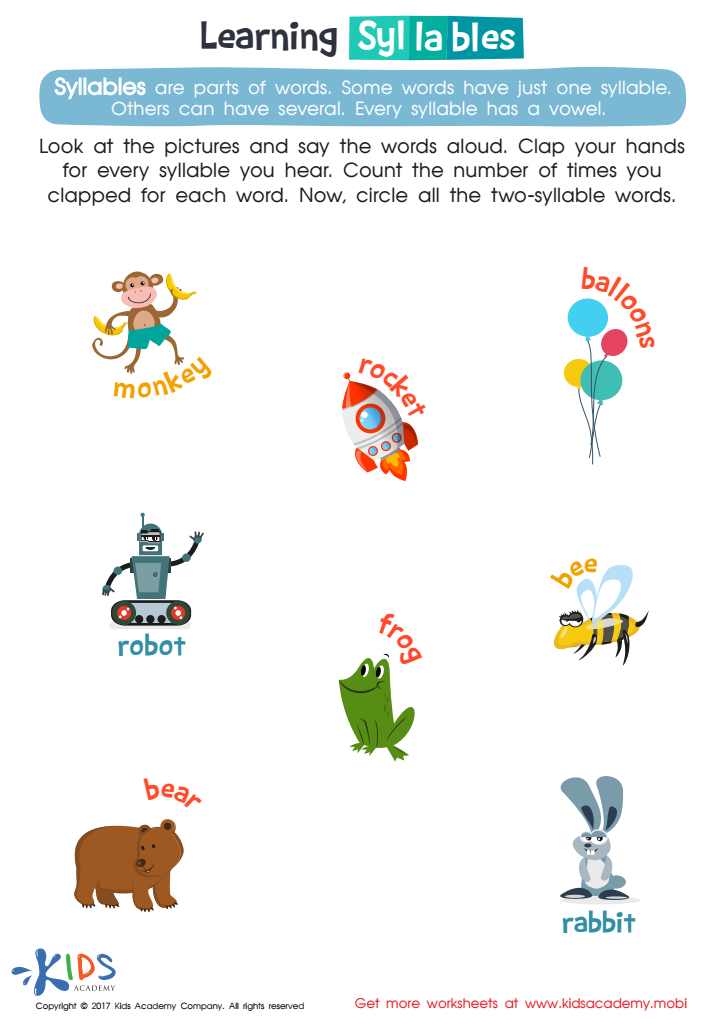
Learning Syllables Word Structure Worksheet
 Assign to My Students
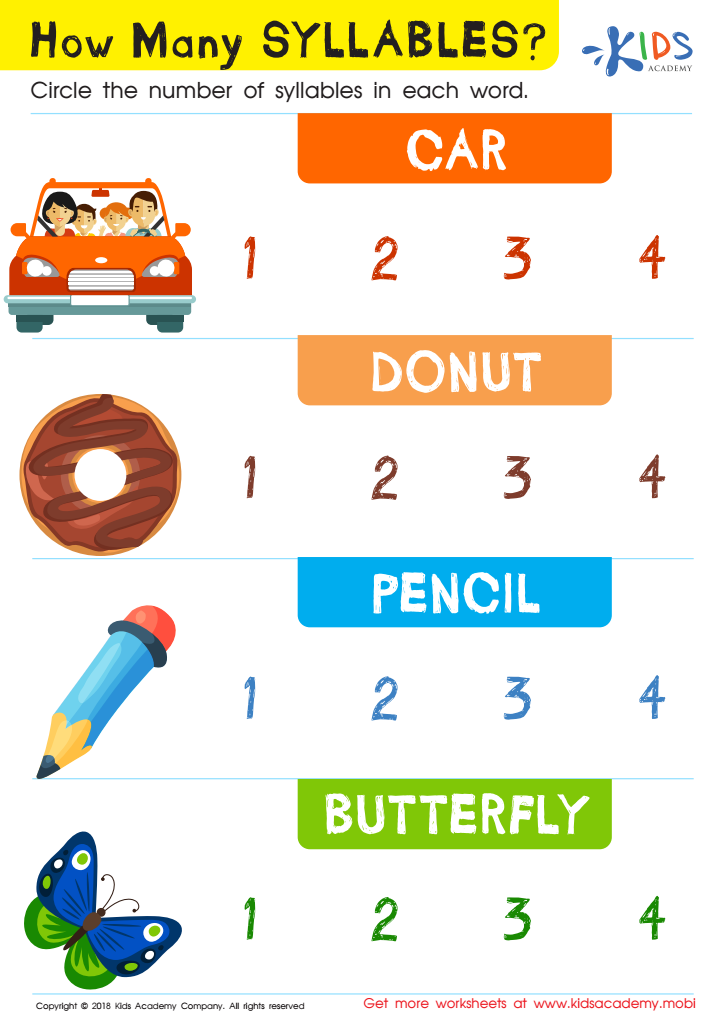
How Many Syllables? Worksheet
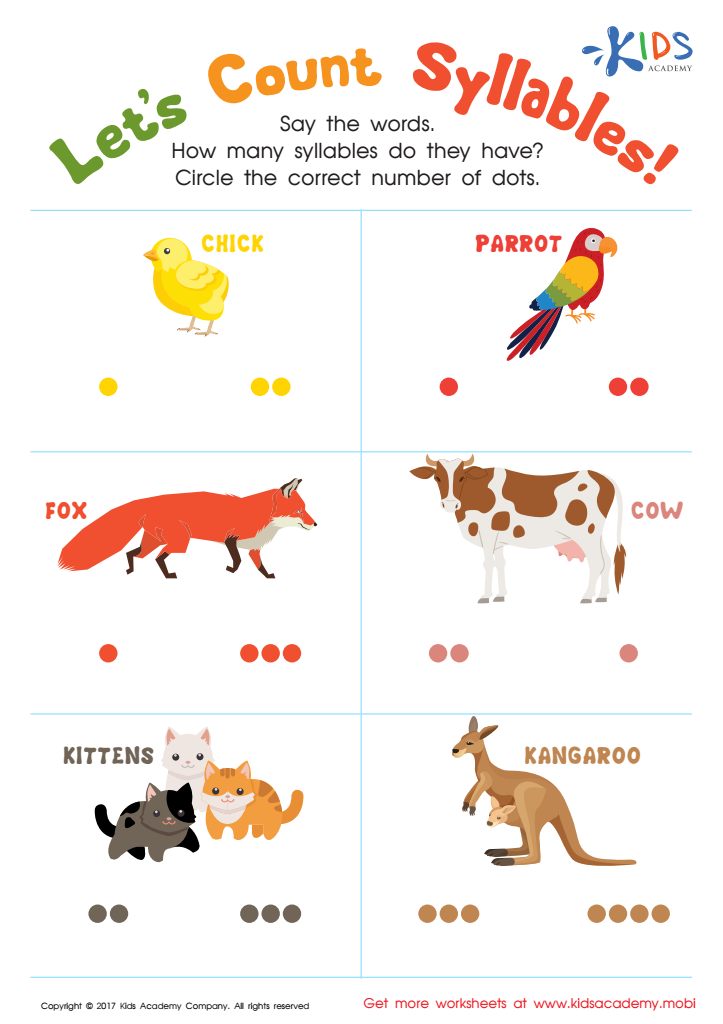
Lets Count Syllables Worksheet







Syllable identification is an essential skill for children aged 4-5 as it forms the foundation of their reading and language proficiency. At this stage, kids are in the critical period of developing their phonological awareness, which is the ability to hear and manipulate the distinct sounds in words. Recognizing syllables helps children break down words into manageable parts, making it easier for them to decode and pronounce new words. This ability directly influences their reading fluency, comprehension, and spelling skills.
Parents and teachers should focus on sylabe identification because it facilitates early reading success. When children can identify syllables, they enhance their vocabulary and become more competent in grasping complex words and sentences. Moreover, this skill aids in early writing, as children learn to structure their words correctly on paper. As a result, they gain confidence in their literacy abilities, setting a positive trajectory for their future academic success.
Incorporating fun and engaging syllable games and activities can make this learning process enjoyable, fostering a love for learning and preventing frustration. Therefore, attention to syllable identification not only enriches children’s immediate educational experiences but also equips them with the crucial skills necessary for lifelong literacy and communication competence.








