
Understanding Sequences Normal Worksheets for Ages 4-5
4 filtered results
Difficulty Level
Grade
Age
-
From - To
Subject
Activity
Standards
Welcome to our "Understanding Sequences Normal Worksheets" for ages 4-5! Designed to enhance early learning, these worksheets help young children develop crucial sequencing skills through engaging activities. By practicing the arrangement of events or objects in order, kids will improve their critical thinking and cognitive abilities. Our user-friendly worksheets incorporate fun visuals and relatable scenarios to make learning enjoyable and relatable. Ideal for teachers, parents, and caregivers, these resources empower children to grasp the concept of sequences through repetition and hands-on practice. Explore our worksheets today and watch your child build a strong foundation in sequencing skills essential for future learning!
Favorites
With answer key
Interactive
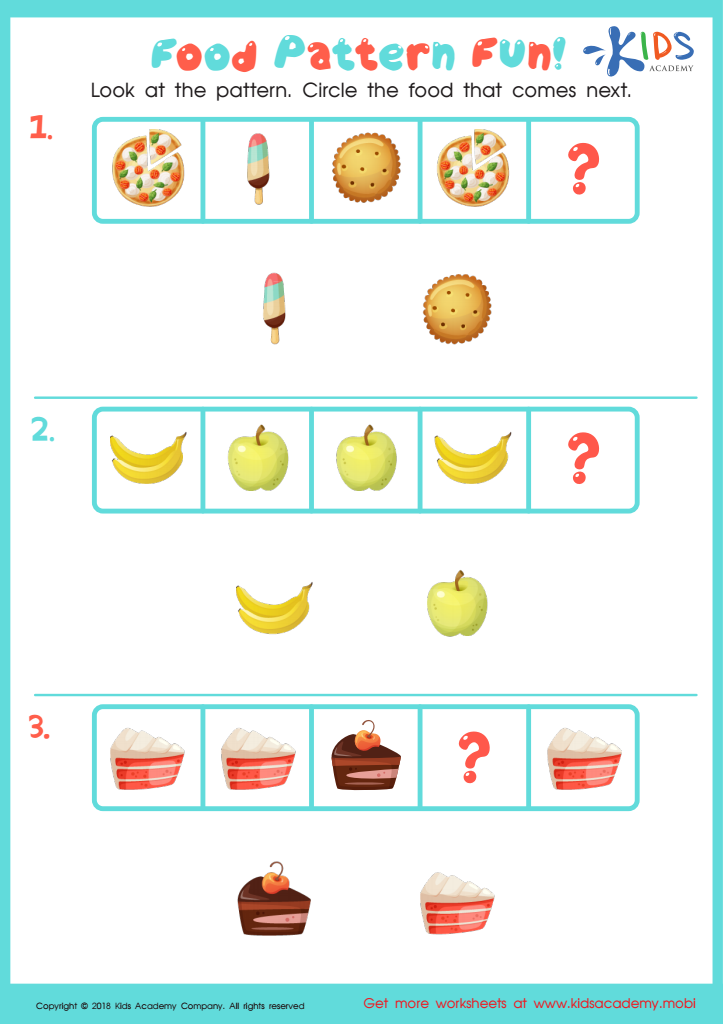
Food Pattern Fun Worksheet
Got kids who love snacks? Get them excited with this fun food pattern worksheet! Ask them to identify the foods in the printout then spot the pattern and circle the next food in each row. It's a great way to get them thinking and have fun at the same time!
 Assign to My Students
Food Pattern Fun Worksheet
Worksheet
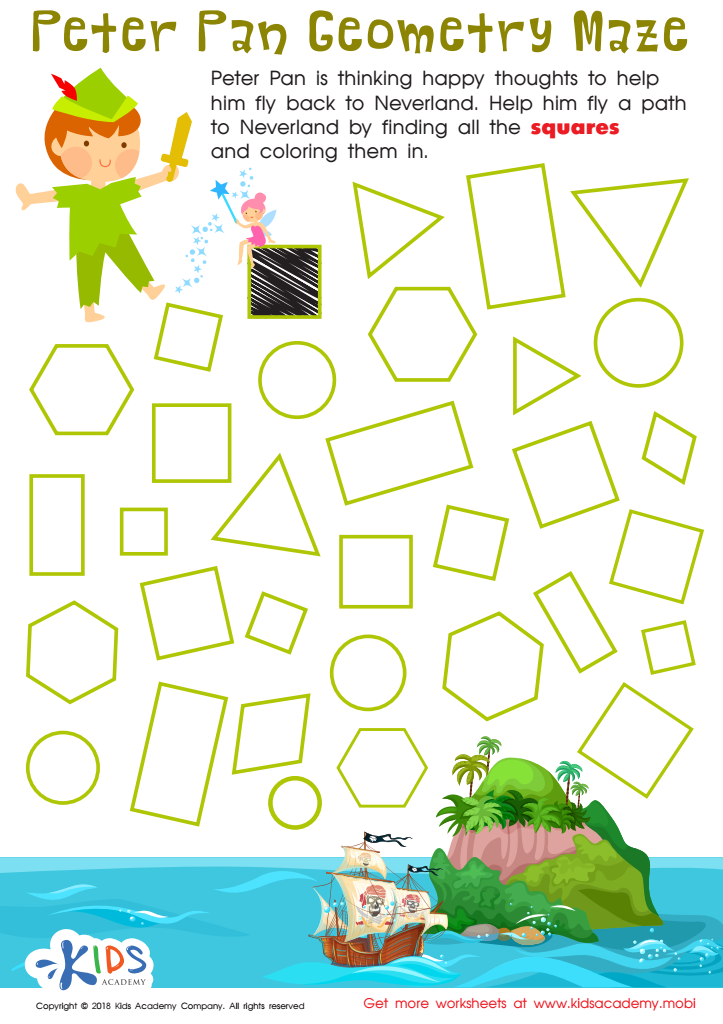
Peter Pan Worksheet
Kindergarteners can join Peter Pan on an adventure to Neverland! They can help him by coloring squares to create a path, strengthening their shape identification skills in a fun maze. Let the journey begin!
Peter Pan Worksheet
Worksheet
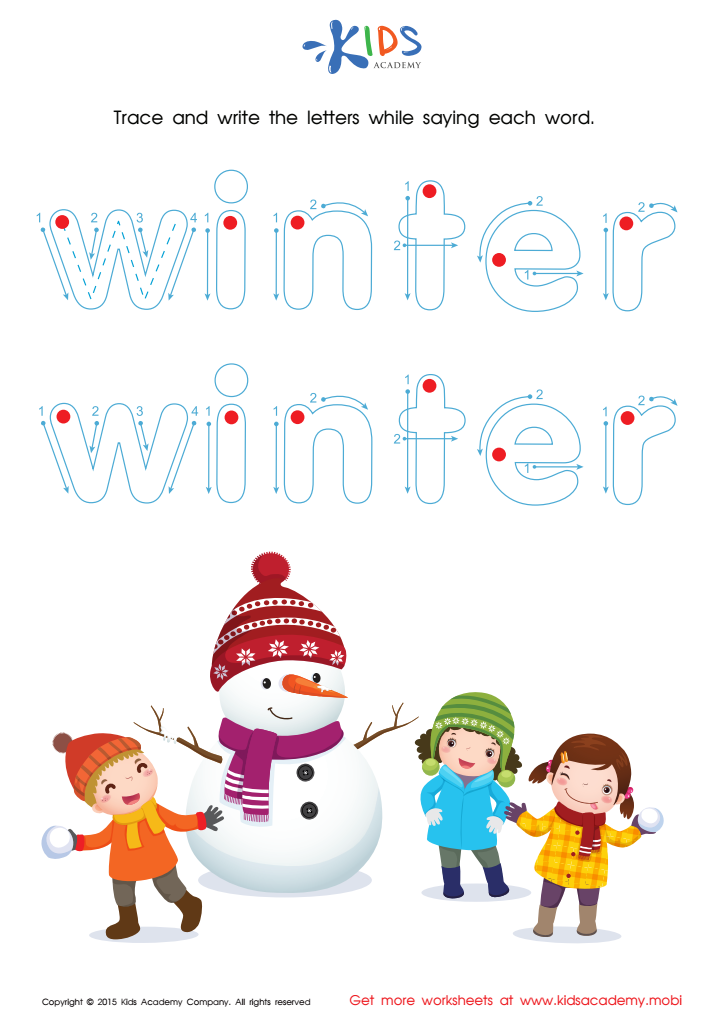
Snowman Tracing Winter Words Worksheet
This free winter printable teaches handwriting and spelling with the word "snowman". It's a fun way to get your kid ready for Christmas cheer! Want more tracing worksheets? Check out here.
Snowman Tracing Winter Words Worksheet
Worksheet
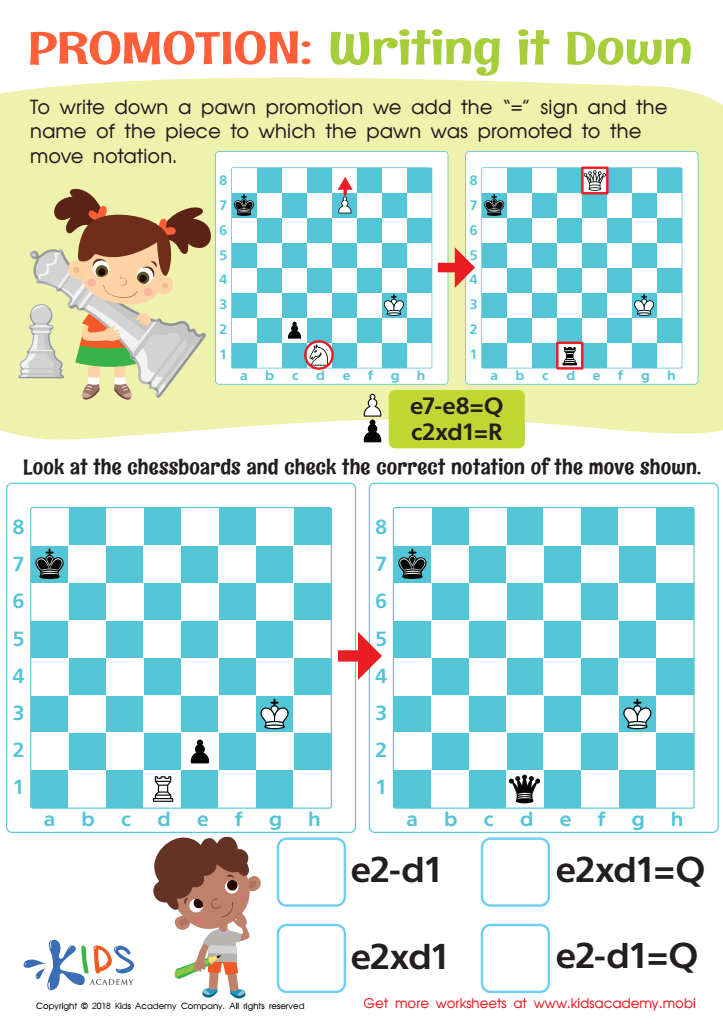
Writing it Down Worksheet
To document pawn promotion, add "=<piece name>" to the move notation. For example: e7-e8=Q. Ask your child to look at the chessboard and take note of the moves. Check the notations are correct. (80 words)
Writing it Down Worksheet
Worksheet
Join Kids Academy for Free
Who is primarily going to use this learning content?








Understanding sequences is a fundamental cognitive skill for children aged 4-5, providing a solid foundation for future learning in mathematics, language, and problem-solving. For parents and teachers, nurturing this skill is vital because it enhances critical thinking and helps children recognize patterns in everyday life.
In early childhood, recognizing and creating sequences—whether in the order of daily routines, story progression, or even in simple actions like "first we eat, then we play"—helps children develop logical reasoning. This understanding aids in mathematical concepts, such as counting and basic addition and subtraction, later on. It also enriches their vocabulary and comprehension skills as they learn to anticipate what comes next in stories or sequences of events.
Promoting sequential awareness offers social benefits as well. Children learn to communicate effectively, share experiences, and engage in storytelling, fostering better relationships with peers. For educators, integrating sequencing activities can make learning fun and interactive, providing opportunities for collaboration and creativity.
Ultimately, parents and teachers should care about understanding sequences because it not only enhances academic readiness but also supports essential life skills that help children navigate their world confidently.








