Subtraction practice Normal Addition and Subtraction Word Problems Worksheets for Ages 4-5
3 filtered results
-
From - To
Welcome to our Subtraction Practice worksheets designed for young learners aged 4-5! These engaging resources are perfect for helping your child build foundational skills in subtraction through fun and relatable word problems. Each worksheet features colorful illustrations and age-appropriate scenarios, making math enjoyable and interactive. As children work through the exercises, they will develop critical thinking skills and enhance their understanding of subtraction concepts in everyday life. Our worksheets are ideal for use at home or in the classroom, providing a great way for early educators and parents to support their child’s math journey with essential practice in subtraction.
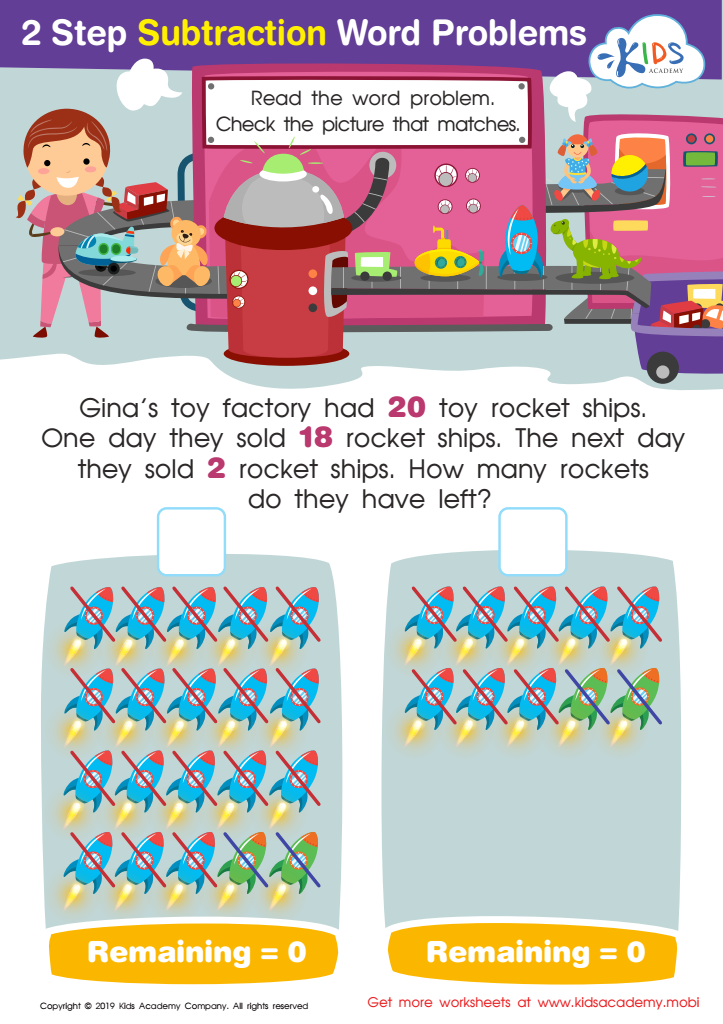
Step Subtraction Word Problems Worksheet
 Assign to My Students
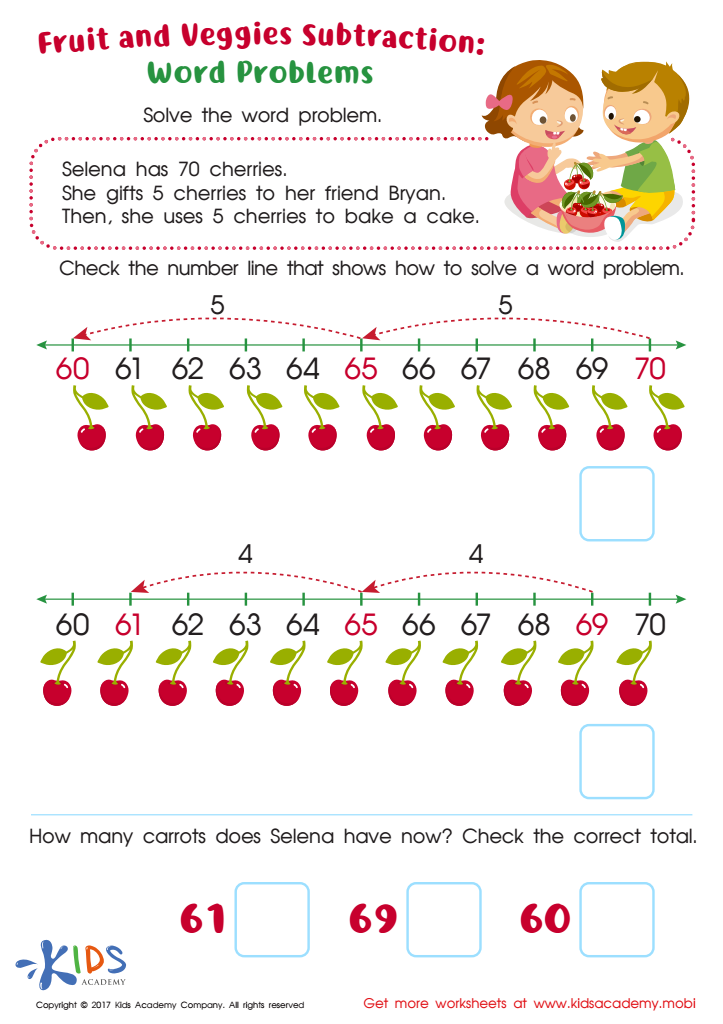
Subtraction Word Problems Free Printable
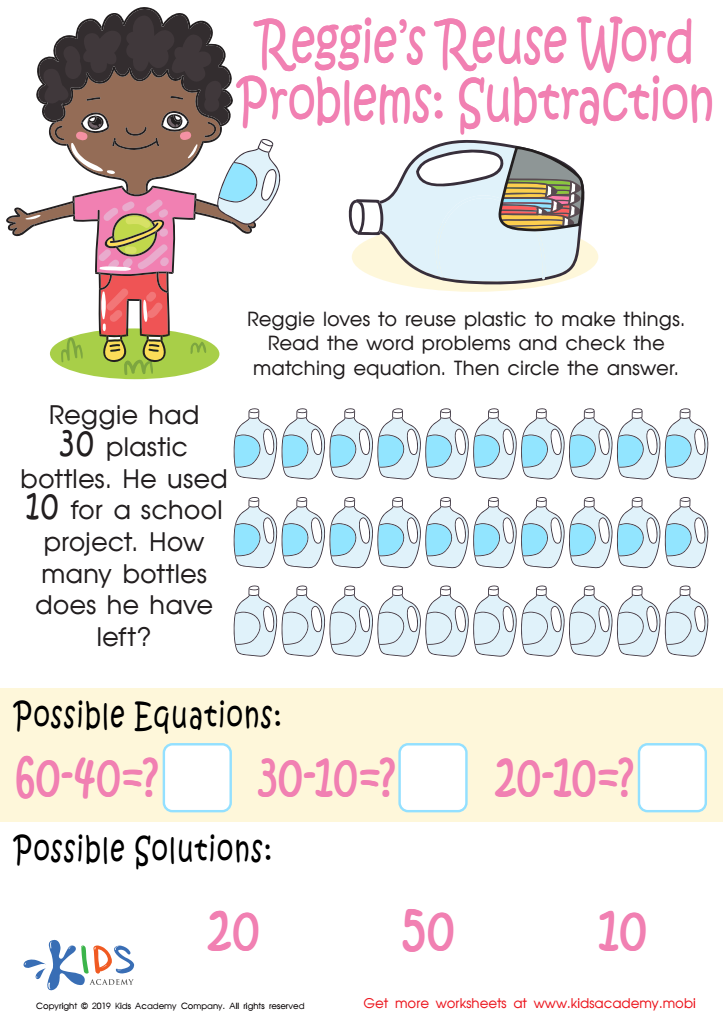
Reggie's Reuse Word Problems: Subtraction Worksheet








Parents and teachers should prioritize subtraction practice and normal addition and subtraction word problems for children aged 4-5 for several key reasons. Firstly, early mathematical fluency lays a strong foundation for future learning. Mastering these fundamental concepts fosters not just arithmetic skills, but also critical thinking and problem-solving abilities crucial for later educational success.
Subtraction, along with addition, promotes number sense — the intuitive understanding of numbers and their relationships. Engaging children in word problems helps them learn to interpret real-life situations mathematically, making learning relevant and enjoyable. At this young age, children are naturally curious and eager to learn; structured activities involving subtraction can harness this enthusiasm effectively.
Moreover, practice in subtraction reinforces hand-eye coordination and fine motor skills through written exercises and manipulative activities, thus supporting overall cognitive development.
Additionally, these mathematical concepts enhance language skills as children describe the processes and solutions, fostering communication abilities. Ultimately, focusing on subtraction and word problems nurtures a child's confidence in their mathematical abilities, setting them on a positive trajectory where they feel capable to tackle increasingly complex concepts in the future. In fostering mathematics at this stage, parents and teachers invest in a child's lifelong learning journey.