Counting practice Normal Addition & Subtraction Worksheets for Ages 4-5
4 filtered results
-
From - To
Enhance your child's early math skills with our Counting Practice Normal Addition & Subtraction Worksheets, designed for ages 4-5. These engaging, printable resources introduce young learners to the foundational concepts of addition and subtraction through fun and stimulating activities. Each worksheet features colorful visuals and age-appropriate exercises that help kids develop counting proficiency while fostering confidence in problem-solving. Perfect for at-home learning or classroom use, our worksheets make practicing math enjoyable and stress-free. Join us in building a solid mathematical foundation for your little one and watch them grow into enthusiastic learners! Start counting and calculating today!
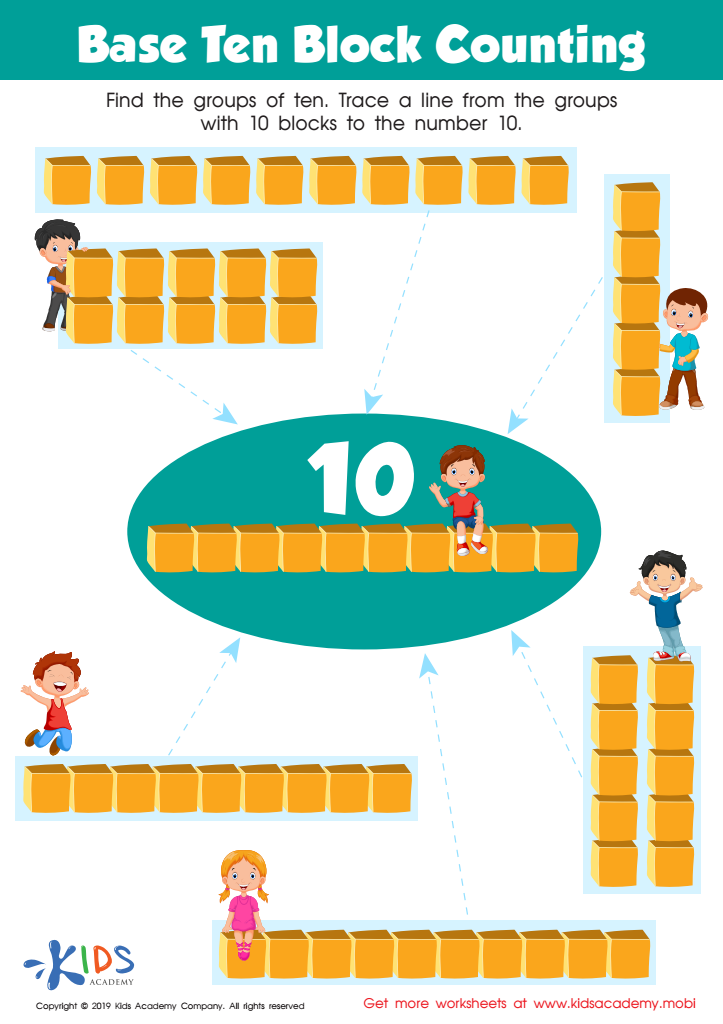
Base Ten Block Counting Worksheet
 Assign to My Students
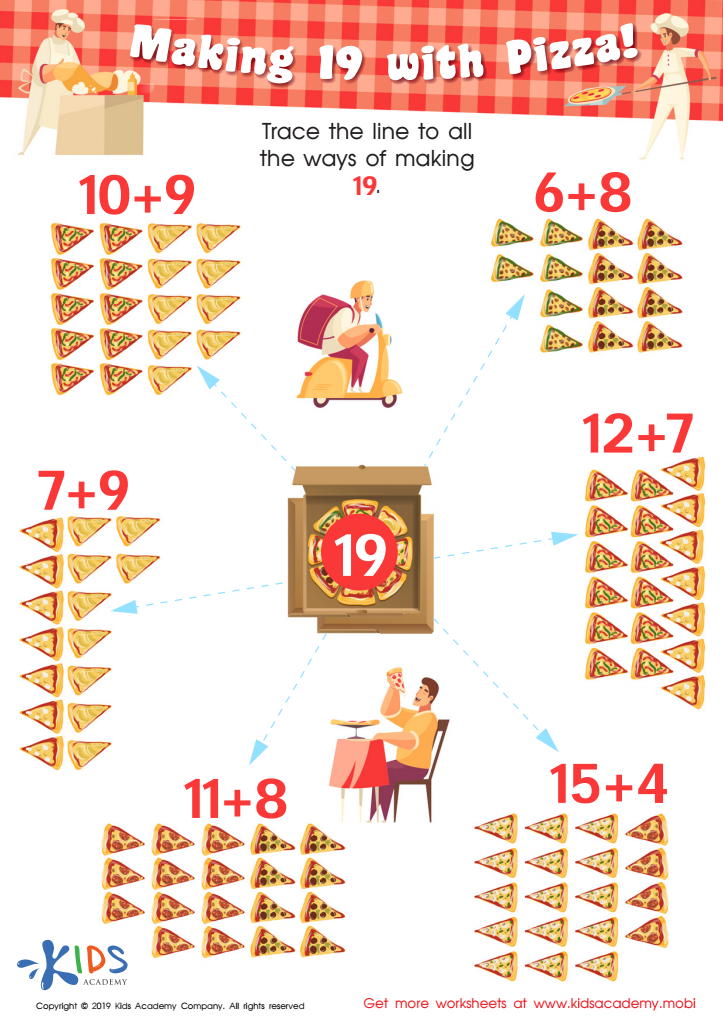
Making 19 with Pizza! Worksheet
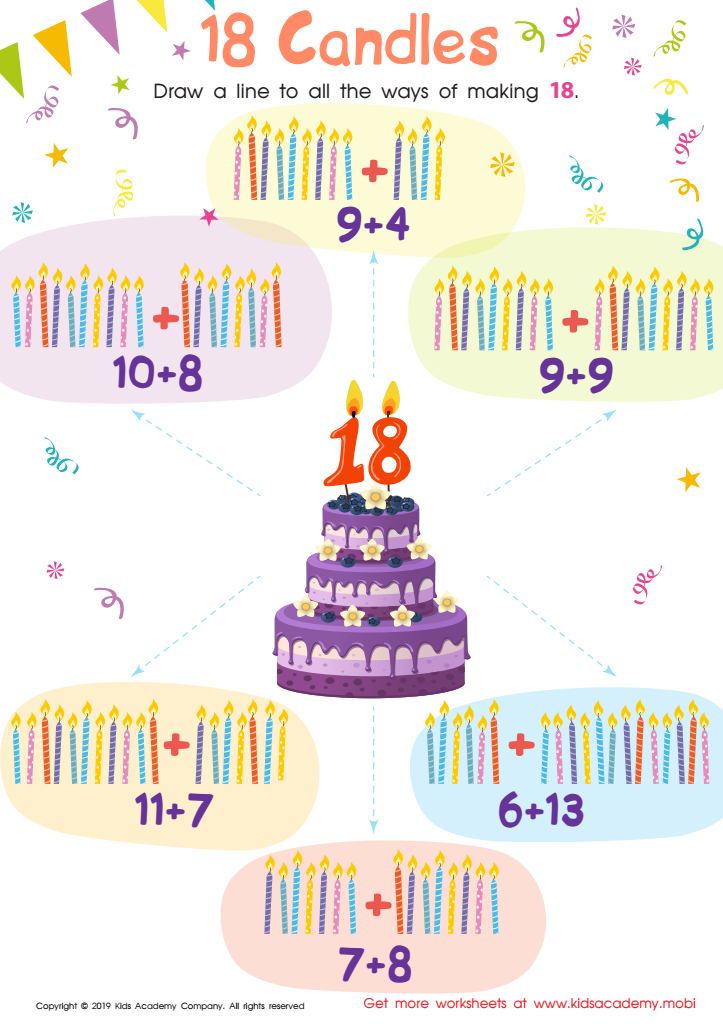
18 Candles Worksheet
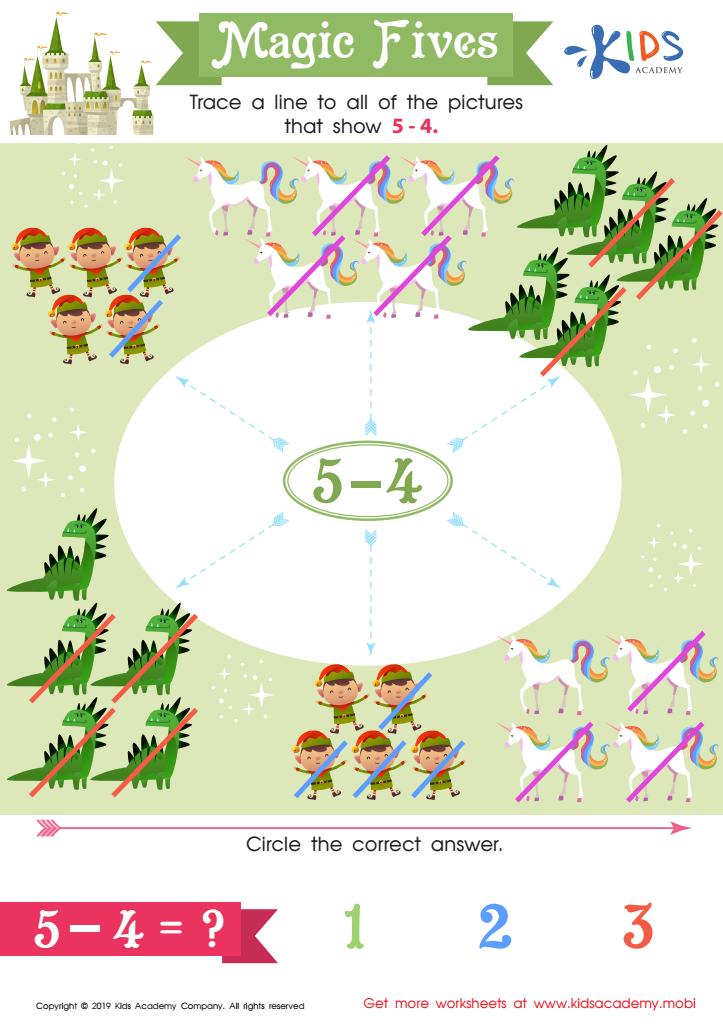
Magic Fives Worksheet








Counting practice and normal addition and subtraction for children aged 4-5 are crucial foundational skills that lay the groundwork for future mathematical learning. At this age, children are naturally curious and eager to learn. Engaging in counting activities helps them develop number sense, an essential cognitive skill that enables them to understand quantity, comparisons, and relationships between numbers.
Practicing addition and subtraction at this early stage promotes problem-solving abilities and logical thinking. Children learn to recognize patterns and make connections, which are vital components of mathematical literacy. Additionally, these skills can enhance their fine motor coordination and language development, as children engage in discussions about numbers and quantities.
Moreover, early mathematics experience fosters self-confidence. Children who grasp these basic concepts are more likely to succeed in later learning, which can lead to a lifetime love of math. For parents and teachers, integrating counting and simple arithmetic into daily routines turns learning into an enjoyable and effortless process. By nurturing these early skills, adults can help prepare their children for academic success, while also equipping them with essential life skills necessary for everyday situations, such as shopping or sharing. Ultimately, investing time in these practices yields long-term educational and developmental benefits.








