
Fine Motor Skills Normal Addition & Subtraction Worksheets for Ages 4-5
5 filtered results
Difficulty Level
Grade
Age
-
From - To
Subject
Activity
Standards
Boost young learners’ math abilities with our Fine Motor Skills Normal Addition & Subtraction Worksheets for Ages 4-5. These meticulously designed printables help children develop essential fine motor skills while mastering basic addition and subtraction. Activities are crafted to engage little hands and minds, offering fun ways to improve pencil control, hand-eye coordination, and numerical understanding. Perfect for preschool and kindergarten students, our worksheets integrate colorful illustrations and interactive tasks to make learning enjoyable and effective. Start building a strong math foundation today with our expertly designed educational tools—ideal for both classroom use and at-home practice.
Favorites
With answer key
Interactive
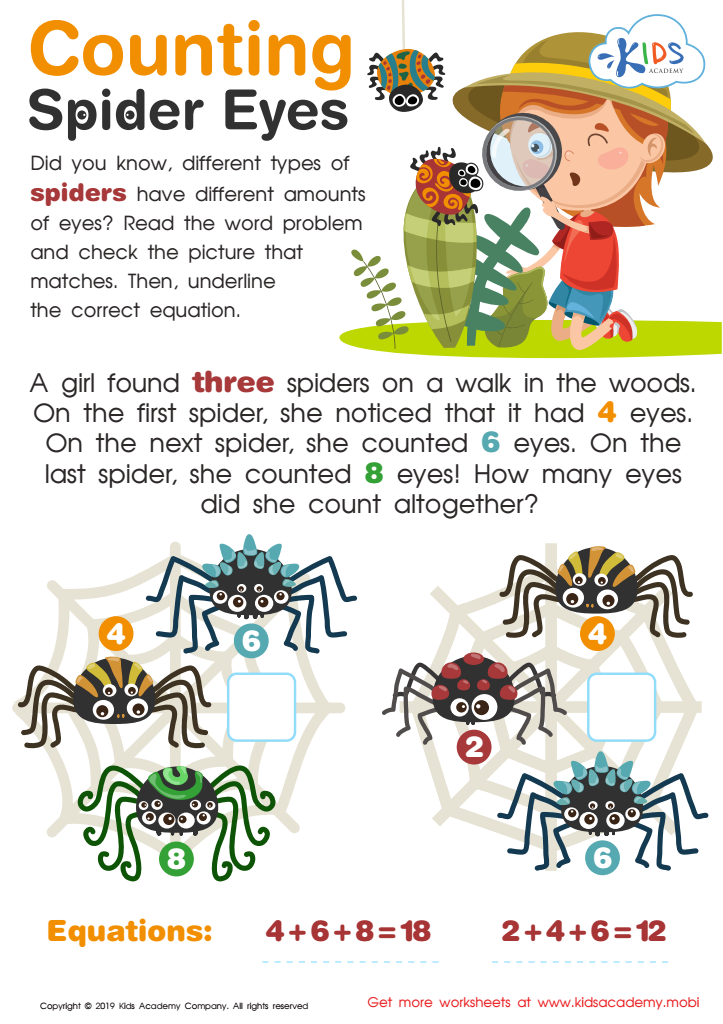
Counting Spider Eyes Worksheet
Did you know different spiders have different eye numbers? Kids will love learning this fact and solving the spider word problems on this free worksheet! Word problems promote a deeper understanding of the concept, plus they get to add up the spiders’ eyes while solving addition problems with more than one addend. Fun and math all in one!
 Assign to My Students
Counting Spider Eyes Worksheet
Worksheet
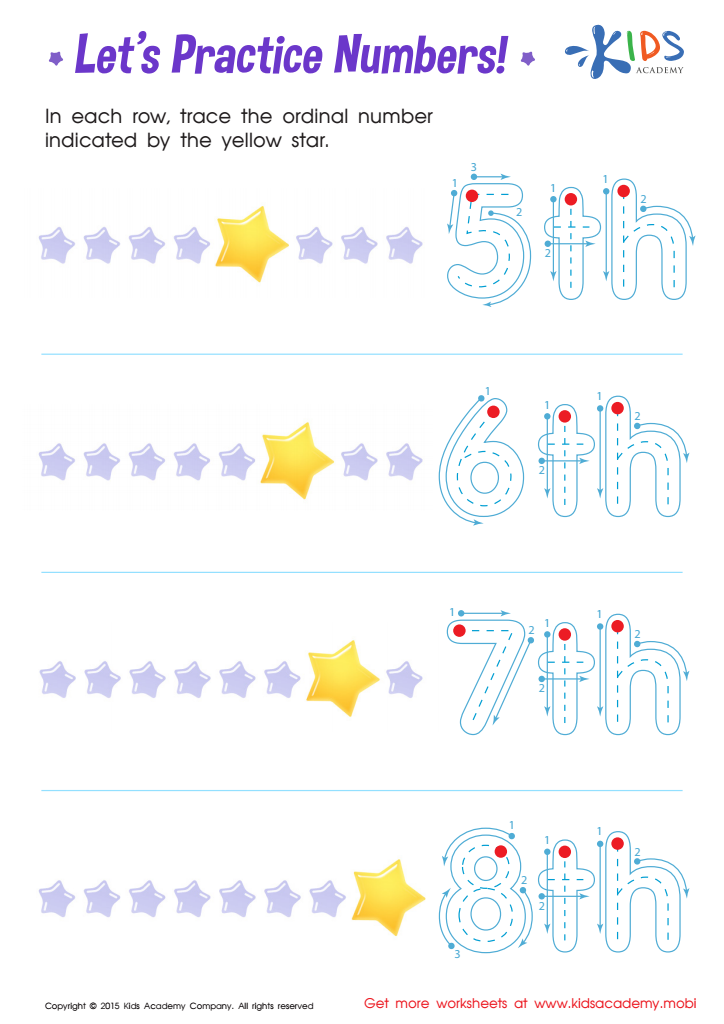
Ordinal Numbers: Let's Practice Numbers Printable
Worksheet
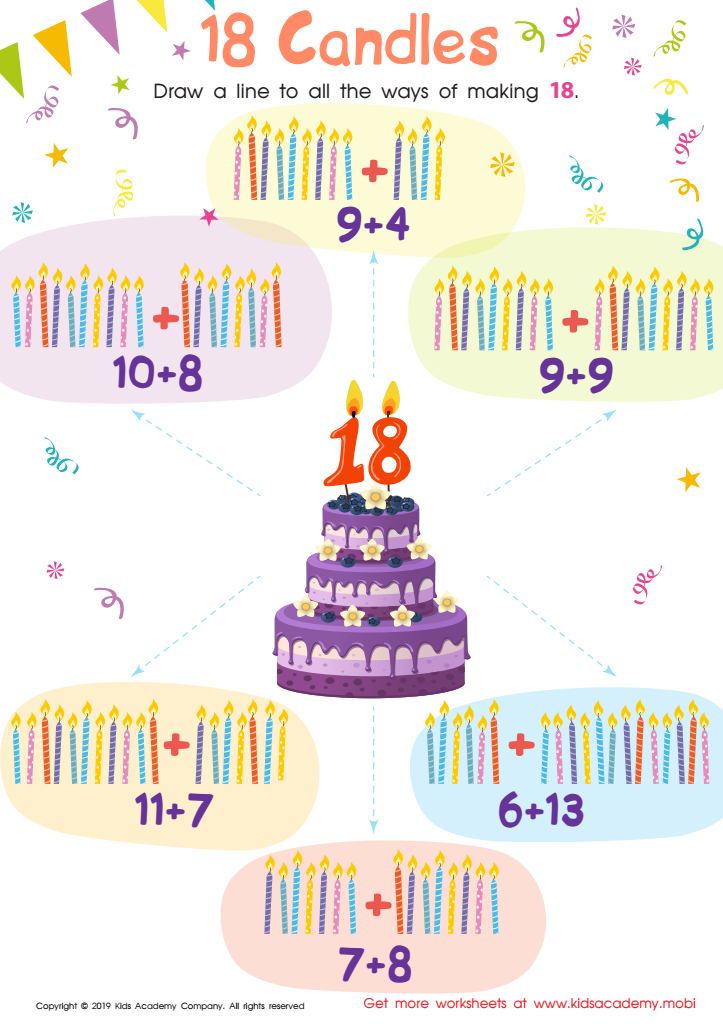
18 Candles Worksheet
This worksheet is great for introducing your students to addition and subtraction. Help your kids solve the simple equations on it and draw a line from the birthday cake with 18 on it to all the solutions. Practice like this will prepare them to tackle more complex math problems.
18 Candles Worksheet
Worksheet
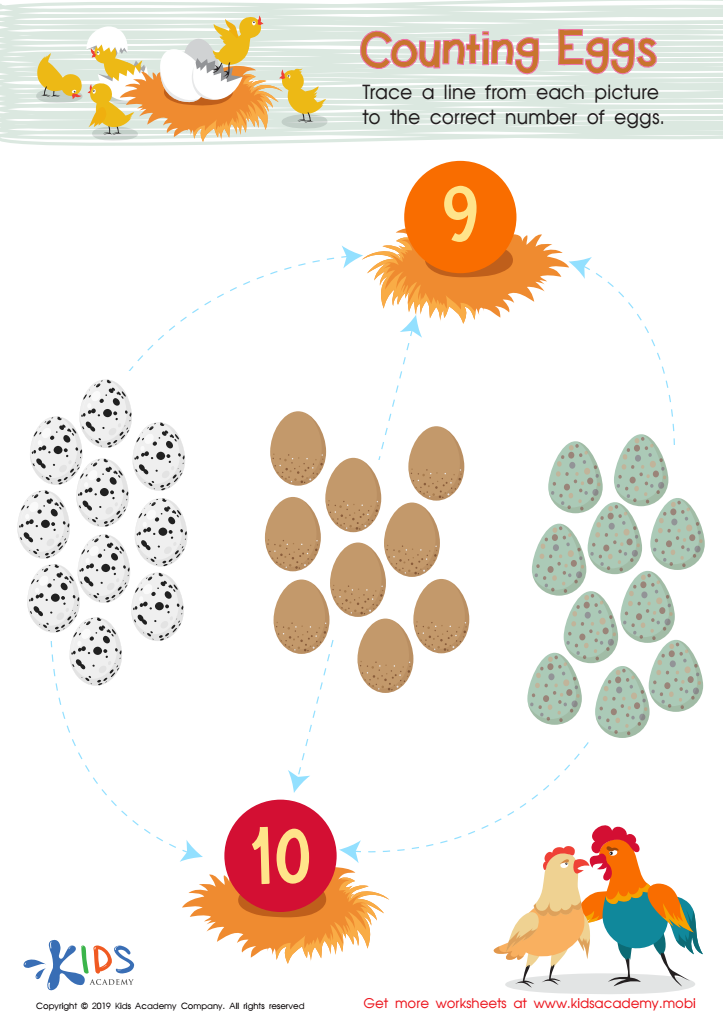
Counting Eggs Worksheet
This worksheet is great for teaching kindergarteners to count and add numbers. It includes colorful pictures of eggs with numbers to trace. Help students count the eggs and draw a line to the right number. This will make learning fun and easy!
Counting Eggs Worksheet
Worksheet
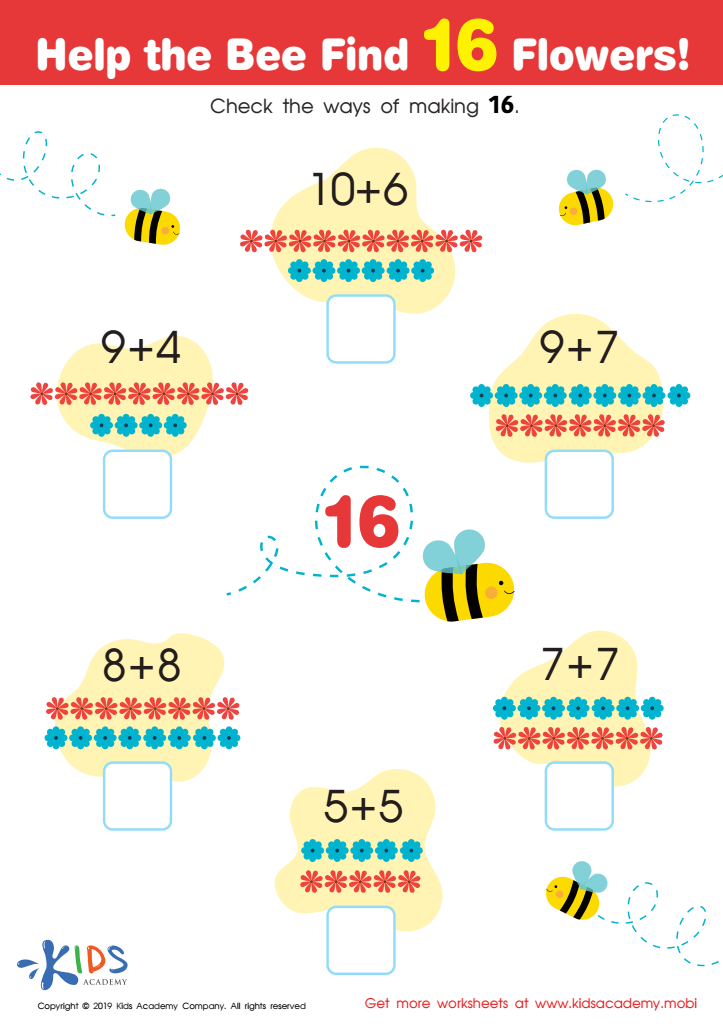
Help the Bee Find 16 Flowers Worksheet
Ask your students to count as high as they can. Show them that different numbers can equal the same figure with examples like 2+2=4 and 3+1=4. Ask for more examples, then help the bees find 16 flowers by checking the ways of making 16.
Help the Bee Find 16 Flowers Worksheet
Worksheet
Join Kids Academy for Free
Who is primarily going to use this learning content?








At ages 4-5, children are at a crucial developmental stage where fine motor skills and basic math concepts like addition and subtraction form the foundation for future learning. Fine motor skills involve the coordination of small muscles, typically in interactions involving the hands and fingers, which are essential for daily activities such as writing, buttoning clothes, and using utensils. When children practice fine motor tasks, such as manipulating counters or drawing numbers, they not only enhance these muscles but also improve hand-eye coordination, dexterity, and precision.
Simultaneously, normal addition and subtraction introduce fundamental math concepts that children will build upon in their educational journey. Engaging in basic arithmetic at this age helps develop critical thinking, problem-solving skills, and cognitive abilities. It lays the groundwork for more complex mathematical understanding and fosters a sense of confidence and curiosity in learning.
For both parents and teachers, emphasizing these skills encourages a well-rounded developmental experience. Hands-on activities, such as counting beads or placing puzzle pieces, can integrate both fine motor skill development and mathematical learning, creating a synergetic effect. By focusing on these areas, adults ensure children are better prepared for academic challenges, promoting an early love for learning and resilience in problem-solving.








