Problem Solving Normal Addition & Subtraction Worksheets for Ages 4-5
3 filtered results
-
From - To
Discover fun and engaging Problem Solving Normal Addition & Subtraction Worksheets designed specifically for children ages 4-5. These worksheets encourage young learners to develop essential math skills through hands-on exercises that promote critical thinking and problem-solving strategies. With colorful illustrations and age-appropriate challenges, kids will enjoy mastering basic addition and subtraction concepts. The activities provided will not only build foundational math skills but also boost confidence in their abilities to tackle problems independently. Perfect for parents and educators, these printable resources are a great way to enhance your child's learning experience at home or in the classroom. Start exploring today!
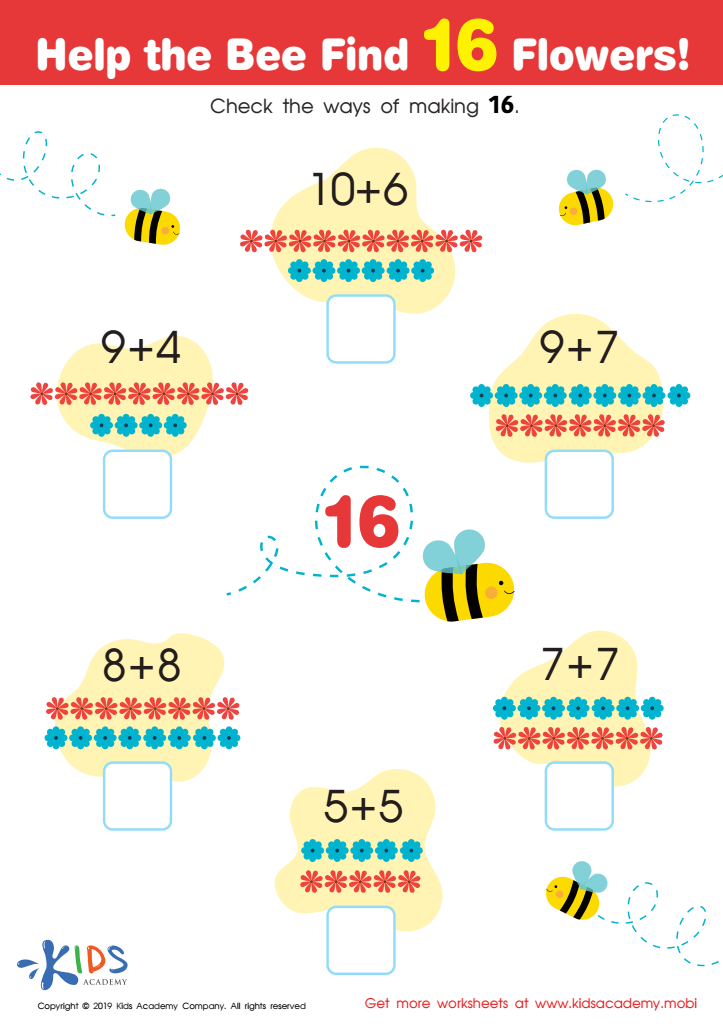
Help the Bee Find 16 Flowers Worksheet
 Assign to My Students
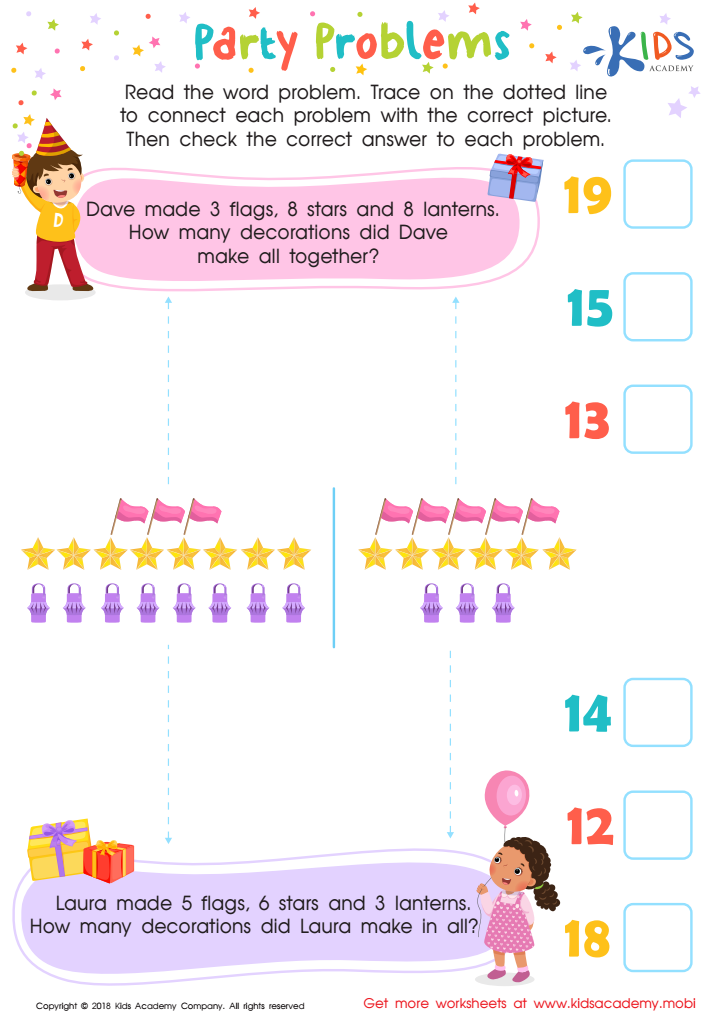
Party Problems Worksheet
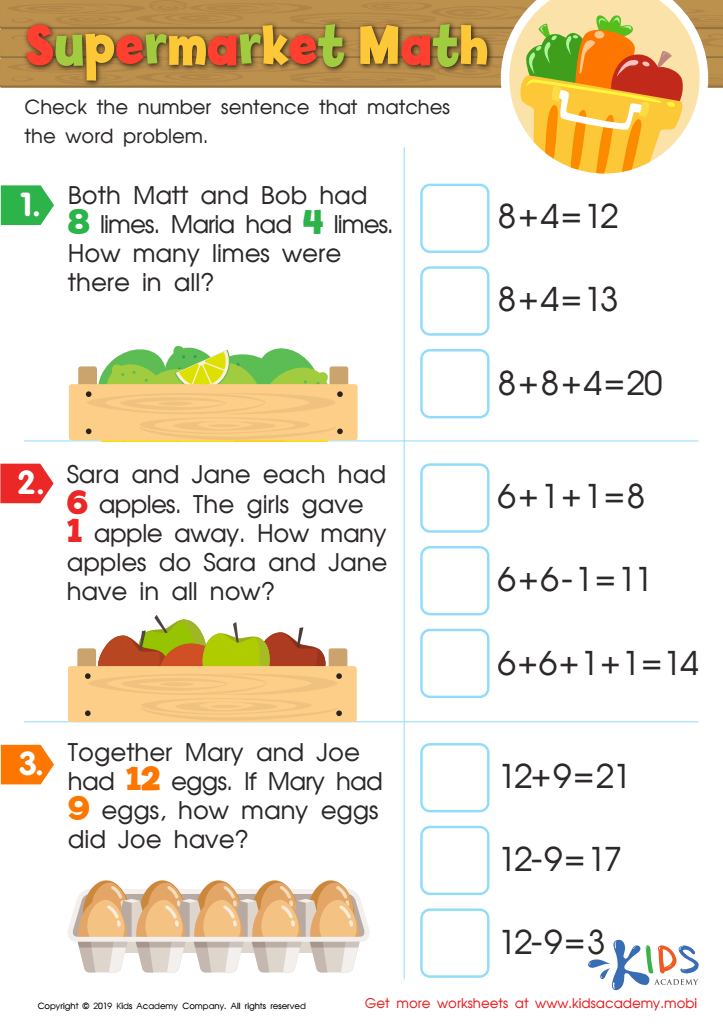
Supermarket Math Worksheet








Parents and teachers should care about Problem Solving in Normal Addition and Subtraction for children aged 4-5 because it lays a crucial foundation for mathematical understanding and critical thinking skills. During this formative stage, kids are naturally curious and eager to explore concepts related to numbers and quantities. Engaging them in problem-solving activities not only helps them grasp basic arithmetic concepts but also fosters logical reasoning and analytical thinking.
At this age, children learn best through play and hands-on experiences. By incorporating addition and subtraction into everyday situations—like sharing snacks or counting toys—parents and teachers can make learning relevant and enjoyable. This approach enhances children's ability to conceptualize numbers, understand relationships between values, and apply these skills in real-life scenarios.
Additionally, problem-solving encourages perseverance and resilience. Children learn that mistakes are a natural part of the learning process, helping them develop a growth mindset early on. Moreover, strong early math skills are predictors of future academic success across subject areas. Ultimately, by prioritizing problem-solving in addition and subtraction, adults can support holistic development in young learners and prepare them for a lifetime of positive mathematical experiences.








