Counting skills Normal Counting Worksheets for Ages 4-5
6 filtered results
-
From - To
Enhance your child's early math abilities with our Counting Skills Normal Counting Worksheets tailored for ages 4-5. These educational resources provide a fun and engaging way for young learners to grasp the fundamentals of counting. Designed to, build a strong foundation in number recognition, sequence, and basic arithmetic, these worksheets feature a variety of colorful and interesting activities. From counting objects to simple addition exercises, these printables foster a positive attitude towards math while sharpening essential skills. Make learning enjoyable and effective with our expertly crafted counting worksheets perfect for making early math practice both exciting and accessible.
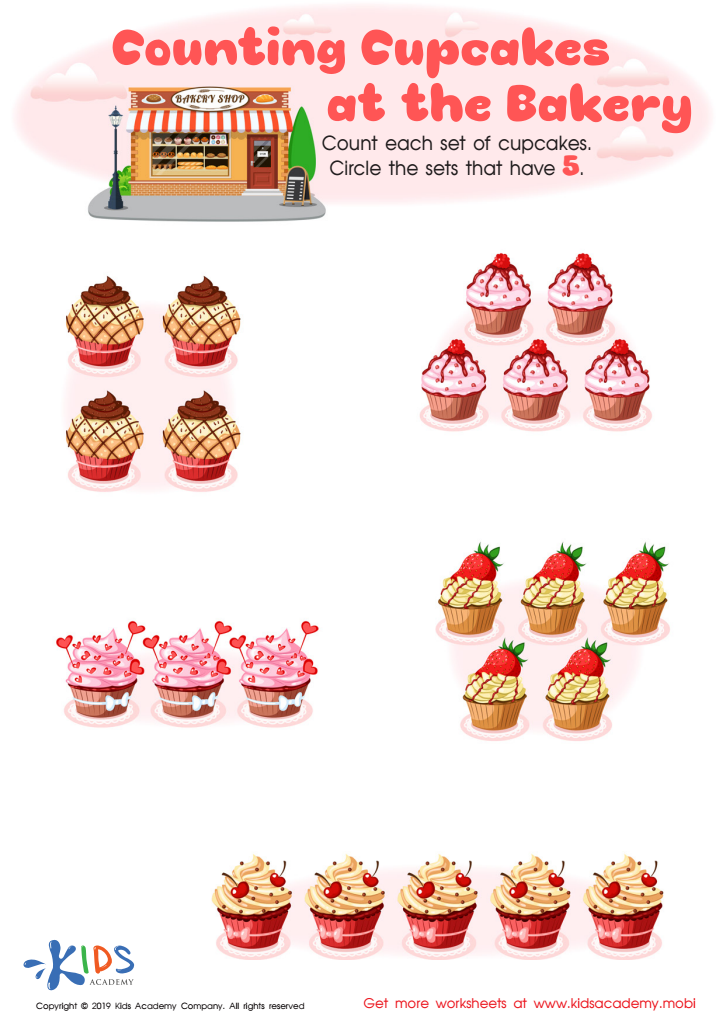
Counting Cupcakes Worksheet
 Assign to My Students

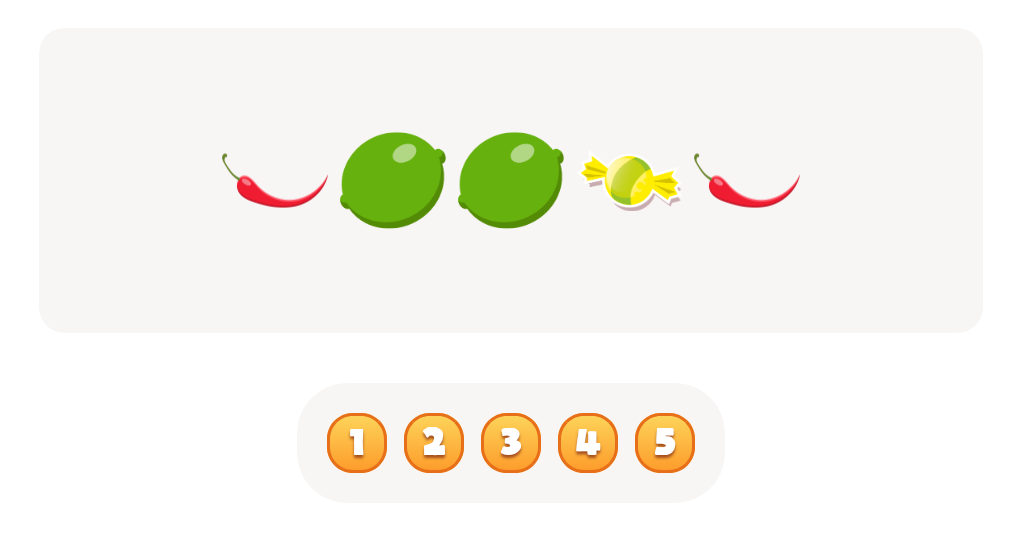
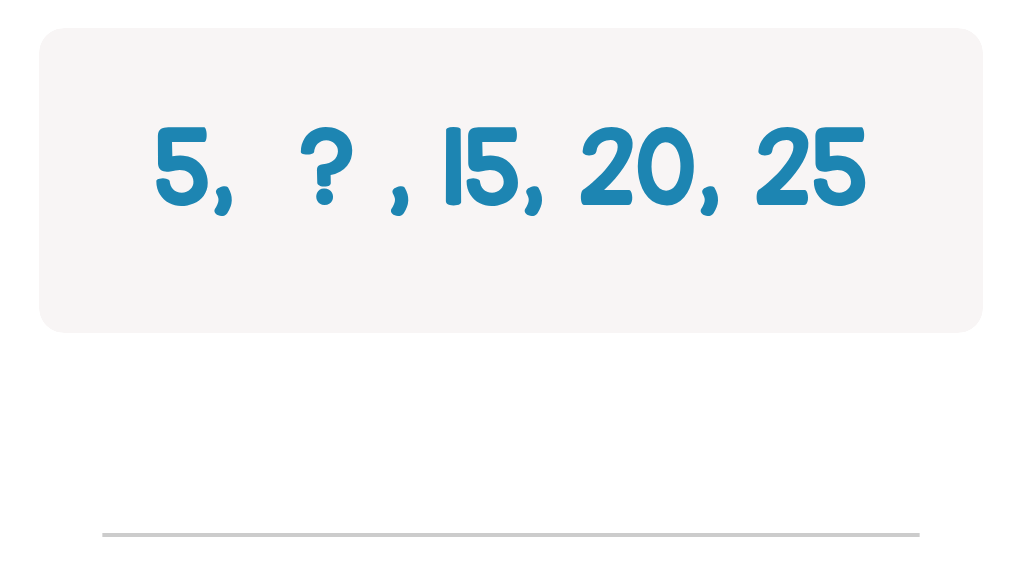
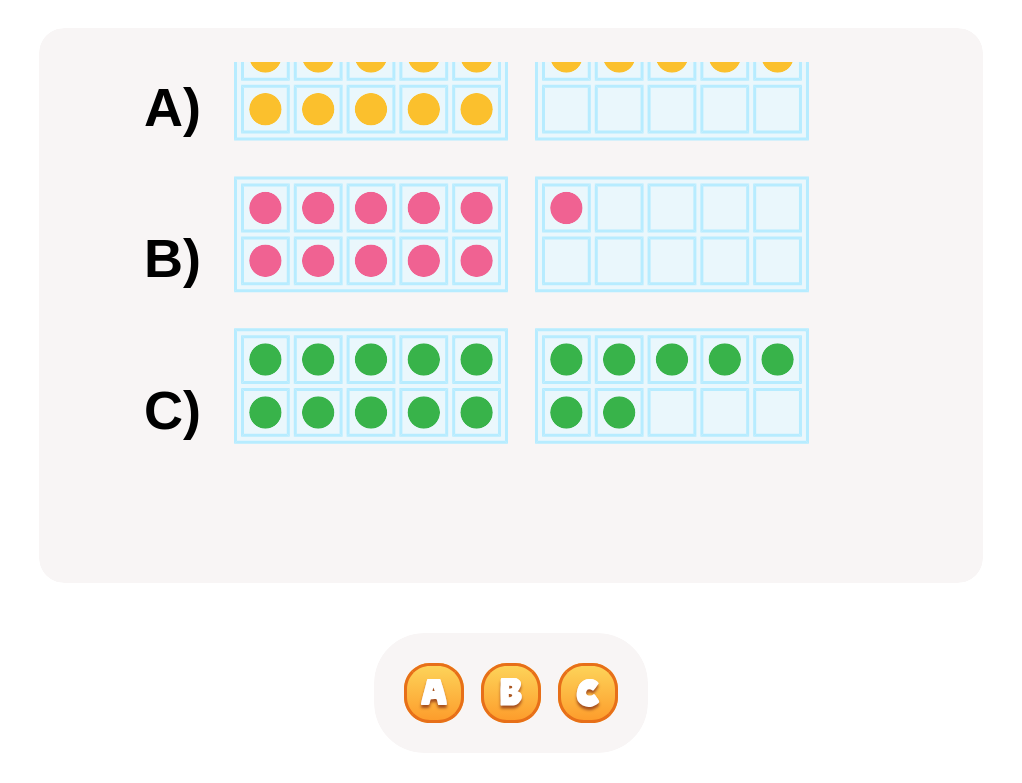
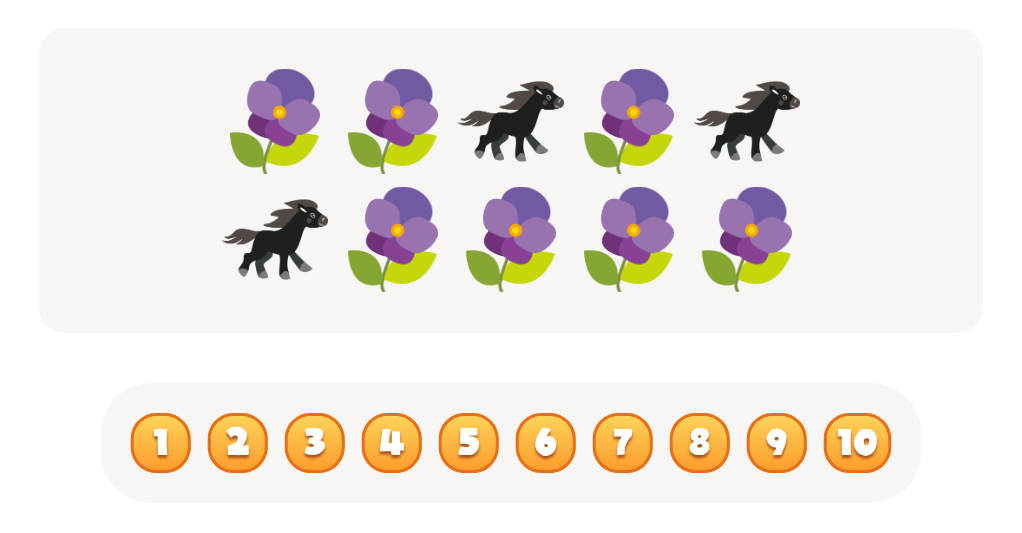
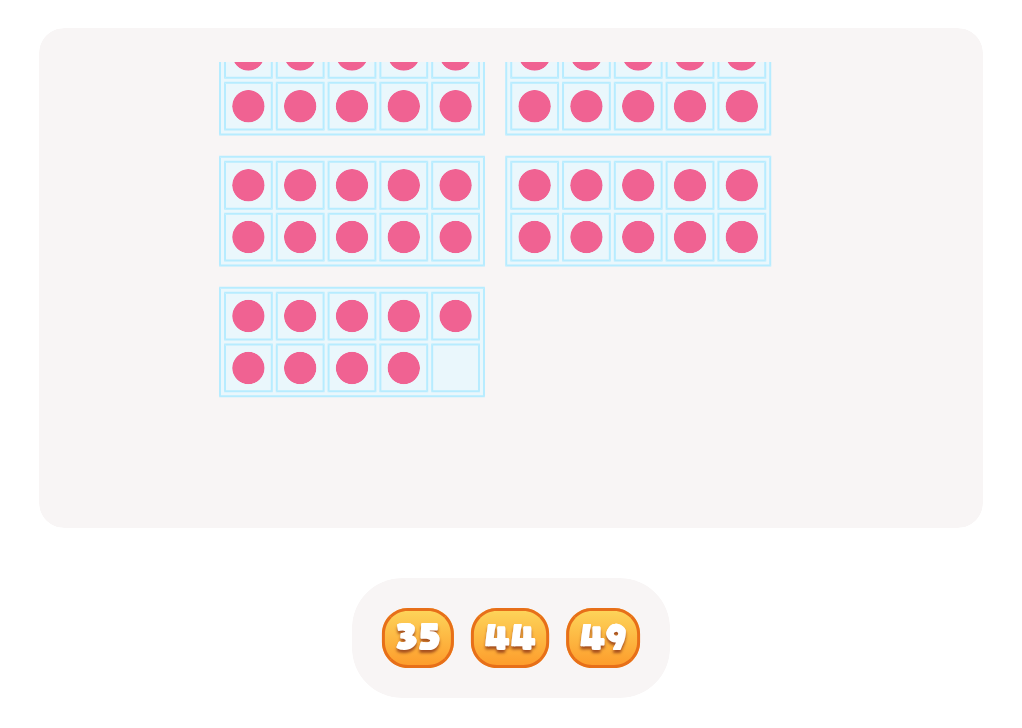
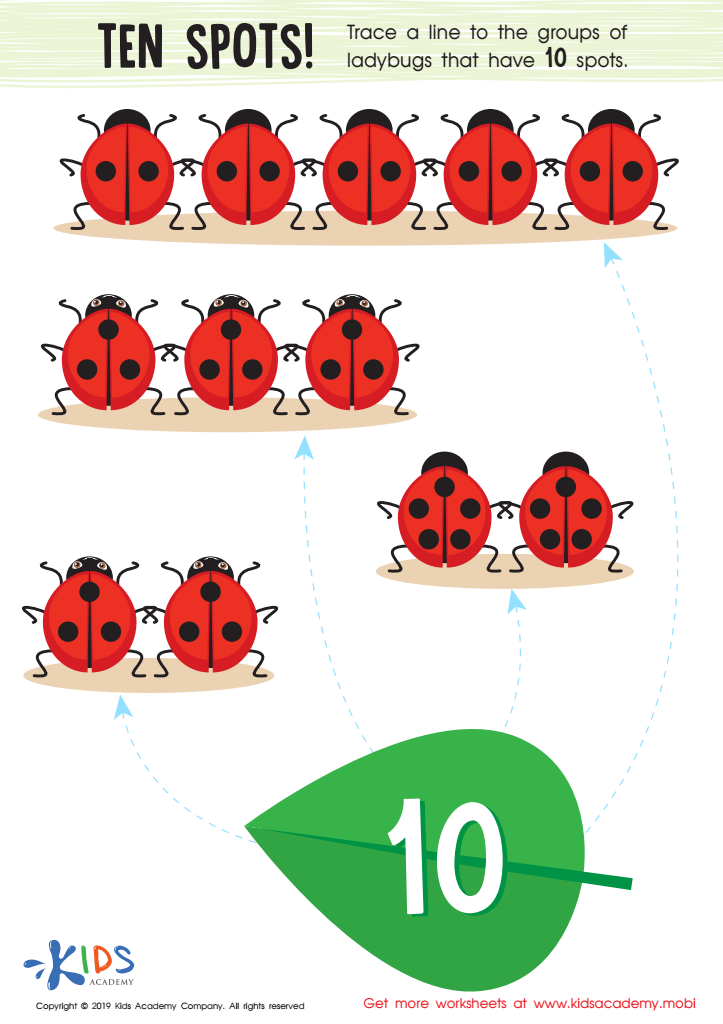
Ten Spots Worksheet
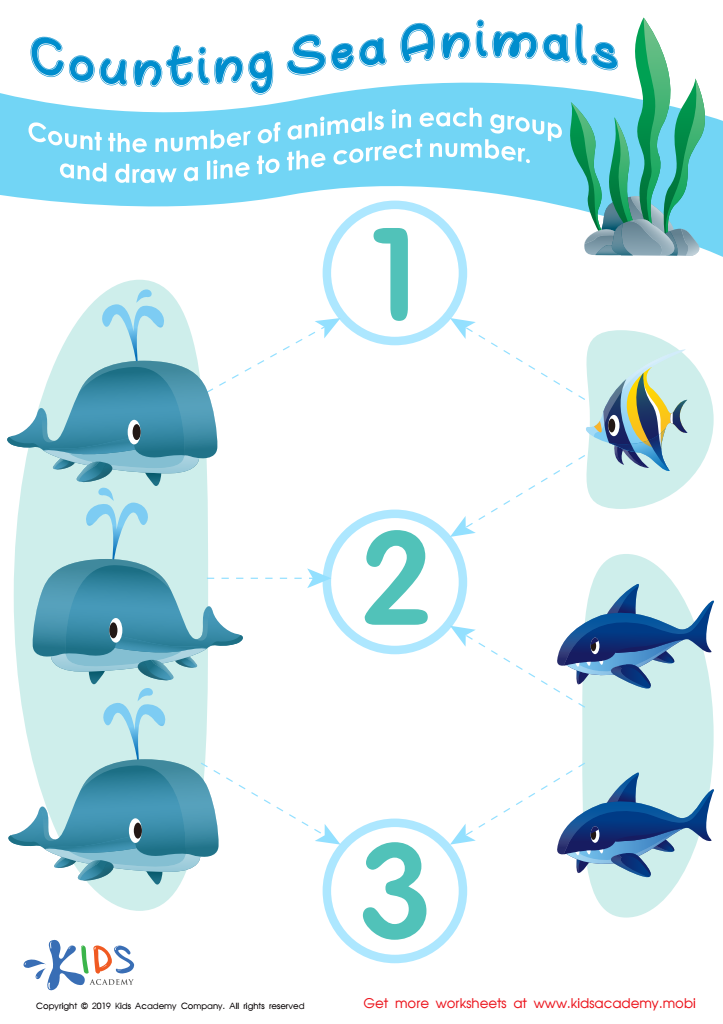
Counting Sea Animals Worksheet
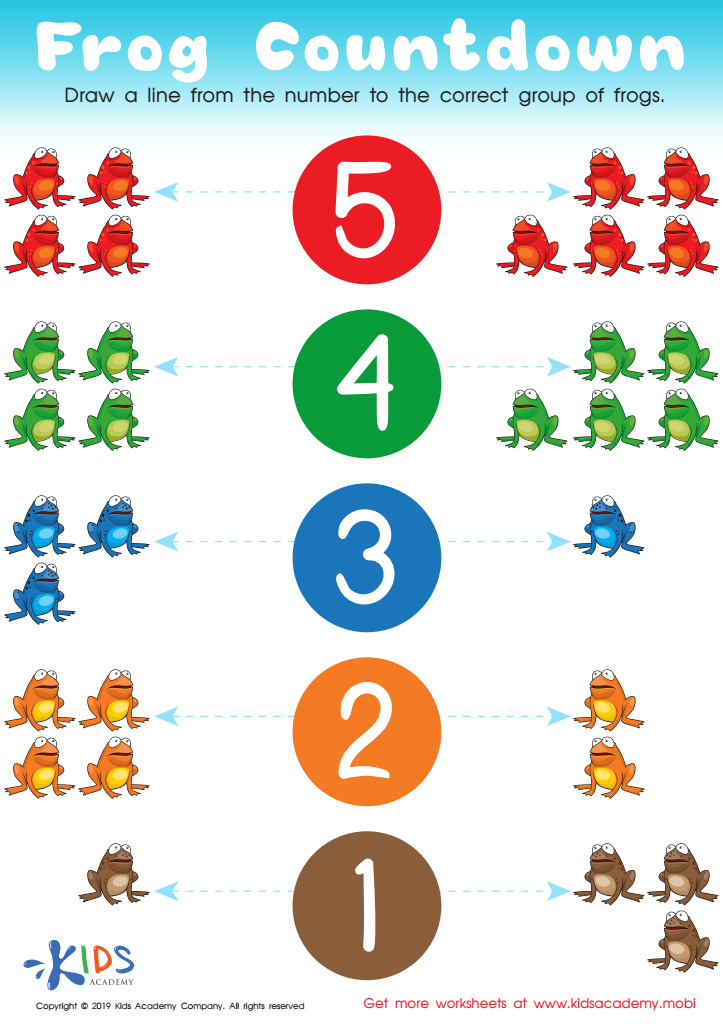
Frog Countdown Worksheet
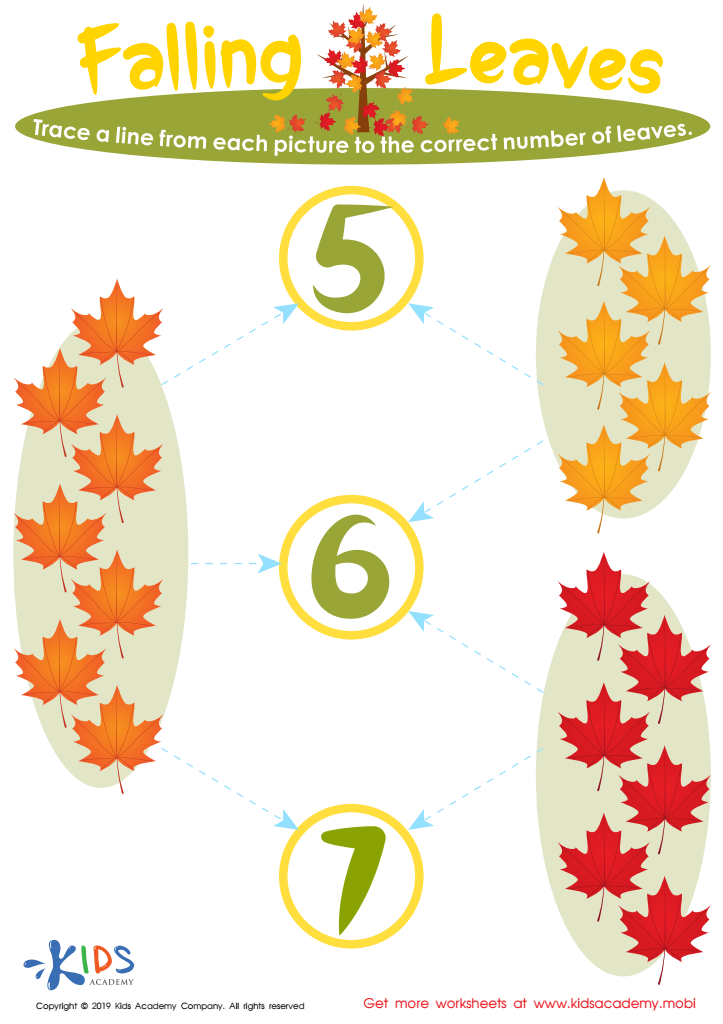
Falling Leaves Worksheet
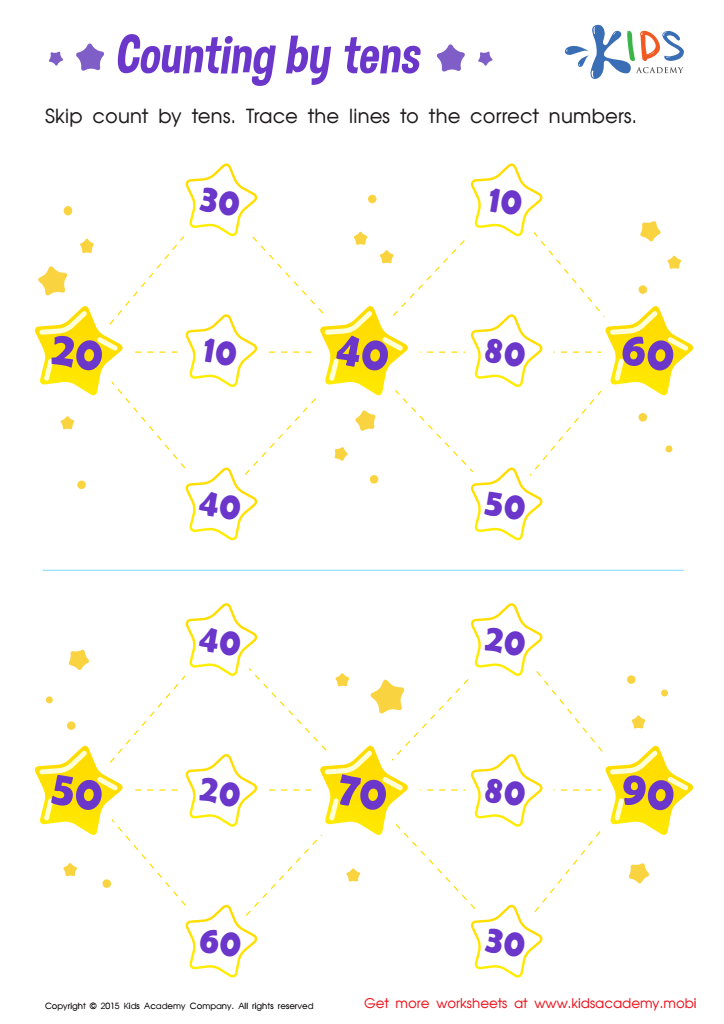
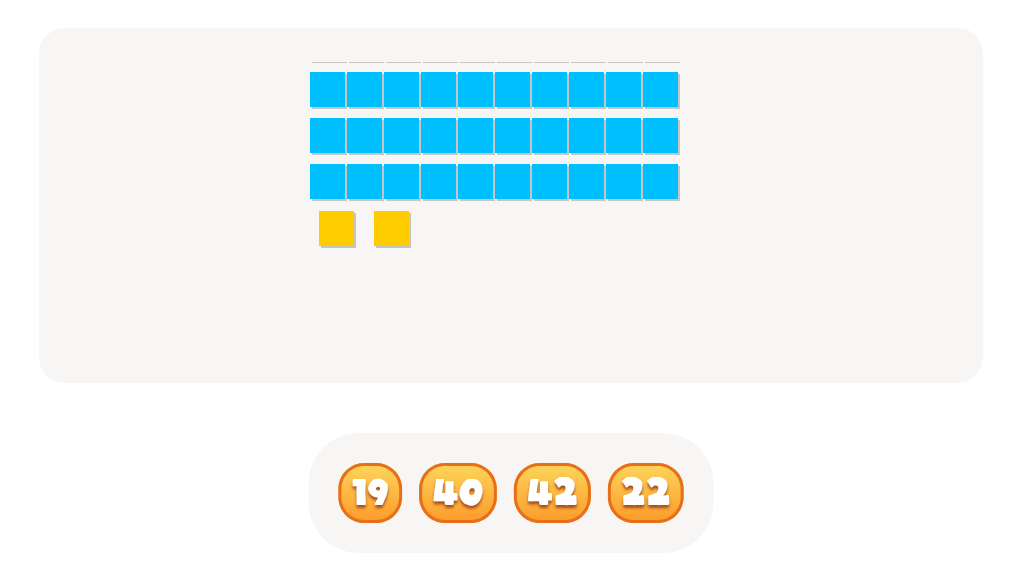
Learn Dozens: Counting by Tens Printable








Counting skills are crucial for children aged 4-5 as they form the foundation for future mathematical understanding and problem-solving abilities. At this developmental stage, kids are naturally curious about the world around them, and counting helps them make sense of their surroundings in a structured way.
For parents and teachers, encouraging normal counting—accurately counting objects in order and understanding the concept of quantity—is essential because it promotes cognitive development. When children count, they learn number sequence, improve memory, and enhance their ability to focus and pay attention. Counting also helps develop fine motor skills as kids point to or group objects, bolstering their physical coordination.
Moreover, counting is intertwined with other critical learning areas. It aids in the understanding of more complex mathematical concepts such as addition, subtraction, and even building blocks for multiplication and division. It also fosters language development as children learn the names and sequence of numbers in the context of daily activities.
Engaging young children in counting activities prepares them for school and equips them with the tools they need for academic success. It builds confidence in their abilities and fosters a positive attitude toward mathematics and learning in general, setting a solid groundwork for their entire educational journey.








