Differentiating shapes Normal Geometry Worksheets for Ages 4-5
3 filtered results
-
From - To
Explore our "Differentiating Shapes Normal Geometry Worksheets" designed for children aged 4 to 5. These engaging worksheets provide a fun and interactive way for young learners to identify, categorize, and differentiate various shapes, helping to lay the foundation for critical math skills. Featuring colorful illustrations and age-appropriate activities, these resources capture children's interest and encourage hands-on learning. Perfect for classroom use or home practice, our worksheets promote shape recognition, visual perception, and cognitive development. Equip your little ones with essential geometry skills while ensuring they enjoy the learning process! Discover the joy of shapes with our thoughtfully crafted worksheets today!
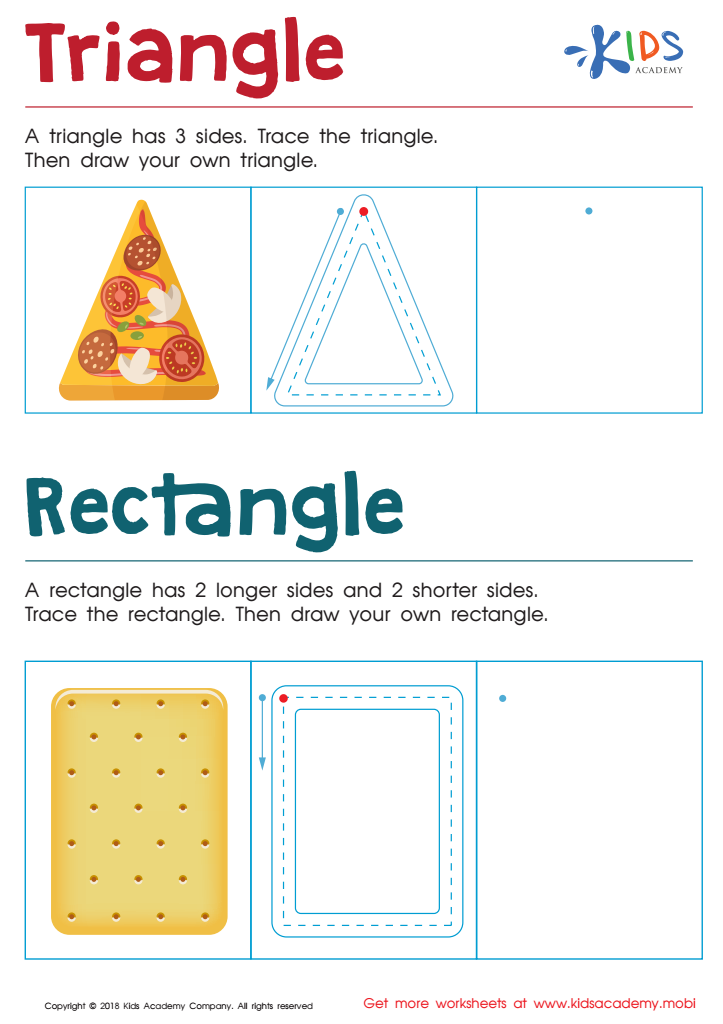
Triangle Rectangle Worksheet
 Assign to My Students











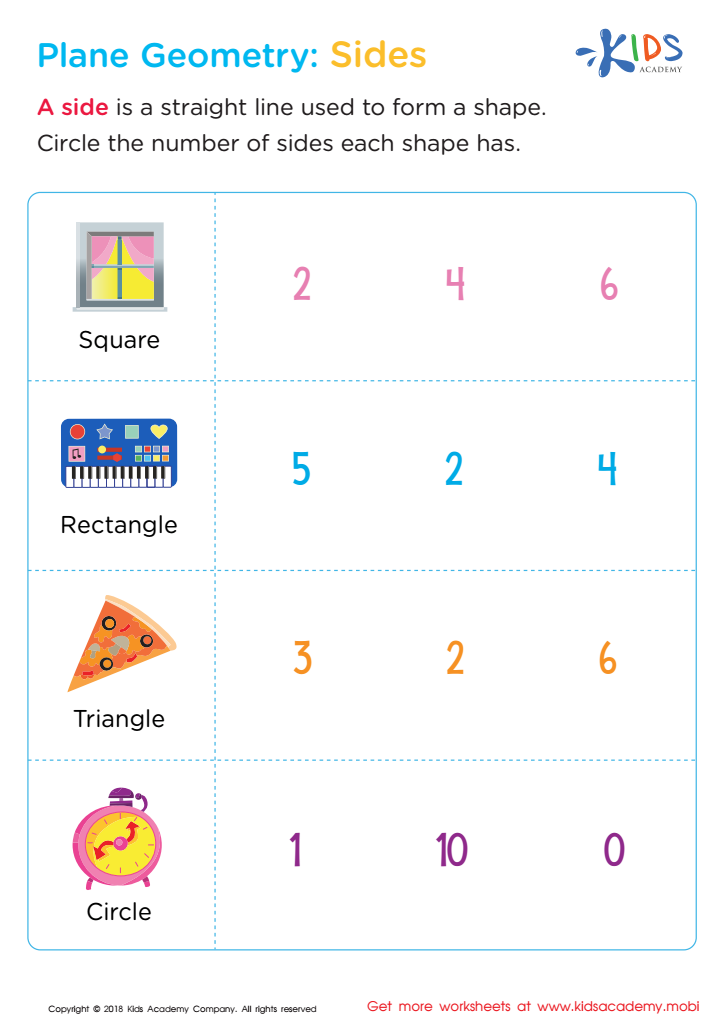
Plane Geometry: Sides Worksheet
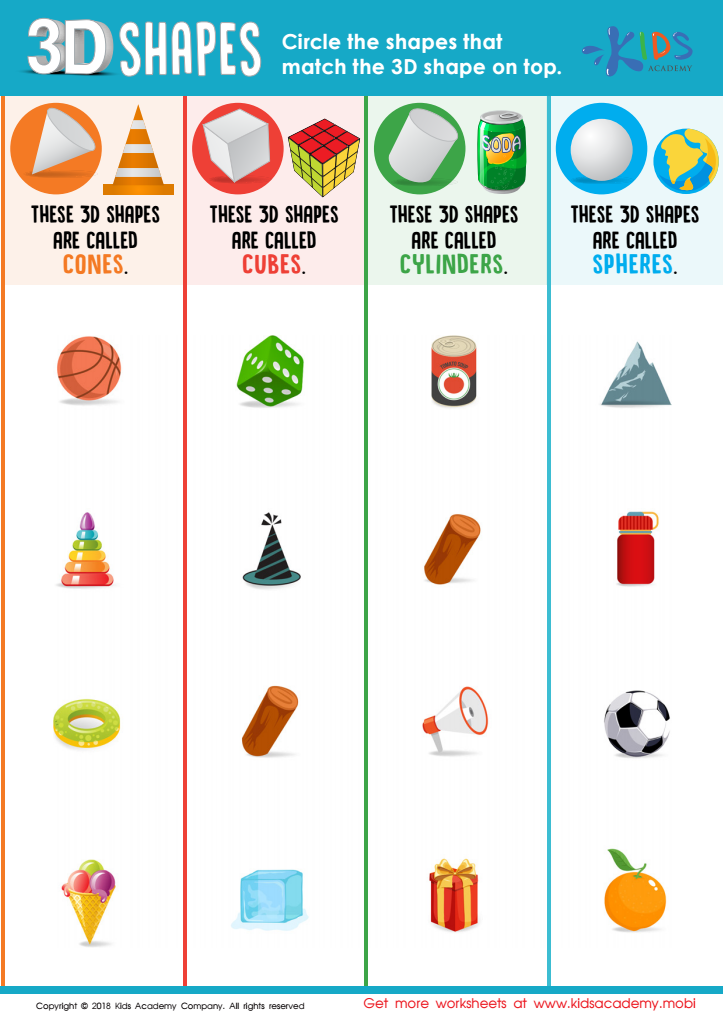
3D Shapes Worksheet








Differentiating shapes in early geometry for ages 4-5 is crucial for several reasons. Firstly, young learners are developing their cognitive skills, and differentiating shapes enhances their ability to recognize and categorize objects in their environment. This is foundational for critical thinking and problem-solving skills later in life.
Furthermore, understanding shapes supports language development; children learn to articulate their observations and comparisons. When teachers and parents introduce differentiated shapes (like circles, squares, triangles, and more complex polygons), children are encouraged to describe properties and relationships, enriching their vocabulary and communication skills.
Additionally, differentiated shapes can foster creativity and exploration through hands-on activities, such as art projects or building games. These activities help children engage with geometry in a playful context, making learning enjoyable and impactful. Lastly, differentiation allows for personalized learning experiences; by addressing varying abilities and interests, educators and parents can cultivate each child's unique strengths.
Overall, engaging young children in shape differentiation not only lays the groundwork for mathematical understanding but also fosters holistic development in language, creativity, and critical thinking, making it an essential focus for parents and teachers.








