Shape identification Normal Geometry Worksheets for Ages 4-5
5 filtered results
-
From - To
Introducing our Shape Identification Geometry Worksheets for Ages 4-5, designed to lay a solid mathematical foundation through engaging and age-appropriate activities. These worksheets help young learners recognize and differentiate basic shapes, enhancing their visual-spatial skills. By incorporating fun illustrations and interactive exercises, children will develop confidence in identifying circles, squares, triangles, and more. Perfect for early learners, these resources support cognitive development and prepare kids for future math success. Accessible and easy to navigate, these worksheets are a perfect addition to any preschool or kindergarten curriculum. Start fostering your child's geometric understanding today!
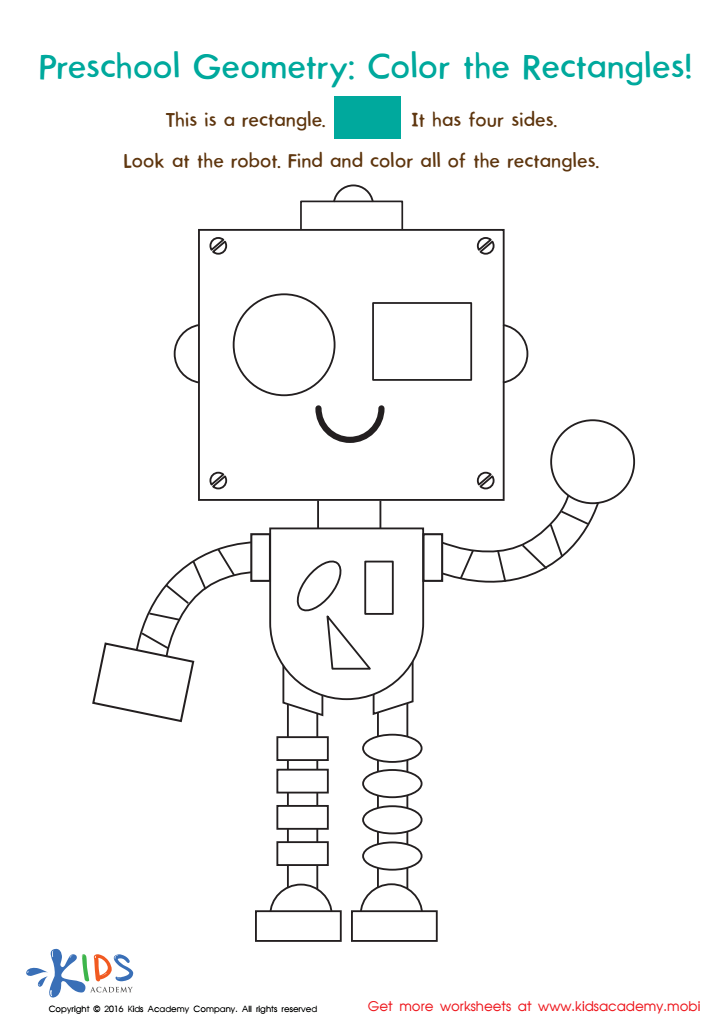
Geometry Worksheet
 Assign to My Students











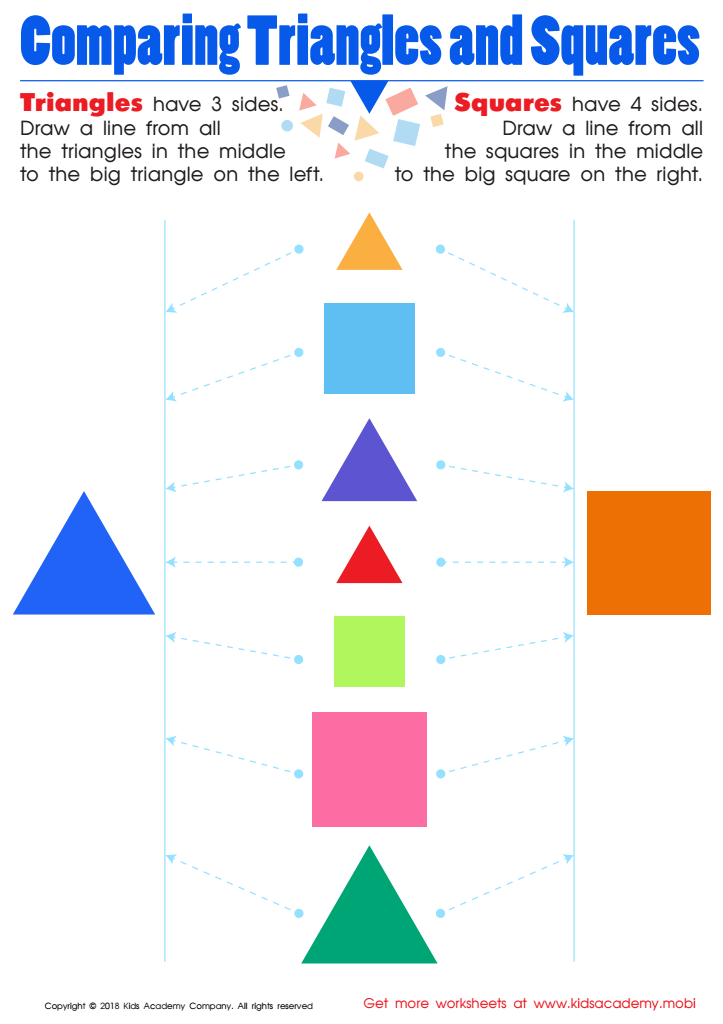
Comparing Triangles Squares Worksheet
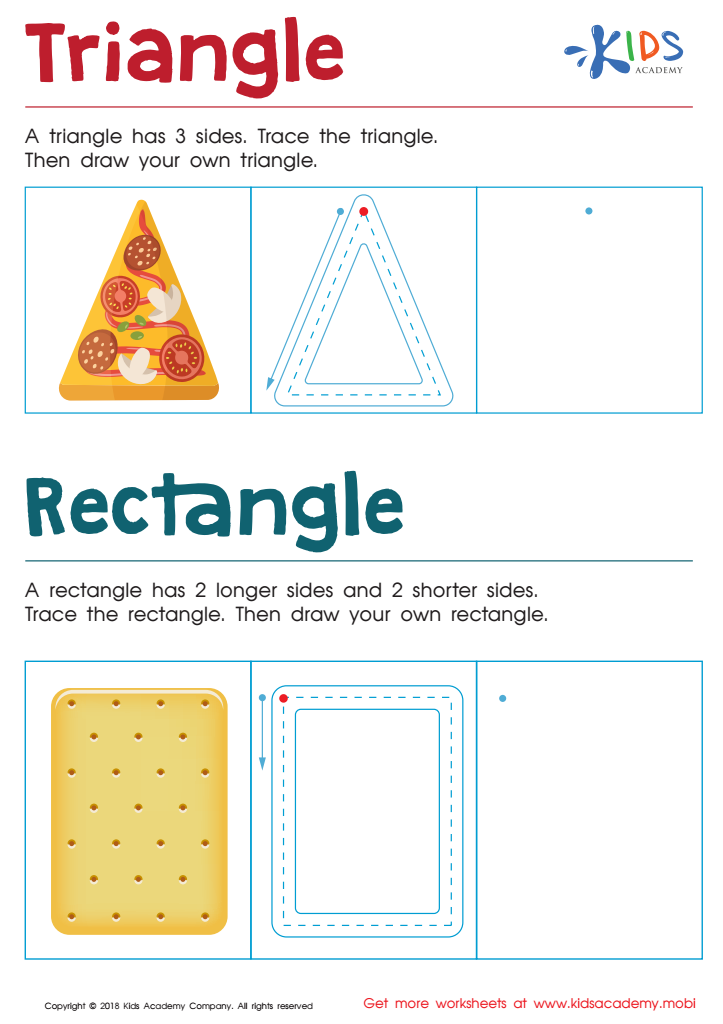
Triangle Rectangle Worksheet
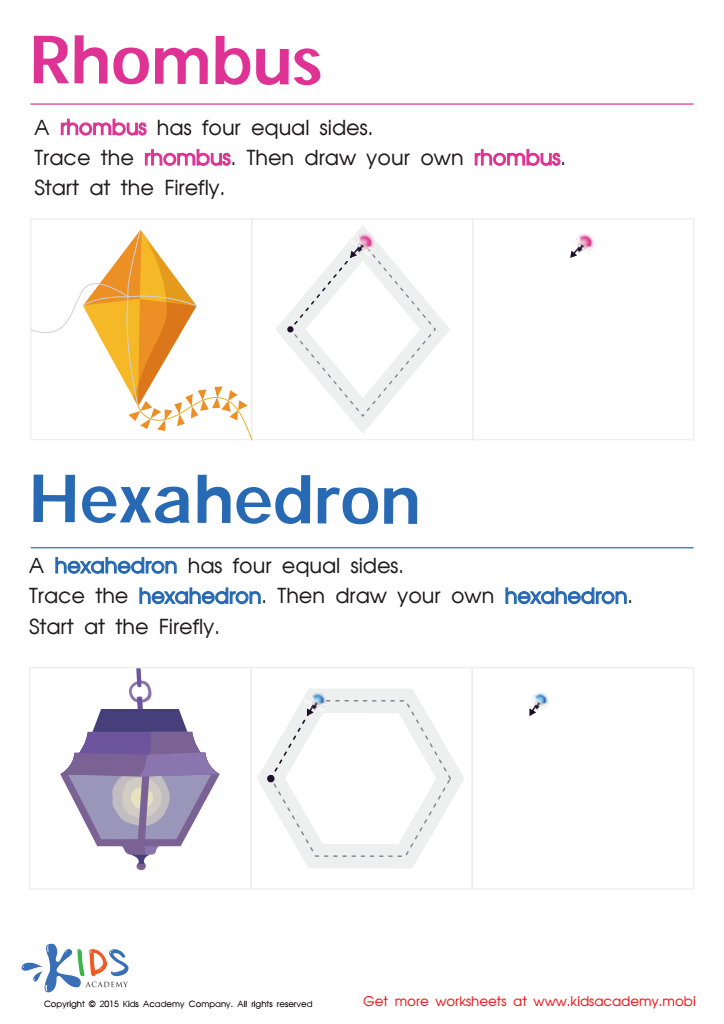
Draw a Rhombus And a Hexahedron Printable
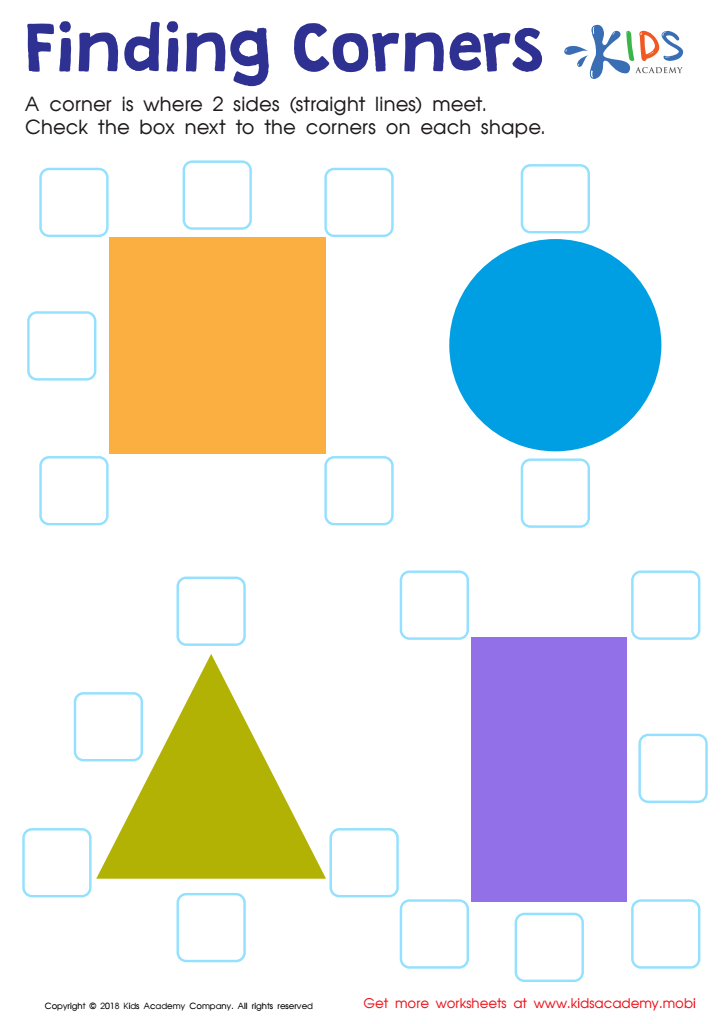
Finding Corners Worksheet








Shape identification is an essential developmental milestone for children, especially around the ages of 4-5. It lays the groundwork for more complex mathematical concepts and cognitive skills. At this age, children are naturally curious and highly perceptive to visual stimuli, making it the perfect time to introduce basic geometric shapes like circles, squares, triangles, and rectangles. Recognizing and differentiating these shapes helps improve their visual-spatial awareness—an essential skill for understanding and interpreting the world around them.
Moreover, shape identification fosters critical thinking and problem-solving abilities. When children manipulate and sort shapes, they learn about attributes like size, orientation, and dimensions. This process requires careful observation and comparison, which are fundamental skills for cognitive development.
Furthermore, shapes are a cornerstone of literacy and numeracy. Understanding shapes aids in the recognition of letters and numbers, facilitating smoother transitions into reading and arithmetic. For instance, recognizing the triangular form in the letter "A" or the circular aspect of the number "0" becomes easier.
Socially and emotionally, shape identification activities can provide a sense of accomplishment and boost confidence. Through games, puzzles, and hands-on activities, children also develop fine motor skills and hand-eye coordination. Thus, caring about shape identification at this formative age prepares children for future academic success, fostering a solid foundation in both mathematics and beyond.








