Multiplication practice Normal Math Worksheets for Ages 4-5
3 filtered results
-
From - To
Introduce your young learner to the exciting world of numbers with our "Multiplication Practice Normal Math Worksheets for Ages 4-5". Designed specifically for beginners, these fun and engaging worksheets will help kids build a strong foundation in basic multiplication. Each sheet features simple, colorful exercises to make learning interactive and enjoyable. Encourage your child to explore patterns and develop critical math skills at their own pace. Our expertly crafted worksheets seek to foster a lifelong love of math through incremental challenges that align with early educational milestones, ensuring their readiness for future academic success.
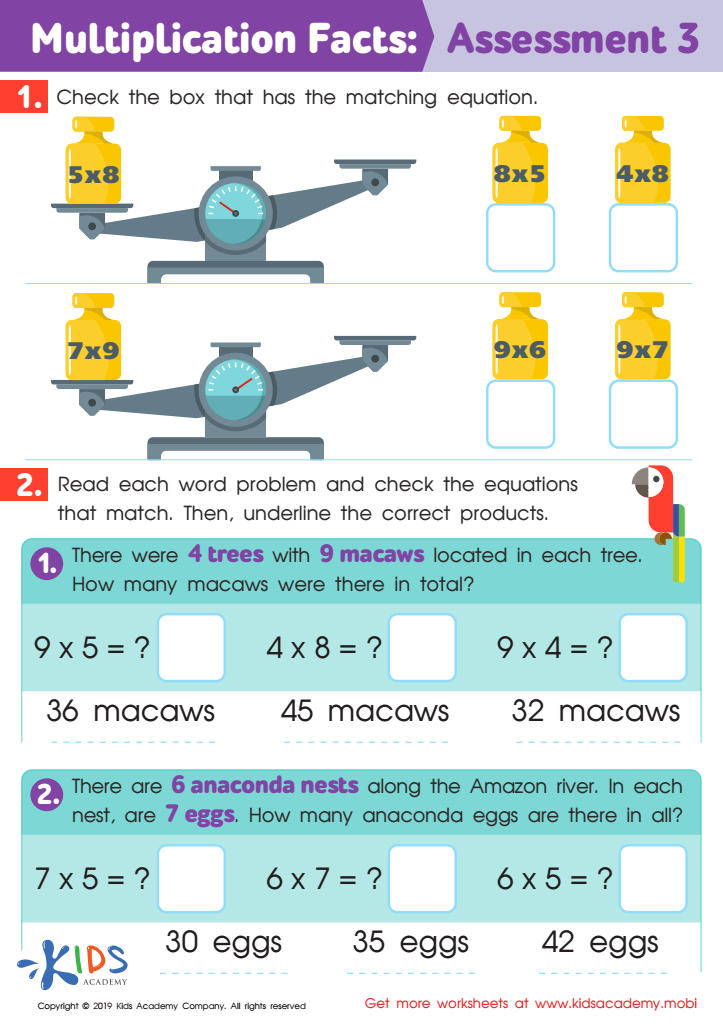
Multiplication Facts: Assessment 3 Worksheet
 Assign to My Students
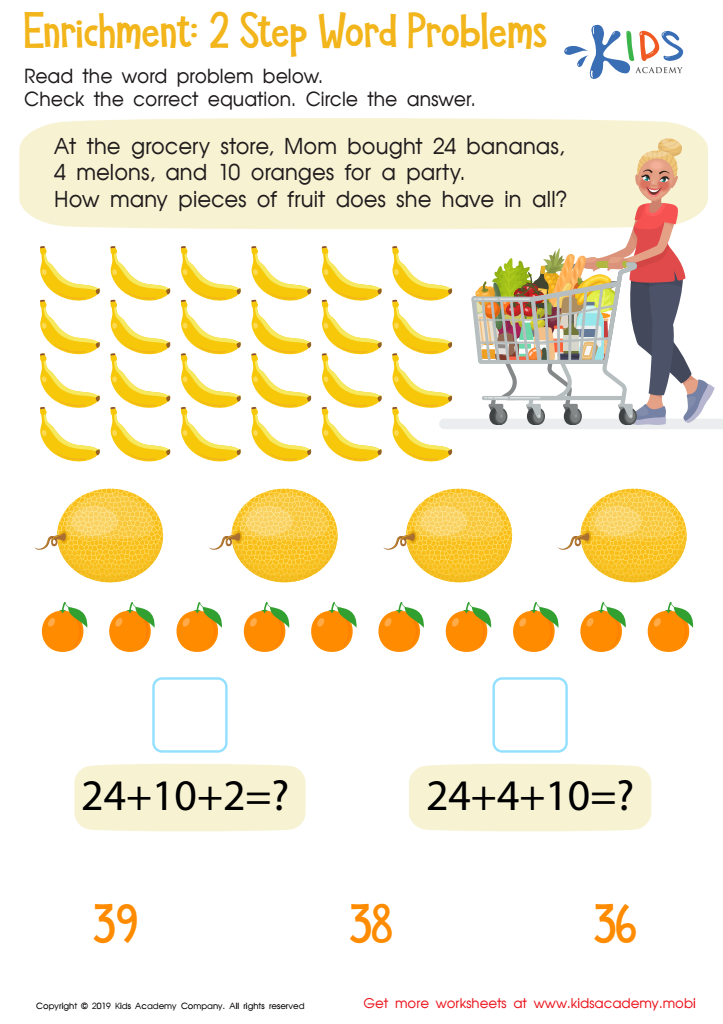
Enrichment -2 Step Word Problems Worksheet
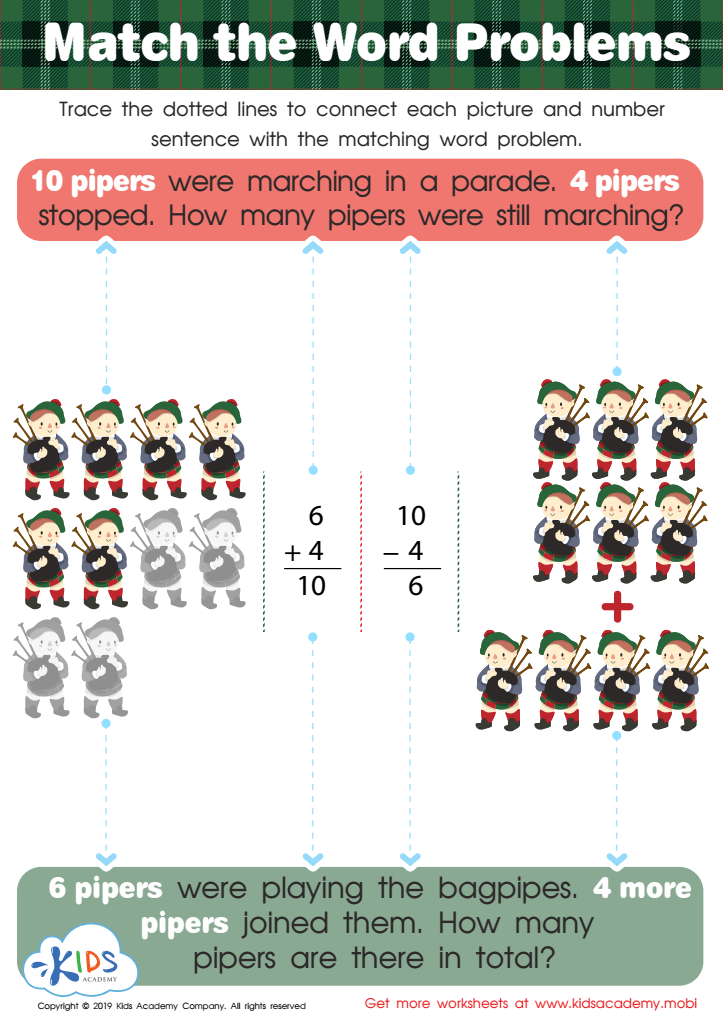
Match the Word Problems Worksheet



.jpg)



Multiplication practice is crucial for young children ages 4-5 to establish a strong mathematical foundation early on. At this age, children’s brains are highly receptive to new information, and early exposure to mathematical concepts can foster a lifelong interest in the subject. Understanding multiplication is not just about memorizing times tables; it helps in developing skills in problem-solving, pattern recognition, and logical thinking. These skills are essential in almost all academic disciplines and everyday life.
Moreover, early multiplication practice aligns with the broader goals of early childhood education, which include promoting cognitive development and critical thinking. It aids in improving number sense, which is understanding the relationships between numbers and how they work together. This foundational knowledge can make future math lessons easier and more enjoyable, reducing math anxiety typically seen in later grades.
Additionally, multiplication practice enhances self-confidence. As children succeed in grasping these concepts, they build a sense of achievement that encourages further learning. Incorporating playful and interactive multiplication activities makes learning engaging and can be seamlessly integrated into daily routines.
In summary, parents and teachers should prioritize multiplication practice to ensure a robust numerical foundation, stimulate cognitive skills, and instill confidence and a positive attitude towards mathematics in young learners.








