
Critical Thinking Normal Matching Worksheets for Ages 4-5
4 filtered results
Difficulty Level
Grade
Age
-
From - To
Subject
Activity
Standards
Unlock the power of critical thinking for your 4-5-year-olds with our engaging Normal Matching Worksheets! Designed to spark curiosity and creativity, these worksheets seamlessly combine fun and learning. Enhance your child’s cognitive skills by encouraging them to pair items, recognize patterns, and draw connections. Each activity promotes problem-solving and logical reasoning in a playful, enjoyable format. Perfect for young learners at home or in the classroom, these worksheets aim to boost confidence and academic readiness. Discover the exciting world of critical thinking with our beautifully illustrated, age-appropriate matching activities that make learning a delightful adventure for your little ones!
Favorites
With answer key
Interactive
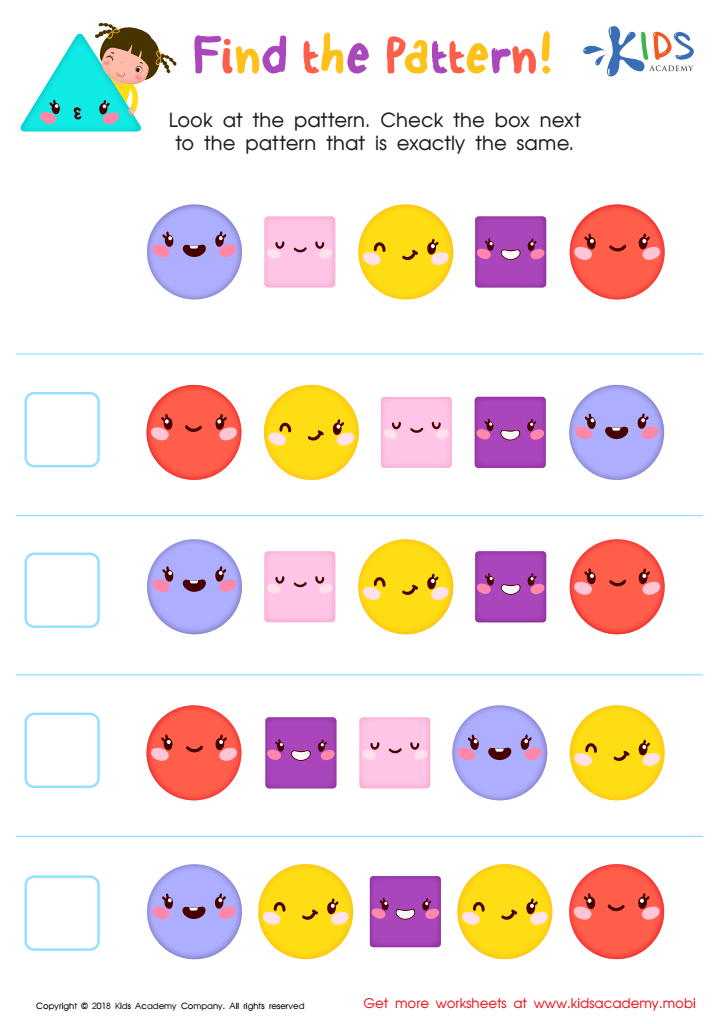
Find the Pattern Worksheet
This colorful pattern worksheet is perfect for testing your kids' pattern recognition. The bright colors will keep them engaged, while they check the box next to the pattern that is the same. Ask your kids to identify the colors used and see how well they can spot similarities!
 Assign to My Students
Find the Pattern Worksheet
Worksheet
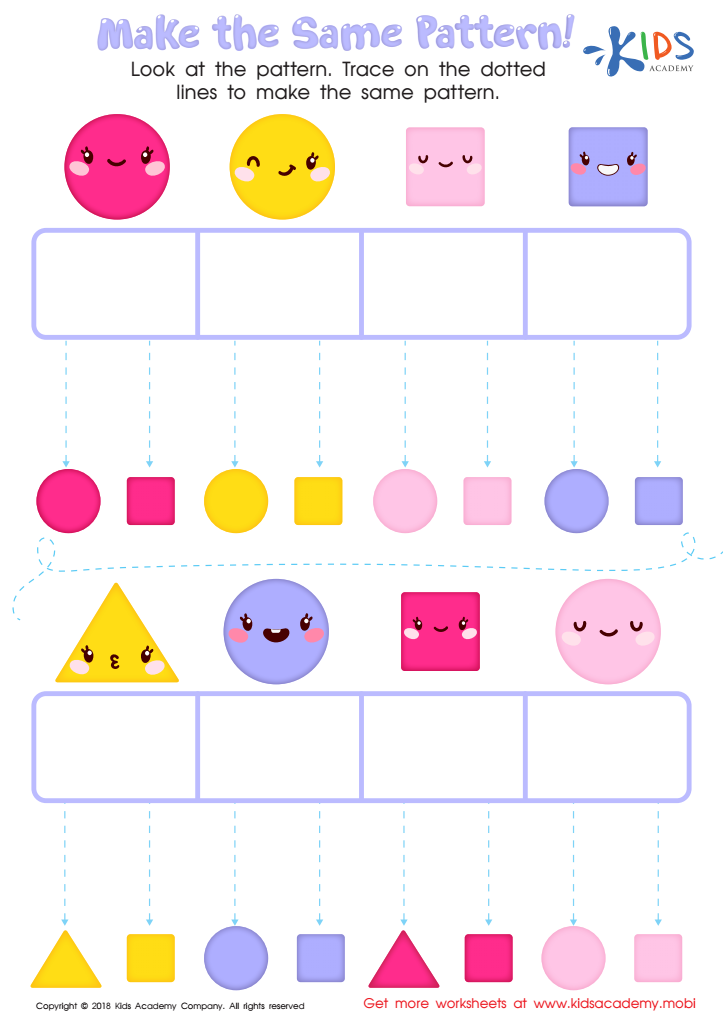
Make the Same Pattern Worksheet
Help your child look at the patterns in the tracing sheet and guide them to trace the dotted lines to match the shapes. This exercise tests their ability to copy pictures correctly, so emphasize the importance of paying attention to the instructions and details.
Make the Same Pattern Worksheet
Worksheet
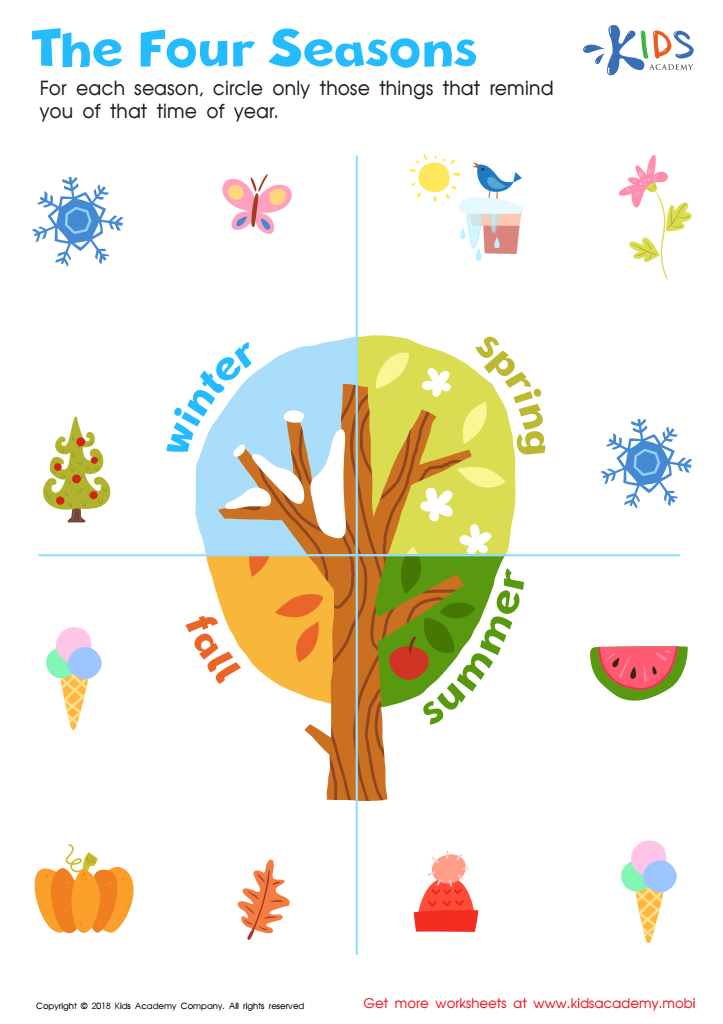
The Four Seasons Worksheet
Tell your child to circle things that remind them of each season. The tree has four squares, one for each season. Some things in each square match the season, others don't. Ask if any are out of place. Help them circle only items that remind them of that season.
The Four Seasons Worksheet
Worksheet
Join Kids Academy for Free
Who is primarily going to use this learning content?








Critical Thinking Normal Matching activities for ages 4-5 are essential for young children's cognitive development and overall learning. Engaging in these activities helps preschoolers refine their analytical skills by encouraging them to compare, contrast, and categorize information. This form of critical thinking lays the foundation for problem-solving abilities, which are crucial in every aspect of life.
Parents and teachers should be invested in fostering these skills at an early age because they promote creativity and independence. Matching activities often involve identifying patterns or recognizing similarities and differences, which stimulate thought processes essential for later learning, such as reading, math, and science.
Moreover, critical thinking enhances language skills, as children articulate their reasoning and explanations during match activities. This communication fosters social-emotional development, aiding children in developing relationships with peers and adults.
Finally, introducing critical thinking at this young age nurtures a lifelong love for learning. It instills curiosity and encourages children to ask questions and seek answers, transforming them into proactive learners. As educators and caregivers, prioritizing Critical Thinking Normal Matching experiences ensures that children build robust cognitive foundations necessary for future success in school and beyond.








