
Animal Classification Normal Sorting Worksheets for Ages 4-5
3 filtered results
Difficulty Level
Grade
Age
-
From - To
Subject
Activity
Standards
Discover engaging "Animal Classification Normal Sorting Worksheets" tailored for ages 4-5 at Kids Academy! Our printable worksheets help young learners enhance their sorting and categorization skills by identifying animals and grouping them based on specific characteristics. These activities are specially designed to stimulate curiosity and understanding of the animal kingdom, fostering early learning in an interactive and fun way. Perfect for classroom or at-home learning, our worksheets provide a foundation for children to develop critical thinking and observational skills. Explore our collection today and watch your child thrive in their educational journey!
Favorites
With answer key
Interactive
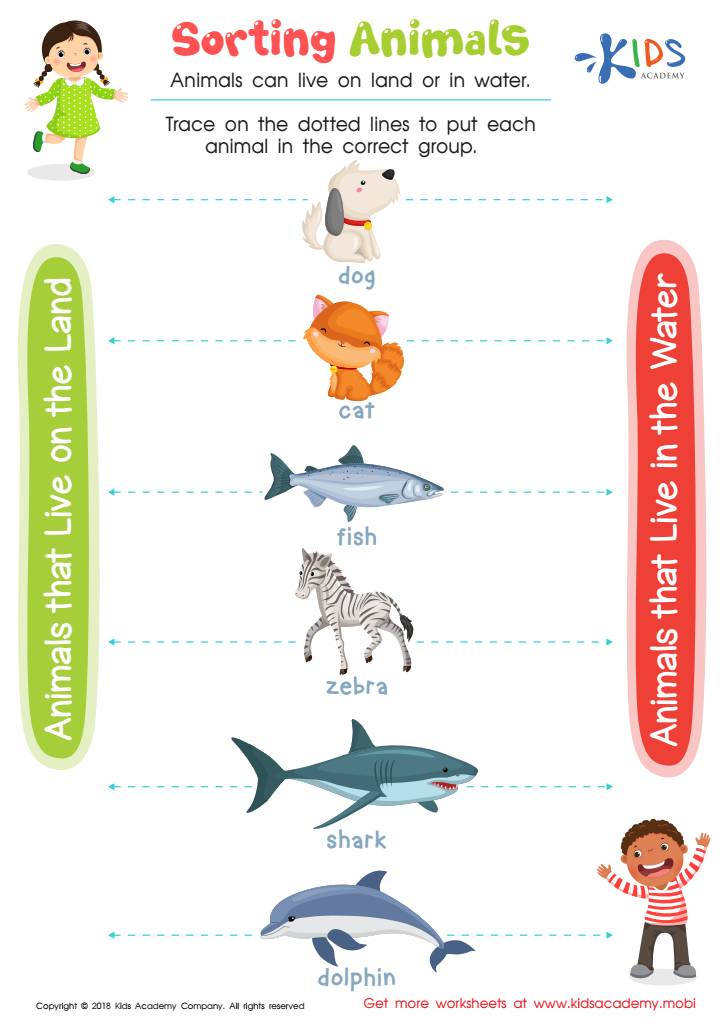
Sorting Animals Worksheet
Your kids will love this free, interactive worksheet! With image clues, they can read and trace the animal names, and then sort them into groups of land or water animals. It's an enjoyable way to boost their critical thinking, fine motor and prior knowledge skills.
 Assign to My Students
Sorting Animals Worksheet
Worksheet
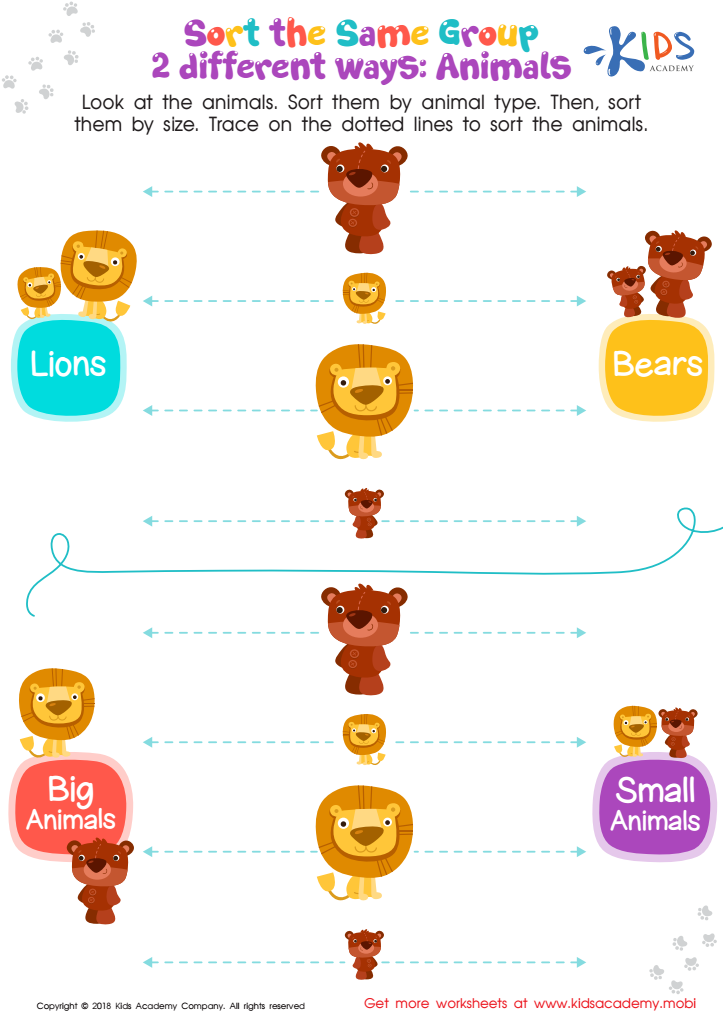
Sort the Same Group 2 Different Ways: Animals Worksheet
Look at the animals with your child. Ask them to name them, then sort them by type (e.g. lions and bears). Next, help them sort by size, tracing the dotted lines. This will teach them sorting skills.
Sort the Same Group 2 Different Ways: Animals Worksheet
Worksheet
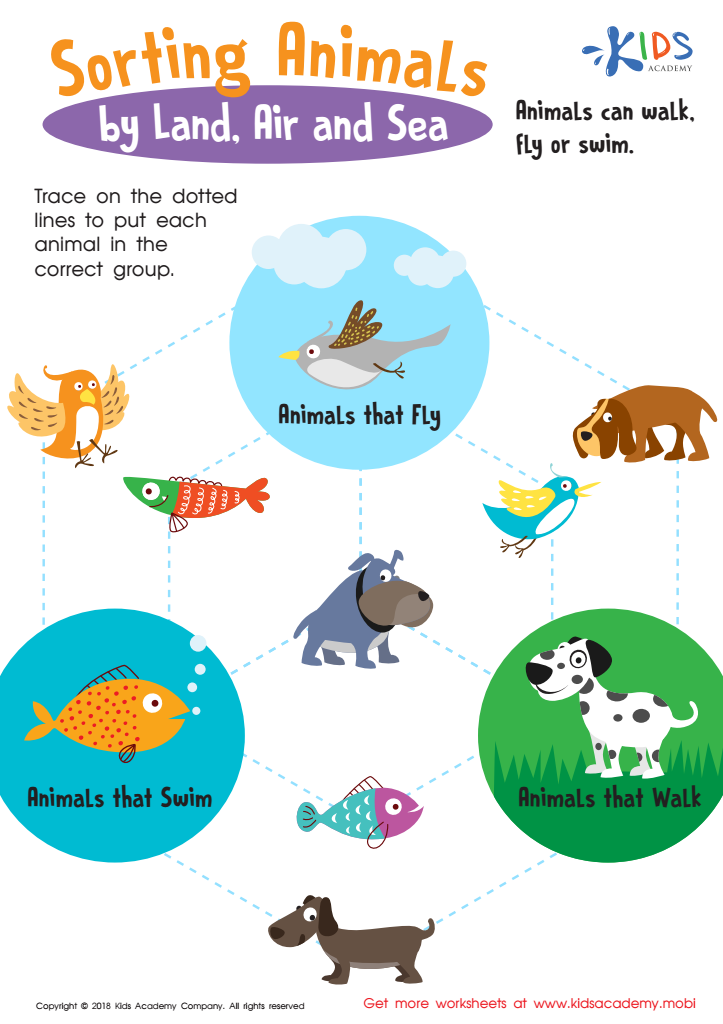
Sorting Animals by Land, Air and Sea Worksheet
Kids will use critical thinking and fine motor skills with this worksheet! They'll analyze animal traits and draw lines to sort them into groups of those that fly, swim, or walk. It's a fun way to hone skills and have a great time!
Sorting Animals by Land, Air and Sea Worksheet
Worksheet
Join Kids Academy for Free
Who is primarily going to use this learning content?








Animal Classification Normal Sorting activities are incredibly valuable for young children aged 4-5, providing foundational building blocks for their cognitive and academic development. At this early stage, children are naturally curious and eager to learn about the world around them. Introducing them to categories such as mammals, birds, reptiles, fish, and insects helps them to grasp basic concepts of organization and relationships in nature.
Firstly, sorting activities enhance critical thinking and problem-solving skills. As children determine which animals belong in which groups, they learn to observe, compare, and analyze different attributes. This kind of logical thinking is crucial for academic success not only in science but also in mathematics and literacy.
Secondly, these activities improve vocabulary and language skills. Engaging children in conversations about animal traits and habitats expands their vocabulary and helps them articulate their thoughts clearly. Describing why a frog belongs with amphibians or a bird with feathers promotes expressive and receptive language development.
Furthermore, animal classification fosters a sense of curiosity and respect for living creatures, laying an early foundation for environmental awareness and empathy towards animals. This ultimately guides children to become compassionate and informed individuals.
In conclusion, animal classification sorting activities are essential for early childhood educators and parents in supporting their children's intellectual, linguistic, and emotional growth.








