Rhyming skills development Normal Reading Worksheets for Ages 4-5
3 filtered results
-
From - To
Enhance your child's literacy journey with our Rhyming Skills Development Worksheets, specially designed for children ages 4-5. These engaging, printable resources promote phonemic awareness by helping young learners recognize and create rhyming words through fun activities. By exploring sounds in a playful way, children develop essential reading skills that lay the foundation for future literacy success. Our worksheets include colorful illustrations and interactive exercises that will captivate your child's imagination while reinforcing crucial concepts. Support your preschooler's reading readiness with these comprehensive tools and watch them grow confident in their language abilities, all while having fun with rhymes!
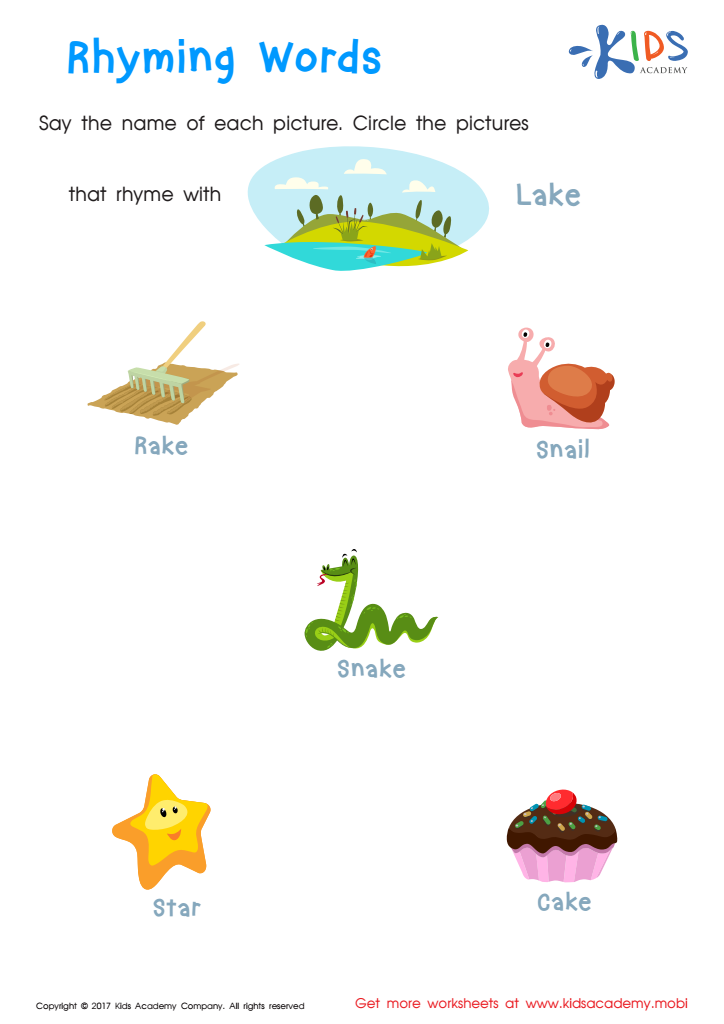
Rhyming Words Rhyming Worksheet
 Assign to My Students
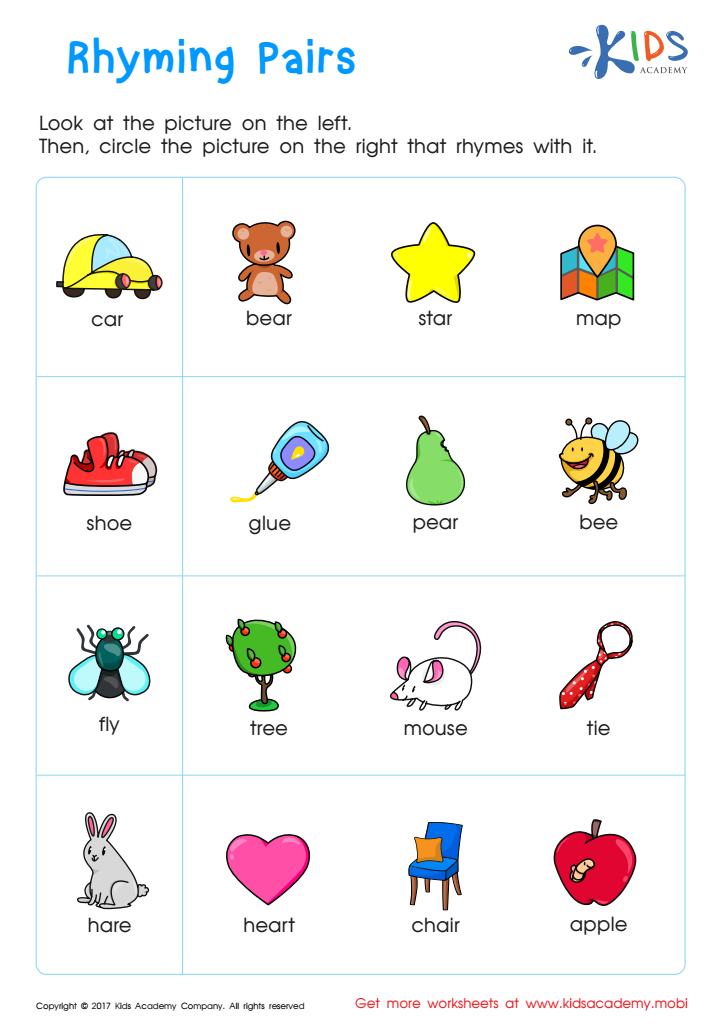
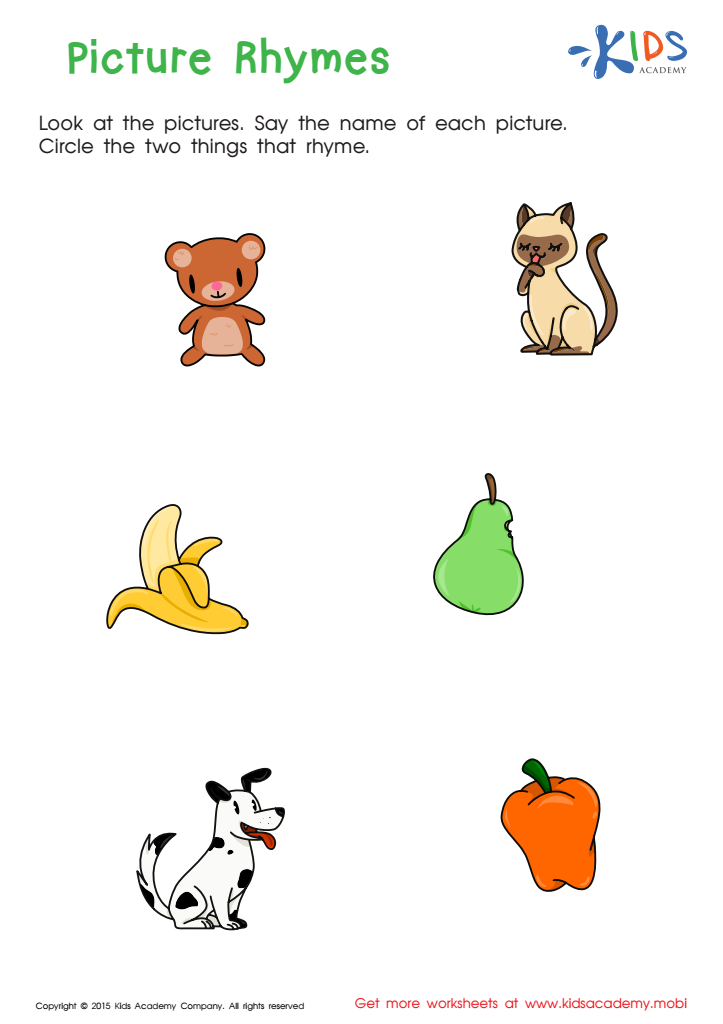
First Words: Picture Rhymes Worksheet







Rhyming skills are a crucial aspect of early literacy development for children aged 4-5. For parents and teachers, fostering these skills can significantly impact a child’s reading and writing abilities. When children recognize and produce rhymes, they develop phonemic awareness, an essential precursor to reading. Phonemic awareness is the ability to hear, identify, and manipulate individual sounds in spoken words, which lays the groundwork for decoding words.
Engaging in rhyming activities can make learning fun and interactive. Singing songs, reading rhyming books, and playing rhyming games not only hold children’s attention but also enhance their vocabulary and comprehension skills. Children who enjoy rhyming often develop a better liking for reading, as the rhythmic and melodic aspects of language capture their interest.
Moreover, developing rhyming skills can boost children's confidence in their language abilities. This confidence encourages them to engage more in literacy activities, leading to a lifelong love of reading. For parents and teachers, investing time in rhyming games and rhyming books is not just about teaching; it's about nurturing essential skills that pave the way for a child's future academic success, self-expression, and creativity.