Reading comprehension Normal Reading Fiction Worksheets for Ages 4-5 - Page 2
27 filtered results
-
From - To
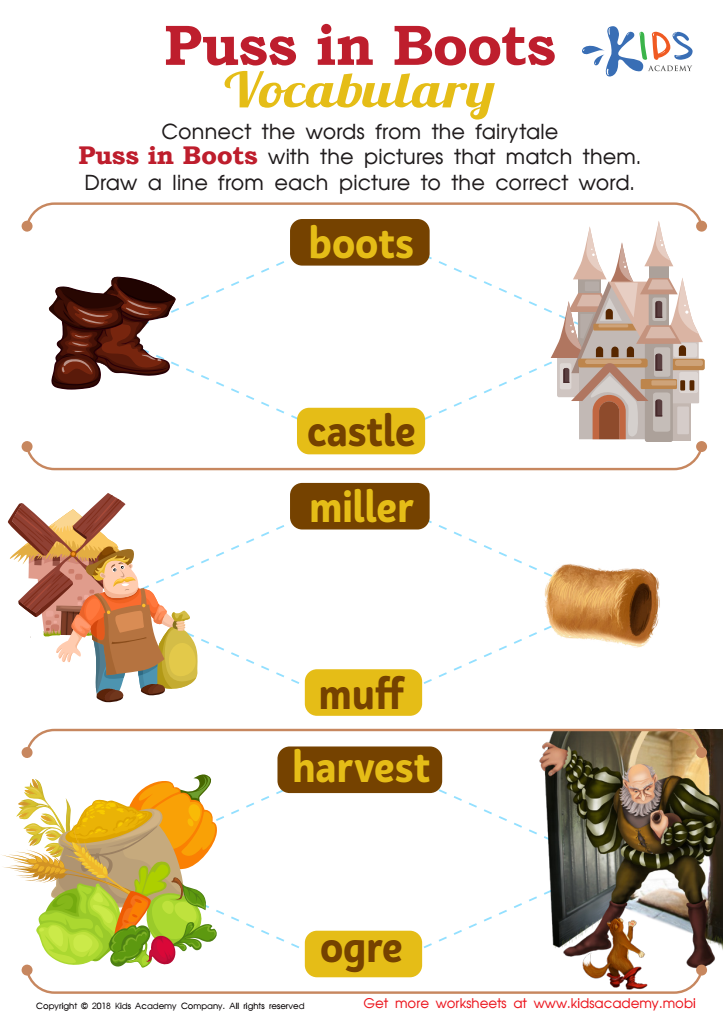
Puss in Boots Vocabulary Worksheet
 Assign to My Students
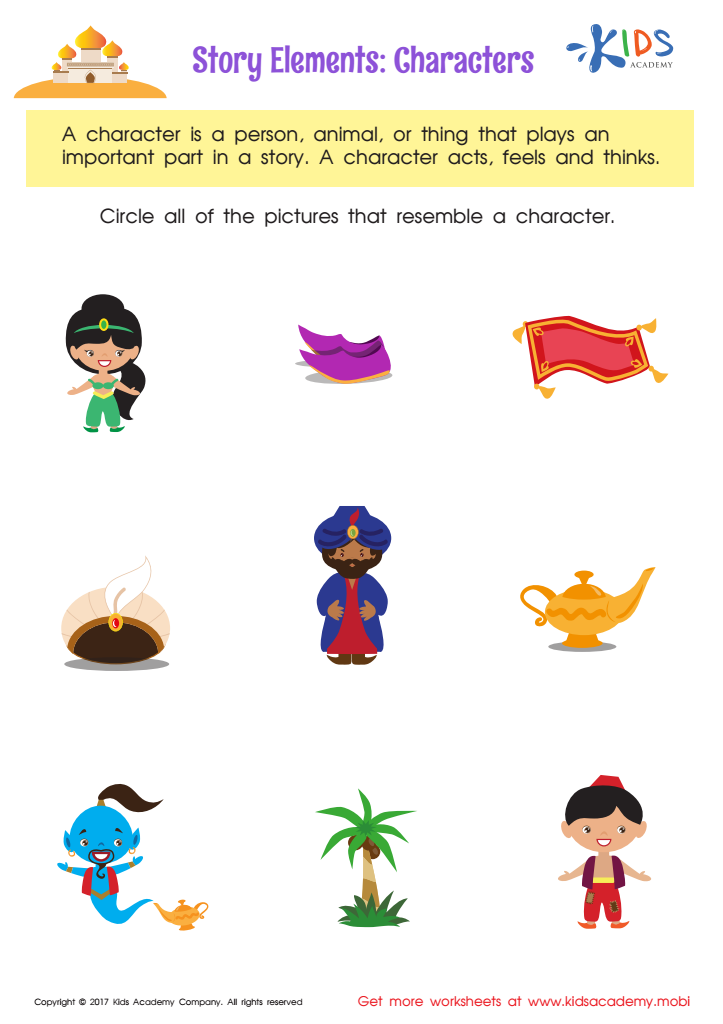
Story Elements Printable
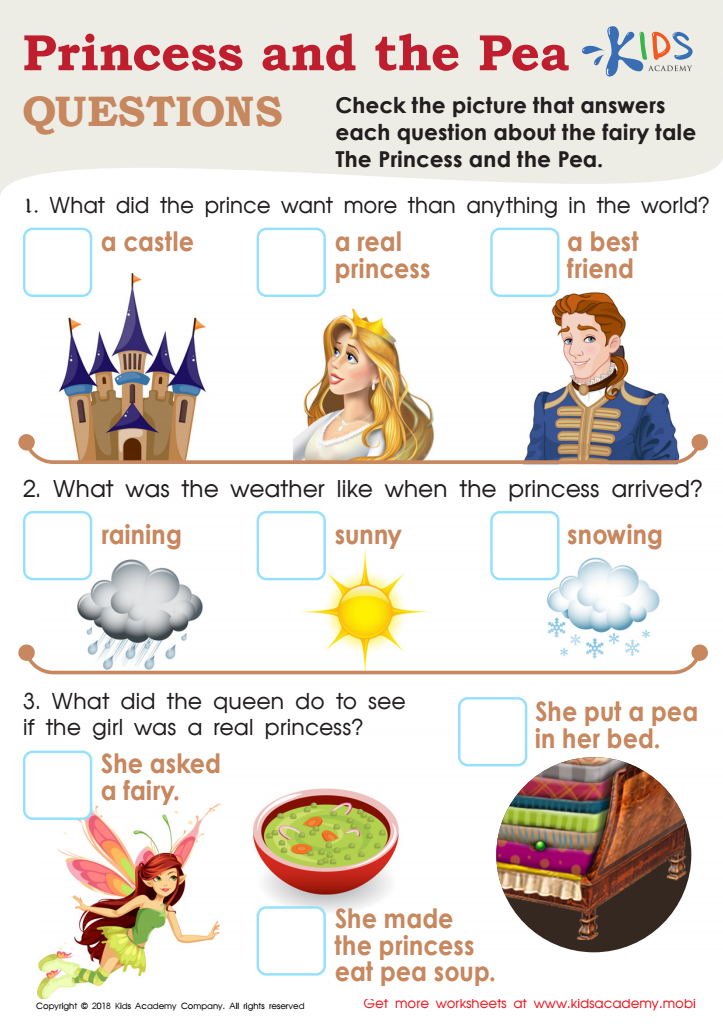
Princess and the Pea Questions Worksheet


.jpg)





Reading comprehension in early childhood is fundamental as it lays the groundwork for future learning across all subjects. For children ages 4-5, engaging with fiction helps in numerous ways. Firstly, it stimulates imagination and creativity. Fictional stories transport children to diverse worlds, introducing them to a range of characters and situations that enrich their understanding and spark imaginative play.
Stories also enhance linguistic skills. As children listen to and discuss stories, they develop vocabulary, learn sentence structures, and grasp the nuances of language. This is crucial in this developmental stage as their brains are highly receptive to linguistic input.
Reading these stories enhances cognitive skills like memory, attention, and critical thinking. Children start making connections between the text and their own experiences, recognizing cause-and-effect, and predicting outcomes, which are key aspects of comprehension.
Social-emotionally, stories often carry moral lessons or dilemmas, helping children develop empathy and understanding. By identifying with characters, they learn about different perspectives and emotions, which is vital for their social development.
Additionally, forming a love for reading early on creates positive associations with books and learning, fostering a lifelong habit. In essence, investing in early reading comprehension through fiction enriches the whole child—intellectually, emotionally, and socially.







