Vocabulary enhancement Normal Animals Worksheets for Ages 4-5
3 filtered results
-
From - To
Boost your child's vocabulary with our engaging Normal Animals Worksheets designed for ages 4-5! These worksheets provide young learners an exciting way to explore the animal kingdom while expanding their language skills. Featuring colorful images and captivating activities, children will identify animals, match words, and develop comprehension through fun exercises. Perfect for preschool classrooms or at-home learning, these resources support foundational literacy skills, fostering a love for words and learning. Equip your little ones with essential vocabulary related to the animal world, encouraging both curiosity and confidence in their communication abilities. Download our worksheets today for an enriching educational experience!
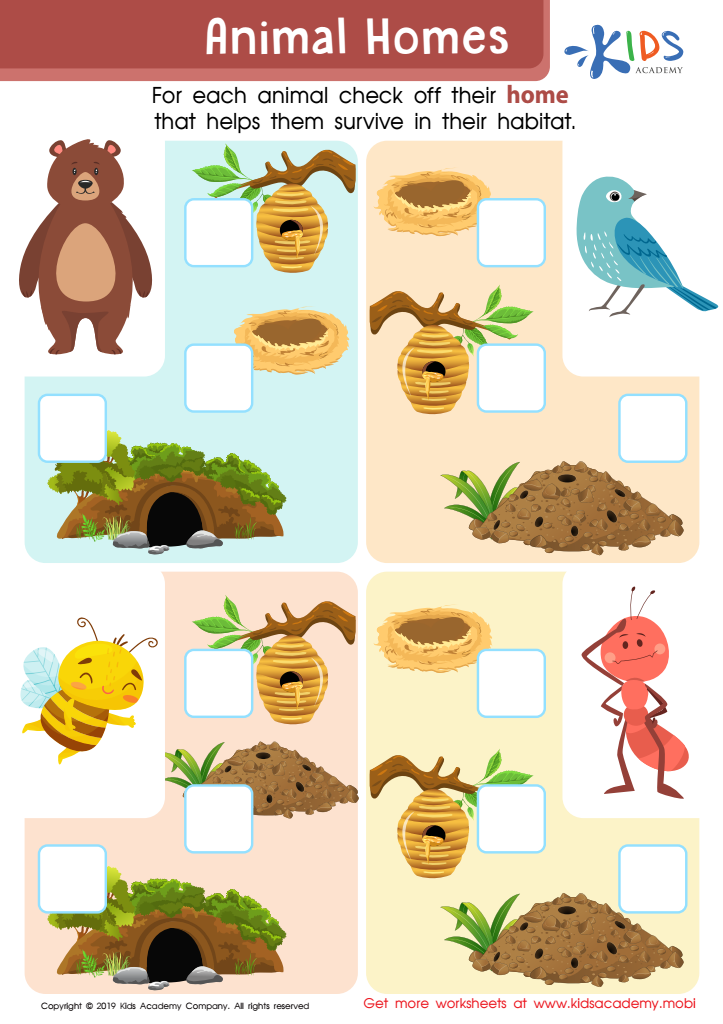
Animal Homes Worksheet
 Assign to My Students
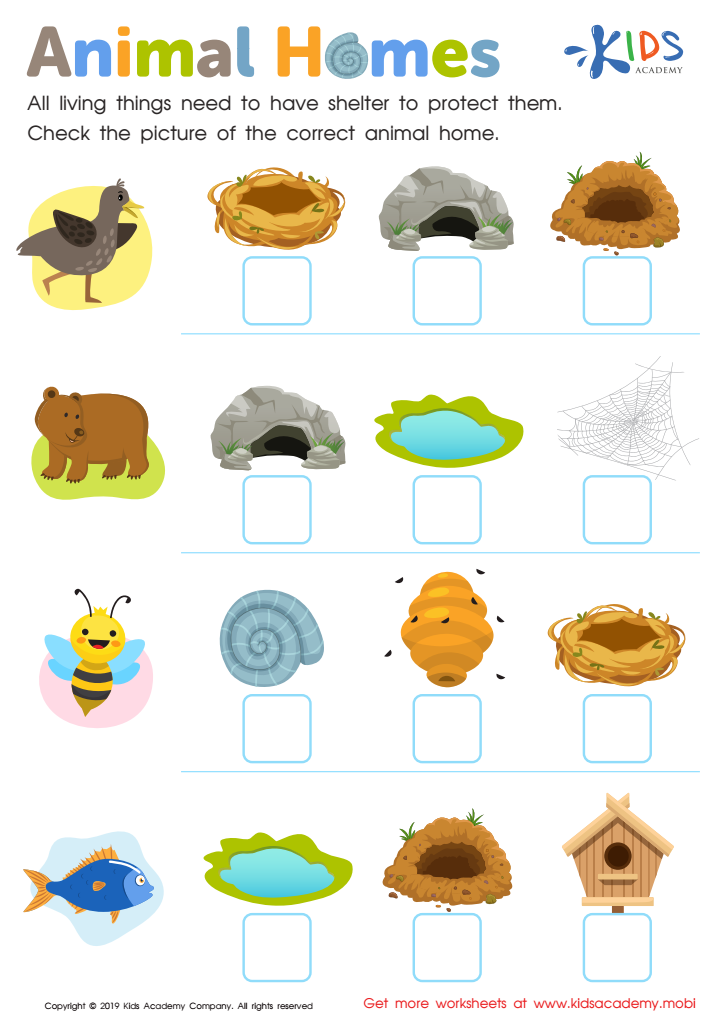
Animal Homes Worksheet







Vocabulary enhancement for early learners, particularly regarding normal animals, is vital for several reasons. At ages 4-5, children are in a critical phase of language development where exposure to new words impacts their communication skills, reading comprehension, and overall academic success. Introducing vocabulary related to normal animals not only makes learning more relatable but also engages children with topics they find fascinating.
By expanding their vocabulary, children build a foundation for future learning. Understanding animal names, characteristics, behaviors, and habitats fosters curiosity, encourages imaginative play, and enhances conversational skills. This knowledge also supports early science education, allowing kids to make connections to real-world concepts like ecosystems and conservation.
Moreover, vocabulary enhancement in this area aids literacy development. As children learn to read, a strong vocabulary helps them decode unfamiliar texts, improving fluency and comprehension. For teachers and parents, incorporating animal vocabulary into playful learning experiences—such as books, songs, or interactive games—creates a stimulating environment that promotes language growth.
Ultimately, nurturing vocabulary around normal animals equips young learners with essential skills that are crucial for their cognitive, social, and emotional development, setting them up for success in their educational journey.








