Critical Thinking Normal Community Worksheets for Ages 4-5
3 filtered results
-
From - To
Discover our engaging "Critical Thinking Normal Community Worksheets for Ages 4-5" designed to nurture young minds! These interactive worksheets help preschoolers explore essential community concepts and develop problem-solving skills. With colorful illustrations and age-appropriate activities, children will practice identifying community helpers, understanding their roles, and recognizing the importance of teamwork. Engaging questions encourage kids to think critically and share their ideas. Perfect for home or classroom use, our worksheets are tailored to support early learners in becoming thoughtful, aware citizens. Spark curiosity and foster a love for learning with our comprehensive collection of fun critical thinking resources today!
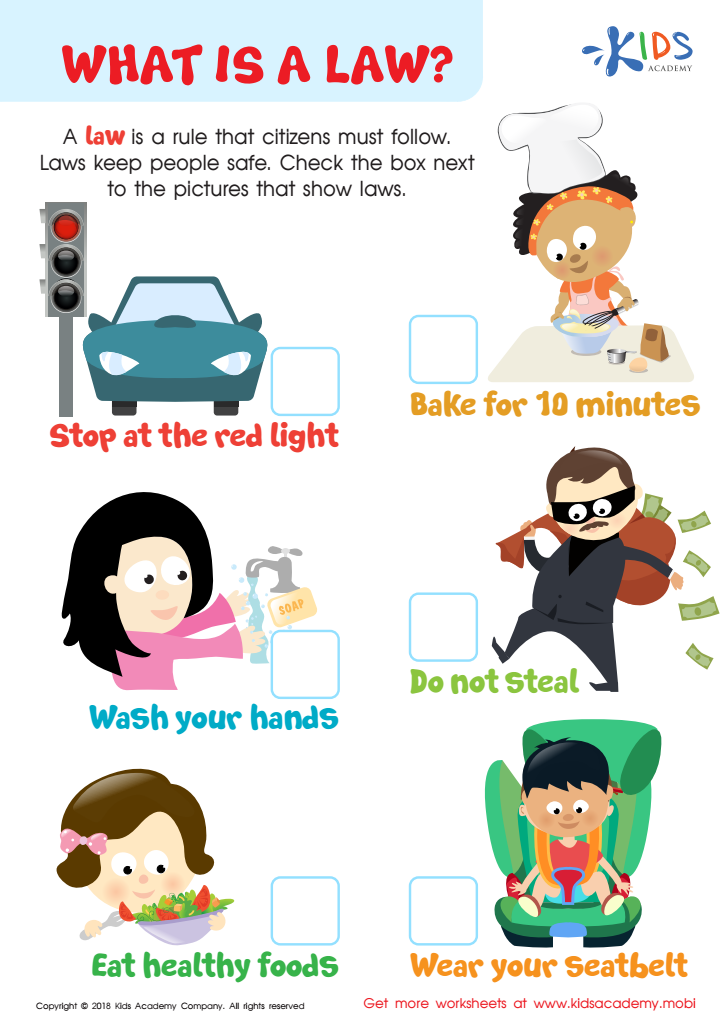
What is a Law? Worksheet
 Assign to My Students
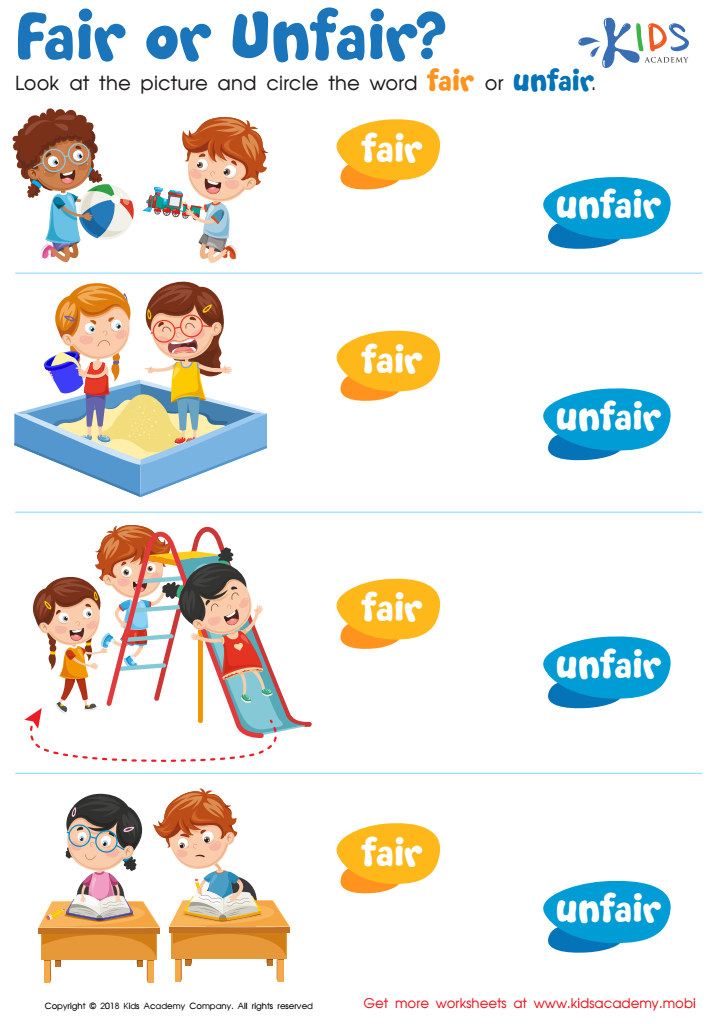
Fair or Unfair Worksheet
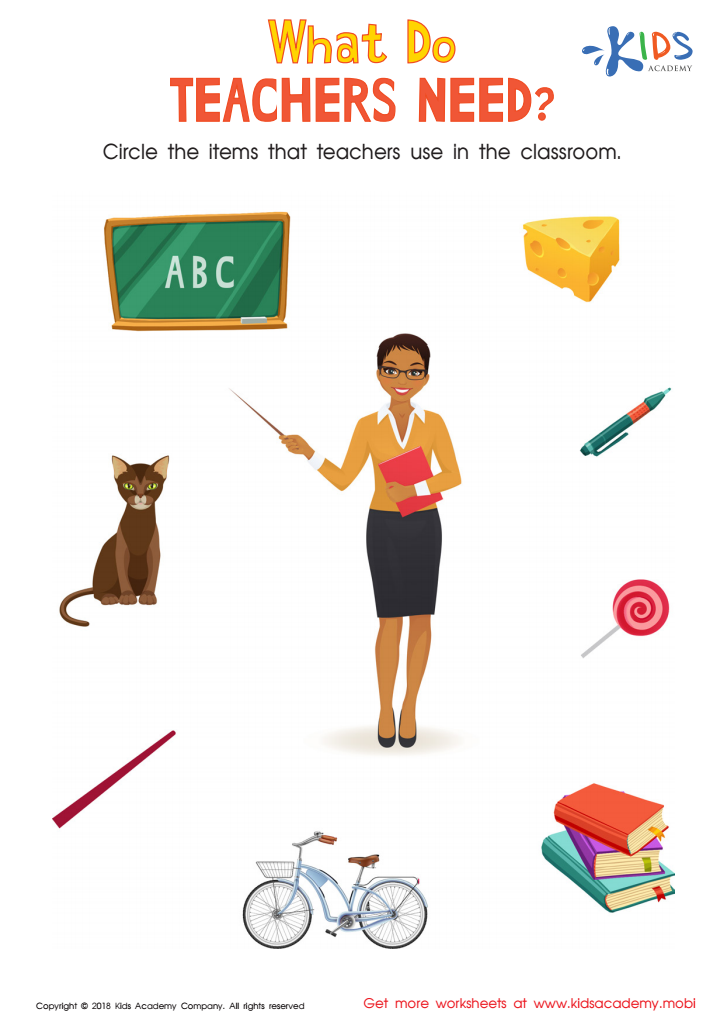
What Do Teachers Need Worksheet








Parents and teachers should prioritize fostering critical thinking in children aged 4-5 to lay a strong foundation for lifelong learning. During this developmental stage, children are naturally curious and eager to explore their surroundings, making it an ideal time to encourage creative thinking and problem-solving skills. By engaging in activities that promote critical thinking, such as open-ended questions, role-playing, and collaborative games, caregivers can help children learn how to analyze situations, evaluate options, and make informed decisions.
Moreover, critical thinking skills enhance social interactions and emotional intelligence. As children communicate their thoughts and ideas with peers, they develop empathy and understanding, vital qualities for navigating relationships. Encouraging children to express their thoughts and inquire about the perspectives of others fosters a sense of community and cooperation among peers, which is essential for a positive learning environment.
Additionally, developing critical thinking skills at an early age can enhance academic performance. Children equipped with these skills are better prepared to tackle challenges and adapt to new information, ensuring they remain engaged and motivated throughout their educational journey. In summary, nurturing critical thinking in young children is crucial for their cognitive, social, and emotional development, shaping them into thoughtful, independent thinkers.








