Letter-sound association Normal Alphabet Worksheets for Ages 4-6
7 filtered results
-
From - To
Boost your child’s literacy skills with our engaging Letter-Sound Association Normal Alphabet Worksheets designed for ages 4-6. These printable resources help young learners connect letters with their corresponding sounds, fostering essential reading readiness. Each worksheet features vibrant illustrations and interactive activities that make learning letters both fun and effective. Children will practice identifying sounds and letters through engaging exercises, enhancing their phonemic awareness. Ideal for homeschoolers and educators, these worksheets support early reading development in a playful, stress-free environment. Give your child a head start on literacy with our carefully crafted letter-sound association worksheets today!
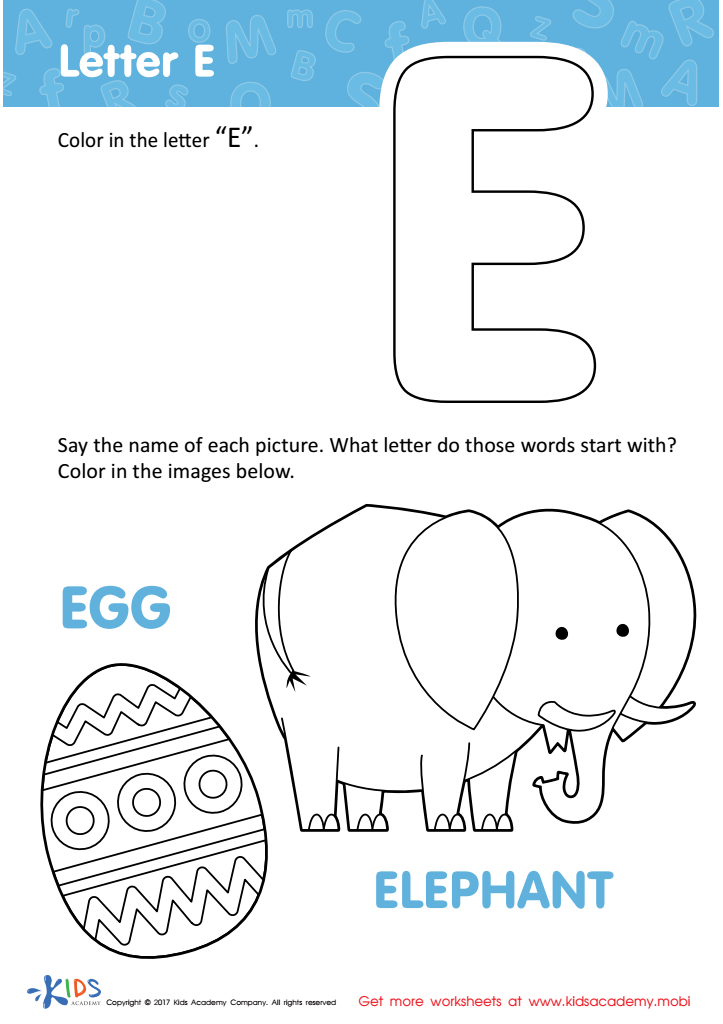
Letter E Coloring Sheet
 Assign to My Students
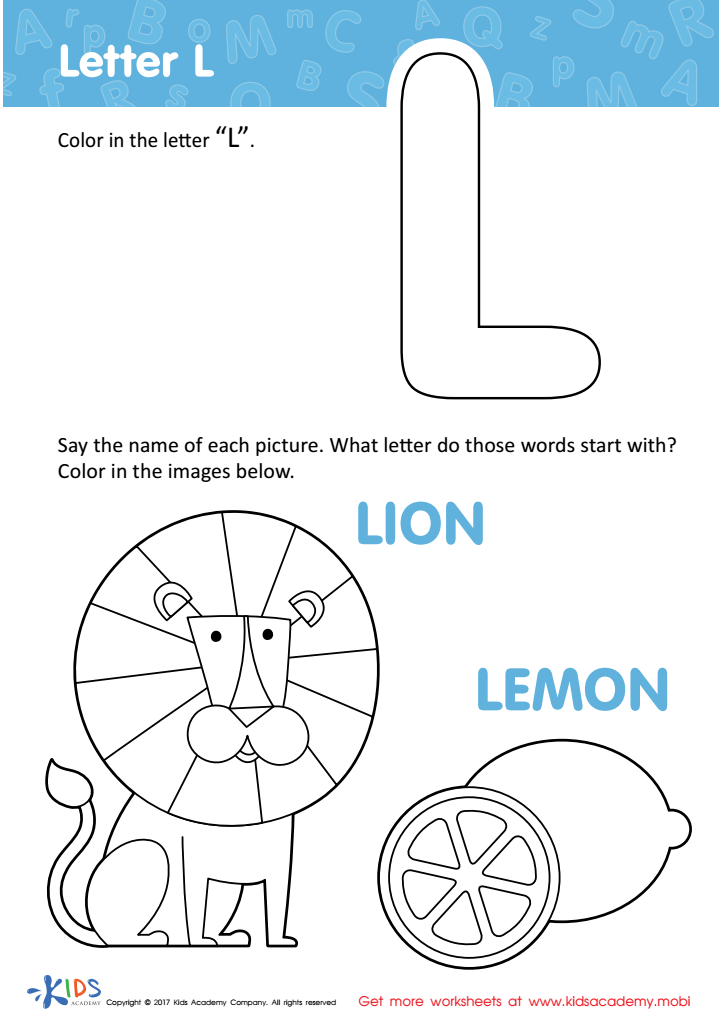
Letter L Coloring Sheet
Assign to My Students
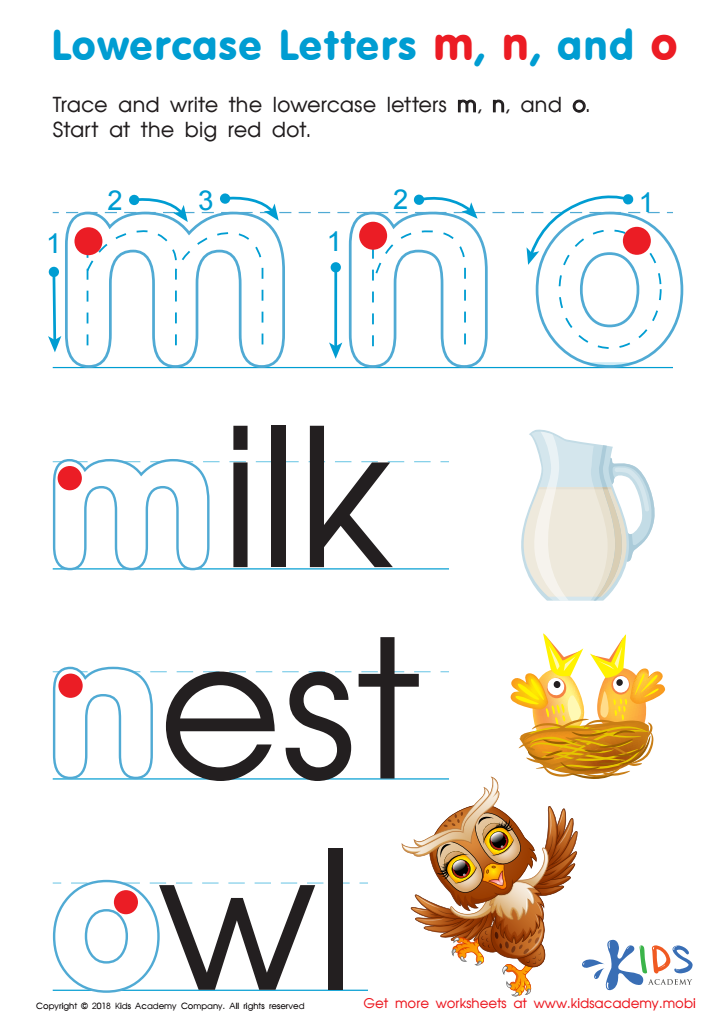
Lowercase Letters m n o Worksheet
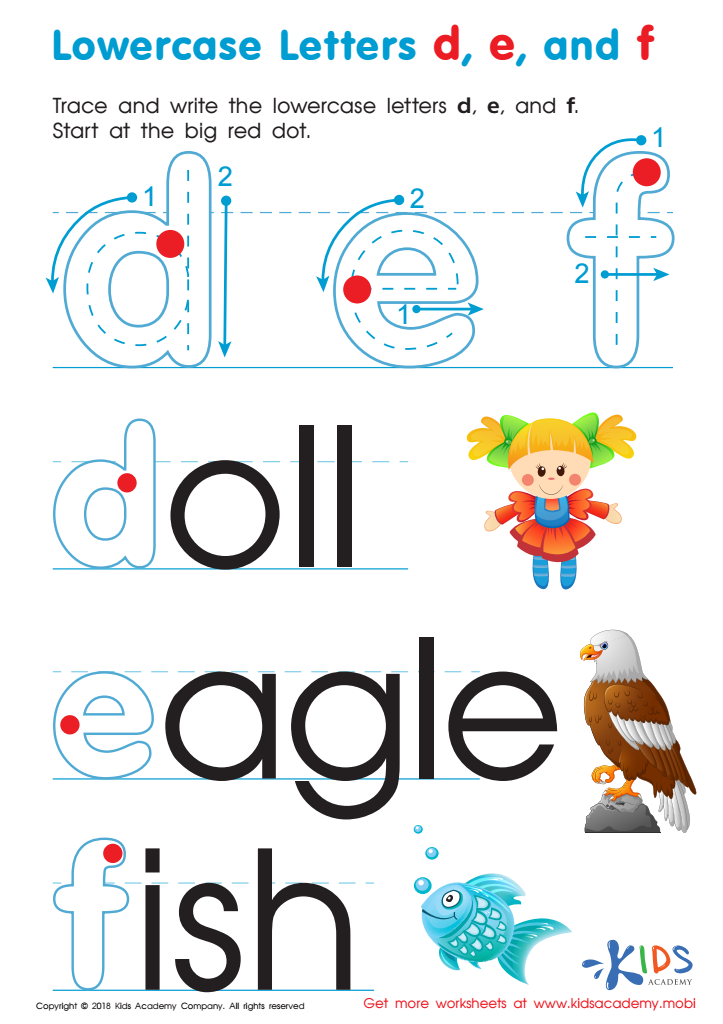
Lowercase Letters d e f Worksheet
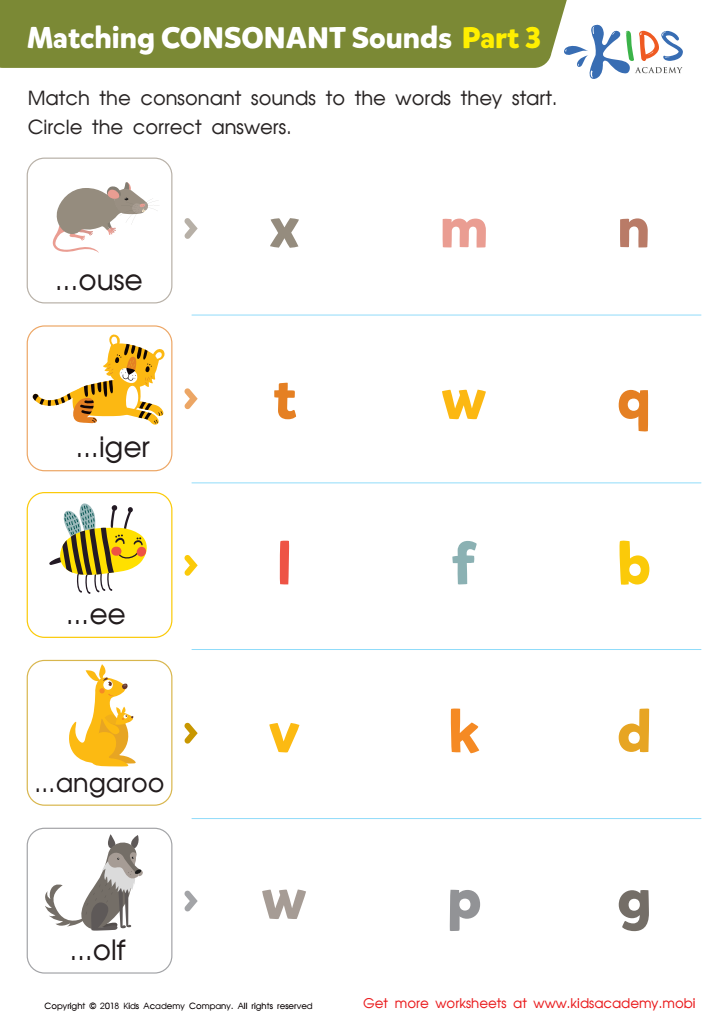
Matching Consonant Sounds: Part 3 Worksheet
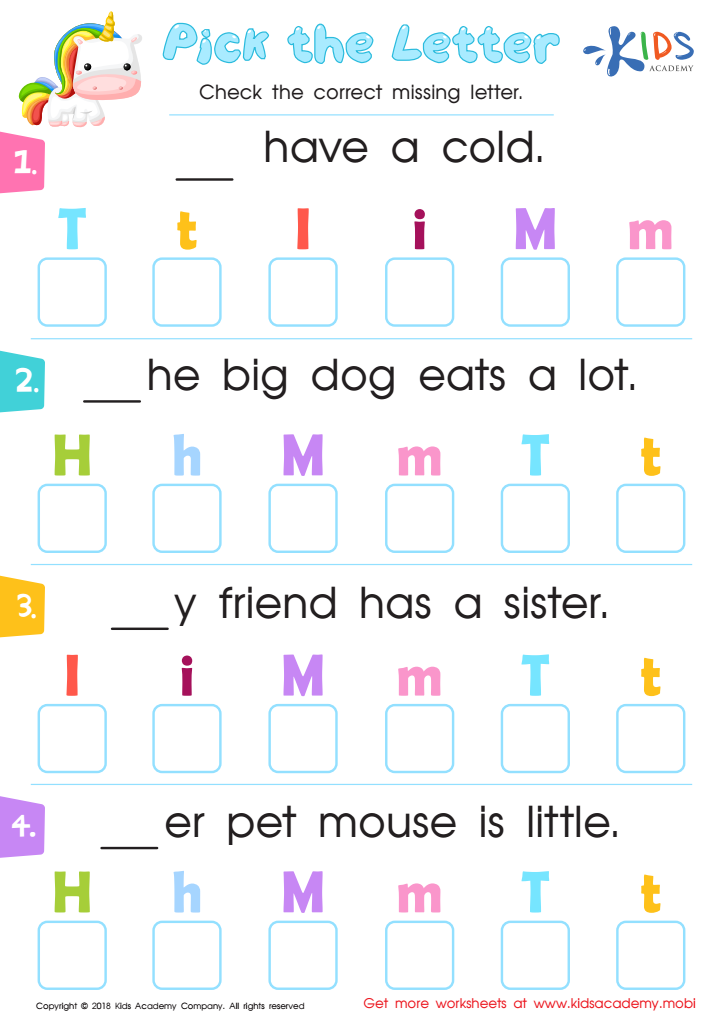
Pick the Letter Worksheet
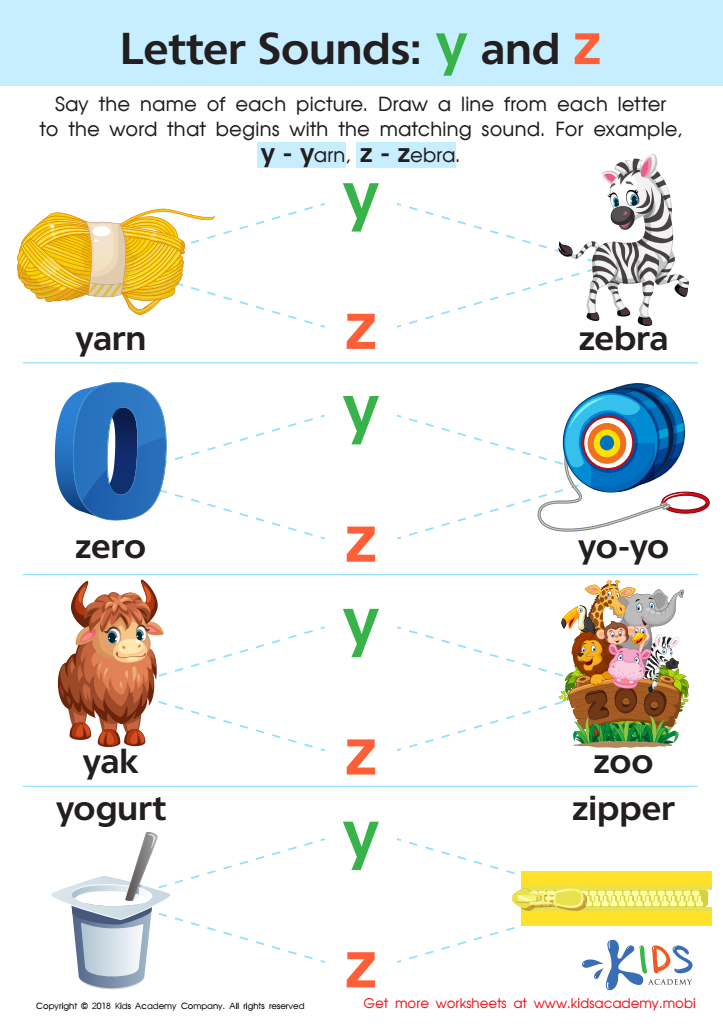
Letter Y and Z Sounds Worksheet







Parents and teachers should prioritize letter-sound association for children aged 4-6 because it serves as the foundation for literacy development. At this critical stage, children are learning to connect letters with their corresponding sounds, which is essential for reading and writing. Understanding these associations enables children to decode new words and recognize familiar ones, fostering confidence and fluency in their reading skills.
Moreover, early mastery of letter-sound knowledge supports vocabulary growth and comprehension, allowing children to engage more deeply with texts. This skill is not just important for academic success; it also plays a vital role in everyday communication and expression.
Additionally, when parents and teachers emphasize letter-sound associations through interactive and playful activities, it creates a rich, engaging learning environment. Such involvement encourages a love for reading and learning, helping children to develop a positive attitude toward education at an early age.
Fostering these skills now ensures that children are better prepared for future academic challenges, setting them on a path to success. Therefore, encouraging letter-sound association is a critical commitment that parents and teachers can make to support children’s development during these formative years.







