Rhyming skills development Normal Alphabet Worksheets for Ages 4-6
4 filtered results
-
From - To
Enhance your child's language abilities with our "Rhyming Skills Development Normal Alphabet Worksheets" designed specifically for ages 4-6. Our engaging activities focus on strengthening foundational phonics and alphabet knowledge through fun rhyming exercises. These expertly crafted worksheets help young learners recognize and match rhyming words, boosting their reading readiness and vocabulary. Perfect for preschoolers and kindergartners, each worksheet combines colorful visuals with interactive tasks to make learning enjoyable and effective. Give your child a head start in literacy with our age-appropriate and highly educational rhyming skill worksheets. Try them today and watch your child excel!
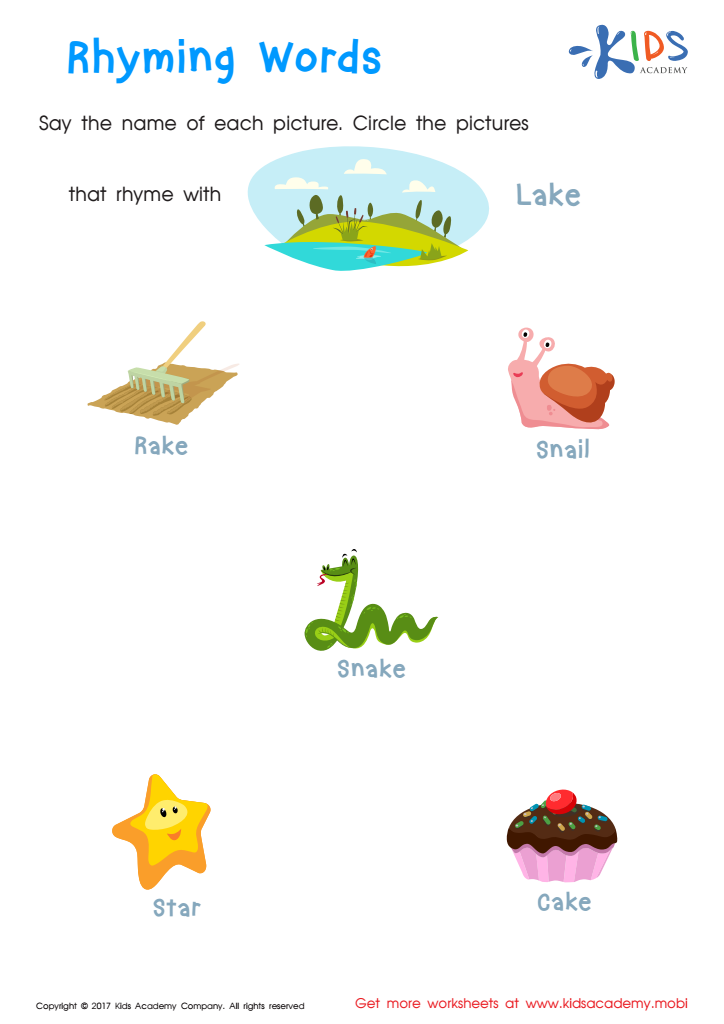
Rhyming Words Rhyming Worksheet
 Assign to My Students
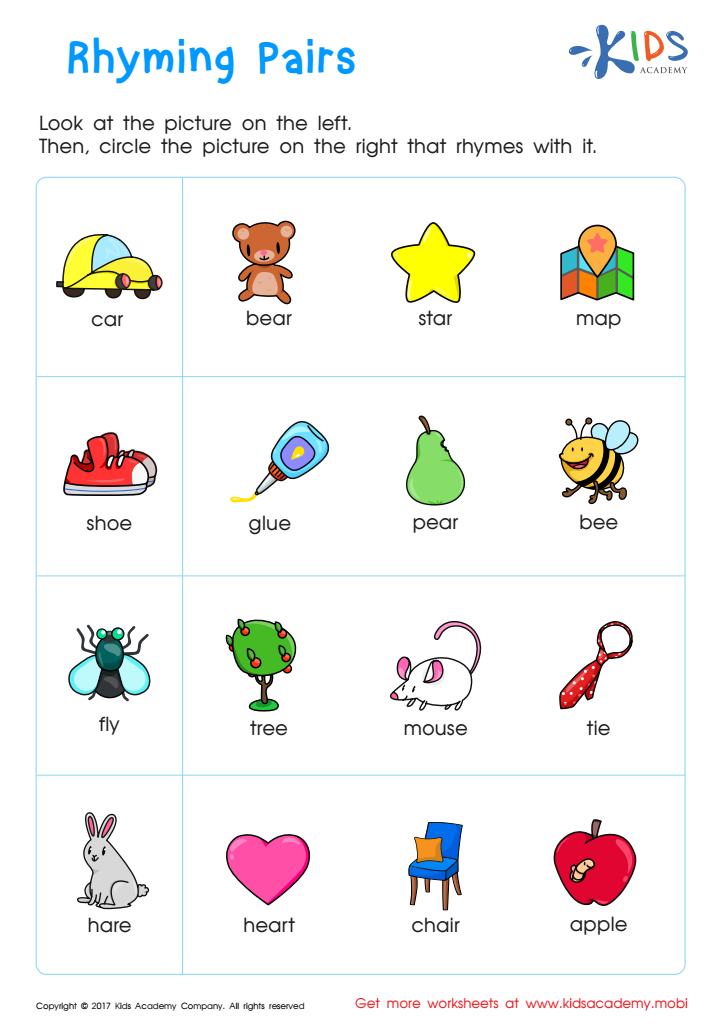
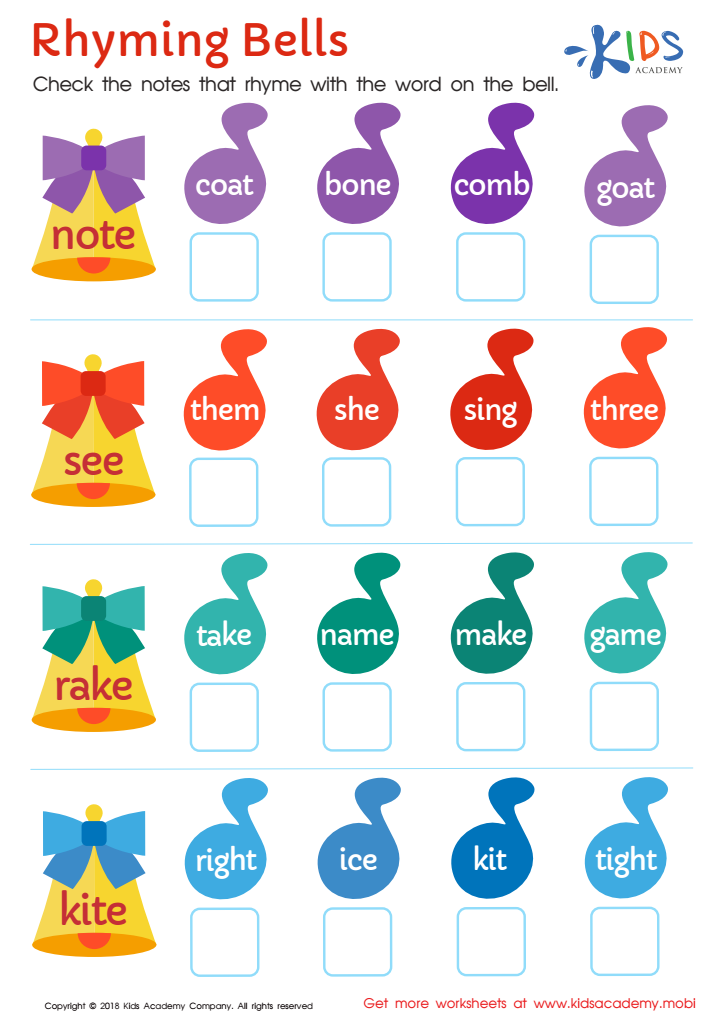
Rhyming Bells Worksheet
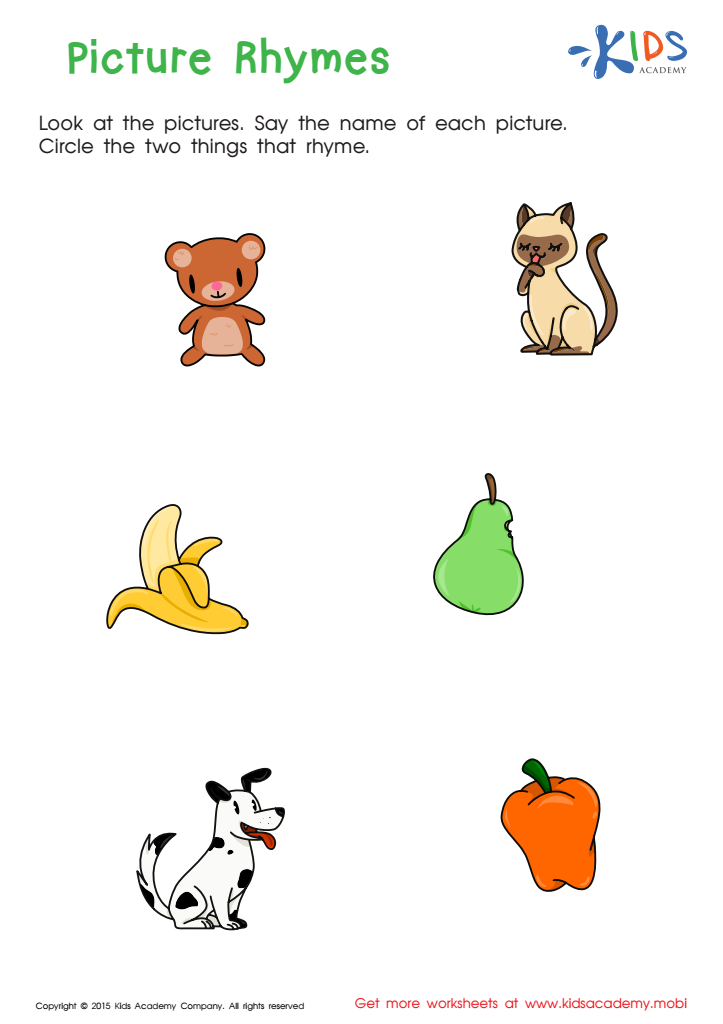
First Words: Picture Rhymes Worksheet







Developing rhyming skills in young children aged 4-6 is crucial for multiple reasons. Firstly, rhyming enhances phonemic awareness, which is the ability to hear and manipulate individual sounds in words. This is a foundational skill for reading and literacy. When children recognize rhyming patterns, they become better at decoding new words, thus improving their reading fluency.
Secondly, rhyming boosts memory and cognitive development. It helps children remember words and concepts by creating associations between similar sounds. This associative memory supports vocabulary acquisition and language development, which are essential for their verbal and written communication skills.
Additionally, engaging in rhyming activities also fosters listening skills and auditory discrimination. Children learn to pay close attention to sounds and differences between them, which can further aid in learning other spoken languages and even music.
Moreover, rhyming can make learning fun, engaging, and enjoyable. Rhyming games, songs, and stories grab children's attention and motivate them to participate. This positive early experience with language lays the groundwork for a lifelong love of reading and learning.
In summary, parents and teachers should prioritize rhyming because it significantly contributes to literacy development, cognitive skills, memory, and overall enjoyment of learning for young children.







