Reading comprehension Normal Short Vowels Worksheets for Ages 4-6
5 filtered results
-
From - To
Discover our engaging Reading Comprehension Normal Short Vowels Worksheets designed specifically for children ages 4-6. These worksheets help young learners develop essential reading skills by focusing on short vowel sounds. Each activity encourages comprehension through fun exercises that enhance phonetic recognition and vocabulary building. Ideal for home or classroom use, our resources provide a balanced mix of interactive tasks that nurture a love for reading. Enhance your child's learning journey and ensure they grasp foundational concepts with our entertaining and educational materials. Start promoting literacy and confidence in reading today with our tailored worksheets for early learners!
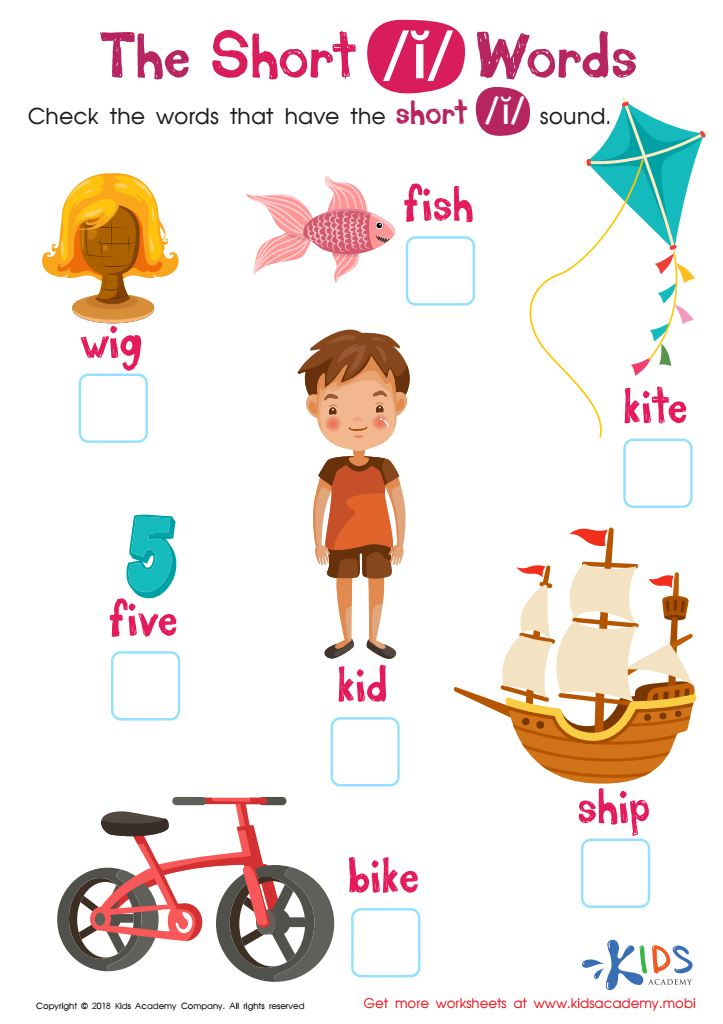
The Short I Words Reading Worksheet
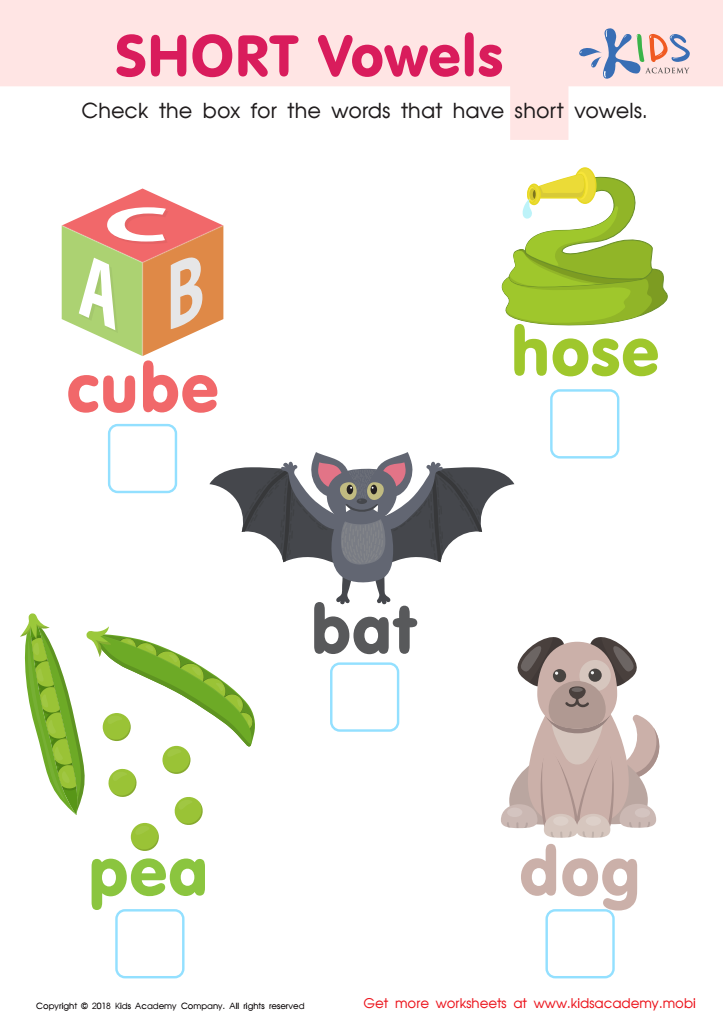
short vowels Worksheet
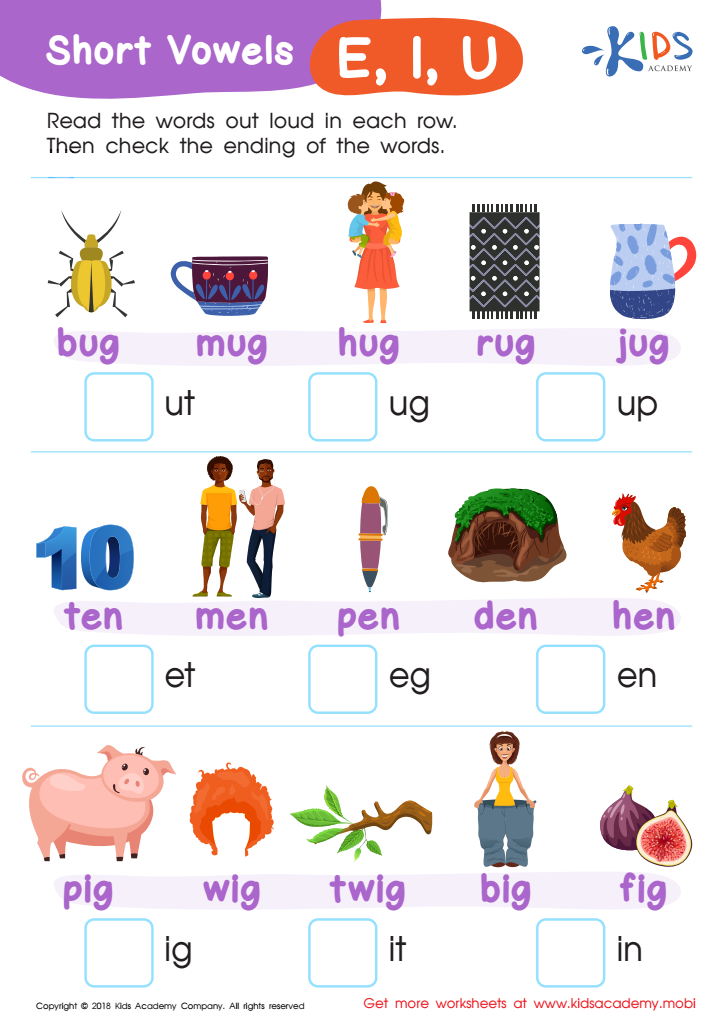
Short Vowels /e/, /i/, and /u/ Worksheet
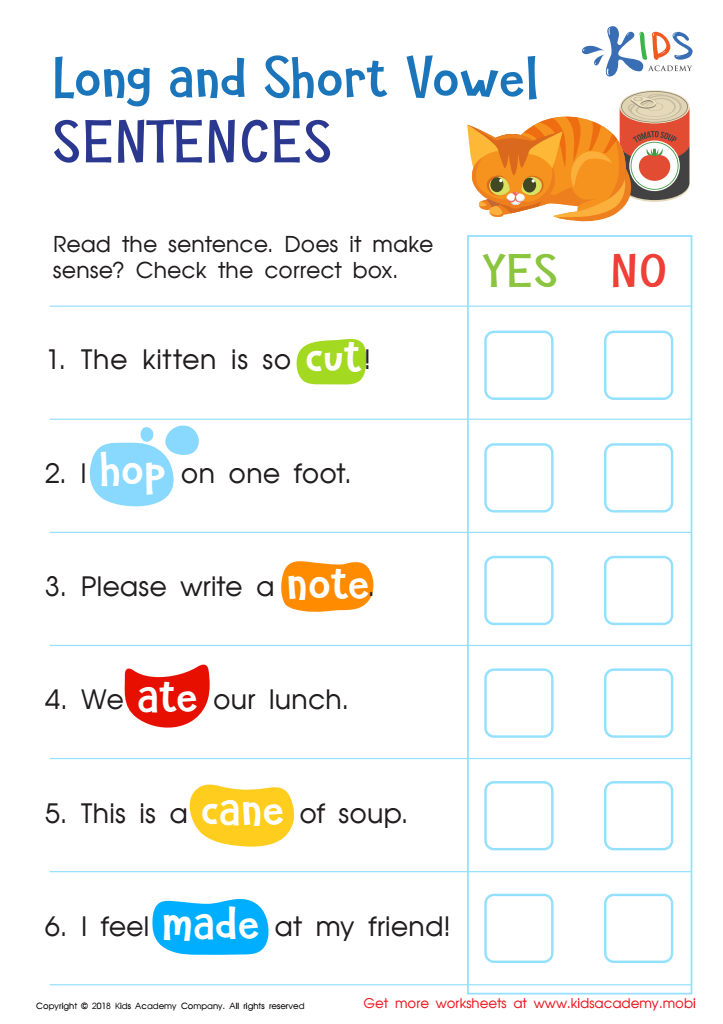
Long and Short Vowel Sentences: Assessment Worksheet

Long and Short E Worksheet
 Assign to My Students



Reading comprehension of normal short vowels is crucial for children ages 4-6, as it lays the foundation for their literacy development. At this age, children are beginning to decode words and understand basic text structures. Short vowels are key building blocks in the English language, appearing in numerous words. By focusing on these phonetic sounds, children improve their ability to sound out words accurately, enhancing their reading fluency.
When parents and teachers emphasize short vowel comprehension, they support children in developing critical thinking skills, as they learn to predict, summarize, and connect ideas within texts. This not only enriches their vocabulary but also boosts their confidence and enthusiasm for reading. Moreover, a solid understanding of short vowels helps bridge the transition to more complex phonetic patterns and reading comprehension strategies in the future.
Parents and teachers should engage children with playful activities, such as rhymes, games, and read-alouds, that revolve around short vowels. This interactive approach fosters a love for reading and paves the way for lifelong learning. Ultimately, reading comprehension involves more than just recognizing words; it's about making meaning from text, and mastering short vowels is a vital step in that journey.








