Phonics Skills Normal Vowel Team Worksheets for Ages 4-6
5 filtered results
Difficulty Level
Grade
Age
-
From - To
Subject
Activity
Standards
Boost your child's reading journey with our engaging Phonics Skills Normal Vowel Team Worksheets for ages 4-6. These expertly designed printables by Kids Academy introduce young learners to essential vowel team combinations, helping them recognize and pronounce common phonics patterns. Through colorful activities and fun exercises, children enhance their reading abilities and phonemic awareness in an enjoyable way. Perfect for early learners, these worksheets foster confident, early reading skills and a solid literacy foundation. Download now and watch your child's love for reading grow!
Favorites
With answer key
Interactive
Phonics Long O Reading Worksheet
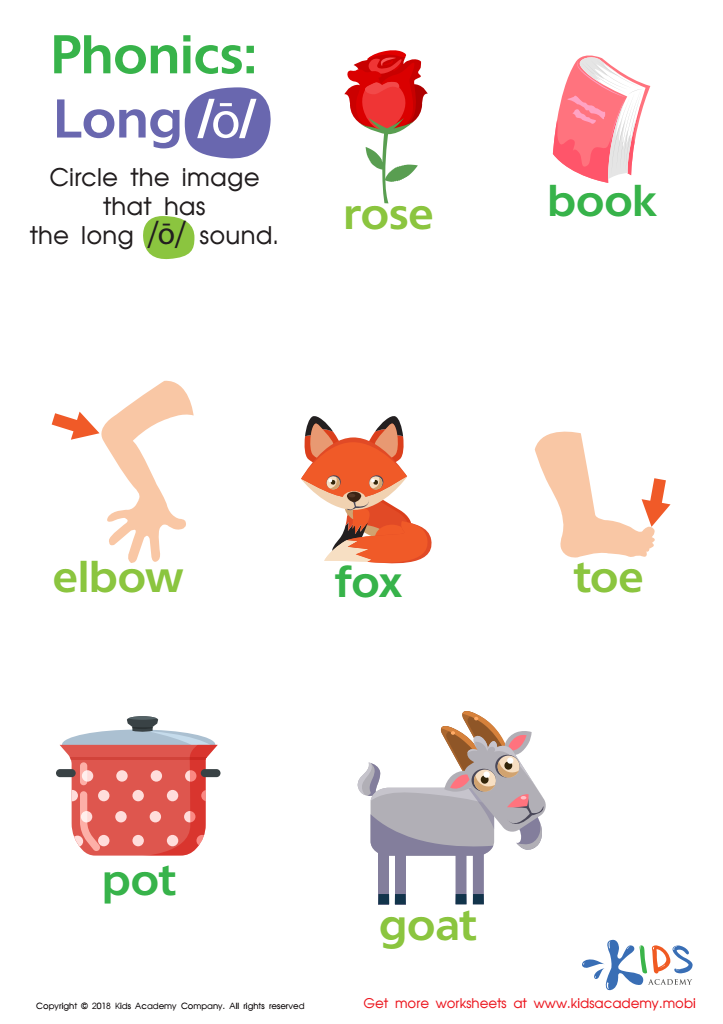
Are you ready to help your child learn the phonics long «o» sound? This worksheet is designed to aid them in getting familiar with the sound. After completing the exercise, your child should be able to differentiate letters, and recognize words with the long «o» sound. Encourage them to circle the images that have the sound.
Phonics Long O Reading Worksheet
Worksheet
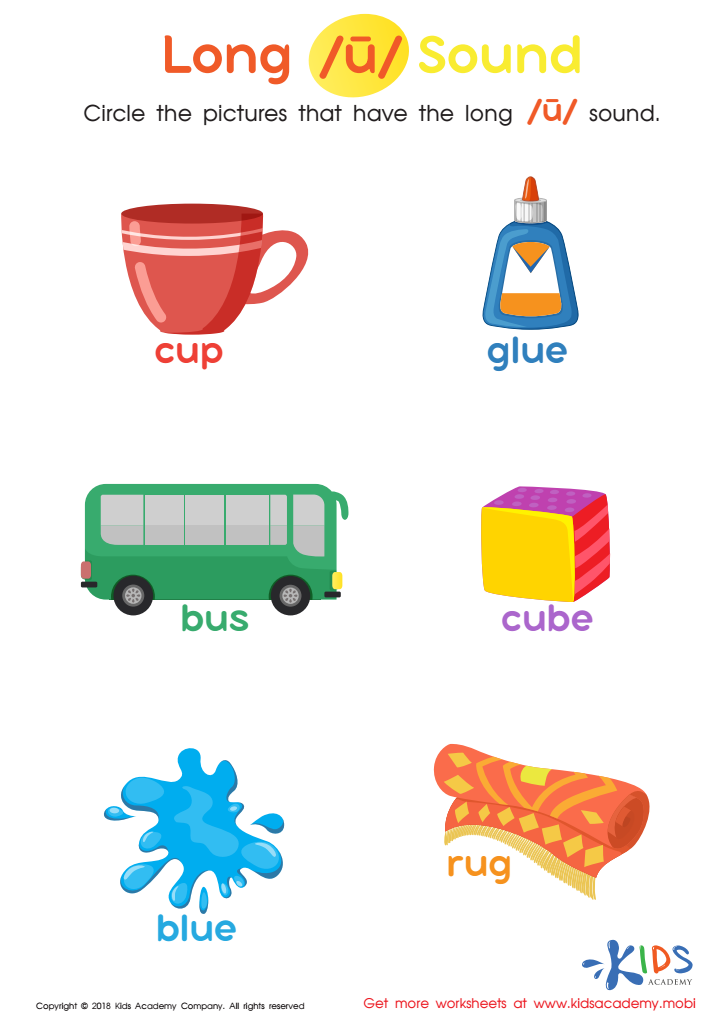
Long «u» Sound Worksheet
This fun and engaging free PDF worksheet teaches kids to differentiate between long and short «u» sounds. Through tracing circles around the correct words, they'll practice their fine motor skills while also recognizing patterns (silent-e for «ū» sound) in closed-syllable words. Bright and cheery pictures make it a great confidence booster for new readers!
Long «u» Sound Worksheet
Worksheet
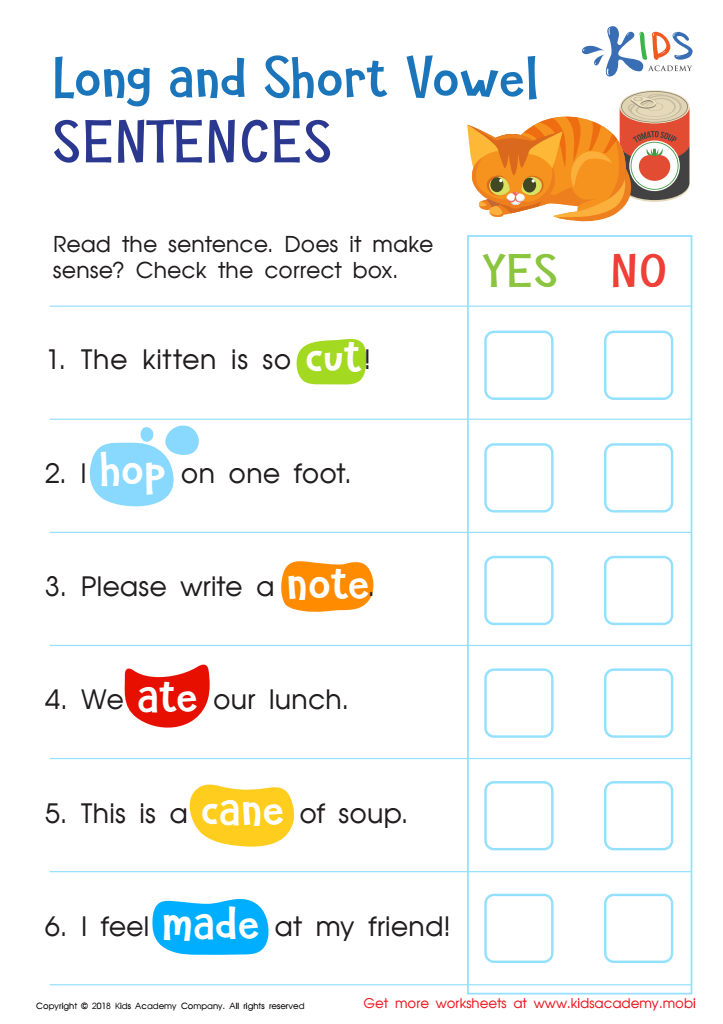
Long and Short Vowel Sentences: Assessment Worksheet
This printable worksheet helps kids practice differentiating between short and long vowel sounds. They'll use context clues to figure out which words make sense in simple sentences. A great way to build reading and writing skills!
Long and Short Vowel Sentences: Assessment Worksheet
Worksheet
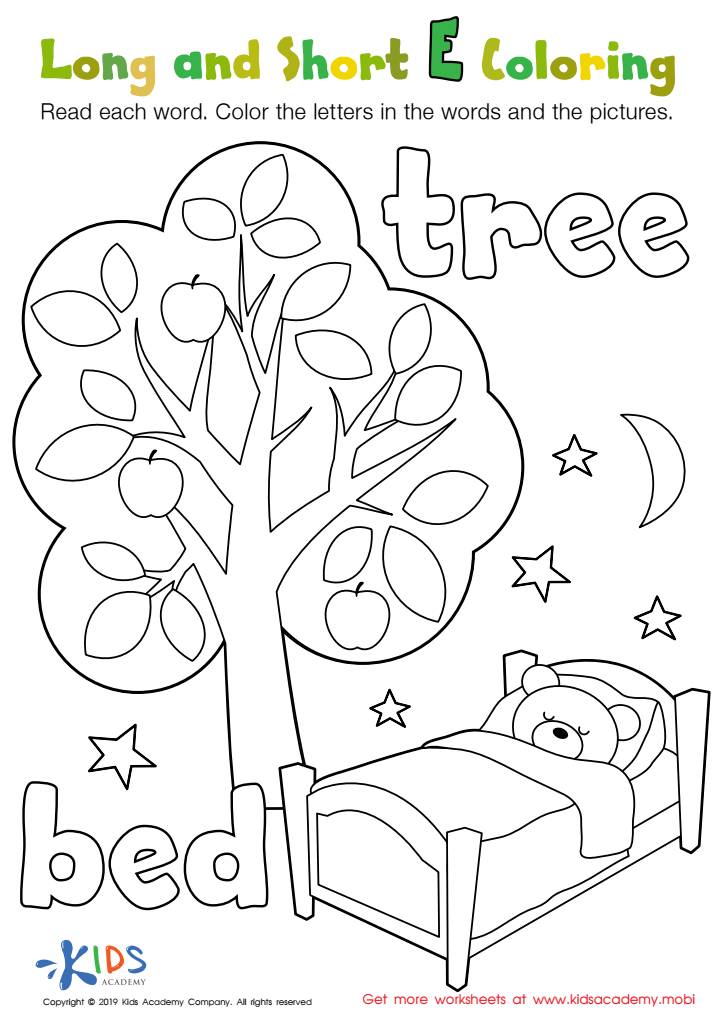
Long and Short E Worksheet
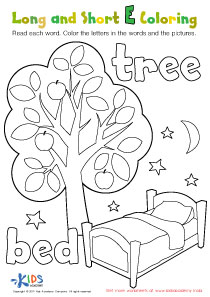
This fun printout makes learning phonics enjoyable for Grade 3 students. Get them to read the words “tree” and “bed” to recognize the different sounds of the letter “E”. After hearing the words they can color the words and the pictures to understand differences between long and short vowels.
Download (PDF)
 Assign to My Students
Assign to My Students
Long and Short E Worksheet
Worksheet
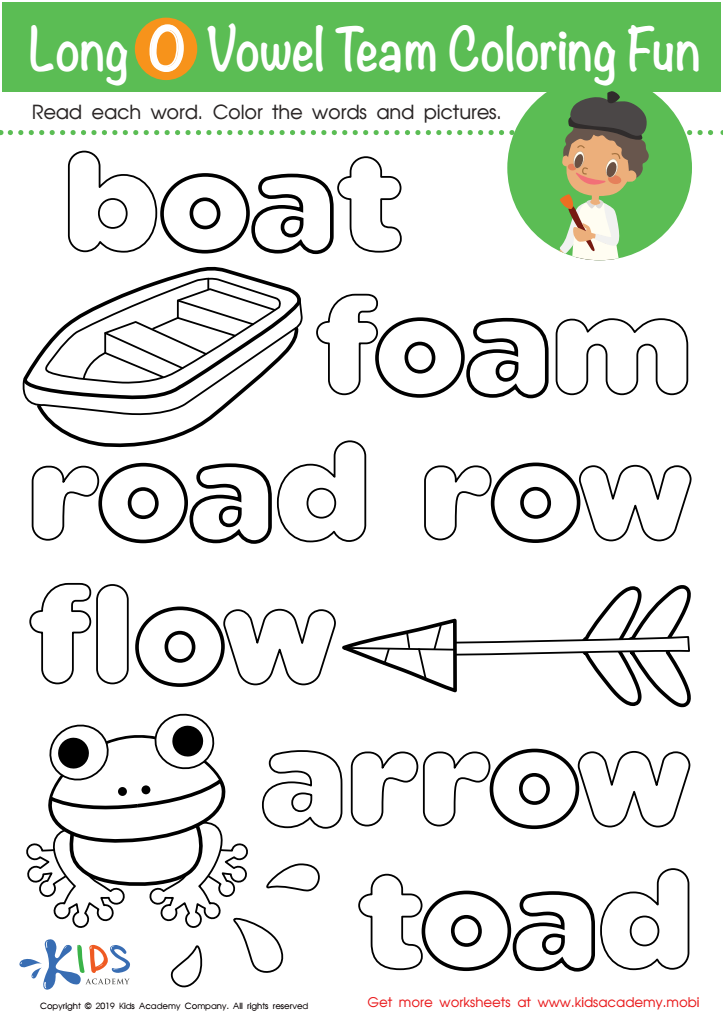
Long O Vowel Team Coloring Worksheet
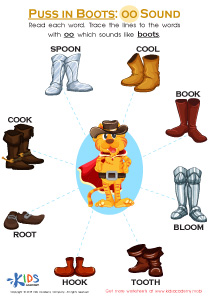
Divide your class into teams and have them work together to identify and pronounce the long O sound in words like "boat" and "flow". As they read aloud, have the rest of the class listen attentively. Then let teams color in the words and matching pictures, reinforcing the lesson. This simple printout is perfect for phonics lessons and a fun way to energize your class.
Download (PDF)
Assign to My Students
Assign to My Students
Long O Vowel Team Coloring Worksheet
Worksheet
Join Kids Academy for Free
Who is primarily going to use this learning content?



Phonics skills, specifically learning about normal vowel teams, are vital for children aged 4-6 as they lay the foundational building blocks for reading and writing proficiency. During this age, children's brains are incredibly receptive to language acquisition, which makes it an optimal time for them to grasp essential phonics concepts. Vowel teams, often referred to as vowel digraphs, consist of two vowels that create a distinct sound when combined, such as "ai" in "rain" or "ea" in "team." Understanding these pairs helps children decode words more accurately and read fluently.
For parents and teachers, focusing on vowel teams supports recognizing patterns within words, thus demystifying English spelling rules, which can often seem inconsistent. By mastering vowel teams, children are better equipped to tackle new and unfamiliar words independently, thereby bolstering their reading confidence and enjoyment.
Early proficiency in phonics skills, including normal vowel teams, correlates with improved literacy outcomes later in academic life. Without these fundamental skills, children may struggle with more complex reading and spelling tasks in the future. Phonics education also aids speech development, listening comprehension, and enhances expressive language abilities. Thus, parents and teachers should prioritize phonics skills to ensure that children develop a strong linguistic foundation paving the way for academic success.