Filters

6 filtered results

Clear all filters
Favorites
With answer key
Interactive

6 filtered results

Difficulty Level

Grade


Enhance your child's reading skills with our Reading Comprehension Normal Vowel Team Worksheets, specially designed for ages 4-6. These engaging worksheets focus on vowel teams, helping young learners recognize and read essential phonics patterns. Developed to foster early literacy, these activities encourage critical thinking as children answer comprehension questions based on fun stories and colorful illustrations. Perfect for both classroom use and at-home learning, our worksheets create a nurturing environment for skill development. Help your child build confidence in their reading abilities and enjoy hours of educational fun with our interactive vowel team resources today!

Check out this FREE Trial Lesson on Vowel Team for age 4-6!

Distinguish between Long U and Short U

Favorites
With answer key
Interactive
  • 4-6
  • Reading comprehension
  • Vowel Team
  • Normal
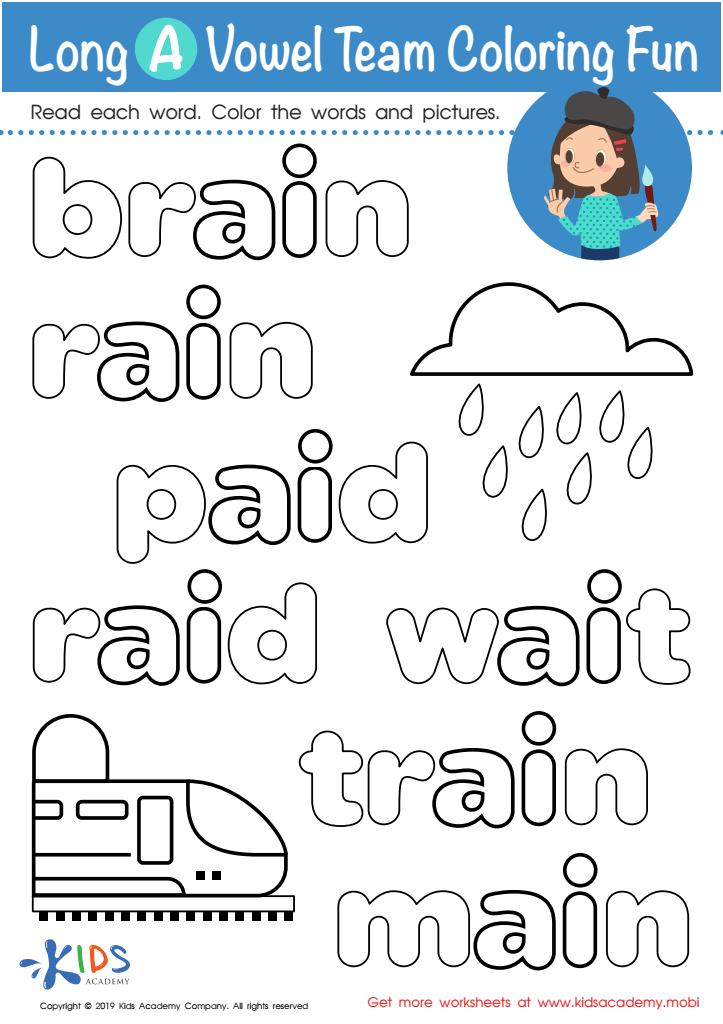
Long A Vowel Team Coloring Fun Worksheet

Long A Vowel Team Coloring Fun Worksheet

Divide your class into teams, give each a printout, then have them read aloud words with a long "A" sound (e.g. brain, paid). As they listen, let them reinforce this lesson by coloring in the words and pictures. Make phonics fun and interactive with this great coloring page!
Download (PDF)
Assign to My Students
Long A Vowel Team Coloring Fun Worksheet
Worksheet
Phonics Long O Reading Worksheet

Phonics Long O Reading Worksheet

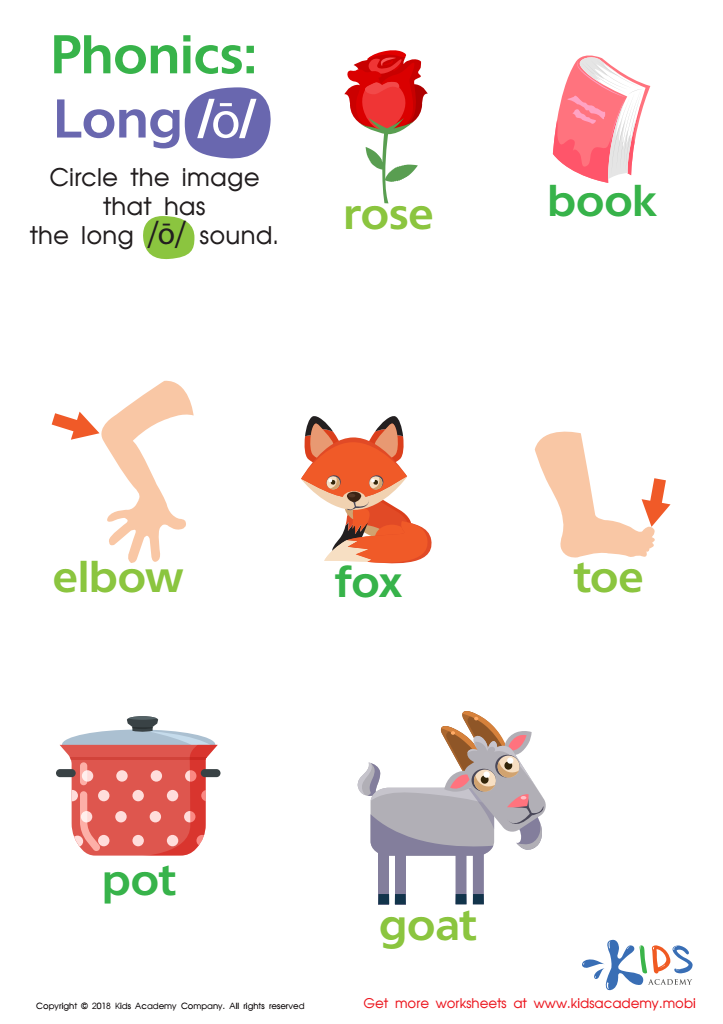
Are you ready to help your child learn the phonics long «o» sound? This worksheet is designed to aid them in getting familiar with the sound. After completing the exercise, your child should be able to differentiate letters, and recognize words with the long «o» sound. Encourage them to circle the images that have the sound.
Phonics Long O Reading Worksheet
Worksheet
short vowels Worksheet

short vowels Worksheet

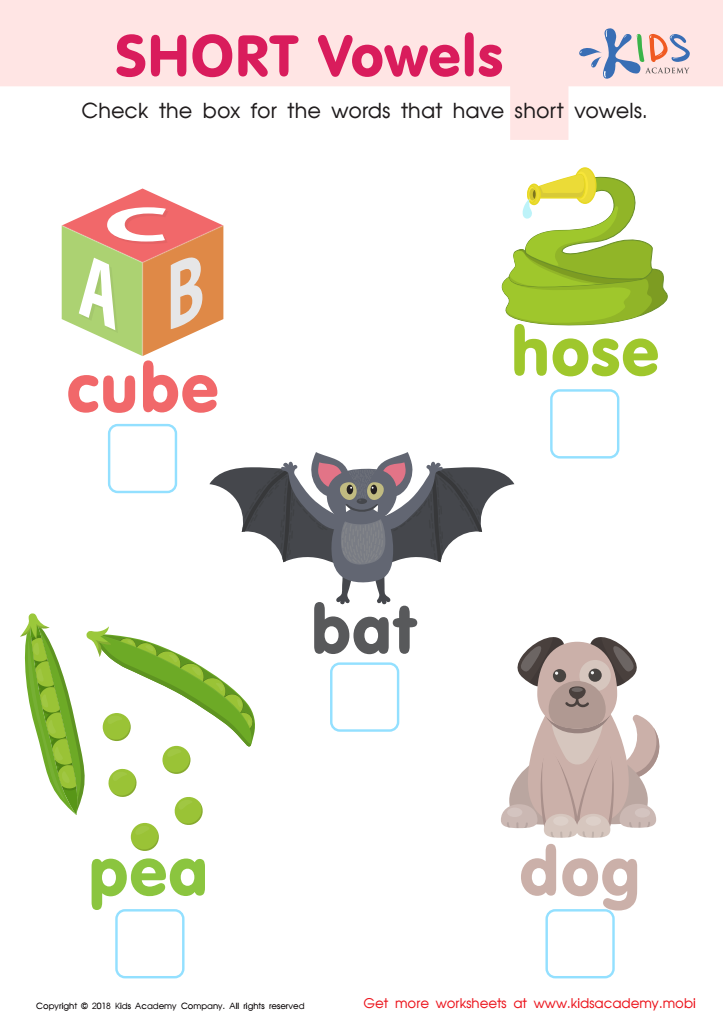
Say "dog" and notice how long it takes to pronounce the vowel. Is it short or long? Compare it to "pea" and use this worksheet to quickly assess your child's mastery. Have them name each picture and listen for the vowel sounds. Only check the boxes for words with short vowel sounds.
short vowels Worksheet
Worksheet
Long «u» Sound Worksheet

Long «u» Sound Worksheet

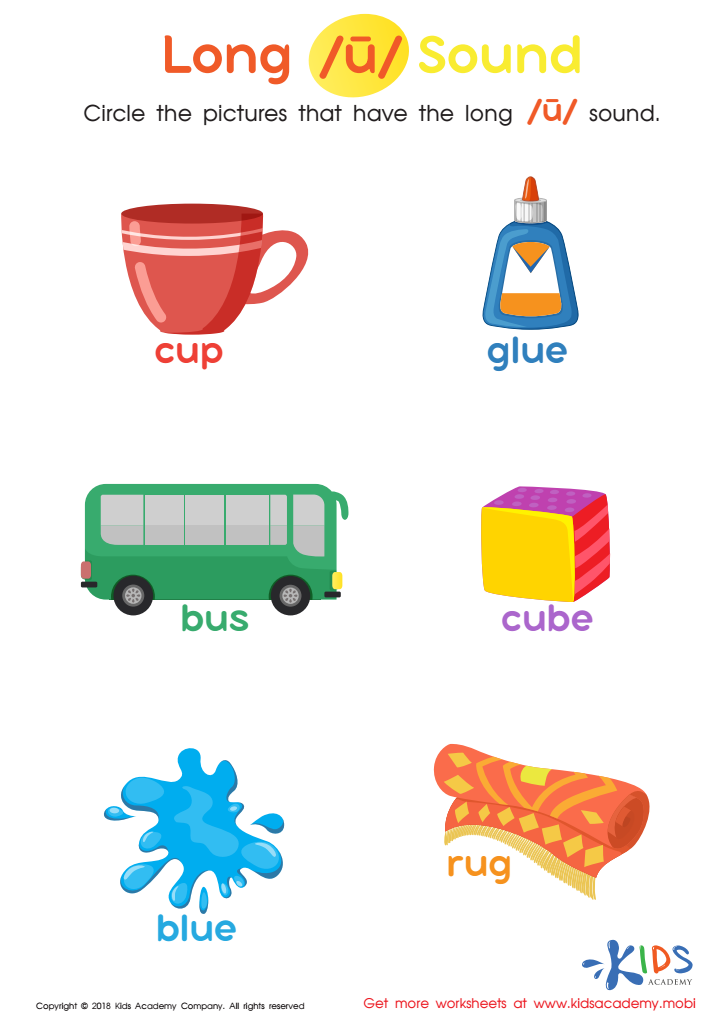
This fun and engaging free PDF worksheet teaches kids to differentiate between long and short «u» sounds. Through tracing circles around the correct words, they'll practice their fine motor skills while also recognizing patterns (silent-e for «ū» sound) in closed-syllable words. Bright and cheery pictures make it a great confidence booster for new readers!
Long «u» Sound Worksheet
Worksheet
Long and Short Vowel Sentences: Assessment Worksheet


Long and Short Vowel Sentences: Assessment Worksheet

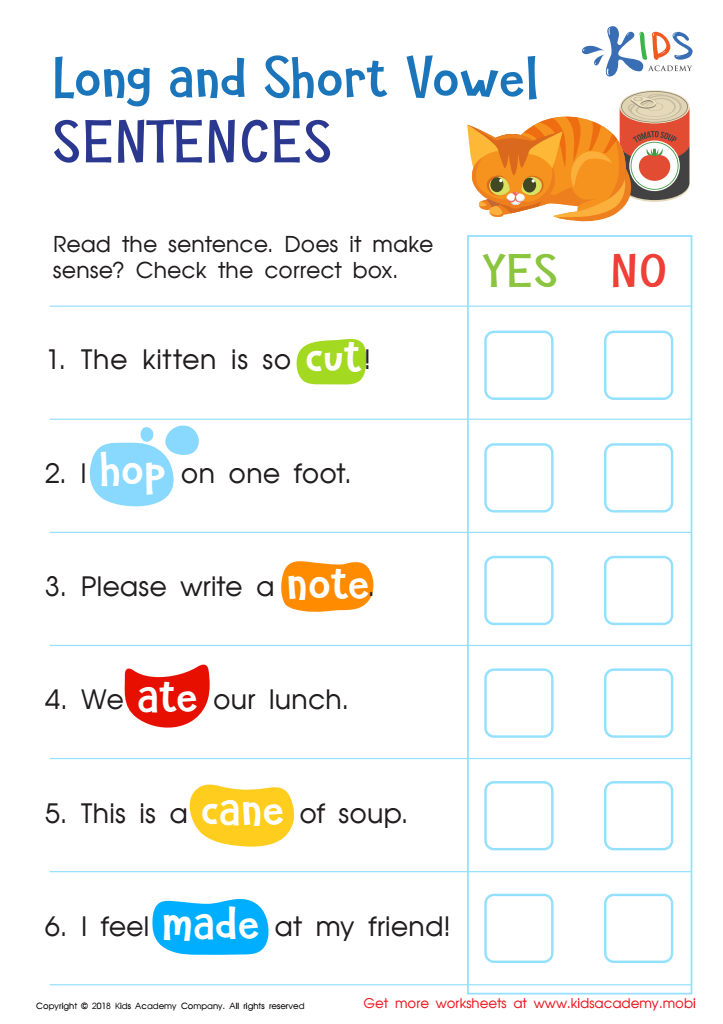
This printable worksheet helps kids practice differentiating between short and long vowel sounds. They'll use context clues to figure out which words make sense in simple sentences. A great way to build reading and writing skills!
Long and Short Vowel Sentences: Assessment Worksheet
Worksheet
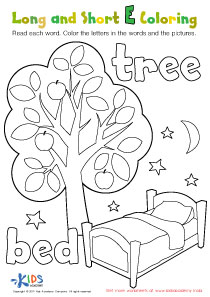
Long and Short E Worksheet

Long and Short E Worksheet

This fun printout makes learning phonics enjoyable for Grade 3 students. Get them to read the words “tree” and “bed” to recognize the different sounds of the letter “E”. After hearing the words they can color the words and the pictures to understand differences between long and short vowels.
Download (PDF)
Assign to My Students
Long and Short E Worksheet
Worksheet


Parents and teachers should prioritize reading comprehension, particularly focusing on Normal Vowel Teams, for children aged 4-6 because it lays the foundation for lifelong literacy skills. At this age, children are developing crucial phonetic awareness; understanding vowel teams helps them decode words more effectively. Normal Vowel Teams, such as "ai" in "rain" or "ea" in "bread," play a vital role in helping young learners grasp how different letters combine to create specific sounds.

By mastering vowel teams, children not only improve their decoding skills but also enhance their overall reading fluency and comprehension. This seamless transition from recognition to understanding promotes a love for reading and encourages children to engage with texts, fostering critical thinking and imagination. Furthermore, strong reading comprehension skills are linked to academic success across subjects.

Ultimately, by focusing on reading comprehension and Normal Vowel Teams, parents and teachers can provide young learners with essential tools for effective communication and emotional expression, enabling them to participate actively in their education and the world around them. Cultivating these skills at an early age helps to build confidence and a passion for reading that can last a lifetime.