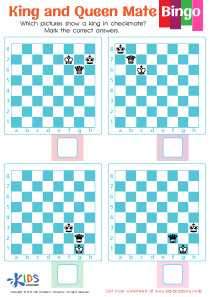
Strategic thinking development Normal Chess Worksheets for Ages 4-6
7 filtered results
-
From - To
Unlock your child's potential with our engaging Normal Chess Worksheets designed for ages 4-6, focusing on strategic thinking development! These thoughtfully crafted activities introduce young minds to the captivating world of chess while enhancing critical skills like problem solving, planning, and decision-making. Each worksheet is filled with vibrant illustrations and simple instructions, making learning fun and interactive. As children explore strategic concepts, they not only learn the rules of the game but also develop essential cognitive abilities that will benefit them in school and beyond. Foster your child's love for chess and set the foundation for lifelong learning with our strategic thinking resources today!
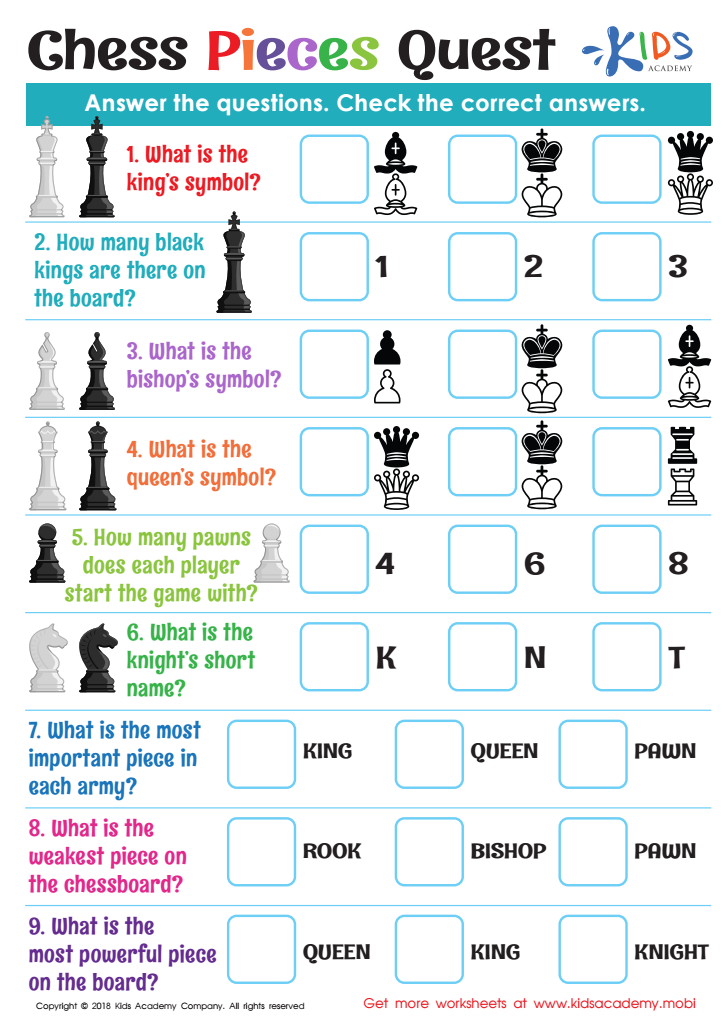
Chess Pieces Quest Worksheet
 Assign to My Students
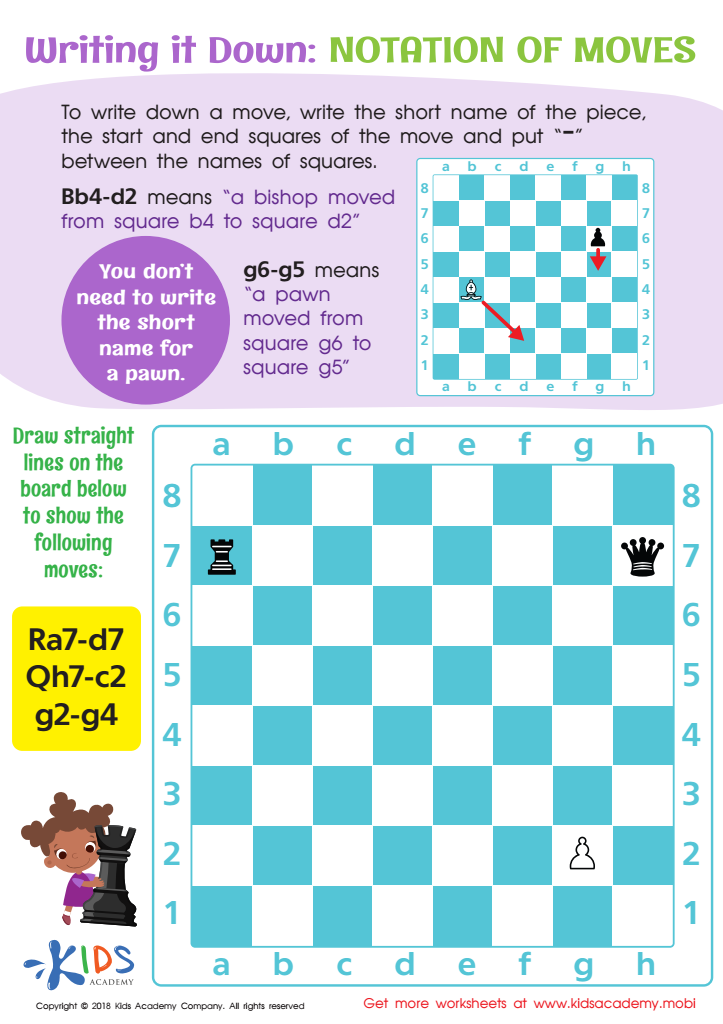
Notation of Moves Writing it Down Worksheet
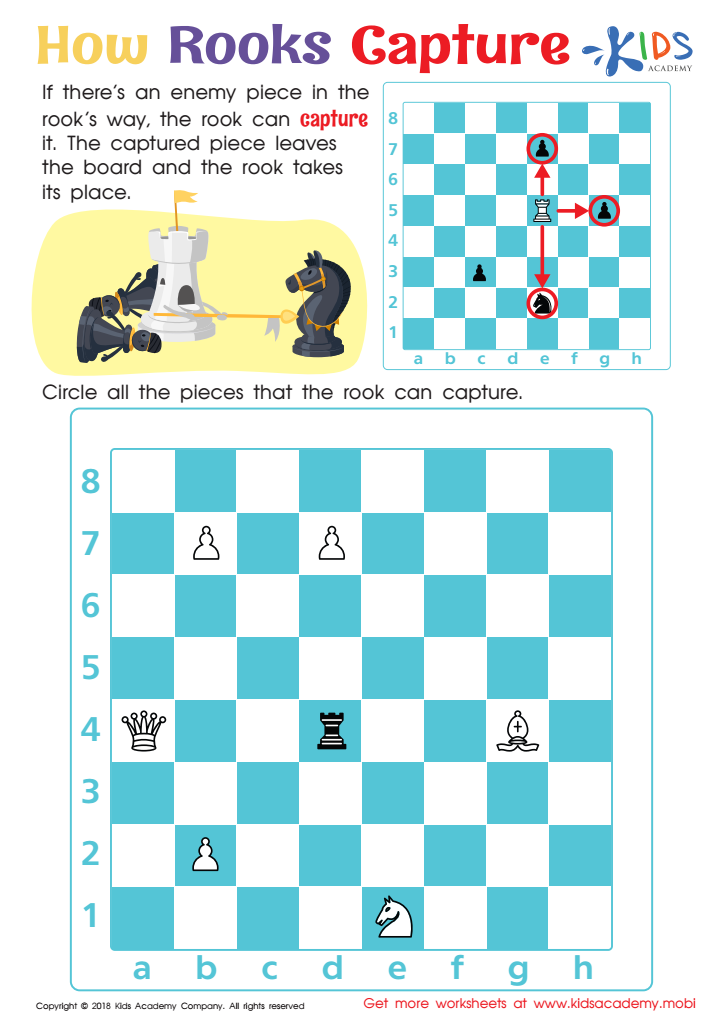
How Rooks Capture Worksheet
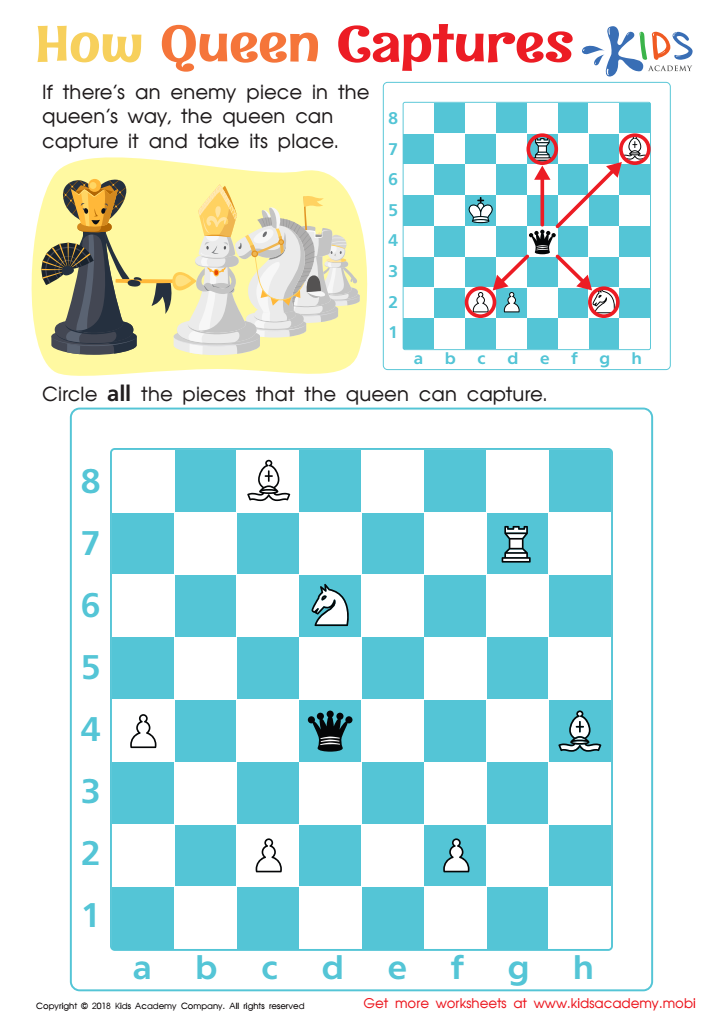
How Queen Captures Worksheet
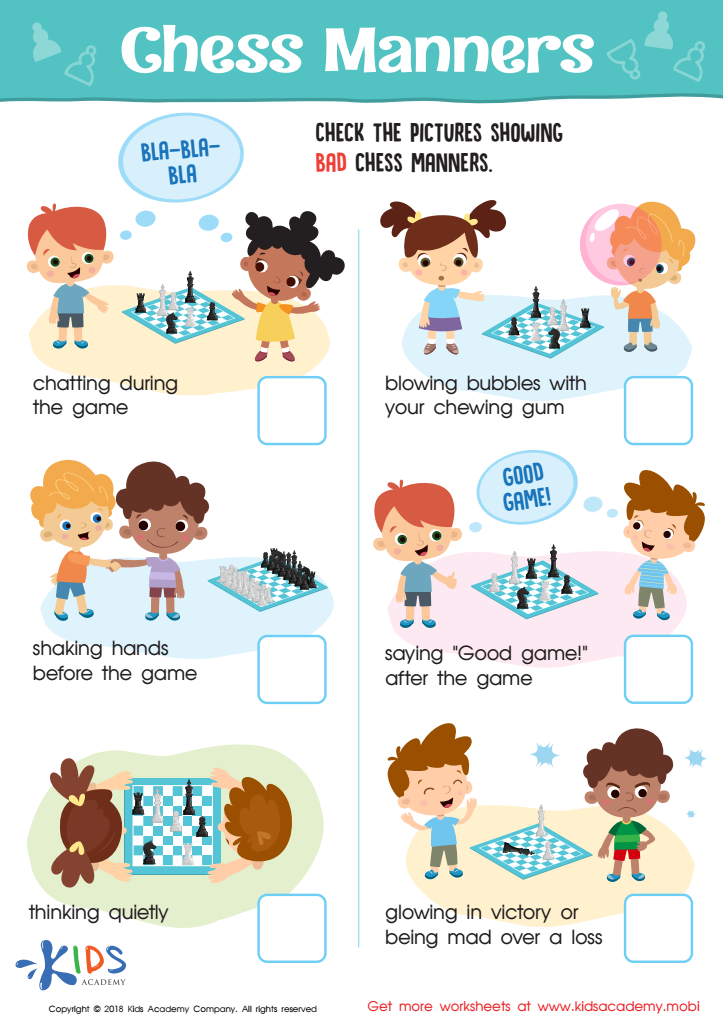
Chess Manners Worksheet
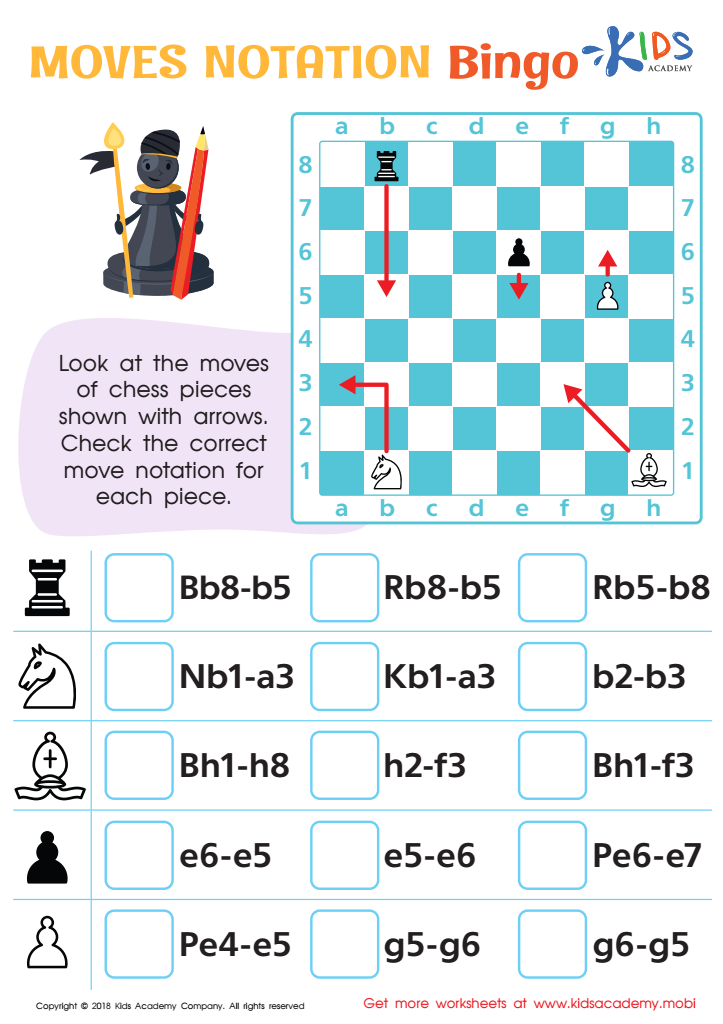
Moves Notation Bingo Worksheet
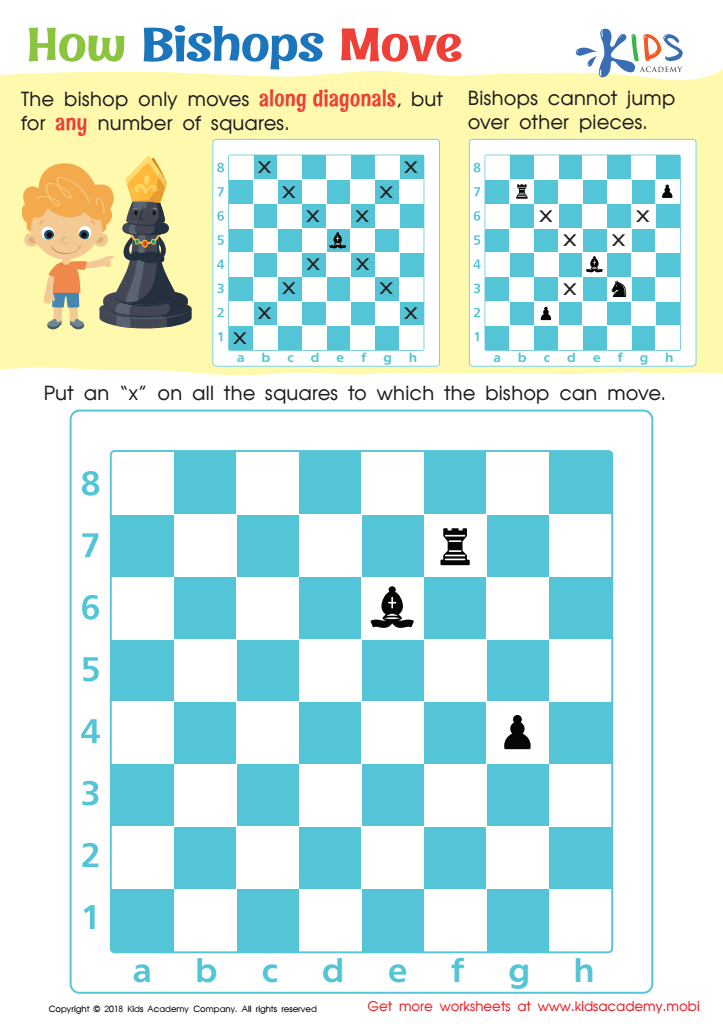
How Bishops Move Worksheet



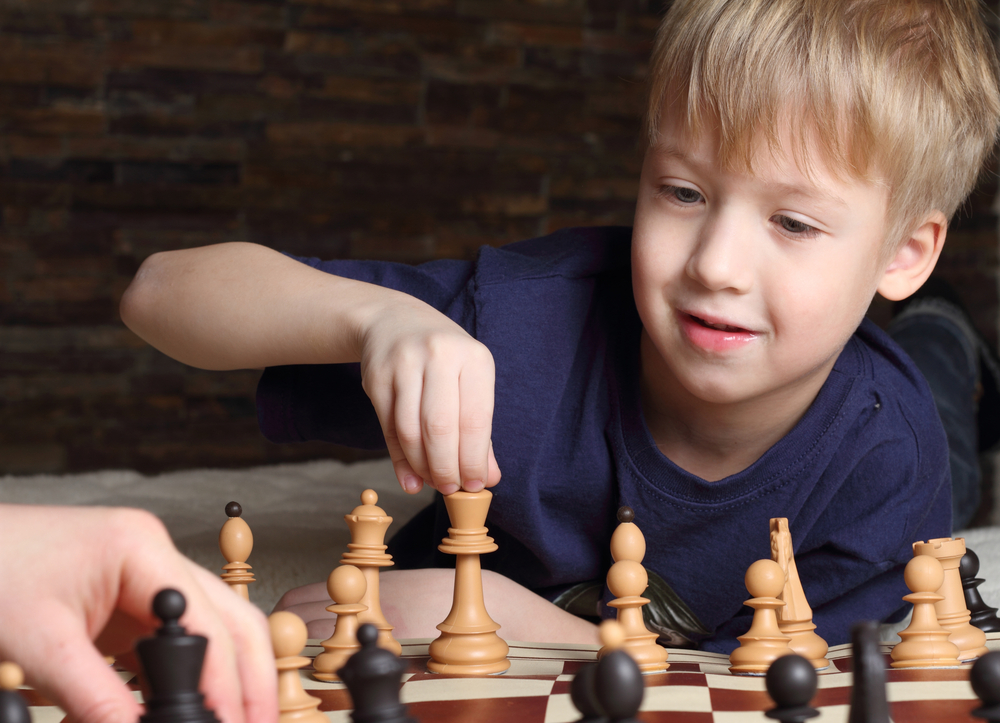



Strategic thinking is crucial for young children's cognitive and emotional development, and engaging them in activities like chess can significantly foster these skills. For parents and teachers, introducing normal chess to children ages 4-6 offers several benefits.
Firstly, chess encourages problem-solving and critical thinking. As children learn to think ahead and anticipate their opponent's moves, they develop the ability to process information logically and make informed decisions. This foundational skill is beneficial across all academic subjects and everyday life.
Secondly, chess promotes patience and focus. Young children often struggle with attention span, but chess provides a structured setting that requires concentration over extended periods. This can lead to improved attention in the classroom and at home.
Additionally, playing chess helps children learn about consequences. They quickly grasp that their choices have results, fostering a sense of responsibility and enhancing their emotional intelligence. Collaborating with classmates or family members during chess also nurtures social skills like communication and respect for others.
Ultimately, integrating strategic games like chess into the early education curriculum enriches children’s learning experiences, setting the stage for academic success and holistic development. Parents and teachers should recognize chess as a valuable tool for cultivating essential life skills from an early age.